I have been working on arranging a memorial at Marin Poetry Center for Linda Gregg, and also received word that my old friend died this week. So elegies are on my mind. Here is a beauty by Rachel Eliza Griffiths.
Elegy, Surrounded by Seven Trees
for Michele Antoinette Pray-Griffiths
Ordinary days deliver joy easily again & I can’t take it. If I could tell you how her eyes laughed or describe the rage of her suffering, I must admit that lately my memories are sometimes like a color warping in my blue mind. Metal abandoned in rain.
My mother will not move.
Which is to say that sometimes the true color of her casket jumps from my head like something burnt down in the genesis of a struck flame. Which is to say that I miss the mind I had when I had my mother. I own what is yet. Which means I am already holding my own absence in faith. I still carry a faded slip of paper where she once wrote a word with a pencil & crossed it out.
From tree to tree, around her grave I have walked, & turned back if only to remind myself that there are some kinds of peace, which will not be moved. How awful to have such wonder. The final way wonder itself opened beneath my mother’s face at the last moment. As if she was a small girl kneeling in a puddle & looking at her face for the first time, her fingers gripping the loud, wet rim of the universe.
It was a crazy week, including travel to the writers conference in Portland, so I missed the Monday vitamin for all of you. But here you go with a lovely poem by Julie Bruck.
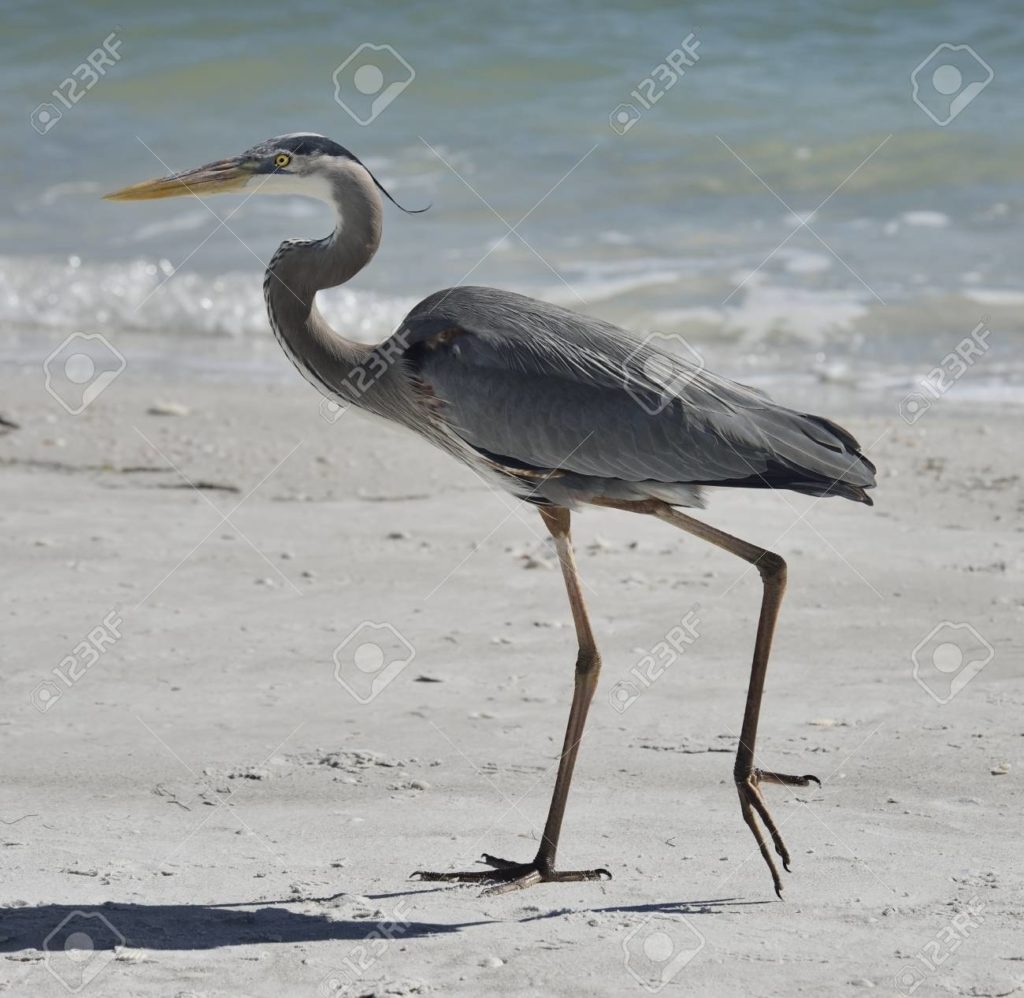
Blue Heron Walking
Not one of Mr. Balanchine’s soloists had feet this articulate, the long bones explicitly spread, then retracted, even more finely detailed than Leonardo’s plans for his flying machines. And all this for a stroll, a secondary function, not the great dramatic spread and shadow of those pterodactyl wings. This walking seems determined less by bird volition or calculations of the small yellow eye than by an accident of breeze, pushing the bird on a diagonal, the great feet executing their tendus and lifts in the slowest of increments, hesitation made exquisitely dimensional, as if the feet thought themselves through each minute contribution to propulsion, these outsized apprehenders of grasses and stone, snatchers of mouse and vole, these mindless magnificents that any time now will trail their risen bird like useless bits of leather. Don’t show me your soul, Balanchine used to say, I want to see your foot.
Two amazing poets died this week, W. S. Merwin and Linda Gregg. I have posted several of Merwin’s poems before. Somehow though, I never have posted a poem by Linda Gregg. Here’s a sample:
Death Looks Down
Death looks down on the salmon A male and female in two pools one above the other The female turns back along the path of water to the male does not touch him and returns to the place she had been I know what Death will do Their bodies already sour and ragged Blood has risen to the surface under the scales One side of his jaw is unhinged Death will pick them up Put them away under his coat against his skin and belt them there He will walk away up to the path through the bay trees Through the dry grass of California to where the mountain begins Where a few deer almost the color of the hills will look up until he is under the trees again Where the road ends and there is a gate He will climb over that with his treasure It will be dark by then But for now, he does nothing He does not disturb the silence at all Nor the occasional sound of leaves of ferns touching of grass or stream For now he looks down at the salmon Large and whole Motionless days and nights in the cold water Lying still Always facing the constant motion
This wonderful poet is coming to read here next week. I have posted one of her poems before, but thought I’d post another, from her book “The Dig.” This poem, as many in the book describe a childhood at the edge, with unreliable caretakers. The description of “wringing of every cent from every dollar,” resonated with me, and I love the details of the description.
The Red Kimono
I stare at the brass scarred by beating until it is as bright and uneven as a lake in August when the sun melts all reflections into one wide gold zero, when the sky itself is wide, is hot as the bell that this schoolmaster, inappropriately strict, tips to summon the children from the unrelenting heat of noon. The long tape unrolls from the teeth of the adding machine onto the scarred deal. Over and over the budget unreels and spills, liberated from the sprockets and machinery of will. My mother sits with a pencil and ticks her teeth, we are broke, every avenue of escape is closed, even the car tires at the curb are fat black zeros, all the scheming and coaxing, the wringing of every cent from every dollar, has come to nothing. I watch my mother swab up the dust, her hair tied in a rag, her naked feet, nails bloodied by a tiny brush. Misery, misery, the cranes of good luck hunch at the snowy mountain of her left breast as she bends to set the empties on the step in the housecoat the landlady lent.
I subscribe to several “poem-a -day” sites, and once in awhile, discover a poet I don’t know whose work interests me, as this morning, a poem by an Irish poet.
Makebelieve
And on the first day god made something up. Then everything came along:
Barbara Reynolds runs a reading series the second Sunday of the month at Britt Marie’s, a wine bar on Solano. I am reading there March 10th at 3:30. But here is Barb herself, speaking one of her poems. This is the first in a series of three.
Ted Kooser was US Poet Laureate in 2004. His poems often deal with the farming communities of the midwest, like this one, which does a great job of capturing a moment and a perspective.
Flying at Night
Above us, stars. Beneath us, constellations. Five billion miles away, a galaxy dies like a snowflake falling on water. Below us, some farmer, feeling the chill of that distant death, snaps on his yard light, drawing his sheds and barn back into the little system of his care. All night, the cities, like shimmering novas, tug with bright streets at lonely lights like his.
Before the days of self service, when you never had to pump your own gas, I was the one who did it for you, the girl who stepped out at the sound of a bell with a blue rag in my hand, my hair pulled back in a straight, unlovely ponytail. This was before automatic shut-offs and vapor seals, and once, while filling a tank, I hit a bubble of trapped air and the gas backed up, came arcing out of the hole in a bright gold wave and soaked me — face, breasts, belly and legs. And I had to hurry back to the booth, the small employee bathroom with the broken lock, to change my uniform, peel the gas-soaked cloth from my skin and wash myself in the sink. Light-headed, scrubbed raw, I felt pure and amazed — the way the amber gas glazed my flesh, the searing, subterranean pain of it, how my skin shimmered and ached, glowed like rainbowed oil on the pavement. I was twenty. In a few weeks I would fall, for the first time, in love, that man waiting patiently in my future like a red leaf on the sidewalk, the kind of beauty that asks to be noticed. How was I to know it would begin this way: every cell of my body burning with a dangerous beauty, the air around me a nimbus of light that would carry me through the days, how when he found me, weeks later, he would find me like that, an ordinary woman who could rise in flame, all he would have to do is come close and touch me.
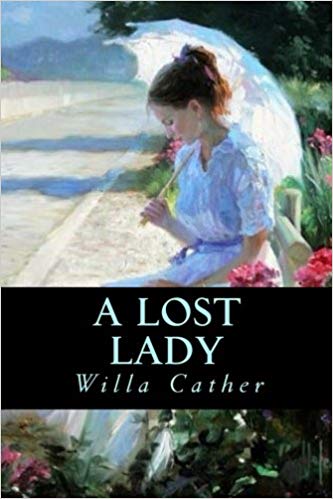
I reread A Lost Lady this week. Inhaled it really. The characters are so vivid, as is the portrait of the farm towns of the prairies at the turn of the century. The great rail roads were built, and the settlers had come, but soon the chiselers and cheapskates would take the place of the larger than life figures who had created the original settlements. One of the characters is the Forrester homestead itself:
“Just at the foot of the hill on which the house sat, one crossed a second creek by the stout wooden road-bridge. This stream traced artless loops and curves through the broad meadows that were half pasture land, half marsh.”
“Any one but Captain Forrester would have drained the bottom land and made it into highly productive fields. But he had selected this place long ago because it looked beautiful to him, and he happened to like the way the creek wound through his pasture, with mint and joint-grass and twinkling willows along its bank. He was well off for those times, and he had no children. He could afford to humor his fancies.”
Mrs. Forrester, the lost lady of the title, is a winsome, engaging woman, the essence of grace and good taste. The story is told through the eyes of a young boy who looks up to her, finds in her the emblem of all that is elegant and delightful, and who grows up under her spell. He is present as Forrester loses his fortune by personally bankrolling a failed bank, the only one of the directors to come forward and save the depositors.
Later, he must rent the pasture land to an unscrupulous character, Ivy Peters: “Neil and Ivy had disliked each other from childhood, blindly, instinctively, recognizing each other through antipathy, as hostile insects do. By draining the marsh Ivy had obliterated a few acres of something he hated, though he could not name it, and had asserted his power over the people who had loved those unproductive meadows for their idleness and silvery beauty…
“The Old West had been settled by dreamers, great-hearted adventurers who were unpractical to the point of magnificence… Now all the vast territory they had won was to be at the mercy of men like Ivy Peters, who had never dared anything, never risk anything. They would drink up the mirage, dispel the morning freshness, root out the great brooding spirit of freedom, the generous, easy life of the great land-holders. The space, the colour, the princely carelessness of the pioneer they would destroy and cut up into profitable mats, as the match factory splinters the primeval forest.”
The lost lady of the title is not just Mrs. Forrester, but the west itself, described beautifully. Of course, the native population might feel the same about the”great-hearted adventurers,” but that’s a different book. This one is a gem of a portrait of a lost time.
Out of the sump rise the marigolds. From the rim of the marsh, muslin with mosquitoes, rises the egret, in his cloud-cloth. Through the soft rain, like mist, and mica, the withered acres of moss begin again.
When I have to die, I would like to die on a day of rain– long rain, slow rain, the kind you think will never end.
And I would like to have whatever little ceremony there might be take place while the rain is shoveled and shoveled out of the sky,
and anyone who comes must travel, slowly and with thought, as around the edges of the great swamp.