Everything before mid-March is beginning to feel like the far past as the uncertainty of the future stretches. It’s hard to remember what getting up and going somewhere feels like. A month into this long ordeal, I created a poetic form I called the viral. It’s a poem about the virus that doesn’t use any of the words people use to talk about it. Here’s an example that came out of an exercise I was using by Tony Hoagland. Surprisingly, it was published soon after I wrote it in What Rough Beast, Covid-19 Edition, April 14, 2020:
First Person Plural, a viral
starting with a line by Diane Seuss
Let’s meet somewhere outside time and space
where panic cannot grab a toehold, in the crevice
between the president and the antiperspirant ad.
Observe as the sun gradually opens
the cymbidium’s curved purple sepals
to its gold labellum, it’s top like a tooth.
Let’s hunker down,
explore our fear of opening, turn
toward the page, the screen,
the one who shares our food,
our bed, our worries.
Let’s unfurl beyond terror
to be touched
by bird or bee or human finger,
wave our delicate fringe
unique, tremulous, perishable.
Meryl Natchez
 Poets have a form called “Ars Poetica” that they use to spell out their belief about their work. Here is one I love from Elizabeth Alexander. It’s simplicity, and the quick turns it makes are pretty darn good:
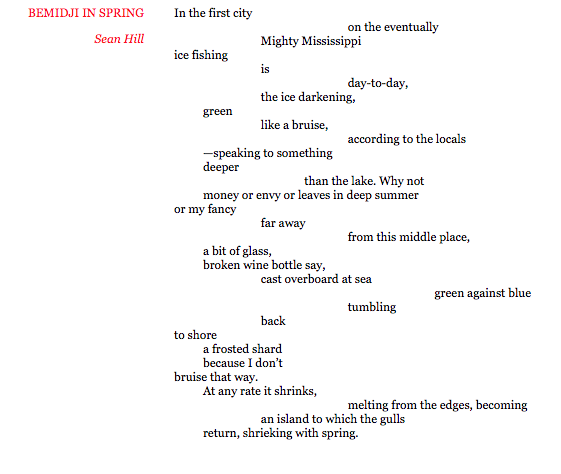
 I had the good luck to host a reading by Elizabeth Bradfield on Saturday. We did this online, including several of her friends. I thought I’d post this poem by one of them,