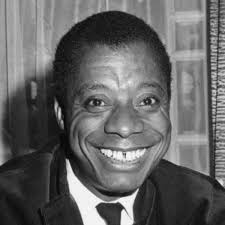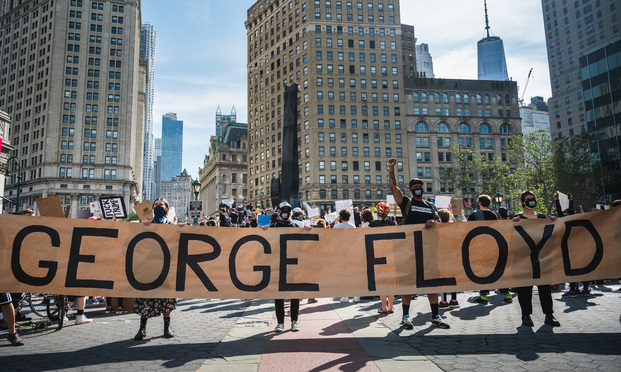
I posted some excerpts from The Fire Next Time last year. It seems appropriate to repost this one today.
“If one is permitted to treat any group of people with special disfavor because of their race or the color of their skin, there is no limit to what one will force them to endure, and since the entire race has been mysteriously indicted, no reason not to attempt to destroy it root and branch. This is precisely what the Nazis attempted. Their only originality lay in the means they used. It is scarcely worthwhile to attempt remembering ow many times the sun has looked down on the slaughter of the innocents. I am very much concerned that American Negroes achieve their freedom here in the United States. But I am also concerned for their dignity, for the health of their souls, and must oppose any attempt that Negroes may make to do to others what has been done to them. I think I know–we see it around us every day–the spiritual wasteland to which that road leads. It is so simple a fact and one that is so hard, apparently, to grasp: Whoever debases others is debasing himself. That is not a mystical statement, but a most realistic one, which is proved by the eyes of any Alabama sheriff–and I would not like to see Negroes ever arrive at so wretched a condition…” Continue reading “Baldwin Redux”
 Last night I went to the San Francisco JCC to hear Danez Smith, a powerful youngish black poet, read from his new book, “Homie.” Sam Sax and Safia Elhillo read with him. The crowd was mostly young and very enthusiastic. Danez is a poet who comes from the loud and proud tradition, often found at poetry slams, less often in books. I enjoyed his reading, and the light, noisy atmosphere, so different from a standard poetry event. But after the reading, in the inevitable Q&A, a woman asked in relation to the publishing industry, still mostly owned and staffed by white people, “How do we dismantle the publishing industry so more diverse voices can be heard?” Neither Safia or Sam had much to say to that. To his credit, Danez said, “Well I don’t know that we want to dismantle it, just support the publication of diverse voices.” There was more to his response than that, but the question reminded me of a passage in James Baldwin’s amazing essay, “Down at the Cross: Letter from a Region of My Mind.” In it, he is being driven to meet friends after a dinner with Elisha Muhammad. His driver (a follower of Muhammad), is talking about the wonderful day when the Negro (his word) population has its own, separate economy. Baldwin asks him, “On what, then, will the economy of this separate nation be based?” and goes on:
 “I was thinking, in order for this to happen, your entire frame of reference will have to change, and you will be forced to surrender many things that you scarcely know you have. I didn’t feel that the things I had in mind, such as the pseudo-elegant heap of tin in which we were riding, had any very great value. But life would be very different without them, and I wondered if he had thought of this.