Connoisseur of Torture Museums

Larry and I went to the Peter Paul Fortress, a former military bastion just over the Neva river from the Hermitage. Like every multi-part attraction we visited here, it wasn’t possible to buy one ticket for everything. You pay to get in, and then each little area has its own ticket booth with someone in it selling a small ticket for their attraction. “That’s socialism for you,” Larry commented, “full employment through inefficiency.”
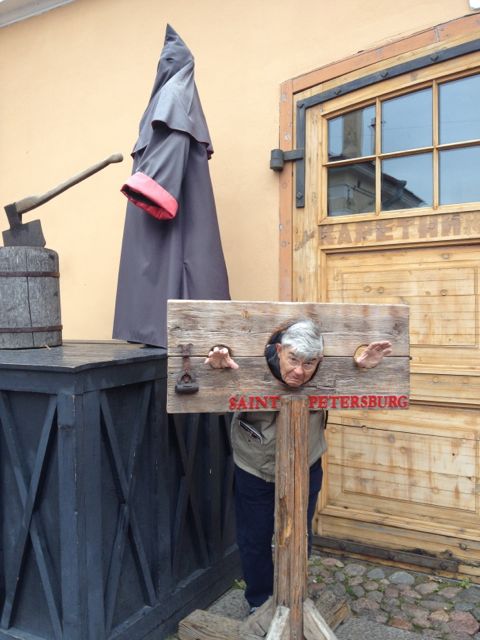
stocksIn any case, aside from the very sobering prison, with its lists of the famous and not so famous political prisoners, we had to see the torture museum, with its careful catalog of the ingenious ways people have tortured each other through the centuries. I was surprised to see that the guillotine was in use in France until 1977.

Larry felt it was significantly better than its counterpart in Siena, which we also visited.  A few images from the museum follow, but you may want to stop here.  They’re not for the faint of heart. Each image has a helpful little blurb like this one, in Russian and in English:
Continue reading “Connoisseur of Torture Museums”

Akhmatova museum

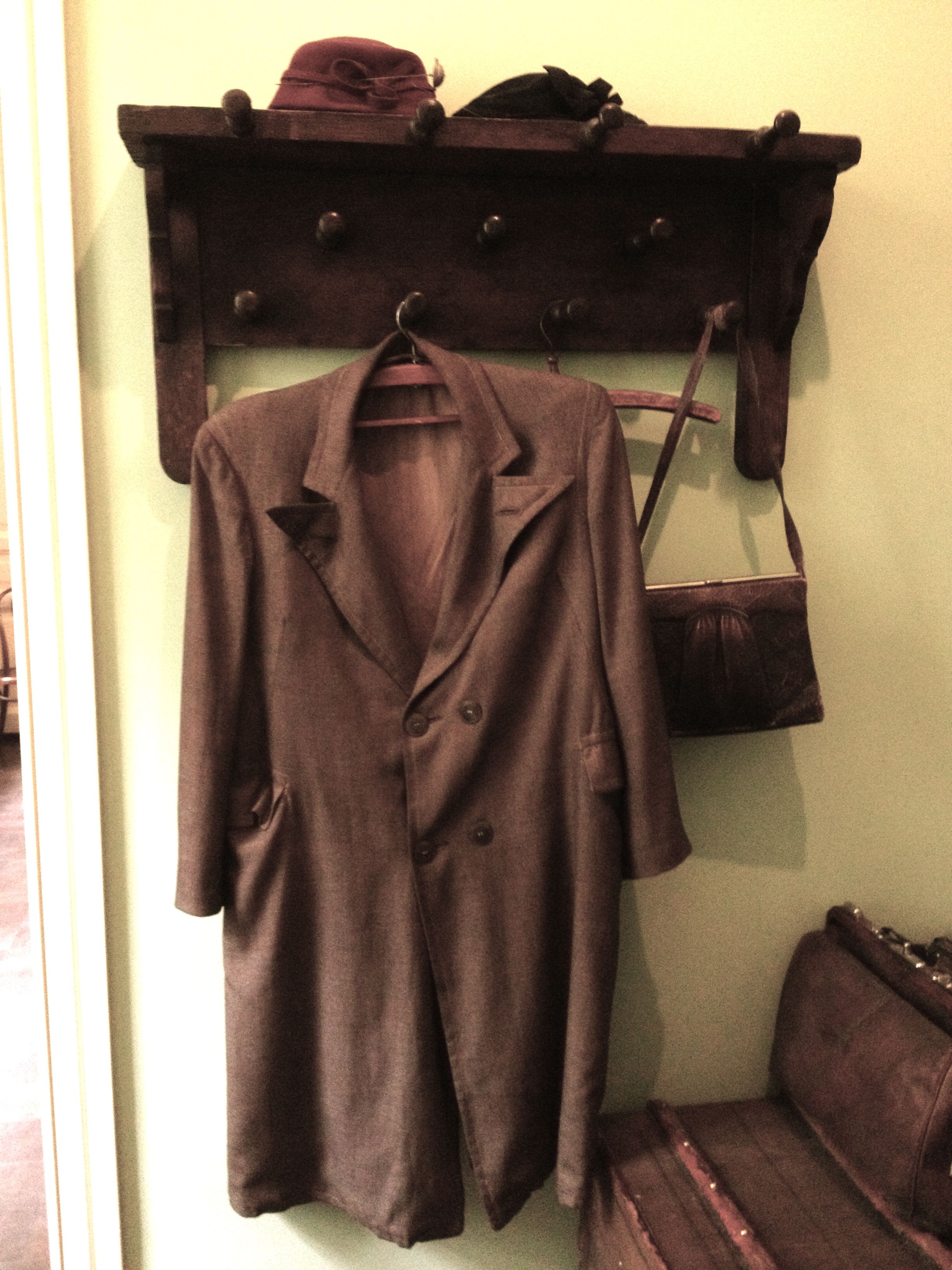
hatcoatOne of the most moving visits for me in St. Petersburg was the trip to the Akhmatova Museum.  For many years Akhmatova lived in rooms assigned to her in the former Sheremetev Palace, which was collectivized after the revolution and made into apartments. During this time, her son and second husband both endured varying prison sentences and she was forced to write poetry in praise of Stalin to hope to secure their release. Here’s a short quote from Wikipedia: Continue reading “Akhmatova museum”

Literary St. Petersburg

St. Petersburg is very conscious of the great writers who lived here. Whether or not they were persecuted, exiled, died (and mostly lived) in the most abject poverty, once their reputation is established and a few decades have past, they do their best to show them off.

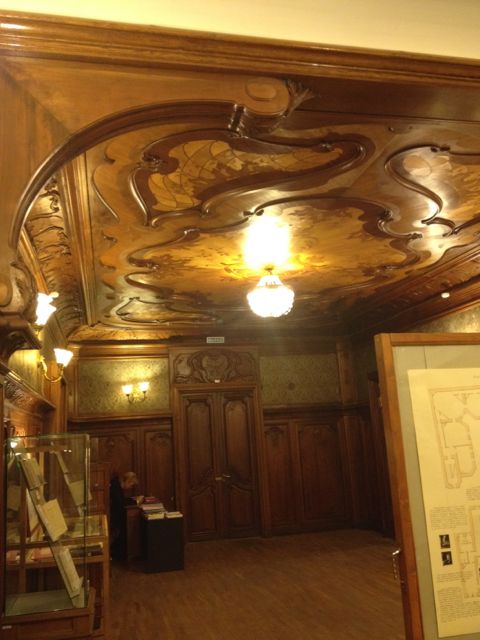
Nabokov had a most bourgeois childhood, growing up in a large apartment in the center of town. He was trilingual (speaking Russian, English and French fluently), in an atmosphere he describes in his memoir, Speak Memory, as “perfect.” But of course, then came the revolution, and his father took a role in what became the provisional government before the Bolsheviks took over. For Nabokov and his family, this meant exile. We had the great good luck to wander in to the Nabokov Museum–reconstructed in the apartment he lived in for the first 18 years of his life–when it was virtually empty and got to wander the suite of rooms, peruse his butterfly collection in its boxes, look at his butterfly net and the pictures of his family.  He dedicated many of his first editions to Vera, his wife, drawing butterflies and making up genus and species names. Here’s a glimpse of it all:

roomThe entry room with the molded wood ceiling Continue reading “Literary St. Petersburg”

Bourgeois Individuality

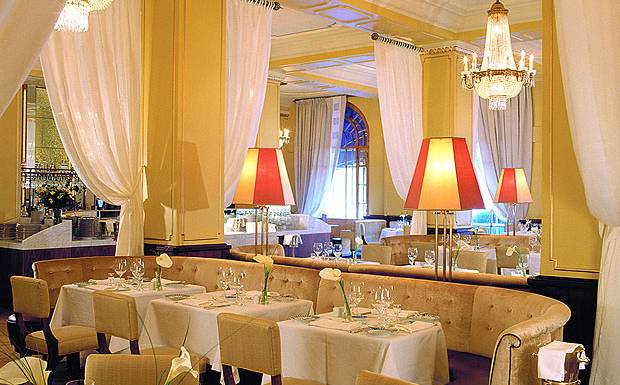
astoria-diningIt’s impossible here in Russia not to acknowledge my bourgeois background. This morning, a rainy one, I lingered happily over my luxurious breakfast in a lovely room. The rain splattered outside, inside white table cloths, linen napkins, friendly waitresses willing to let me practice my few remaining Russian phrases, happy to fetch me a a poached egg, more tea. All this along with the time to relax, to savor it. I remembered Dickey’s poem, and gave it a nod. I didn’t even have to think about where to procure the sausages–it was all there for me. Continue reading “Bourgeois Individuality”

Thoughts on travel

We got on BART on a perfect sunny Wednesday afternoon in Berkeley, heading for the San Francisco airport and about 17 hours of flight + layover to get to St. Petersburg. I wondered just why we do this, leave one of the most beautiful, temperate, pleasant spots on earth to spend thousands of dollars to go someplace else for awhile. Part of it must be the atavistic pleasure of exploration–despite the internet and travel tips, heading to a foreign country is an adventure: different assumptions, customs, money.

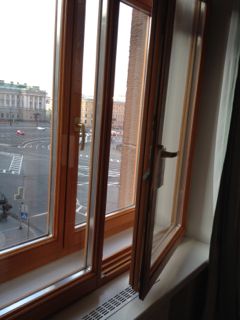
windowsJust the windows in our hotel are a marvel–wood framed, quadruple-paned, with a large space inbetweem. They really insulate here!

In the case of Russia, just walking around looking at a different alphabet (one I know, but not as well as English) makes me realize how much of reading is word recognition as opposed to reading letter by letter. How slowly and painstakingly I sound out the simplest words until I recognize them. Not to mention trying to decipher prices that are in the hundreds or thousands of roubles. A cup of borscht for 390 roubles?

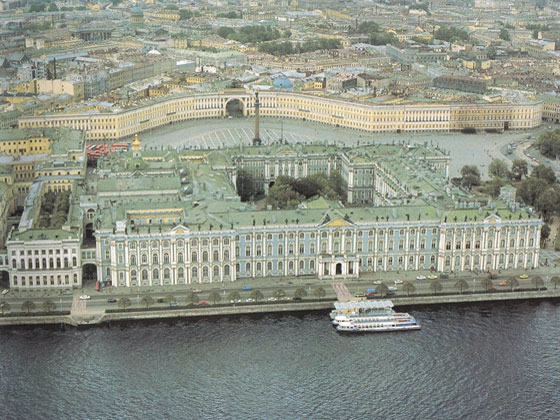
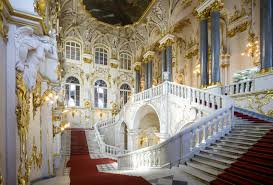
city-of-st-petersburg-hermitageBut it’s also the pleasure of encountering the culture of another country. We spent several hours at the Hermitage Museum, yesterday. The grandeur of the hundreds of ornate rooms, gilding, parquet, mosaic, malachite, lapis, marble staircases, pillars, elaborate moldings and inlaid doors and tables, vaulted ceilings with painted frescos…there’s simply nothing like this on the American continent.herm1

Continue reading “Thoughts on travel”

The energy of the slam

Come       Come where the booze is cheaper,
Come       Come where the pots hold more,
Come       Come where the boss is a bit of a sport,
Come       Come to the pub next door!

George Orwell, that master of the essay, has a lovely piece on writing called “Good Bad Books.” Of course, you can read all his essays online now (although they are rife with typos, even more than my notes here!), including this one. In it, he notes that some authors who write commercially, without  intellectual pretensions, remain readable long after their higher-toned colleagues are forgotten. He comments: “In each of these books the author has been able to identify himself with his imagined characters, to feel with them and invite sympathy on their behalf…In novelists, almost as much as in poets, the connection between intelligence and creative power is hard to establish. A good novelist may be a prodigy of self-discipline like Flaubert, or he may be an intellectual sprawl like Dickens. Enough talent to set up dozens of ordinary writers has been poured into Wyndham Lewis’s so-called novels, such as Tarr or Snooty Baronet. Yet it would be a very heavy labour to read one of these books right through. Some indefinable quality, a sort of literary vitamin, which exists even in a book like If Winter Comes, is absent from them.”

starry-plough-berkeley-ca-usa-nightlife-live-entertainment-live-entertainment-live-music-1529393_28_550x370_20111025224705_optI was reminded of and searched out the essay because I recently went to my first poetry slam, at the Starry Plough in Berkeley. The raw energy of the poets was invigorating and made the evening better than many a literary night of droning poets searching their soul for meaning.  Lots of that indefinable literary vitamin. I was reminded of this sentence from Orwell’s essay:

There are music-hall songs which are better poems than three-quarters of the stuff 
that gets into the anthologies.

Here, here! Next time I go, I may perform.


Anders Zorn

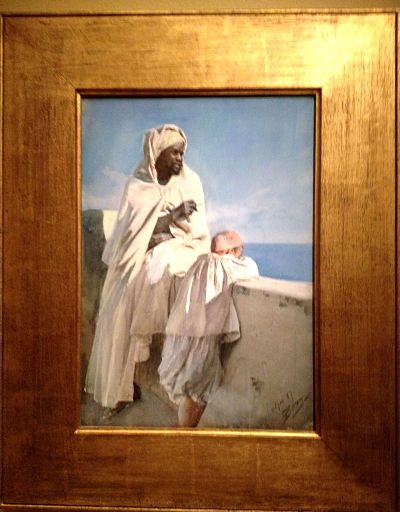
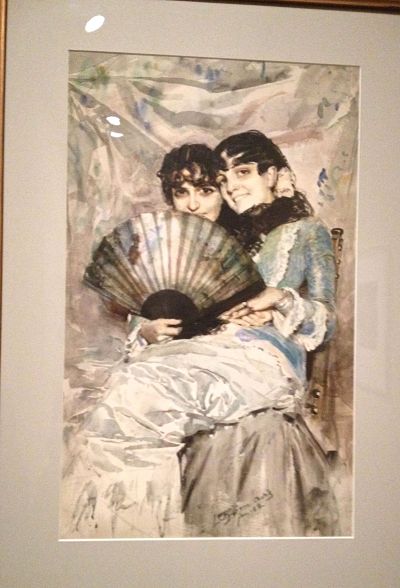
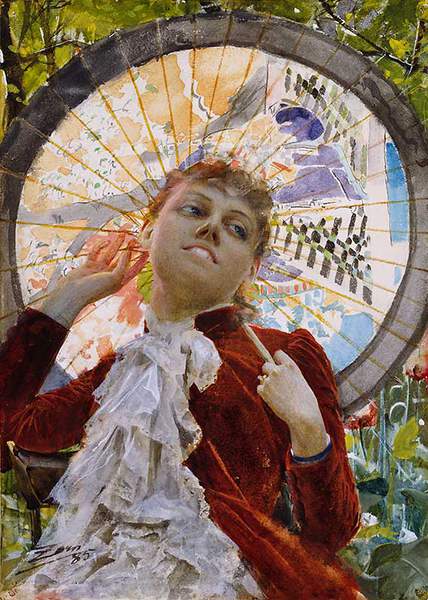
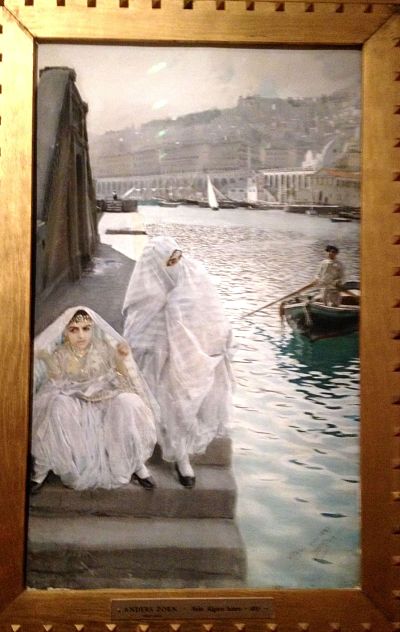
Last Sunday was a perfect, mild winter day, sun and mist. We took a walk at Land’s End and then went to see an exhibit of the Swedish painter, Anders Zorn (1860-1920), at the Palace of the Legion of Honor. I’d never heard of him, and while I didn’t think much of his later work, I loved his early watercolors. He was a painter who came from very humble origins and achieved fame early. He wound up making ~$15,000 a week in the early 1900’s painting portraits in the mode of John Singer Sargent. In his final self-portrait, he looks plump, content, and more like a wealthy merchant than an artist.  Still, I think it’s worth a trip to see the rooms of watercolors. The personalities of his subjects seem to shine through, and his water is especially vivid.

IMG_1233_opt IMG_1235_opt

castlesIMG_1234_opt


Continue reading “Anders Zorn”

Internet magic

Almost two years ago, I posted about Roberto Chavez’ show at the Autry Museum in LA. As part of the post I mentioned that over 30 years ago, a gallery owner had sold a wonderful self-portrait of Roberto with a lime-green background that we had loaned to the gallery for the show. Even though it was not for sale, the unscrupulous gallery owner sold it, and although Roberto gave us another painting in its place, I never really got over it. Continue reading “Internet magic”