Everything before mid-March is beginning to feel like the far past as the uncertainty of the future stretches. It’s hard to remember what getting up and going somewhere feels like. A month into this long ordeal, I created a poetic form I called the viral. It’s a poem about the virus that doesn’t use any of the words people use to talk about it. Here’s an example that came out of an exercise I was using by Tony Hoagland. Surprisingly, it was published soon after I wrote it in What Rough Beast, Covid-19 Edition, April 14, 2020:
First Person Plural, a viral
starting with a line by Diane Seuss
Let’s meet somewhere outside time and space
where panic cannot grab a toehold, in the crevice
between the president and the antiperspirant ad.
Observe as the sun gradually opens
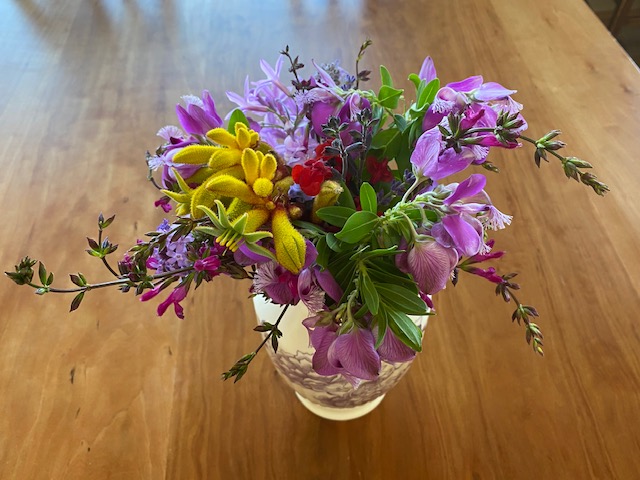
the cymbidium’s curved purple sepals
to its gold labellum, it’s top like a tooth.
Let’s hunker down,
explore our fear of opening, turn
toward the page, the screen,
the one who shares our food,
our bed, our worries.
Let’s unfurl beyond terror
to be touched
by bird or bee or human finger,
wave our delicate fringe
unique, tremulous, perishable.
Meryl Natchez
 Poets have a form called “Ars Poetica” that they use to spell out their belief about their work. Here is one I love from Elizabeth Alexander. It’s simplicity, and the quick turns it makes are pretty darn good:
 I had the good luck to host a reading by Elizabeth Bradfield on Saturday. We did this online, including several of her friends. I thought I’d post this poem by one of them,
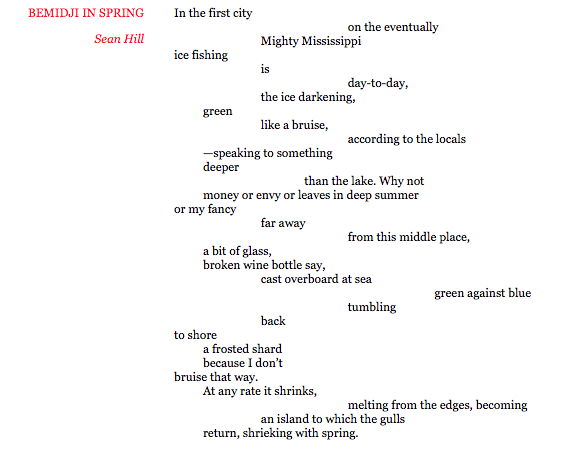

 Everything is Going to Be All Right
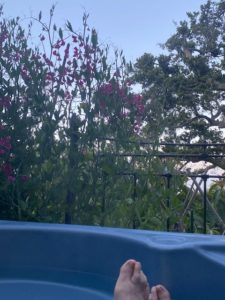 On Friday, I took a dawn hot tub steam curling tranquilly around the sweet peas, heading towards the bay just visible between oak branches. Then I noticed that the electric fence, which guards my chickens from predators, was not blinking, which meant it was shorted out somewhere. I dressed and went down to find a sizable oak limb had split off and crashed through the chicken run, rupturing the bird net and the fence.
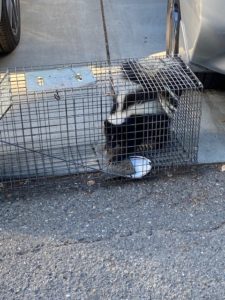 “Maybe he’s too smart for us,” I told my grandson. We decided to leave the trap baited overnight, and this morning I woke to find a skunk in it. I’ve had a lot of experience with skunks from the time our house backed onto a large open space in Lafayette. The county used to drop off traps and then pick up trapped skunks. Those traps were very narrow, so once caught the skunks couldn’t raise their tail to spray. My trap has plenty of room for the skunk to spray, so it was a problem. I got an old towel and held it in front of me as I approached the trap. The skunk sprayed and sprayed until his little spray reservoir was depleted. Then I covered him with another old towel, put the cage on a rubber mat in the back seat and drove the trap to Tilden Park, where I propped the trap open and let him flee. The car smells only a tiny bit skunky, as does my right arm. The towels and cage are out in the sun, waiting for time to reduce the smell.
 Sunday Night

 Undressing You
 I’ve been receiving poems from so many sources lately. Even my local art gallery is sending daily inspiration. It’s amazing how many poems I don’t like! But then comes one I do, and it’s all worth it. I try only to post the ones that move me here:
 This poem, which I found on the site Women’s Voices for Change, seems to perfectly encapsulate this moment. Jane’s new book, Ledger, from Knopf, just came out. It’s worth buying a copy from your local book store. You won’t regret it.