First rain

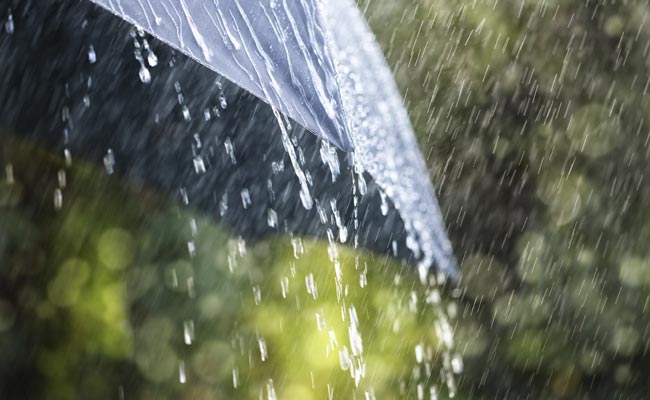
rainIn Japan, they have festivals for the cherry blossoms each spring. Here in California, it doesn’t rain for months and then, suddenly, does. So I think we need a First Rain Festival. We could have hot food and umbrella dances, boot splash puddles, green drinks, sing rain songs and recite poems about rain. And even though this poem is about 100 years old and about summer rain, it seems relevant:

Summer Rain

All night our room was outer-walled with rain.
Drops fell and flattened on the tin roof,
And rang like little disks of metal.
Ping!—Ping!—and there was not a pin-point of silence between
them.
The rain rattled and clashed,
And the slats of the shutters danced and glittered.
But to me the darkness was red-gold and crocus-colored
With your brightness,
And the words you whispered to me
Sprang up and flamed—orange torches against the rain.
Torches against the wall of cool, silver rain!

 Amy Lowell


Clive James, master of the exemplary sentence

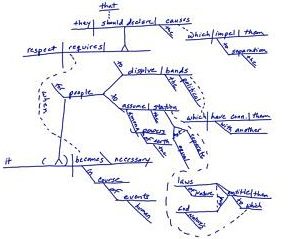
Sentence DiagramIt’s always a thrill when someone I’ve just discovered, and therefore think must be obscure, turns out to be well known. This happened recently with Clive James, a poet, critic, and essayist whose latest book on DVD collections was recently reviewed in the NY Times.

I’ve been enjoying his Poetry Notebook 2006-2014. It’s full of lines like this in any essay about the strange idea that art should be somehow completely spontaneous, without any rigorous training in the craft of it:

“Even though nobody can expect to master, without years of practice, a performing art such as playing the piano, there will still be the wish that music itself might be composed by an ignoramous.”

Wendell Berry

Given the incessant clamor of news, this poem seems appropriate.

The Peace Of Wild Things

When despair grows in me
and I wake in the night at the least sound
in fear of what my life and my children’s lives may be,
I go and lie down where the wood drake
rests in his beauty on the water, and the great heron feeds.
I come into the peace of wild things
who do not tax their lives with forethought
of grief. I come into the presence of still water.
And I feel above me the day-blind stars
waiting for their light. For a time
I rest in the grace of the world, and am free.

Wendell Berry

My one day as a poetry teacher

E.-E.-Cummings-150x150In tenth grade, I convinced my teacher to let me do a unit on poetry.  I started with this poem by e. e. cummings, which is labeled simply “20” in his 100 selected poems, which I still have.

It is battered and dogeared. I was very fond of it for many years, although it has now been more years since I have opened it.

20

she being Brand

-new;and you
know consequently a
little stiff I was
careful of her and (having

thoroughly oiled the universal
joint tested my gas felt of
her radiator made sure her springs were O.

K.)i went right to it flooded-the-carburetor cranked her

up,slipped the
clutch (and then somehow got into reverse she
kicked what
the hell) next
minute i was back in neutral tried and

again slo-wly;bare,ly nudg.       ing(my

lev-er Right-
oh and her gears being in
A 1 shape passed
from low through
second-in-to-high like
greasedlightning) just as we turned the corner of Divinity

avenue i touched the accelerator and give

her the juice,good

                              (it
was the first ride and believe I we was
happy to see how nice and acted right up to
the last minute coming back down by the Public
Gardens I slammed on
the Continue reading “My one day as a poetry teacher” →
An exemplary sentence

Sentence DiagramHow have I missed Dennis Lehane until now? I just read (according to the book jacket) his 12th book, The Drop. It’s a stunner.

It’s hard to know which sentences to quote. Here are a few. Chovka is a Chechen mob Boss. Bob is a quiet man, an underling:

“Chovka nodded. He was concentrating on his phone, texting away like a sixteen-year-old girl during school lunch. When he finished texting, he put the phone away and stared at Bob for a very long time. If Bob had to guess, he’d say the silence went on for thee minutes, maybe four. Felt like two days. Not a soul moving in that bar, not a sound but that of six men breathing. Chovka stared into Bob’s eyes and then past his eyes and over his heart and through his blood. Continue reading “An exemplary sentence” →

Danusha Laméris

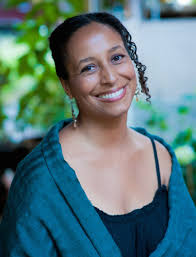
lamerisI was so lucky to read with Danusha Laméris at the Poetry World Series last May. This is from her book, The Moons of August. If you don’t know who Temple Grandin is, her book is worth reading, too.

Interview

for Temple Grandin

She said it was because she could think like a cow.
That maybe the autism helped her understand
how to design the curved corrals
so they’d flow more easily through the gates.

The harness that held the dairy cow waiting to be milked
made sense to her. She wanted to be inside it, to feel the world
pressing away, something not a human touch. Continue reading “Danusha Laméris” →

Chana Bloch

chana-imageYesterday I heard Chana read recent poems, most about her diagnosis of terminal cancer. She was incandescent and spoke of how a fatal disease can also be a gift, focusing the mind, the spirit, on what’s important. She mentioned that her first book started with a group of poems about her father’s death, and the irony that her career is completing itself with this new work, on contemplating her own death. I don’t have any of the new poems, “still a work in progress,” Chana says, but here is one about her father:


Marriage

Theirs was the one with the noisy bedsprings.
How does a child solve a riddle like that?
Scritchity-screech
—are they fighting again?

Theirs was a marriage of drums and cymbals,
a clashing-and-carping, nagging-and-clamoring
performed day in, day out.                      Continue reading “Chana Bloch” →

A book from Larry

TsvetaevaI received a mysterious email from Larry (who is in New York), telling me he had bought and sent me a book from the Strand . It arrived today–a lovely copy of poems by Marina Tsvetaeva, a Russian poet from the early 20th century. Like her compatriots, her life was tragic–you can look it up if you like. Still, her lyrics still soar: Continue reading “A book from Larry” →

The Blue Buick

fairchildI’ve just renewed The Blue Buick from U C Library for the third time, which means I’ve had it almost three months now. Guess I need to buy a copy.

These mostly long poems of a man who grew up in Kansas, son of a machine shop owner, are unique. They have a specificity and a narrative beauty that pins me in place. Here is one of the shorter ones, to give you a hint of what they’re like:

Hearing Parker the First Time

The blue notes spiraling up from the transistor radio
tuned to WNOE, New Orleans, lifted me out of bed
in Seward County, Kansas, where the plains wind riffed
telephone wires in tones less strange than the bird songs

of Charlie Parker. I played high school tenor sax the way,
I thought, Coleman Hawkins and Lester Young might have
if they were, like me, untalented and white, but “Ornithology”
came winding up from the dark delta of blues and Dixieland Continue reading “The Blue Buick” →

What you can do with a poem

I somehow encountered a time warp this week, and Monday is long past. Even Tuesday, and here it is Wednesday, and despite being fully “retired” I have not had the moment to sit down and put up a poem for Monday.  Time simply telescoped and disappeared.

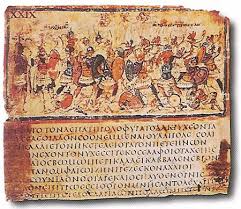
iliadBut I have been reading a rather wonderful recreation of An Iliad by Alessandro Baricco, translated by the incomparable Anna Goldstein. Baricco had the idea of reading the entire Iliad in public, as it was done in the Homeric world. He adapted the poem for public reading, editing “to suit the patience of a modern audience.” His notes on this process are a poem in themselves, and the result was performed in fall 2004. He comments:

“For the record I’d like to say that more than ten thousand (paying) people were present at the two readings, and that Italian radio broadcast the Rome performance live, to the great satisfaction of drivers on the road and people at home. Numerous cases were confirmed of people who sat in their parked cars for hours, unwilling to turn off the radio. All right, perhaps they were sick of their families, but, anyway, this is just to say that it went very well.”

Here’s the opening, titled Chryseis: Continue reading “What you can do with a poem” →

George Oppen

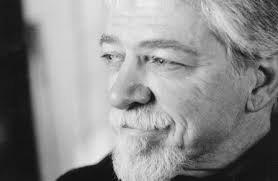
oppenGeorge Oppen is a poet who seems to have faded from view. But his sensibility is intriguing.  His focus was on simplicity–using language to point to the experience as opposed to itself. Here’s a snippet:

Pedestrian

What generations could have dreamed
This grandchild of shopping streets, her eyes

In the buyer’s light, the store lights
Brighter than the lighthouses, brighter than moonrise

From the salt harbor so rich
So bright her city

In a soil of pavement, a mesh of wires where she walks
In the new winter among enormous buildings.

George Oppen

Molly Peacock

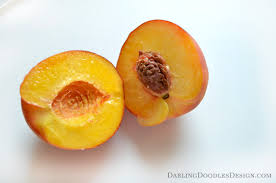
I had a chance to look at a book of poems by Molly Peacock in a friend’s library. This one reminded me of a moment when i saw my parents sharing an apricot, by far my tenderest and most intimate memory of them:

peachCouple Sharing a Peach

It’s not the first time
we’ve bitten into a peach.
But now at the same time
it splits–half for each.
Our “then” is inside its “now,”
its halved pit unfleshed–

what was refreshed.
Two happinesses unfold
from one joy, folioed.
In a hotel room
our moment lies
with its ode inside,
a red tinge,
with a hinge.

Molly Peacock

Continue reading “Molly Peacock” →