Coral Bracho

Coral Bracho 7It’s not quite Monday, but I’ve been reading Forrest Gander’s splendid translations of Coral Bracho, a Mexican poet. The book is worth reading just for the introduction, but the poems are, well, rapturous might be the adjective I’m looking for.  Here’s a short sample, in Spanish and English:

En la entraña del tiempo

El tiempo cede
y entreabre
su delicada profundidad. (puertas
que unas a otras se protegen; que unas en otras entran;
huellashuellas,
rastro de mar.) Un otoño
de leños y hojarascas. En su fondo: Continue reading “Coral Bracho” →

The energy of the slam

Come       Come where the booze is cheaper,
Come       Come where the pots hold more,
Come       Come where the boss is a bit of a sport,
Come       Come to the pub next door!

George Orwell, that master of the essay, has a lovely piece on writing called “Good Bad Books.” Of course, you can read all his essays online now (although they are rife with typos, even more than my notes here!), including this one. In it, he notes that some authors who write commercially, without  intellectual pretensions, remain readable long after their higher-toned colleagues are forgotten. He comments: “In each of these books the author has been able to identify himself with his imagined characters, to feel with them and invite sympathy on their behalf…In novelists, almost as much as in poets, the connection between intelligence and creative power is hard to establish. A good novelist may be a prodigy of self-discipline like Flaubert, or he may be an intellectual sprawl like Dickens. Enough talent to set up dozens of ordinary writers has been poured into Wyndham Lewis’s so-called novels, such as Tarr or Snooty Baronet. Yet it would be a very heavy labour to read one of these books right through. Some indefinable quality, a sort of literary vitamin, which exists even in a book like If Winter Comes, is absent from them.”

starry-plough-berkeley-ca-usa-nightlife-live-entertainment-live-entertainment-live-music-1529393_28_550x370_20111025224705_optI was reminded of and searched out the essay because I recently went to my first poetry slam, at the Starry Plough in Berkeley. The raw energy of the poets was invigorating and made the evening better than many a literary night of droning poets searching their soul for meaning.  Lots of that indefinable literary vitamin. I was reminded of this sentence from Orwell’s essay:

There are music-hall songs which are better poems than three-quarters of the stuff 
that gets into the anthologies.

Here, here! Next time I go, I may perform.


Poetry Monday–from the files

parakeetI found this poem, cut out from the New Yorker, no idea when…

HARM

First, you took the parakeet out of its cage,
Its body warm and folded, a blue-green kite
With a surprised heart. Then you scoured the metal,
The door a loose pocket of bars on two wire hinges,
The clawed perches, the swing and its endless dialogue
With the invisible. Slowly, you removed the racks
From the dishwasher and placed the cage in it.
We laughed at your ingenuity, at the way
It expressed your secret ambition to be
The one least mauled by the predictable.
And I think I knew then that I would carry on this hope
Of yours. There is such harm in love.
But let it be the green-and-blue acrobat it is,
A tropical danger in the midst of my body,
The body that you built for me.
Let it be the cage you cared for from which
Birdsong was pulled into the cool and odorless air.

Vickie Karp

More on Diana Moon Glampers, a short rant

I’ve written before about Kurt Vonnegut’s satirical short story, “Harrison Bergeron,” and its Handicapper General, Diana Moon Glampers. She’s the one who makes sure no one stands out as better than anyone else by assigning the appropriate handicap. This doesn’t seem so much like satire in the current environment of political correctness.

imagesI just came across a reaction by Zoë Heller to the proposition posited by Lee Siegel for The New Yorker and Isaac Fitzgerald at BuzzFeed that reviewers should only publish positive book reviews. Siegel and Fitzgerald feel we shouldn’t say anything negative about the poor authors who have worked so hard. Heller makes the case that banning “negativity” is bad for the culture and unfair to authors. I couldn’t agree more. In fact I more than agree. Continue reading “More on Diana Moon Glampers, a short rant” →

Poetry Monday

Even though it’s a holiday, it’s still Monday. Larry doesn’t like holidays now that he’s retired. There’s no mail. Things are closed. Too many people everywhere. They should be at work, he thinks.

Another very plain speaking person is James Galvin. This is one of my favorite poems of his:

galvinAgainst the Rest of the Year

The meadow’s a dream I’m working to wake to.
The real river flows under the river.
The real river flows
Over the river.
Three fishermen in yellow slickers
Stitch in and out of the willows
And sometimes stand for a long time, facing the water
Thinking they are not moving.

Thoughts akimbo
Or watching the West slip through our hopes for it,
We’re here with hay down,
Starting the baler, and a thunderhead
Stands forward to the east like a grail of milk.

The sky is cut out for accepting prayers.
Believe me, it takes them all.
Like empty barrels afloat in the trough of a swell
The stupid bales wait in the field.
The wind scatters a handful of yellow leaves
With the same sowing motion it uses for snow.

After this we won’t be haying anymore.
Lyle is going to concentrate on dying for a while
And then he is going to die.
The tall native grasses will come ripe for cutting
And go uncut, go yellow and buckle under snow
As they did before for thousands of years.
Of objects, the stove will be the coldest in the house.
The kitchen table will be there with its chairs,
Sugar bowl, and half-read library book.
The air will be still from no one breathing.

The green of the meadow, the green willows,
The green pines, the green roof, the water
Clear as air where it unfurls over the beaver dam
Like it isn’t moving.

In the huge secrecy of the leaning barn
We pile the bodies of millions of grasses,
Where it’s dark as a church
And the air is the haydust that was a hundred years.
The tin roof’s a marimba band and the afternoon goes dark.
Hay hooks clink into a bucket and nest.
Someone lifts his boot to the running board and rests.
Someone lights a cigarette.
Someone dangles his legs off the back of the flatbed
And holds, between his knees, his hands,
As if they weighed fifty pounds.
Forever comes to mind, and peaks where the snow stays.

James Galvin

The problem of publication

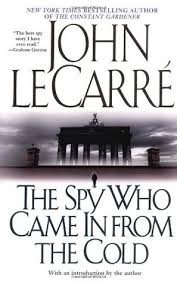
imagesIn the introduction to The Spy Who Came in From the Cold, le Carré writes about how the publication of this book changed his life:

“I had written literally in secret…and free of serious critical attention. Once this book hit the stands, my time of quiet and gradual development was over for good, however much I tried to re-create it…For years to come there would be no such thing, for the publishing industry, as a ‘small’ le Carré book–a distortion both longed for and abhorred by any artist worth his salt.”

Continue reading “The problem of publication” →

Contest Winner

I subscribe to and occasionally submit poems to Split This Rock.  This one received an honorable mention in their annual contest:

Sandor_optMárai Sándor in Exile

Deprived of your native language,
of pörkölt cooked in cramped kitchens,
of the scent of elder flowers in early June,
you don’t meet people you know on the street, or stop
in familiar shops that sell just what you need.
You don’t sit with friends
at the café with a newspaper filled
with gossip about people you know.

After your home was destroyed,
you said language was your true home.
But so few speak the Magyar tongue.
Even your name sounds unfamiliar here.
Who will read your forty-six books?
your scrupulous observations of
the German soldiers who set up radios
in your parlor? the Russians
who used it for their motorpool?
You saved your hatred for
your countrymen, newly minted
Soviets, returned from Moscow.
Their lethal mix of terror
and preferment snuffed
what little there was left of Hungary
and drove you out.

It’s lonely in the sun
of San Diego. Your bones crave cold light,
need winter in Krisztinaváros
before the siege,
the irreplaceable stones of Castle Hill.
Your mouth is parched
for the barbed sweetness of accented vowels,
the braided bread of consonants,
the bullets
of your spoken tongue.

Meryl Natchez

This is actually an earlier version of a poem I’ve since revised into a sonnet.  More about that, and about contests, submission, acceptance and rejection later.

Luckily for me

and my resolution to be more timely with Poetry Monday, a wonderful chapbook, “Little Oceans” by Tony Hoagland, arrived in the mail today.  I’ve posted his poems before, and some of these I’d read before, but I was so glad to spend a little time with his work, and his particular view of America that is piercing, unsparing, and doesn’t let any of us (including himself) off the hook.  Here’s a sample.

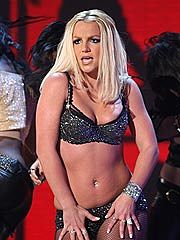
spearsPOOR BRITNEY SPEARS

is not the beginning of a sentence
you hear often uttered in my household.
 
If she wants to make a career comeback
and her agent pushes her into the MTV awards show
but she can’t lose the weight beforehand

and so looks chubby in a spangled bikini
before millions of fanged, spiteful fans and enemies,
then gets a little drunk beforehand
so misses a step in the dance routine

making her look, one critic says,
like a “comatose piglet,”

well, it wasn’t by accident, was it?
that she wandered into that late 20th century glitterati party
of striptease American celebrity? Continue reading “Luckily for me” →

Monday miscellany

Thanks to MLK, who has given the working world a much-needed day of respite after everyone goes back to work after the holidays.  I hope, like me, you are taking the day slowly, in robe and slippers. Of course, as Larry says about retirement, “It’s great not to be able to tell the difference between regular days and holidays.”

nashI was reminded, via a poem about a martini sent by a friend, of Ogden Nash. I can remember reading his “light verse” in the New Yorker when I was 10 or 12, thinking it was brilliant. He’s pretty much forgotten now, but if you think of him in context, only one generation older than Pound and Eliot, and remember the straight jacket most poets were struggling to get out of, the weight of his lightness is more impressive.  Here are two short samples:

A Word to Husbands

To keep your marriage brimming
With love in the loving cup,
Whenever you’re wrong, admit it;
Whenever you’re right, shut up.  Continue reading “Monday miscellany” →

Mueller on Monday

My New Year’s resolution this year is to read the Constitution. Both lawyers I know who have taken Constitutional Law in law school, confess to not having read it all. They’ve focused on the case law around the document, and read parts of it.  I mention this because I’d also like to be a little more timely with poetry Monday–not a resolution, but an intention.

MuellerI don’t know much about Lisel Mueller other than that her family left Nazi Germany when she was 15, but I wandered into the main Berkeley library the other day and looking for a selection of Marianne Moore (which was not on the shelf) and took out a selection of her poems instead. I found them engaging and accessible.  She will be 90 this year!

Here are a couple of short selections: Continue reading “Mueller on Monday” →

Starting the new year with a poem

This one is by Octavio Paz, a Mexican poet:

January First

pazThe year’s doors open
like those of language,
toward the unknown.
Last night you told me:
tomorrow
we shall have to think up signs,
sketch a landscape, fabricate a plan
on the double page of day and paper.
Tomorrow, we shall have to invent,
once more,
the reality of this world.

I opened my eyes late.
For a second of a second
I felt what the Aztec felt,
on the crest of the promontory,
lying in wait
for time’s uncertain return Continue reading “Starting the new year with a poem” →