The Watergate

If you lived through the Nixon administration, this poem has a deep resonance. It might even work if you didn’t:

The Watergate

For most in the United States the word brings a phase
when mortars in Vietnam still whistled around them
and the scandal of Nixon and his Machiavellian buds
poured from the news into their subconscious—I see
that Watergate too: the televised hearings, and in particular
one session—Sam Ervin had just asked Ehrlichman
or Dean or Haldeman, a long-winded, periphrastic,
left-branching question—it must have lasted
forty seconds and seemed three days before he paused
for effect, and Ehrlichman or Dean or Haldeman
answered: “Senator, could you please repeat the question?”
And he did, verbatim! And that is one Watergate.

But I think also of the morning my father sent me to the creek
that ran through our pasture to remove a dead calf
a flood had floated north to lodge against our water gate—
a little Guernsey heifer—I had petted her often—
Now flies buzzed around her, bloated and entangled
in the mesh—and I remember her eyes were open,
so she seemed to watch as I pulled first one leg
then another from the vines and wire that trapped her,
and pulled her to the bank through the shallow water.

Because the second water gate, which features the tender
relationship between a dead calf and a little boy,
happened twenty years before the first, in which men
break into an office complex in a hotel, I prefer its
posts and hog wire that kept cows from a neighbor’s field
to the gray rows of filing cabinets that brought down a presidency.
The water pours out of the mountain and runs to the sea.
Sometimes I say it to myself, until the meanings leave.
I say Watergate until it is water pouring through water.

Rodney Jones

Back in commission

It’s funny that we say “out of commission,” but rarely the opposite. In my case, I just had hip replacement surgery, and had a lot of worrying to do beforehand. I mean a LOT. But it turned out to be so much less invasive than I imagined. I was up and walking within hours, and went home the next morning. In any case, I am back, and here is your belated poem selection for the week:

Learning How to Write the Beginning

I’d want it to be early autumn,
a day like today, still green,
but gold around the edges,

our old yellow lab lying at your feet,
a Red Stripe beer
on the redwood table.

The sky would be as soft and faded
as that shirt you used to wear,
and it would be quiet, not even birdsong,

nothing to betray
what led up to the middle
or happened in the end.

by Judith Waller Carroll

Frogs on Monday

I attended a poetry workshop on Saturday, and my favorite poem of the day was by Terry Lucas, the new Marin County poet laureate. I said in the workshop that I had recently read that by writing about a bad experience one was able to shift one’s relationship to it to that of witness. I think this poem does that perfectly.

Dear Frogs of Pinckneyville, Illinois

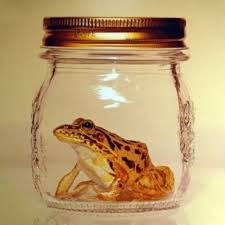
Forgive me for all the times I forced you
into Welch’s Grape Jelly jars filled with cotton balls
soaked with ether from my father’s starter fluid can

he sprayed into dead diesel engines 
on frozen December mornings. I am truly sorry
for not throwing you higher. Please know that I wanted to

put you into orbit like Belka and Strelka, the first
warm-blooded animals to trick gravity and return
alive, but my nine-year old arm wasn’t strong enough

Continue reading “Frogs on Monday”

Memorial


The Marin Poetry Center held a memorial for Linda Gregg last week that was very moving. Forrest Gander spoke of visiting her in New York in her small, very spare apartment near St. Marks Place. She had just gotten home after a chemo treatment, and had no one, as he said, to make her a bowl of soup or a cup of tea. But she was uncomplaining.

It made me think of this poem of hers:

Staying After

I grew up with horses and poems
when that was the time for that.
Then Ginsberg and Orlovsky
in the Fillmore West when
everybody was dancing. I sat
in the balcony with my legs
pushed through the railing,
watching Janis Joplin sing.

Continue reading “Memorial”

Correction!

Here is last week’s poem as it’s supposed to be:

Trespassing

Teens, the street, night nothing to do so they split
off in two’s, find an ark  like Noah’s, unfinished.

A wooden-frame, all two-by-fours and exposed pipe
dreams, she won’t go in but he takes her hand.

They wander, imagine walls, windows, become temporary
residents in a sketch of someone’s future disappointment.

A playhouse, rehearsal, with him as Man, her as
wife mother daughter, every living thing of all flesh.

Then on the plywood floor, it’s just a boy pounding a way
and a girl, her quiet cries turning stars into doves inside.

Lisa Mecham

From the NY Times Sunday Magazine last year

A friend sent me a copy of this poem by Nathan McClain, and I am just now getting around to posting it.

He has some other interesting love elegies on his publications page, cited above.

Love Elegy with Busboy

The whole mess —
pair of chopsticks pulled apart,
tarnished pot of tea,
even my fortune
(which was no good) —
we left for the busboy to clear.
I’d probably feel more
guilty if he didn’t
so beautifully sweep our soiled plates
into his plastic black tub
and the strewn rice into his palm.
The salt and pepper shakers
were set next to each other again.
A new candle was lit.
You’d never know
how reckless we’d been,
how much we’d ruined.
With the table now so spotless,
who’s to say we couldn’t just go
back? Who says we can’t start over,
if we want?

Nathan McClain

What we think we know

I have read this poem by Heather McHugh several times in several places, but most recently as part of an essay in Sewanee Review.

She says this about it: “I’ve read this poem now a hundred times to audiences…but I revisit it to relive it, to remind my own tenacious habits how a nourishment abides inside its stubbornest unknowns, inside another person’s mind.”

What He Thought

for Fabbio Doplicher

We were supposed to do a job in Italy
and, full of our feeling for
ourselves (our sense of being
Poets from America) we went
from Rome to Fano, met
the mayor, mulled
a couple matters over (what’s
a cheap date, they asked us; what’s
flat drink). Among Italian literati

we could recognize our counterparts:
the academic, the apologist,
the arrogant, the amorous,
the brazen and the glib—and there was one

administrator (the conservative), in suit
of regulation gray, who like a good tour guide
with measured pace and uninflected tone narrated
sights and histories the hired van hauled us past.
Of all, he was the most politic and least poetic,
so it seemed. Our last few days in Rome
(when all but three of the New World Bards had flown)
I found a book of poems this
unprepossessing one had written: it was there
in the pensione room (a room he’d recommended)
where it must have been abandoned by
the German visitor (was there a bus of them?)
to whom he had inscribed and dated it a month before.
I couldn’t read Italian, either, so I put the book
back into the wardrobe’s dark. We last Americans

were due to leave tomorrow. For our parting evening then
our host chose something in a family restaurant, and there
we sat and chatted, sat and chewed,
till, sensible it was our last
big chance to be poetic, make
our mark, one of us asked
                                             “What’s poetry?”
Is it the fruits and vegetables and
marketplace of Campo dei Fiori, or
the statue there?” Because I was

the glib one, I identified the answer
instantly, I didn’t have to think—”The truth
is both, it’s both,” I blurted out. But that
was easy. That was easiest to say. What followed
taught me something about difficulty,
for our underestimated host spoke out,
all of a sudden, with a rising passion, and he said:

Continue reading “What we think we know”

Elegies

I have been working on arranging a memorial at Marin Poetry Center for Linda Gregg, and also received word that my old friend died this week. So elegies are on my mind. Here is a beauty by Rachel Eliza Griffiths.

Elegy, Surrounded by Seven Trees

              for Michele Antoinette Pray-Griffiths


Ordinary days deliver joy easily
again & I can’t take it. If I could tell you
how her eyes laughed or describe
the rage of her suffering, I must
admit that lately my memories
are sometimes like a color
warping in my blue mind.
Metal abandoned in rain.

My mother will not move.

Which is to say that
sometimes the true color of
her casket jumps from my head
like something burnt down
in the genesis of a struck flame.
Which is to say that I miss
the mind I had when I had
my mother. I own what is yet.
Which means I am already
holding my own absence
in faith. I still carry a faded slip of paper
where she once wrote a word
with a pencil & crossed it out.

From tree to tree, around her grave
I have walked, & turned back
if only to remind myself
that there are some kinds of
peace, which will not be
moved. How awful to have such
wonder. The final way wonder itself
opened beneath my mother’s face
at the last moment. As if she was
a small girl kneeling in a puddle
& looking at her face for the first time,
her fingers gripping the loud,
wet rim of the universe.

Back on track

It was a crazy week, including travel to the writers conference in Portland, so I missed the Monday vitamin for all of you. But here you go with a lovely poem by Julie Bruck.

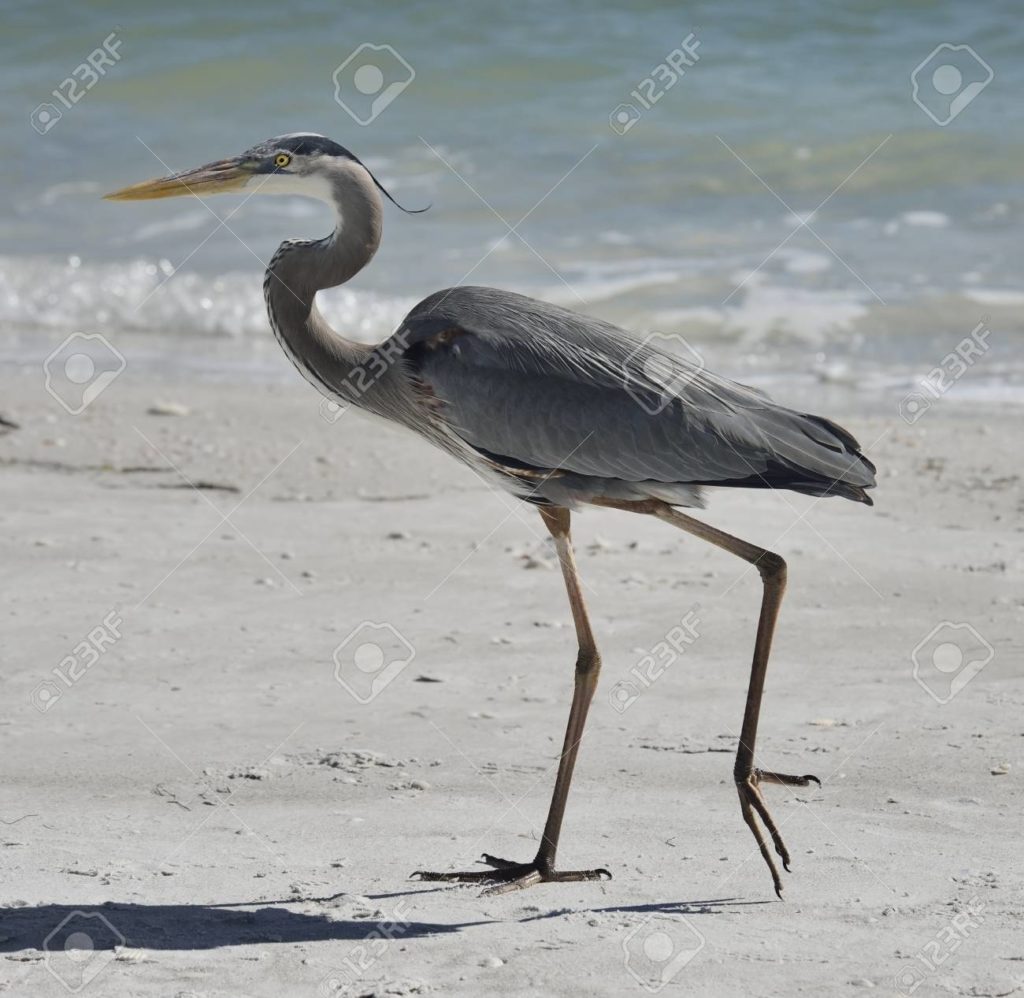
Blue Heron Walking

Not one of Mr. Balanchine’s soloists had feet this articulate,
the long bones explicitly spread, then retracted, even more
finely detailed than Leonardo’s plans for his flying machines.
And all this for a stroll, a secondary function, not the great
dramatic spread and shadow of those pterodactyl wings.
This walking seems determined less by bird volition or
calculations of the small yellow eye than by an accident
of breeze, pushing the bird on a diagonal, the great feet executing
their tendus and lifts in the slowest of increments, hesitation
made exquisitely dimensional, as if the feet thought themselves
through each minute contribution to propulsion, these outsized
apprehenders of grasses and stone, snatchers of mouse and vole,
these mindless magnificents that any time now will trail
their risen bird like useless bits of leather. Don’t show me
your soul, Balanchine used to say, I want to see your foot.

Julie Bruck