Two deaths

Two amazing poets died this week, W. S. Merwin and Linda Gregg. I have posted several of Merwin’s poems before. Somehow though, I never have posted a poem by Linda Gregg. Here’s a sample:

Death Looks Down

Death looks down on the salmon
A male and female in two pools
one above the other
The female turns back along the path of water to the male 
does not touch him and returns to the place she had been 
I know what Death will do
Their bodies already sour and ragged
Blood has risen to the surface under the scales
One side of his jaw is unhinged 
Death will pick them up 
Put them away under his coat against his skin 
and belt them there
He will walk away up to the path through the bay trees
Through the dry grass of California to where the mountain begins
Where a few deer almost the color of the hills will look up until he is under the trees again 
Where the road ends and there is a gate
He will climb over that with his treasure 
It will be dark by then
But for now, he does nothing 
He does not disturb the silence at all
Nor the occasional sound of leaves
of ferns touching 
of grass or stream
For now he looks down at the salmon 
Large and whole 
Motionless days and nights in the cold water Lying still 
Always facing the constant motion

Linda Gregg

Continue reading “Two deaths”


Lynn Emanuel

This wonderful poet is coming to read here next week. I have posted one of her poems before, but thought I’d post another, from her book “The Dig.” This poem, as many in the book describe a childhood at the edge, with unreliable caretakers. The description of “wringing of every cent from every dollar,” resonated with me, and I love the details of the description.

The Red Kimono

I stare at the brass scarred by beating until
it is as bright and uneven as a lake in August when the sun
melts all reflections into one wide gold zero, when the sky
itself is wide, is hot as the bell that this schoolmaster,
inappropriately strict, tips to summon the children from the unrelenting
heat of noon. The long tape unrolls from the teeth of the adding
machine onto the scarred deal. Over and over the budget unreels
and spills, liberated from the sprockets and machinery of will.
My mother sits with a pencil and ticks her teeth, we are broke,
every avenue of escape is closed, even the car tires at the curb
are fat black zeros, all the scheming and coaxing, the wringing
of every cent from every dollar, has come to nothing. I watch
my mother swab up the dust, her hair tied in a rag, her naked
feet, nails bloodied by a tiny brush. Misery, misery, the cranes
of good luck hunch at the snowy mountain of her left breast
as she bends to set the empties on the step in the housecoat
the landlady lent.

Lynn Emanuel, from The Dig

Monday poem

Ted Kooser was US Poet Laureate in 2004. His poems often deal with the farming communities of the midwest, like this one, which does a great job of capturing a moment and a perspective.

Flying at Night

Above us, stars. Beneath us, constellations.
Five billion miles away, a galaxy dies
like a snowflake falling on water. Below us,
some farmer, feeling the chill of that distant death,
snaps on his yard light, drawing his sheds and barn
back into the little system of his care.
All night, the cities, like shimmering novas,
tug with bright streets at lonely lights like his.

Ted Kooser

Fast Gas

Dorianne Laux just came out with a new book that I’m reading. Here’s a poem I really enjoyed

Fast GasX

  for Richard

Before the days of self service,
when you never had to pump your own gas,
I was the one who did it for you, the girl
who stepped out at the sound of a bell
with a blue rag in my hand, my hair pulled back
in a straight, unlovely ponytail.
This was before automatic shut-offs
and vapor seals, and once, while filling a tank,
I hit a bubble of trapped air and the gas
backed up, came arcing out of the hole
in a bright gold wave and soaked me — face, breasts,
belly and legs. And I had to hurry
back to the booth, the small employee bathroom
with the broken lock, to change my uniform,
peel the gas-soaked cloth from my skin
and wash myself in the sink.
Light-headed, scrubbed raw, I felt
pure and amazed — the way the amber gas
glazed my flesh, the searing,
subterranean pain of it, how my skin
shimmered and ached, glowed
like rainbowed oil on the pavement.
I was twenty. In a few weeks I would fall,
for the first time, in love, that man waiting
patiently in my future like a red leaf
on the sidewalk, the kind of beauty
that asks to be noticed. How was I to know
it would begin this way: every cell of my body
burning with a dangerous beauty, the air around me
a nimbus of light that would carry me
through the days, how when he found me,
weeks later, he would find me like that,
an ordinary woman who could rise
in flame, all he would have to do
is come close and touch me.

Dorianne Laux

Monday poem

This is from an anthology I received as a Christmas gift, American Journal: Fifty Poems for Our Time. This is my favorite so far from it:

Mercy

Like two wrestlers etched
around some ancient urn

we’d lace our hands,
then wrench

each other’s wrists back
until the muscles ached

and the tendons burned,
and one brother

or the other grunted Mercy —
a game we played

so many times
I finally taught my sons,

not knowing what it was,
until too late, I’d done:

when the oldest rose
like my brother’s ghost,

grappling the little
ghost I was at ten —

who cried out Mercy!
in my own voice Mercy!

as I watched from deep
inside my father’s skin.

Patrick Phillips

Mary Oliver 1935-2019

Thanks to Gina for sending me this:

Marengo

Out of the sump rise the marigolds.
From the rim of the marsh, muslin with mosquitoes,
rises the egret, in his cloud-cloth.
Through the soft rain, like mist, and mica,
the withered acres of moss begin again.

When I have to die, I would like to die
on a day of rain–
long rain, slow rain, the kind you think will never end.

And I would like to have whatever little ceremony there might be
take place while the rain is shoveled and shoveled out of the sky,

and anyone who comes must travel, slowly and with thought,
as around the edges of the great swamp.

Mary Oliver

Rainy Day Poem

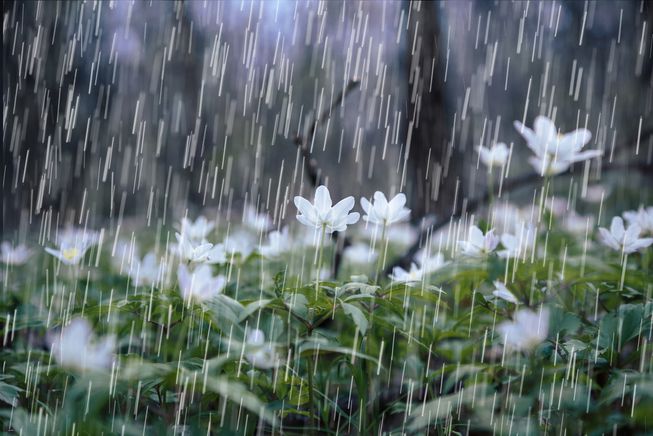
Rain in Northern California, where we always seem to be needing it, can be as delicious as this poem, which sounds contemporary though written a century ago.

Summer Rain

All night our room was outer-walled with rain.
Drops fell and flattened on the tin roof,
And rang like little disks of metal.
Ping!—Ping!—and there was not a pin-point of silence between
    them.
The rain rattled and clashed,
And the slats of the shutters danced and glittered.
But to me the darkness was red-gold and crocus-colored
With your brightness,
And the words you whispered to me
Sprang up and flamed—orange torches against the rain.
Torches against the wall of cool, silver rain!

Amy Lowell

Brief history lesson

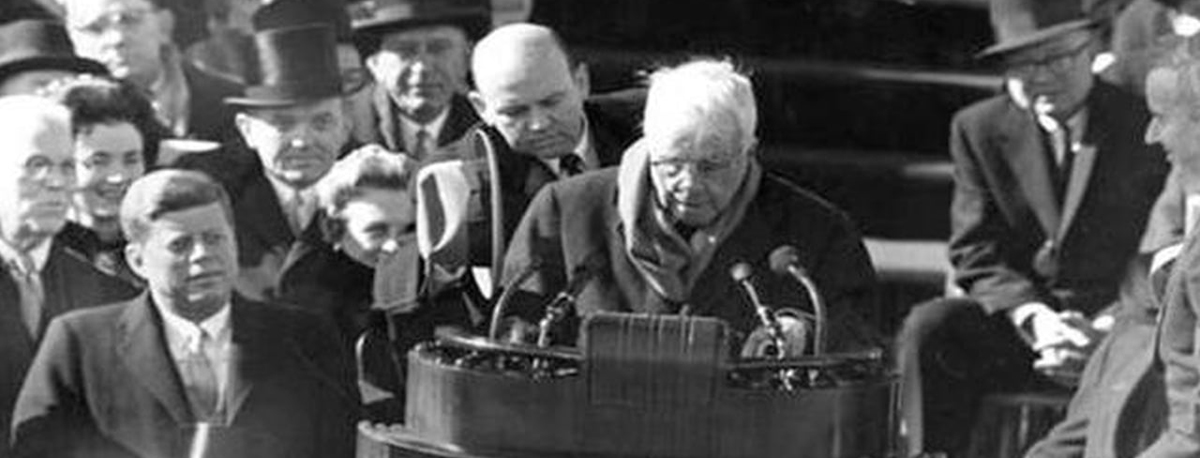
I remember Frost’s fumbling at Kennedy’s inauguration–an old man then, and the first poet to be asked to read at such an event–such a different time. When asked to recite a poem, this was Frost’s response:

“If you can bear at your age the honor of being made president of the United States, I ought to be able at my age to bear the honor of taking some part in your inauguration. I may not be equal to it but I can accept it for my cause — the arts, poetry — now for the first time taken into the affairs of statesmen. … I am glad the invitation pleases your family. It will please my family to the fourth generation and my family of friends and, were they living, it would have pleased inordinately the kind of Grover Cleveland Democrats I had for parents.” Continue reading “Brief history lesson”