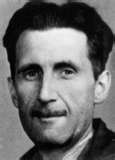
Most of us read 1984 or Animal Farm in high school. But I think it’s in his essays that Orwell is without peer. They’ve just published his diaries, seventy-odd years after his death. Based on the reviews they seem mostly to track his domestic, gardening and husbandry concerns. I was excited to read that he had 10 Moroccan hens, and carefully tracked their egg production.
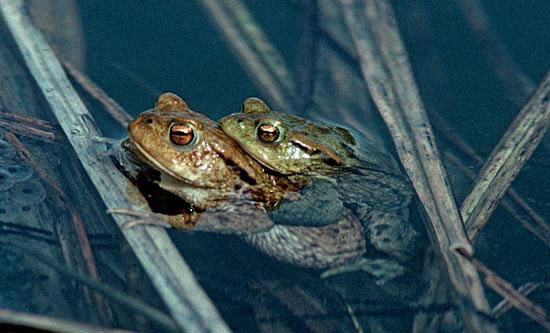 Years ago I bought the four volume set of Orwell’s essays. Volume four is my favorite. It contains essays like “Revenge is Sour,” “Such, Such Were the Joys,” and “How the Poor Die,” along with his “As I Please” columns which ran regularly. My favorite of his essays, though, is “Some Thoughts on the Common Toad.” You can read it and his other essays online. In this one, he talks about toads mating in spring, and about spring in general and its democratic pleasures: “Even in the most sordid street the coming of spring will register itself by some sign or other, if it is only a brighter blue between the chimney pots or the vivid green of an elder sprouting on a blitzed site. Indeed it is remarkable how Nature goes on existing unofficially, as it were, in the very heart of London.”
 He notes that any reference to spring in an article invariably brings abusive letters, and asks: “Is it wicked to take a pleasure in spring and other seasonal changes? To put it more precisely, is it politically reprehensible, while we are all groaning, or at any rate ought to be groaning, under the shackles of the capitalist system, to point out that life is frequently more worth living because of a blackbird’s song, a yellow elm tree in October, or some other natural phenomenon which does not cost money and does not have what the editors of left-wing newspapers call a class angle?”
It’s worth reading the essay for its perfect arc and many exemplary sentences. Another essay, “Marrakech,” starts like this: “As the corpse went past, the flies left the restaurant table in a cloud and rushed after it, but they came back a few minutes later.” How’s that for an exemplary sentence?
If you want more, I highly recommend Volume IV of The Collected Essays, Journalism and Letters of George Orwell. I can’t imagine his personal diaries come close to their wit. Or simply look here if you’re willing to put up with typos.