Eyesight

ammonsDriving up I-5 from LA yesterday, spring had come to California. The hills are briefly green and gold, and the orchards all in bloom. I thought of this poem by A. R. Ammons, and was surprised to find I haven’t posted any of his work.  Here’s a poem to remedy that:

Eyesight

It was May before my
attention came
to spring and

my word I said
to the southern slopes
I’ve

missed it, it
came and went before
I got right to see: Continue reading “Eyesight” →
Sharon Olds on Monday

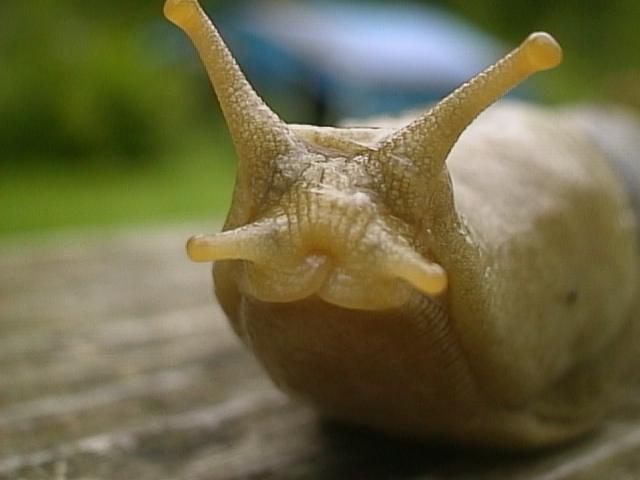
slug6I had forgotten this wonderful poem by Sharon Olds. Then I saw, after the rain last week, one of these big banana slugs in the garden and went to look for it. It didn’t disappoint me:

The Connoisseuse of Slugs

When I was a connoisseuse of slugs
I would part the ivy leaves, and look for the
naked jelly of those gold bodies,
translucent strangers glistening along the
stones, slowly, their gelatinous bodies
at my mercy. Made mostly of water, they would shrivel
to nothing if they were sprinkled with salt,
but I was not interested in that. What I liked Continue reading “Sharon Olds on Monday” →

The exemplary sentence

zagajewskiI picked up a book of essays by Adam Zagajewski, called In Defense of Ardor, an elegant title. The title essay discusses the role of irony in modern writing, and makes a case for less of it, more engagement. It’s worth reading in it’s entirety if that subject interests you.  But the quote today is from the essay “The Shabby and the Sublime,” about the act of writing.

“Maybe we’re not altogether alone in our empty room in our workshop: if so many writers love solitude it may be because they’re not really all that lonely. There really is a higher voice that sometimes–too rarely–speaks. We catch it only in the moments of our greatest concentration. This voice may only speak once, it may make itself heard only after long years of waiting: still, it changes everything… Continue reading “The exemplary sentence” →

Contemporary poetry

a-e-stallingsI went to a poetry reading at the incomparable University Press Books bookstore (support it!) this weekend, and the subject of accessibility came up. One reader, Rebecca Foust, mentioned that her mother, who never went further than high school, memorized and loved Robert Frost’s poems. Though his poems, to a poet, are layered and complex, Rebecca said her mother went to them for simple comfort.

This is very hard to achieve today, when we have largely shed form, and the adjective “accessible” often denigrates a poem. But here’s a great example of a layered, accessible contemporary poem by A.E. Stallings that includes rhyme, poetic and prosaic allusions, and humor:

Pop Music

Musicfor a new parent

The music that your son will listen to
To drive you mad
Has yet to be invented. Be assured
However, it is approaching from afar
Like the light of some Chaldean star. Continue reading “Contemporary poetry” →

Here’s that rainy day

Finally! This song has been happily playing in my head, sung by my favorite jazz singer, Molly Holm. You can’t hear a recording of her doing it, but you can hear Rosemary Clooney sing it.

tumblr_lckuc65Fei1qbyf2jo1_1280Meanwhile, we’re in Calistoga, where we spent the night, about to take a mud bath. Ever done it? It’s a unique experience, sort of like floating in warm chocolate pudding, and a delicious rainy day experience.

I’ve been reading Keats’ selected letters, and have a few gems for you:

“An extensive knowledge is needful to thinking people–it takes away the heat and fever, and helps, by widening speculation, to ease the Burden of the Mystery…

…axioms in philosophy are not axioms until proved upon our pulses. We read fine things but never feel them to the full until we have gone the same steps as the Author.”

These excerpts from a letter almost 200 years old seem more vibrant to me today as any contemporary tweet!

If you want to try some poetry by Keats, I recommend “To Autumn,” “Ode to a Grecian Urn,” and “La belle dame sans merci,” for starters.

Knucklebones

Here’s an odd little poem I came across:

Astragaloi

We know there must be consciousness in things,

In bits of gravel pecked up by a hen

To grind inside her crop, and spider silk

Just as it hardens stickily in air,

And even those things paralyzed in place,

The wall brick, the hat peg, the steel beam

Inside the skyscraper, and lost, forgotten,

And buried in ancient tombs, the toys and games,

Those starry jacks, those knucklebones of glass

Meant for the dead to play with, toss and catch

Back of the hand and read the patterns of,

Diversions to beguile the endless time,

Never to be picked up again…They’re thinking,

Surely, all of them. They are lost in thought.


Mark Jarman, from To The Green Man, Saraband Books

Poet, too

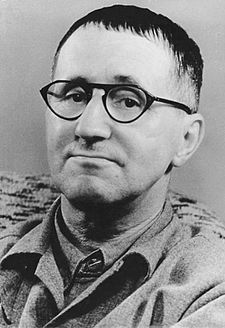
225px-Bertolt-BrechtI think of Bertolt Brecht as a playwright, mostly his collaboration with Kurt Weill and the often performed Threepenny Opera. But he was also a poet, and this poem of his made me laugh as well as think:

The Buddha’s Parable of the Burning House

Gautama the Buddha taught
The doctrine of greed’s wheel to which we are bound, and advised
That we should shed all craving and thus
Undesiring enter the nothingness that he called Nirvana.
Then one day his pupils asked him:
What is it like, this nothingness, Master? Every one of us would
Shed all craving as you advise, but tell us
Whether this nothingness which the we shall enter
Is perhaps like being one with all creation
When you lie in water, your body weightless, at noon,
Unthinking almost, lazily lie in water, or drowse,
Hardly knowing now that you straighten the blanket,
Going down fast–whether this nothingness, then,
Is a happy one of this kind, a pleasant nothingness, or
Whether this nothingness of yours is mere nothing, cold, senseless and void.
Long the Buddha was silent, then said nonchalantly:
There is no answer to your question.
But in the evening, when they had gone,
The Buddha still sat under the bread-fruit tree, and to the others,
Those who had not asked, addressed this parable: Continue reading “Poet, too” →

A short poem for Monday

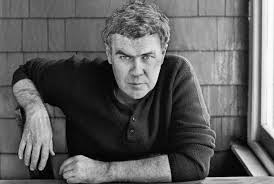
I think of Raymond Carvercarver almost exclusively for his short stories, but he wrote poems, too.  If you haven’t read his work, it’s spare–I think the term minimalist was first applied to his work.  “Cathedral,” “What We Talk About When We Talk About Love,” are two very famous ones. “One Good Thing” is one of my favorites. And here’s a poem.

Late Fragment

And did you get what
you wanted from this life, even so?
I did.
And what did you want?
To call myself beloved, to feel myself
beloved on the earth.

Raymond Carver

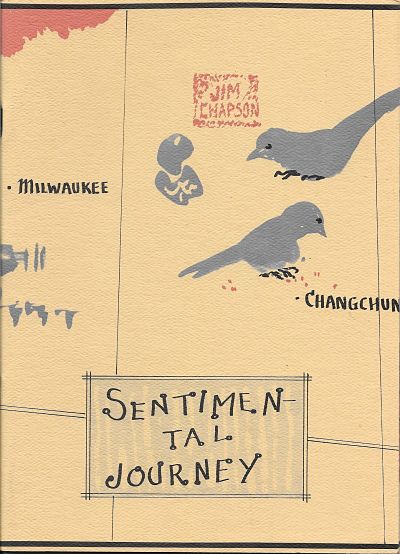
Jim Chapson

ChapsonI have been going through files, discarding bales of no longer relevant paper, but came across this wonderful short poem by Jim Chapson that seems a good antidote to the fervor of New Year’s resolutions:

What Are You Doing?

Tomorrow you will fall into a pit.
What are you doing today
To prevent this from happening?
Today you are digging the pit,
Today you are covering it with leaves and branches
So tomorrow you can say, “I didn’t know it was there.”

Jim Chapson

How many self-dug pits have I fallen into in a lifetime? As for Jim, he seems to be gliding above ground in Milwaukee.

Geodes

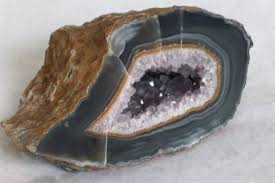
I know nothing at all about Jared Carter, except that I like this poem a friend sent me:

geodeGeodes

They are useless, there is nothing
To be done with them, no reason, only

The finding, letting myself down holding
To ironwood and the dry bristle of roots

Into the creekbed, into clear water shelved
Below the outcroppings, where crawdads sport

Through silt; clawing them out of clay, scrubbing
Away the sand, setting them in a shaft of light

To dry. Sweat clings in the cliff’s downdraft.
I take each one up like a safecracker listening

For the lapse within, the moment crystal turns
On crystal. It is all waiting there in darkness.

I want to know only that things gather themselves
With great patience, that they do this forever.

Jared Carter

How a poem can happen

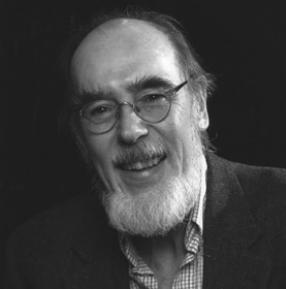
824_egrennanHere’s your Monday poetry vitamin (and isn’t this how you imagine an Irish poet should look!):

Detail

I was watching a robin fly after a finch – the smaller bird
chirping with excitement, the bigger, its breast blazing, silent
in light-winged earnest chase – when, out of nowhere
over the chimneys and the shivering front gardens,
flashes a sparrowhawk headlong, a light brown burn
scorching the air from which it simply plucks
like a ripe fruit the stopped robin, whose two or three
cheeps of terminal surprise twinkle in the silence
closing over the empty street when the birds have gone
about their own business, and I began to understand
how a poem can happen: you have your eye on a small
elusive detail, pursuing its music, when a terrible truth
strikes and your heart cries out, being carried off.

Eamon Grennan