Out and back before 9:30 am, no ticket needed

This morning I was reading the selection of Jack Gilbert’s poems from the second of the small Bloodaxe anthologies I stumbled on at UCB. I liked a number of poems–a pleasant surprise. I think I’ve mentioned before that my first reaction to a new poem/poet is a kind of wariness. For me the sensibility of the poems is as important as the skill they demonstrate. There is so much I don’t like, and I close myself off out of self-protection against the assault of bad poetry.

But reading through this selection was like making a new friend. You meet for coffee or a walk, talk about things, become closer, begin to trust the sensibility of this person, share more, talk more deeply: Yes, I understand your thoughts on this, I feel that way, too. Continue reading “Out and back before 9:30 am, no ticket needed” →

Lowbrow?

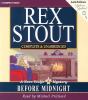
Years ago Larry and his friends conceived of a mythical motorcycle club called the Lowbrows. Their motto was “I’m a lowbrow. You figure it out.” (I never saw their motto written out, but I imagine lowbrows don’t use semicolons.) I don’t think the club had any purpose, it was more of a riff. But it came to mind when I thought about mentioning how much I love the Nero Wolfe mysteries by Rex Stout. I just finished listening to Before Midnight. Continue reading “Lowbrow?” →

What is the sound of no rooster crowing?

All week my neighbors have been asking what happened to the rooster. They all liked hearing his crow and notice its absence. The silence has been very loud. I found this wonderful poem by the Brazilian, João Cabral de Melo Neto, a poet I don’t know, translated by Galway Kinnell, a poet I admire greatly.


Weaving the Morning

1.

One rooster does not weave a morning,
he will always need the other roosters, Continue reading “What is the sound of no rooster crowing?” →

Robinson Jeffers

At one time, Jeffers was quite the rage, but by the time he died in 1962 he fallen almost completely out of fashion. Today he is mostly known as an early environmentalist. Nonetheless, his best work is still fresh, and as today is Monday, here’s a sample. The only thing out-of-date in this poem is ‘milch cow’ for milk cow and some odd punctuation:

Carmel Point Continue reading “Robinson Jeffers” →

Poetry, repression and fame

I stumbled across a small set of chapbooks called Bloodaxe Poetry Introductions edited by Neil Astley in the UC stacks the other morning. The first one I opened had several interesting poets new to me, including a German, a Czech, and a Romanian poet. Thinking about the poetry of Eastern Europe, one has to take into account the forces of invasion, dictatorship, and the repression of the state. A quote from a translator of Miroslav Holub, the Czech poet, highlights the latter:

Eward Osers, recalls how Czech authorities ‘always had an uneasy feeling that in his surrealist way, Holub might be poking fun at them. When in one of his poems he spoke of “a crowd of dwarves [applauding] in the king’s palace” he was somewhat to his surprise summoned to the censor’s office. It turned out that many of the members of the Communist Party Central Committee were rather short and that passage would therefore have to be changed.

In the western world, we really don’t have to consider censorship, except self-censorship. Poetry has very little practical impact. Poetry in the west is basically ignored–the political and cultural weight that causes the Central Committee to ask that a passage be changed just doesn’t apply here. No one goes to jail here for what they say. No one, like Mandelstam, is exiled and eventually dies in a camp for his work.

And for poets who achieve recognition here–that is, that their poetry is widely read and praised–that recognition can be a kind of trap, counter to the intensely personal process of writing. The poet begins writing what the audience wants, and there is nothing worse for the creative process than that.

Holub was also a well-respected immunologist, and had this to say about his work:

“I prefer to write for people untouched by poetry… I would like them to read poems in such a matter-of-fact manner as when they are reading the newspaper or go to football matches. I would like people not to regard poetry as something more difficult, more effeminate, or more praiseworthy.”

An interesting aesthetic. In any case, here’s a short poem of his from 1961.

A helping hand

We gave a helping hand to grass–
and it turned into corn.
We gave a helping hand to fire–
and it turned into a rocket.

Hestatingly,
cautiously,
we give a helping hand
to people,
to some people…

Miroslav Holub

Monday, Monday

Does anyone remember the Mamas and the Papas? Of course, but only with nostalgia. Back in the 70s Larry commented that their music was dated. It startled me at the time, but of course, he was right. They are their period. This morning, talking about the implications of the election in Egypt, Larry said, “I predict a dysfunctional government. Anyone taking bets?”

But Monday is also a day I look for a new poem to send to my poetry friends, and this is what I came up with today and am hereby adding to my anthology of radically accessible poetry.

The Swan at Edgewater Park Continue reading “Monday, Monday” →

What’s in a metaphor?

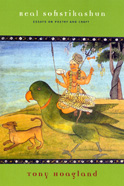
I have been rereading Tony Hoagland’s essays on poetry, called real sofistikashun. I’ve quoted from his poetry before. It’s a wonderfully readable book: lucid, insightful, and packed with analysis that actually illuminates what it discusses. I read it a few years ago, but it was during a bad time for me, and I didn’t absorb much. Then I loaned it to a friend, forgot about it, and recently got it back. It’s almost as if I never read it. (The benefit of failing memory, as Larry says, is that you can hide your own Easter eggs.)

Here’s the passage that opens the chapter on metaphor:

“There is something irreconcilably, neurologically primal about the act of metaphor. This primal wildness conceals it from us. Of the hinterlands of the gray matter, where metaphors roam free, our data is all rumor, conjecture, and anecdote. Because metaphorical speech is such a commonplace, because almost anyone can and does produce metaphor on a daily basis, we assume that it is scrutable.  Because it is a mental process, because it takes place in our own heads (on our property), because it leaves our own authorial lips, we assume we know something of its workings. But we do not. Invariably, the only adequate way to describe the metaphorical event is by another metaphor. It’s a mystery hand going into a black mystery box. The head says, “Fetch me a metaphor, hand,” and the hand disappears under a cloth. A moment later, the hand reappears, metaphor on its extend palm. But despite the spontaneity and ease of this event, we have only a vague idea of where the image came from. In fact, we don’t know. And neither does the hand.”

Continue reading “What’s in a metaphor?” →

The one…

I thought I should revisit my “Blogs I read” listing, and discovered in the process that C. Dale is no longer adding to his blog, Avoiding the Muse. But I found an interesting question  there: which poem first captured your imagination? Or as he put it: many poets can trace back and name the poem that first took hold of them, excited them beyond anything …the poem that elicited almost a conversion reaction.

Continue reading “The one…” →

Musing on Hopkins, Beckett and Louis C. K.

Larry was getting ready last night to get up at 5:30 am and head out for his weekend softball tournament. Now that he’s turned 70, he’s moved up from the over-65 to the over-70 tournament team, and as one of the youngest players, he’s in demand. He mentioned that he had to lay out all his gear, and I quoted “gear and tackle and trim,” referencing Hopkins’ Pied Beauty. It turns out Larry doesn’t care for Hopkins, and though I brought up The Northon Anthology of English Literature, Volume II, and did my best, he was unmoved. Nonetheless, the echoes of memorized lines enrich my encounter with the world in a delicious way.

And in the process, I realized how rare it is now to take down a doorstop of a volume, look through an index, and find a poem. Mostly, it’s just Google. But having the anthology open on the kitchen table led to my reading a snippet from Beckett’s Molloy: Continue reading “Musing on Hopkins, Beckett and Louis C. K.” →

Newbies

Actually , new bees!  Those of you who have been following this blog may remember the great adventure of the Haengekorb, in which my friend Laurie and I went to Sebastapol and bought a unique hanging basket hive, because I wanted bees and she had a swarm. we set up the hive, Laurie donned her bee suit and dumped the swarm in, and they seemed to settle happily. But several months later, after building a small amount of comb and storing some honey, they disappeared.

I moved the Haengekorb to a new, sunnier spot, with a new roof. It’s not nearly as elegant as it was hanging from the tree, but much more practical. Even romantic farmers need to take reality int account from time to time. For one thing, I don’t need a ladder to get into the hive now, and it’s much more protected from rain. I finished this project last Saturday, and on Monday night, got a call about a bee swarm. I grabbed my veil and gloves and drove out to El Sobrante. Continue reading “Newbies” →

This tent…

I’ve been up on the McCloud River for a few days, camping and learning how to fly fish–or at least how to cast. While there, I was reminded (by sleeping in one) how much I dislike tents–though maybe I’d like a bedouin tent better than zippered nylon from REI.

I came home to an email with this wonderful poem by Rumi, another radically accessible poet even in translation (can’t really get the line placement right here–it’s centered, not left justified, but you get the idea): Continue reading “This tent…” →

A poem by Bei Dao

I thought I’d include a slightly more “difficult” poem in my radically accessible series. It’s a poem in translation, so it’s one step removed from the original, which may account for some of its obliqueness. It’s difficult only in that the images don’t connect in a completely linear fashion. Still, the sense comes through clearly, I think. Continue reading “A poem by Bei Dao” →