Wilbur could not rescue Plath

Thanks to my daughter, who forwarded on this poem, about a meeting in which Richard Wilbur was recruited to encourage Sylvia Plath after a suicide attempt:
Cottage Street, 1953

Framed in her phoenix fire-screen, Edna Ward
Bends to the tray of Canton, pouring tea
For frightened Mrs. Plath; then, turning toward
The pale, slumped daughter, and my wife, and me.

Asks if we would prefer it weak or strong.
Will we have milk or lemon, she enquires?
The visit seems already strained and long.
Each in his turn, we tell her our desires.

It is my office to exemplify
The published poet in his happiness,
Thus cheering Sylvia, who has wished to die;
But half-ashamed, and impotent to bless

Continue reading “Wilbur could not rescue Plath” →

Monday already

It feels like someone is removing days from the week! But here it is again, my turn to send a poem out. I am choosing this one by Seamus Heaney:


A Kite for Aibhín, after ‘L’Aquilone’
by Giovanni Pascoli (1855-1912)

Air from another life and time and place,
Pale blue heavenly air is supporting
A white wing beating high against the breeze,

And yes, it is a kite! As when one afternoon
All of us there trooped out
Among the briar hedges and stripped thorn,

I take my stand again, halt opposite
Anahorish Hill to scan the blue,
Back in that field to launch our long-tailed comet.

And now it hovers, tugs, veers, dives askew,
Lifts itself, goes with the wind until
It rises to loud cheers from us below.

Rises, and my hand is like a spindle
Unspooling, the kite a thin-stemmed flower
Climbing and carrying, carrying farther, higher

The longing in the breast and planted feet
And gazing face and heart of the kite flier
Until string breaks and – separate, elate –

The kite takes off, itself alone, a windfall.

Seamus Heaney

Continue reading “Monday already” →

Radically Accessible Poetry

I’ve been thinking about an online journal, maybe called Radically Accessible Poetry. The poems in the journal would be anything I wanted to publish. The only criterion for publication is that they have an immediate impact. Of course, I would be the judge of that. It’s a tempting idea because so much poetry seems unavailable–that is, the content and the expression leave me unmoved. And there’s something particularly depressing in reading one presumably sincere effort after another and feeling so little.

In any case,  Radically Accessible Poetry (or RAP–what’s a journal without an acronym?) might include poems like the two I mentioned almost a year ago, as well as longer poems. Most poems would be short, though. For one thing, short poems are less demanding and therefore more accessible, and for another it’s easier to find good short ones than good long ones.

As I don’t want to start a whole new website for RAD, perhaps I’ll just assume my poetry entries here are the journal. Interesting that the flyer for WIlliam Stafford’s reading was from a May 8th in the past; too bad he’s not with us anymore to read poems like this: Continue reading “Radically Accessible Poetry” →

Poetry Monday

The prose poem is a medium difficult to describe–a paragraph? a story? a reflection? It’s shorter than a story, but not in short lines. It should make you catch your breath the way a poem does, I think. This one, by Robert Hass, does everything it should:

A Story About the Body

The young composer, working that summer at an artist’s colony, had watched her for a week. She was Japanese, a painter, almost sixty, and he thought he was in love with her. He loved her work, and her work was like the way she moved her body, used her hands, looked at him directly when she made amused and considered answers to his questions. One night, walking back from a concert, they came to her door and she turned to him and said, “I think you would like to have me. I would like that too, but I must tell you that I have a double mastectomy,” and when he didn’t understand, “I’ve lost both my breasts.” Continue reading “Poetry Monday” →

Story and poem

From that same issue of Poetry East I mentioned earlier, I came across a poem by Thomas Lynch, another poet new to me.  His day job is listed variously as funeral director or undertaker, a thought-provoking trade for a poet. I imagine it keeps him grounded. In this issue of the magazine, each poet writes a note about the poem. Lynch has a section about how he composes when he has writers’ block and concludes with this:

“Truth told, this multi-media approach results in remarkable disappointments–poems of such abundant mediocrity that I burn them or affix to them the names of poets I dislike and post them to The New Yorker.   Continue reading “Story and poem” →

Oops, one more

Just when I thought I was finished with this topic for the moment, I came across this poem in an old copy of Poetry East.

How Western Underwear Came to Japan

When Tokyo’s Shirokiya Drygoods caught fire
in the thirties, shopgirls tore the shelves’ kimonos
and knotted them in ropes. Older women used
both hands, descending safely from the highest floor,
though their underskirts flew up around their hips.


The crowded street saw everything beneath–
ankles, knees, the purple flanges of their sex.
Vesus the younger girls careful keeping
one hand pinned against their skirts, against
the nothing under them and their silk falling.


Last in this series

To finish this three-part series, a few months ago I heard a poem by L. A. Jones, a fellow attendee of the Squaw Valley Poetry Workshop, and recognized snippets from NPR–snippets that related to information that I’d heard and pondered and half-forgotten.  I liked what she did with these and Lisa graciously allowed me to publish:

Pescatarian

1.
A petting zoo in your mouth
your furry mouth
all that fur in your mouth

it could break your heart

unable to talk.

2.
Continue reading “Last in this series” →

More awakenings

Following yesterday’s post about poems that try to make sense of the constant data we swim in, here’s one by Dean Young, from his booking, Fall Higher. The Tony in this poem is the Tony Hoagland from yesterday.

Some Recent and New Errors

My books are full of mistakes
but not the ones Tony’s always pointing out
as if correct spelling is what could stop the conveyor belt
the new kid caught his arm in.

Awake in America

How can we process the barrage of data in which we live? It’s hard to make sense of the huge events that shape current history, and yet here they are, paraded in front of us replayed at 6, 9, 10, 11 and in-between, mingled with small horrors, trivia, obligation, inspiration–an overwhelming soup, seasoned with complicity and powerlessness.

Tony Hoagland and Dean Young are poets whose work seems to me to address this in particular. So I thought I’d post a few poems over the next few days–one by each of them, a few by others. Let me know what you think.

America


Then one of the students with blue hair and a tongue stud
Says America is for him a maximum security prison whose walls

Are made of Radio Shacks and Burger Kings, and MTV episodes
Where you can’t tell the show from the commercials;

Continue reading “Awake in America” →

California’s got four

San Francisco’s fine,
You sure get lots of sun,
But I’m used to four seasons,
California’s got but one.
cc                               California, Bob Dylan

When I first came here, I thought Dylan was right about the seasons, though not so much about sunny San Francisco! In the over 40 years I’ve lived here, I’ve learned to appreciate the subtlety of the seasons: the parched summers when the hills bake from a golden beige to tired, brittle brown, the way the brown shades into blue as the rains come. Then the blue intensifies, slowly greening over the rainy winter, till one sudden day, like yesterday, you notice that the hills have turned a green to rival Ireland. For a week or ten days they are so green, you want to roll around in the grass–a mistake, as it’s full of prickles! I’ve had some serious misadventures based on those intoxicating hills. Then in another moment they turn from an unbearably luxuriant green to a yellow-green, to the gold of early summer, and the process starts over.   Continue reading “California’s got four” →

A new poem

For my morning reading, last time I was at the Albany Library I gathered up a handful of poetry anthologies. I thought I should just look at some new poems, even braced as I am against new poets. I was pleasantly surprised  by the first poem in the book, by Meg Kearney, someone I’d never read.

Nature Poetry

for William Matthews

Bill hated the separation implied by the term.
“What’s this?” he’d ask, gesturing to what lay
beyond our classroom window. From “NAC” 6-303
in Harlem. Manhattan blinked an glowed like
the floor of stalagmite, lit by its own desire
to exist. What was it? Concrete, glass, steel–
meaning limestone, silica, gypsum, sand,
manganese, sodium, sulfur, ore–
anything unnatural here? Here, in the city, we
steel ourselves against the elements–steel,
from the Old High German stak, “to resist”–
and we fight like the animals we are for our
own little plot of privacy amidst all this
concrete (from the Latin, concret-us, past-
participle of con-crescere “to grow together”).
We’re too much together, and all the while we
go around like Adam and put a name to things,
just to say this is real, I exist in the world.
So we say “boulevard,” “taxi,” “skyscraper,” “villain”–
which used to mean you worked on a farm, but now
means you better have eyes in the back of your
head walking down the boulevard. “Be careful
going home,” Bill would say at the end of class. “It’s
a jungle out there.” Yes, we’d agree. Naturally.

Meg Kearney

Continue reading “A new poem” →

Dreams of Kay Ryan

From time to time, poets make cameo appearances in my dreams. Last night it was Kay Ryan. We were at a party together, and I was trying to show her how to undress and change your outfit in the middle of a public space without anyone noticing.  The trick is to move very naturally, at an unhurried pace, and just keep interacting normally with the environment while you slip into something else. Unfortunately, I was wearing a starched shirt that crinkled like wrapping paper when it moved, which ruined the process. Kay was understanding.

I asked her if she ever felt trapped by her own style, if she ever got tired of writing “Kay Ryan poems.”  She didn’t seem to have a problem with that. I woke up with this poem:

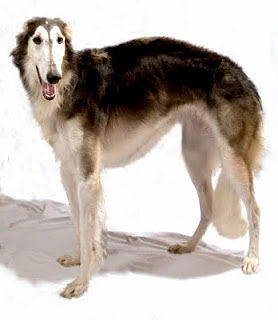
Borzoi

How is it that
we recognize
with our sense
and with our eyes
that tall dogs,
short dogs,
fat and thin,
are all one species
from within?

Continue reading “Dreams of Kay Ryan” →