Virginia Woolf’s exemplary sentences

Yesterday I got tired of driving around to PBS, SIrius/XM, KCSM, and got several books on CD from the library. (I miss Henderson!) I started with The Voyage Out. I probably read this decades ago, but have no memory of it. That’s the good thing about memory loss, Larry might say, you can hide your own Easter eggs.

But in this case, the pleasure of rediscovery includes reacquaintance with Ms. Woolf’s sly, economical wit. Here are just a few of her gems:

“..she slipped into a fine analysis of him which is best represented by one word, “sentimental,” by which she meant that he was never simple and honest about his feelings.”

What a perfect definition of what’s wrong with sentimentality! Or this, about a man who spent his life contemplating a book he never wrote:

“There never will be a book…That’s what comes of putting things off, and collecting
fossils, and sticking Norman arches on one’s pigsties.”

That’s what gets in my way, dreaming of Norman arches for the chicken coop. Or about her children’s religious education.

“So far, owing to great care on my part, they think of God as a kind of walrus…”

And finally the first one that caught my attention and made me pull over and get out my notebook (the only problem with listening while you drive is it slows your progress):

Continue reading “Virginia Woolf’s exemplary sentences” →

The exemplary sentence and the elusive world

I realize I have collected a number of sentences about imagination vs. reality.

“What a gulf between the self which experiences and the self which describes experience.”  Edmund Wilson, I Thought of Daisy from the last one of these posts

“Life is not what we live; it is what we imagine we are living.”  Pascal Mercier, Night Train to Lisbon, from the one before

and this one:
“The world in out heads is not a precise replica of reality.” from Thinking, Fast and Slow by Daniel Kahneman, which Larry happens to be reading.

I’ve been pondering this idea a lot lately, the construct we carry in our heads as opposed to the world an infant experiences, for example, one without labels or words. Continue reading “The exemplary sentence and the elusive world” →

You are what you read

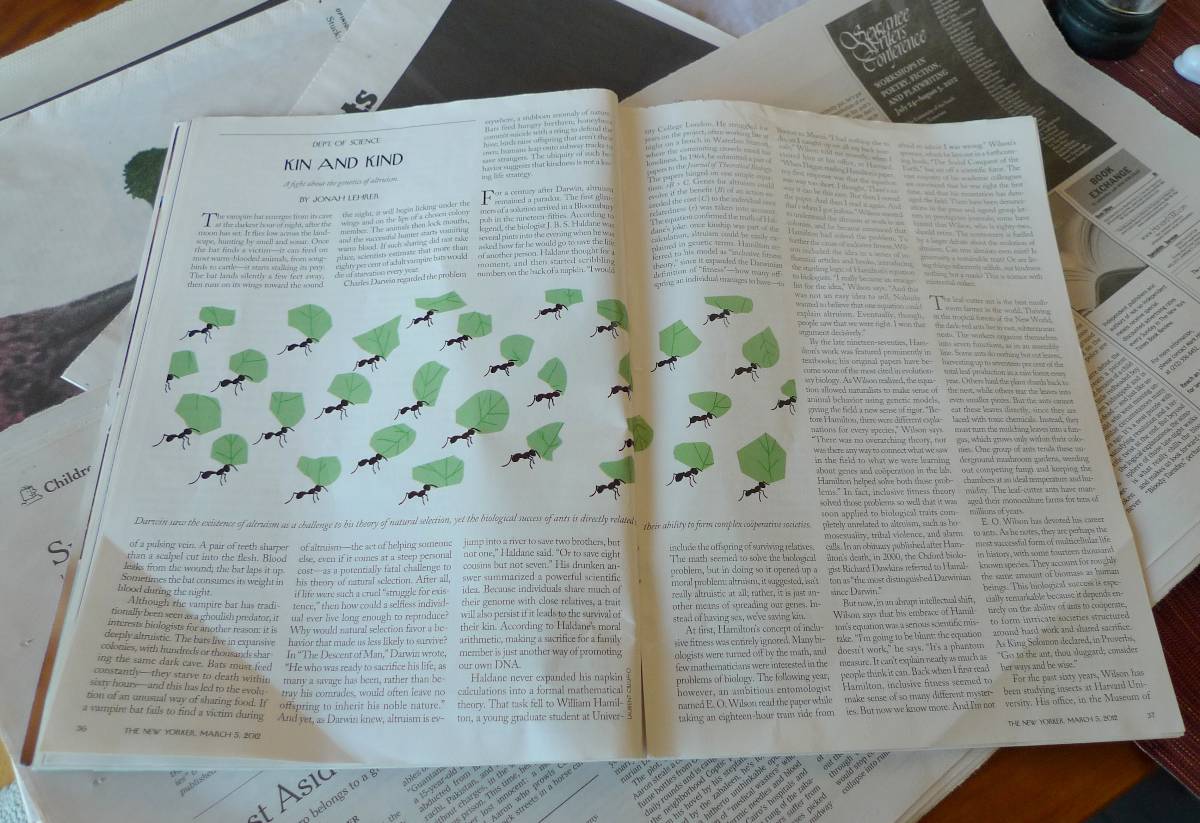
Having a cup of tea early Saturday morning at a bakery in Venice (CA), a couple with a young son were sitting at the table next to me.  The parents were reading, the boy–maybe 5 or 7 years old–was playing a math game on a PDA.  I looked up when the boy was asking for help figuring out what 6 minus 2 was.  The father put down his magazine, and started working with the various cups and plates on the table to make the numbers real. I noticed that he was reading the very article in the New Yorker by Jonah Lehrer I had just finished the day before on the plane, about the Darwinian value of altruism. The article had a cartoon of leaf cutter ants and their bright green leaves across the two-page spread that made it recognizable from a distance, and he and his (I assume) wife discussed it once the mystery of 6-2 was resolved.

It made me reflect on how a certain number of people around the same period of time might be reading and thinking about the survival value of selflessness–and just what selfish and selfless might mean for us and for other species.  There’s a kind of awesome power in that, the ability of a well-written article in a popular medium to support a current of thought and discussion across a broad swath of disparate people. Continue reading “You are what you read” →

The exemplary sentence, take 3

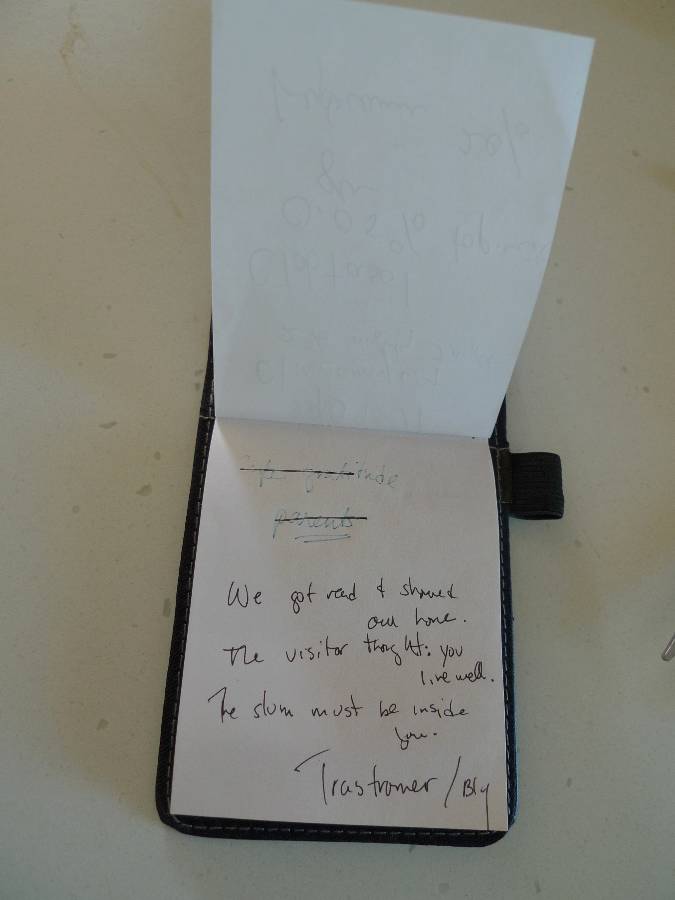
Here are some notes from the little pad I keep inside my purse to capture the stray sentence or idea, or in Brenda Hillman’s words, to be a rancher of phrases. These are all the more pleasing to me because they are surrounded by directions, movie and book titles, stray phone numbers.

We got ready and showed our home.
The visitor thought: you live well.
The slum must be inside you.
…  Tomas Tranströmer, “The Scattered Congregation” (translated by Robert Bly)

Words make things happen. We must weigh them carefully.
…  Pascal Mercier, Night Train to Lisbon (see more of these)

Maybe he better get out of here
before it’s too late, but maybe too late
was what he wanted.
…  Philip Levine Continue reading “The exemplary sentence, take 3” →

In praise of Berryman

I perfect my metres
until no mosquito can get through…

Beryman, Dreamsong 297

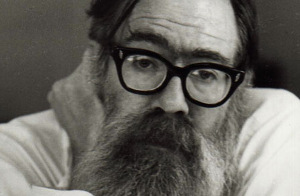
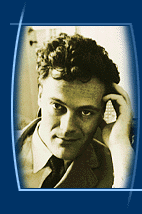
In the vagaries of poets’ reputations, Berryman is now up, while Lowell is down. This is a reversal of thirty years ago. Who can say why? I fell in love with Berryman’s Dreamsongs in my early twenties. They have two ongoing personae: Henry, a stand in for Berryman himself, and Mr. Bones, a wisecracking minstrel who sees through Henry. In my innocence and arrogance I wrote a Henry poem, in imitation and homage, and sent it to Berryman. He responded with a wonderfully kind letter.  This wasn’t long before his suicide in 1972. Continue reading “In praise of Berryman” →

The problem with Lowell

I woke from dreams of not getting where I needed to be in a foreign country of endless lines and confusing roads. Somewhere there was a cafe, somewhere a bay. But I couldn’t find them. And for some reason, I took out the brick of Robert Lowell’s collected poems for my morning reading.

Why has Lowell, once so well-known that he appeared on the cover of Time magazine, dropped so out of favor? Was he unlucky to be adorably handsome, from a fine old Boston family, and talented? Perhaps the volume of his work is overwhelming. Coming to him cold, one would be daunted long before finding the handful of marvelous poems that still vibrate with the pain of the human condition. Every poem seems to tackle the big problems, and as with most (all?) poets, most of them fail.

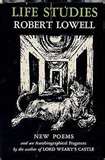
Still, Life Studies, published in the late 1950’s had a huge influence on poetry. I remember reading it, stunned by its intimacy–it was like nothing that came before.  The personal, confessional tone from an academically acclaimed poet legitimized the personal as a subject for poetry. Sylvia Plath was his student, and took the next step.

Despite true madness, excess drinking, smoking, and three marriages, Lowell lived 60 years, and wrote and wrote and wrote.  Rhyme and meter were the water he swam in–they seemed natural to him, not forced or added. He could write a sonnet in his sleep.  Here’s one of my favorites, written late in his life. He nicknamed his third wife “dolphin,” and the first four lines seem addressed to her. The rest of the poem contemplates life as a poet. I always think they are about Berryman, who famously arrived drunk for readings, but they could be about Lowell himself, or many others I guess.  Regardless, I especially love the final four lines:

Fishnet

Any clear thing that blinds us with surprise,
your wandering silences and bright trouvailles,
dolphin let loose to catch the flashing fish. . . .
saying too little, then too much.
Poets die adolescents, their beat embalms them,
The archetypal voices sing offkey;
the old actor cannot read his friends,
and nevertheless he reads himself aloud,
genius hums the auditorium dead.
The line must terminate.
Yet my heart rises, I know I’ve gladdened a lifetime
knotting, undoing a fishnet of tarred rope;
the net will hang on the wall when the fish are eaten,
nailed like illegible bronze on the futureless future.

Lowell is not an easy poet, but he’s one who whose stature will rise again, when others have faded.


Cluck and Glück

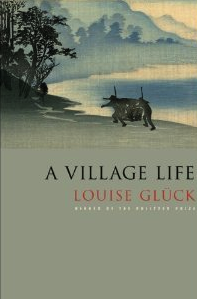
I didn’t know that Louise Gluck pronounced her name to rhyme with “click,” but that’s how it is. She read on Thursday night at Moe’s (yes, we still have a few bookstores in Berkeley!). It was a pleasure to listen to her read though she announced at the start that she doesn’t like to read. I had to strain to hear, but it was worth it. She read from her new book, A Village Life.

The NY Times review mentions “her signature desolation,” and there is certainly a generous measure of pain in her work. I don’t find this off-putting.

My favorite of the poems she read was “The Crossroads.” You can hear her read it–the poem starts about one minute in if you want to skip the pretentious intro. She’ll be reading again as part of the Lunch Poems series at UC on March 1.

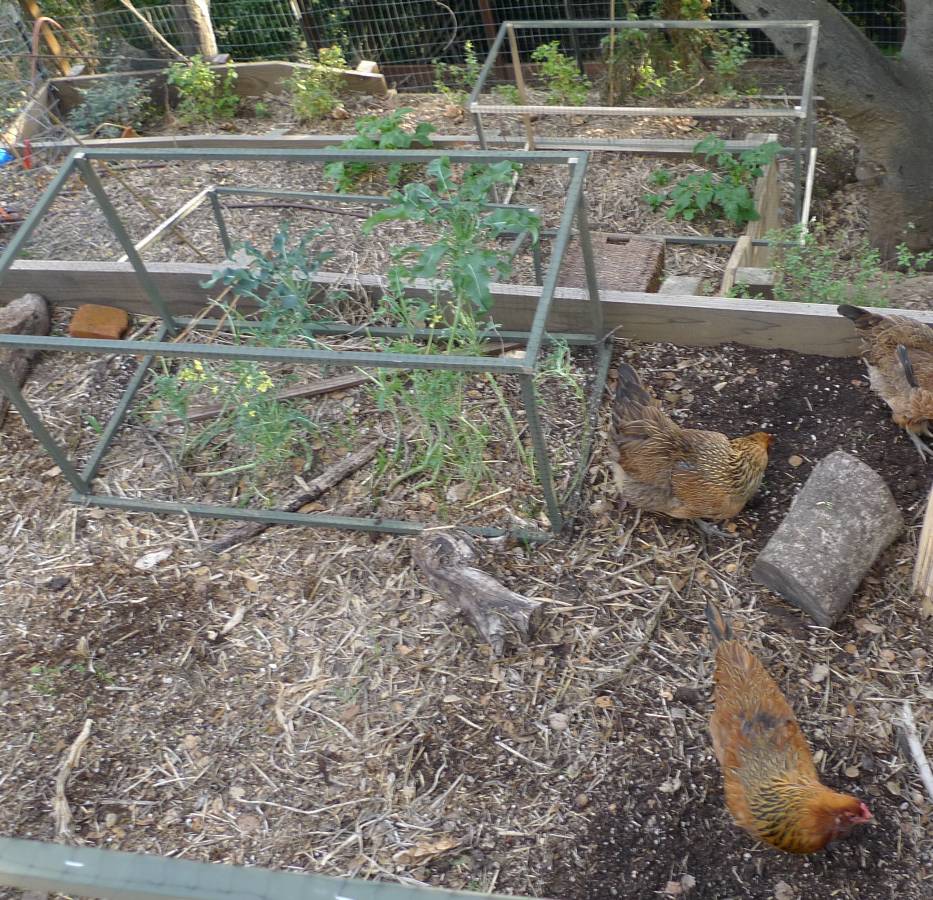
Earlier that day (here is the cluck part) my wonderful friend and expert builder, Jeannie, finished creating a set of plant protection boxes for my garden. Now that it’s planting season, I’d like to let the chickens out to weed and fertilize, but you may remember what they do to anything that grows.

So we created a set of 2′ x 4′ boxes with bird cloth stapled around the sides to put around various areas where things are growing. They are lightweight and transportable. We painted them with camouflage paint so that they blend into the landscape (Jeannie’s idea).

Now the plants can thrive, and the chickens can do their work:

The exemplary sentence, take 2

I recently finished Night Train to Lisbon, by the Swiss author, Pascal Mercier, translated by Barbara Harshav.  This is another book about a quest. In most ways, Henderson and Gregorius could not be more opposite: Henderson a flamboyant, wandering millionaire seeking the meaning of life, and Gregorius a scholar of Greek and Latin, nicknamed Papyrus because of his dry, papery ways. Gregorius is of working class origins. He has lived his whole adult life as a high school teacher in Bern. And yet, as Night Train to Lisbon opens, a strange encounter is a catalyst for Gregorius to drop precipitously out of his former life and start on a quest for the Portuguese author of an obscure, privately published book A Goldsmith of Words, a book that purports to explore the fragmented, buried, kaleidoscopic experiences that make up a life.

The passion to learn about this mysterious author, the conceit of a book within a book, and the appealing figure of Gregorius all captured my imagination and sustained me through the 438 pages of this novel.  This book is almost too full of intriguing sentences, most attributed to the mysterious Portuguese author, Amadeu de Almeida Prado. Here are a few: Continue reading “The exemplary sentence, take 2” →

The exemplary sentence

I saw this idea on Mark Doty’s blog and immediately adopted it. I’ve been saving sentences for decades, and just now am rereading Saul Bellow’s Henderson the Rain King. This is the only one of Bellow’s books I’ve ever liked, but I really love it and it holds up wonderfully since I first read it maybe 30 years ago.

I say rereading, but this time I am listening to it as read by Joe Barrett, who manages to embody the voice of Henderson as well as the soft accents of various African characters. It’s wonderful to me how such a reading can enhance a book. But this one is so packed with exemplary sentences, it’s hard to choose, and I often need to rewind–not as easy on CD as formerly on cassette–to capture their complete sense.  Here is one (not even the whole sentence, but enough):

“Even civilized women  are not keen on geography, preferring a world of their own.”

Continue reading “The exemplary sentence” →

The paw of time

My friend Simone sent me a link to an unusual online art exhibit.  There is a certain charm to these simple watercolors, “made anonymously in India (especially in Rajasthan) by practitioners of Tantrism.”

After looking through them, I was moved especially by The Paw of Time. It seemed so intuitively accurate to me.

I wrote about it, and sent my friend the poem. After some back and forth and her excellent edits, here it is.

The Paw of Time

when I finally discerned
the crude paw shape,
heavy and inhuman,
its smooth edges without malice
its force irresistible
I recognized it
right away

—————

Simone herself is an amazing artist whose work I’ve been enjoying for decades. She regularly posts her photographs on Facebook.  Maybe she’ll comment with her Facebook ID, so you can friend her and see them.


Appropos of nothing

I received this poem in my email this morning, and think it’s worth reprinting here. I love how the poet starts off in a folksy way, as if Galileo were a friend, and the poet was simply remembering a conversation. Then the images of blowing paper and terrified squirrel leap and flutter on the page, each with their particular qualities.  Continue reading “Appropos of nothing” →

Poets and their mothers

I’ve been reading Adam Zagajewski’s recent book of poetry, Unseen Hand, translated by Clare Cavanagh. Zagajewski writes in Polish, and I’ve long admired his work.

I encountered this poem of his just after I had reread a poem of Larry’s about envisioning his mother’s funeral.  Yes, Larry, too is a poet.  His poem is from his book called Night Train. Here are the two:

About My Mother

I could never say anything about my mother:
how she repeated, you’ll regret it one day,
when I’m not around anymore, and how I didn’t believe
in either “I’m not” or “anymore,”
how I liked watching as she read bestsellers,
always turning to the last chapter first,
how in the kitchen, convinced it wasn’t
her proper place, she made Sunday coffee,
or even worse, filet of cod,
how she studied the mirror while expecting guests,
making the face that best kept her
from seeing herself as she was ( I take
after her in this and other failings),
how she went on at length about things
that weren’t her strong suit and how I stupidly
teased her, for example when she
compared herself to Beethoven going deaf,
and I said, cruelly, but you know he
had talent, and how she forgave it all
and how I remember that, and how I flew from Houston
to her funeral and couldn’t say anything
and still can’t.

Adam Zagajewski, translated by Clare Cavanagh

***************************

When I go to your funeral
I’ll be clean-shaven & have
a fresh haircut. I’ll wear
a black silk tie with a Windsor
knot, a charcoal-grey suit
(3-buttoned, with vest).
My socks will match.
My shoes will be shined.
I’ll look real sharp, Mom.
And everyone will murmur
“now there’s a young man
with promise
” & everything
will be like it once was—
before the pulleys creak
& the ropes slowly lower
your coffin out of the red
clay granite sunshine
of western Oaklahoma.

Larry Rafferty

I think Larry stands up pretty well with Zagajewski, although I have to admit that the lines:

how she studied the mirror while expecting guests,
making the face that best kept her
from seeing herself as she was

are pretty breathtaking in their unsparing appraisal. I’m just glad I wasn’t Mr. Zagajewski’s mother! As for Larry, well, I’m his wife and have often felt that unsparing, appraising eye–but tempered with fondness.