Monday poem

Last week I opened The Dead and the Living, an older book of poems by Sharon Olds, to find this gem:

Six-Year Old Boy

We get to the country late at night
in late May, the darkness is warm and
smells of half-opened lilac.
Gabe is asleep oh the back seat,
his wiry limbs limp and supple
except where his hard-on lifts his pajamas like the
earth above the shoot of a bulb,
I say his name, he opens one eye and it
rolls back to the starry white.
I tell him he can do last pee
on the gras, and he smiles on the surface of sleep like
light in the surface if water. He pulls his pajamas down and there it
is, gleaming like lilac in the dark,
hard as a heavy-duty canvas fire-hose
shooting its steel stream.
He leans back, his pale face Continue reading “Monday poem”

Monday poem

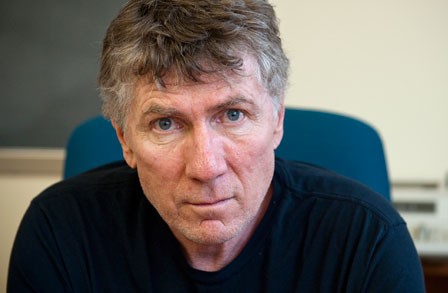
I rarely do two poems by the same poet in a row, but I came across this poem from James Galvin’s latest book and really like it.

Wildlife Management I

All the trees kept their own counsel without any wind to speak of,
until one lone limber pine began gesticulating wildly, as if it
suffered from its own inner cyclone.
                                                                  It was like a lunatic in the
courtroom of other trees.
                                              We forgot about the sunset and the dark
coming on across the plain.
                                                   Then the reason appeared: a mother
antelope had twin newborns backed into the tree and fended off a
pair of coyotes who darted in and feinted out, knowing she
couldn’t defend them both.
                                                  The girl I was with shrieked, “Do
something!”
                         I thought of the rifle back at the house.
                                                                                                I thought of a
litter of coyote whelps in a den somewhere nearby.
                                                                                                I thought of the
three-hundred-yard sprint to the tree.
                                                                     The mother antelope would
be first to bolt, and those coyotes would have the aplomb to make
off with both twins.
                                    I said no.
                                                     The antelope struck out with her
forelegs, she butted the coyotes back, until one of them got the
chance they had orchestrated and caught a twin and trotted off,
dangling it by the nape as gently as if it were her own.
James Galvin, from Everything we Know Is True

Americanathon

I thought this poem by James Galvin would be appropriate for today.

Americanathon

WAITING FOR THE NEW ice age to come along
Like a dawdling child from a previous eon,
Waiting for the homeless man to go on home
With his tired cardboard sign that says “anything helps,”
Waiting for a cure, waiting for the closeout sale,
The black sail, a new tarboosh and a tiny red car,
A new improved and safer war,
A harmless war, a war that we could win,
A brain tumor in your smart phone, an entitlement check
(Will you please check on my entitlement?),
Waiting for the bank hack, the backtrack, the take,
Waiting for a calabash, the calaboose, an acquisition,
An accusation, resuscitation from a total stranger,
Waiting for the finish line to explode.

James Galvin, from Everything We Always Knew Was True

Poems at Mill Valley Library

Last week the Marin Poetry Center cosponsored an event called “Stump the Laureate,” at which volunteers from the audience recited poems, and Dana Gioia, the California poet laureate, alternated with the audience, poem for poem. The idea was to keep going until we or he ran out of poems. But I don’t think he would have run out for a very long time. It was such fun, with many voices and many poems. Dana was going t6o recite sort of chronologically,  but wound up often echoing a poem by the same author or time period as the reciter who preceded him. Pretty nice trick!

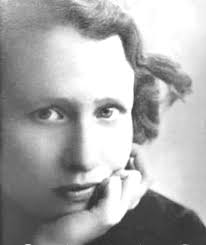
Here’s a lovely poem by Edna St. Vincent Millay that was part of the recitation.  We all agreed she is undervalued.

 Love Is Not All

Love is not all: it is not meat nor drink
Nor slumber nor a roof against the rain;
Nor yet a floating spar to men that sink
And rise and sink and rise and sink again;
Love can not fill the thickened lung with breath,
Nor clean the blood, nor set the fractured bone;
Yet many a man is making friends with death
Even as I speak, for lack of love alone.
It well may be that in a difficult hour,
Pinned down by pain and moaning for release,
Or nagged by want past resolution’s power,
I might be driven to sell your love for peace,
Or trade the memory of this night for food.
It well may be. I do not think I would.

Edna St. Vincent Millay

Continue reading “Poems at Mill Valley Library”

One from Szymborska

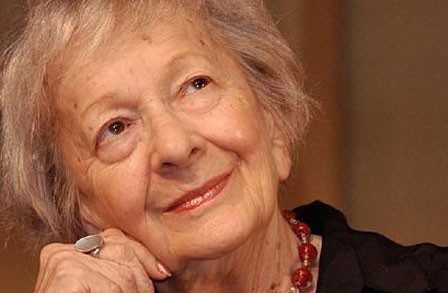
When we were in Krakow two years ago, we went to an exhibit at the National Museum called “Szymborska’s Drawer.” It was a recreation of the home office of the Polish poet, Wislawa Szymborska. It had her desk, her yellow typewriter, her bookcase, her postcard collection, many strange and delightful artifacts. You can see some photos here.

Born in 1923, Szymborska lived through the upheavals of central Europe, the invasion by Germany, control by the Soviets, constant political change and public hardship.

He poems are mostly deceptively simple and intensely moving,  as this one.

Children of Our Age

We are children of our age,
it’s a political age.

All day long, all through the night,
all affairs—yours, ours, theirs—
are political affairs.

Whether you like it or not,
your genes have a political past,
your skin, a political cast,
your eyes, a political slant.

Whatever you say reverberates,
whatever you don’t say speaks for itself.
So either way you’re talking politics.

Even when you take to the woods,
you’re taking political steps
on political grounds.

Apolitical poems are also political,
and above us shines a moon
no longer purely lunar.
To be or not to be, that is the question.
and though it troubles the digestion
it’s a question, as always, of politics.

To acquire a political meaning
you don’t even have to be human.
Raw material will do,
or protein feed, or crude oil,

or a conference table whose shape
was quarreled over for months:
Should we arbitrate life and death
at a round table or a square one.

Meanwhile, people perished,
animals died,
houses burned,
and the fields ran wild
just as in times immemorial
and less political.

Wislawa Szymborska
translated by Stanisław Baranczak and Clare Cavanagh
Monday Poem

I’ve mentioned the Poem-a-Day from the Academy of American Poets before. Last week, I saw one by Mark Wunderlich that I liked. I didn’t know his work, so read further and found this one, my favorite of the ones on the site, which he graciously allowed me to reprint here:

The Son I’ll Never Have

The son I’ll never have is crossing the lawn. He is lying on an
imaginary bed,

the coverlet pulled up over his knees—knees I don’t dare describe.

I recoil from imagining him as meat and bone, as a mind

and hands stroking the fur of his pet rabbit.

I never gave him the accordion I used to play, my mother and I Continue reading “Monday Poem”

Beauty

April is the cruelest month, but also, ironically?, poetry month. In any case every night this week has a poetry event I’m attending.

So far the highlight has been a spectacular reading at the North Berkeley Library by B.H. Fairchild. Fairchild has crafted narrative poems from his childhood in Texas and Kansas. He is the son of a machine shop owner, and the poems manage to capture and elevate the smoke and dust motes into light like grails of milk.

You missed the reading, but can hear a sample here. It’s a long poem; sit back and make yourself comfortable, it’s worth it! Such a treat. Continue reading “Beauty”

About the hats, and more than the hats

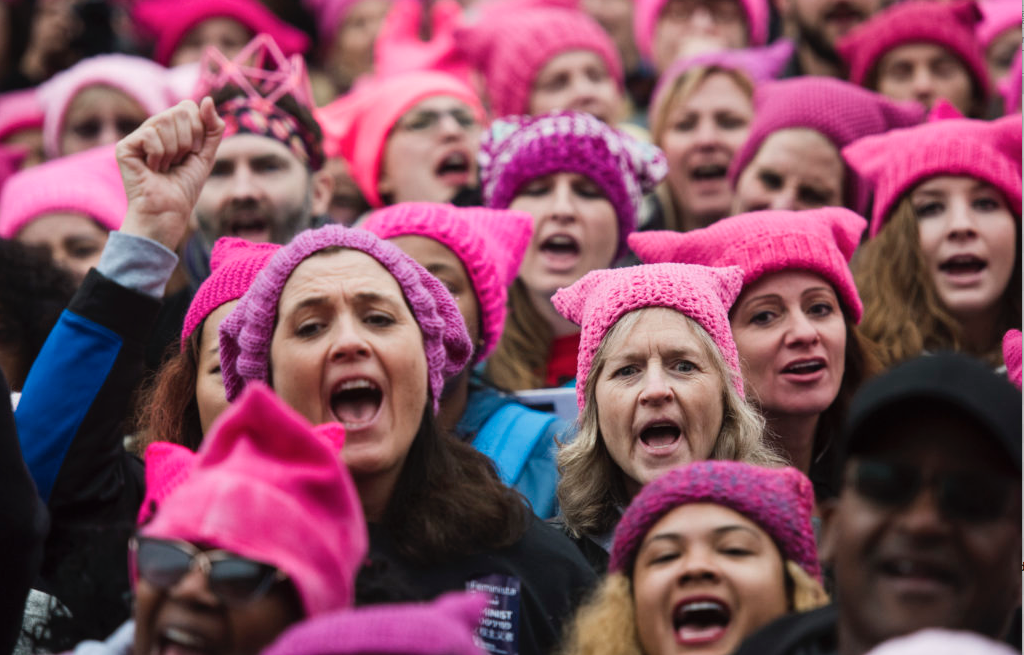
If you don’t get enough poetry here, you can sign up with the Academy ofAmerican Poets (www.poets.org) and get a poem every day in your email. This is one that arrived a couple of weeks ago, for all those who knit and wear the pink pussy hats, for all of us, really.

As to Why We Will Not Stop (Making the Hats)

This time it does not begin with the beaver
Instead only halfway up the mountain
Where the sheep we keep each year come through

Winter enough to answer us, enough
For us to shear, deft before the coming storm,
To take away from the body what it did not know

It grew and then astonished each spring to feel
The quickening of the lamb, the heft of
Sudden weight crossing one more patch

Of snow. All with an eye out
For the cougar or some such animal
Of which the DNA is no longer

What it might have been, the coyote now
As part dog part wolf
Already commonplace. We have come to know the truth Continue reading “About the hats, and more than the hats”

First night of Passover, 2017

A poem as relevant today as it was in 1999. It seems we are always bombing something.

during the bombing of Kosovo

Hevel may be translated vanity
or mist or vapor
the name of the first man
whose brother was not his keeper

It is evening it is morning one day
like mist from ten thousand feet
above the hills bombs fall
like vapor the thin air
is full of them
roads crawl with tanks soldiers
like mist tens of thousands
of refugees cross the border
like vapor from morning to dusk
unmanned families
like mist women in slippers
children in bare feet Continue reading “First night of Passover, 2017”

Blossom foam

I’ve been traveling and seen fields of daffodils to the horizon, horses munching the greenest grass, trees in all phases of blossom.  Spring everywhere. It made me think of this poem by James Wright:

A Blessing

Just off the highway to Rochester, Minnesota,
Twilight bounds softly forth on the grass.
And the eyes of those two Indian ponies
Darken with kindness.
They have come gladly out of the willows
To welcome my friend and me.
We step over the barbed wire into the pasture
Where they have been grazing all day, alone.
They ripple tensely, they can hardly contain their happiness
That we have come.
They bow shyly as wet swans. They love each other.
There is no loneliness like theirs.
At home once more,
They begin munching the young tufts of spring in the darkness.
I would like to hold the slenderer one in my arms,
For she has walked over to me
And nuzzled my left hand.
She is black and white,
Her mane falls wild on her forehead,
And the light breeze moves me to caress her long ear
That is delicate as the skin over a girl’s wrist.
Suddenly I realize
That if I stepped out of my body I would break
Into blossom.

James Wright