Domestic Felicity

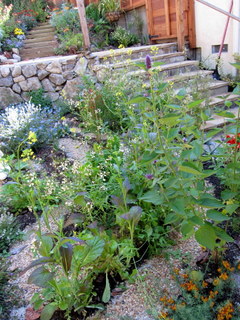
Yesterday was the day for pruning the labyrinth. I am a person who loves to plant and tend but hates to cut. My mother used to say she liked the look of wild gardens, and I guess I do, too.

Nonetheless, it was no longer possible to walk the full labyrinth, so pruning and tying back was in order. I took my wonderful Japanese scissors and some brown garden twine, and set to work.
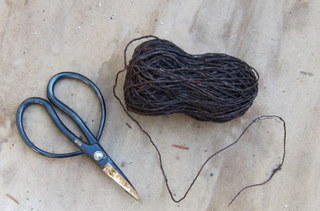
The whole project took four hours, not the hour or so I’d expected. But it at the end the labyrinth was a labyrinth again, not an impassable maze, and the pullets feasted on the cuttings.
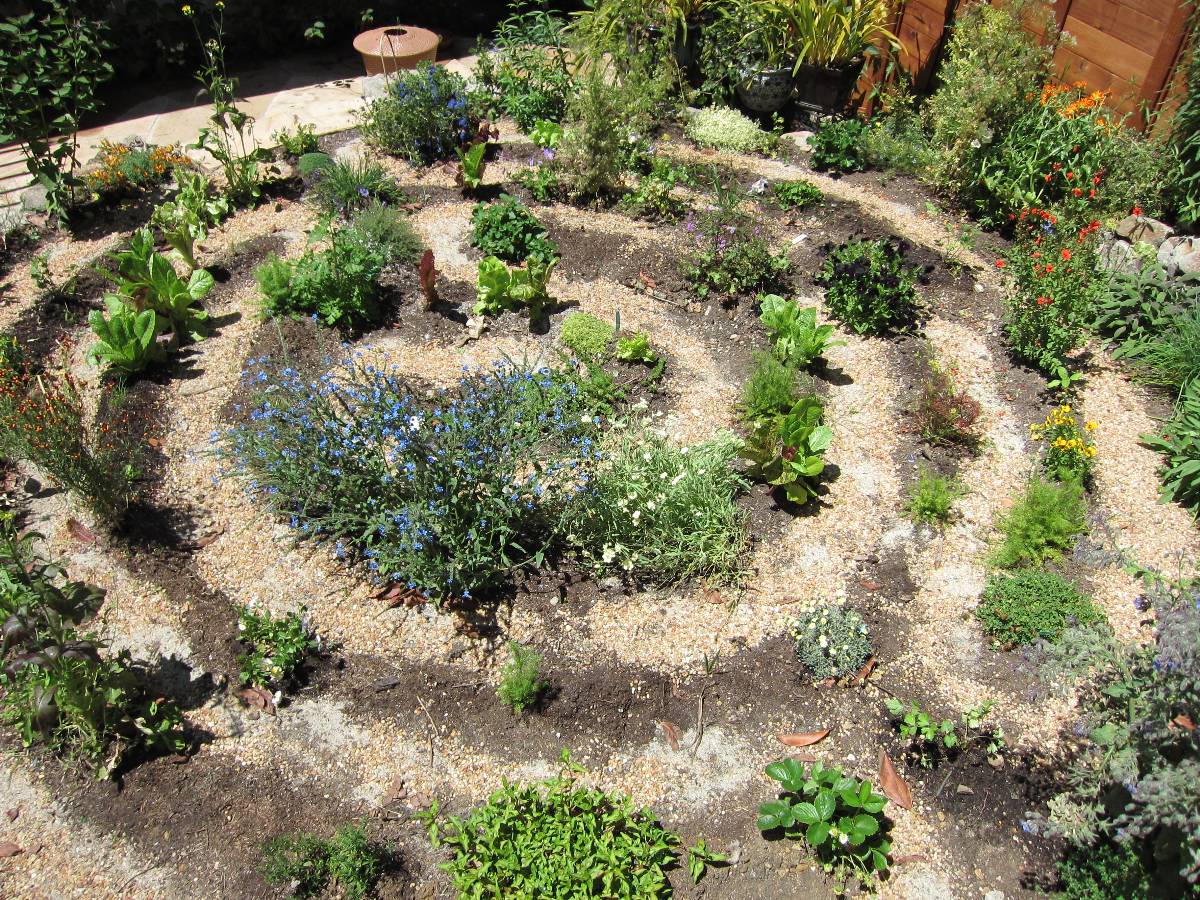
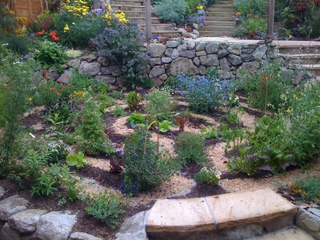
As a finishing touch, I placed a statue (a wonderful gift from a sculptor friend) near the center. In addition to gracing the labyrinth, it holds back the Blue Showers plant so that I didn’t have to completely decimate it.
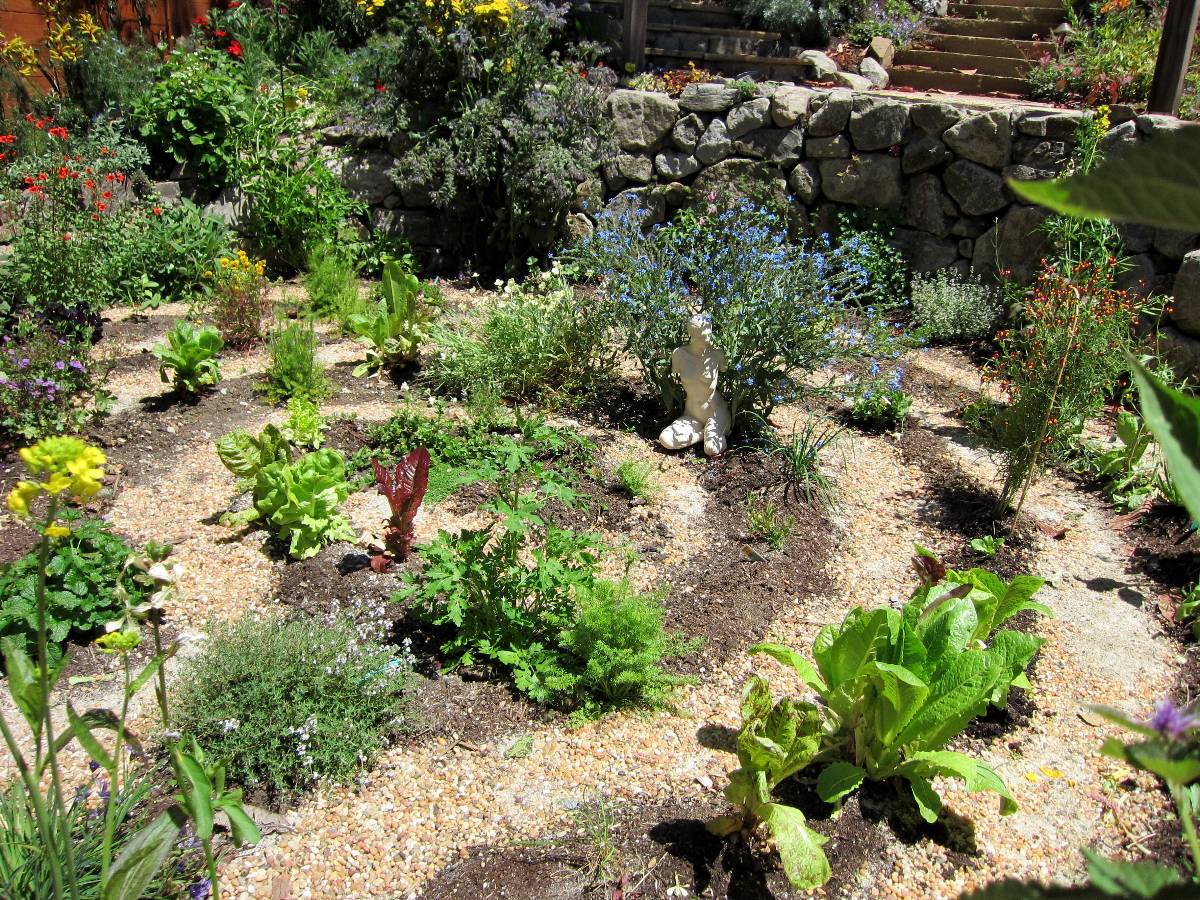
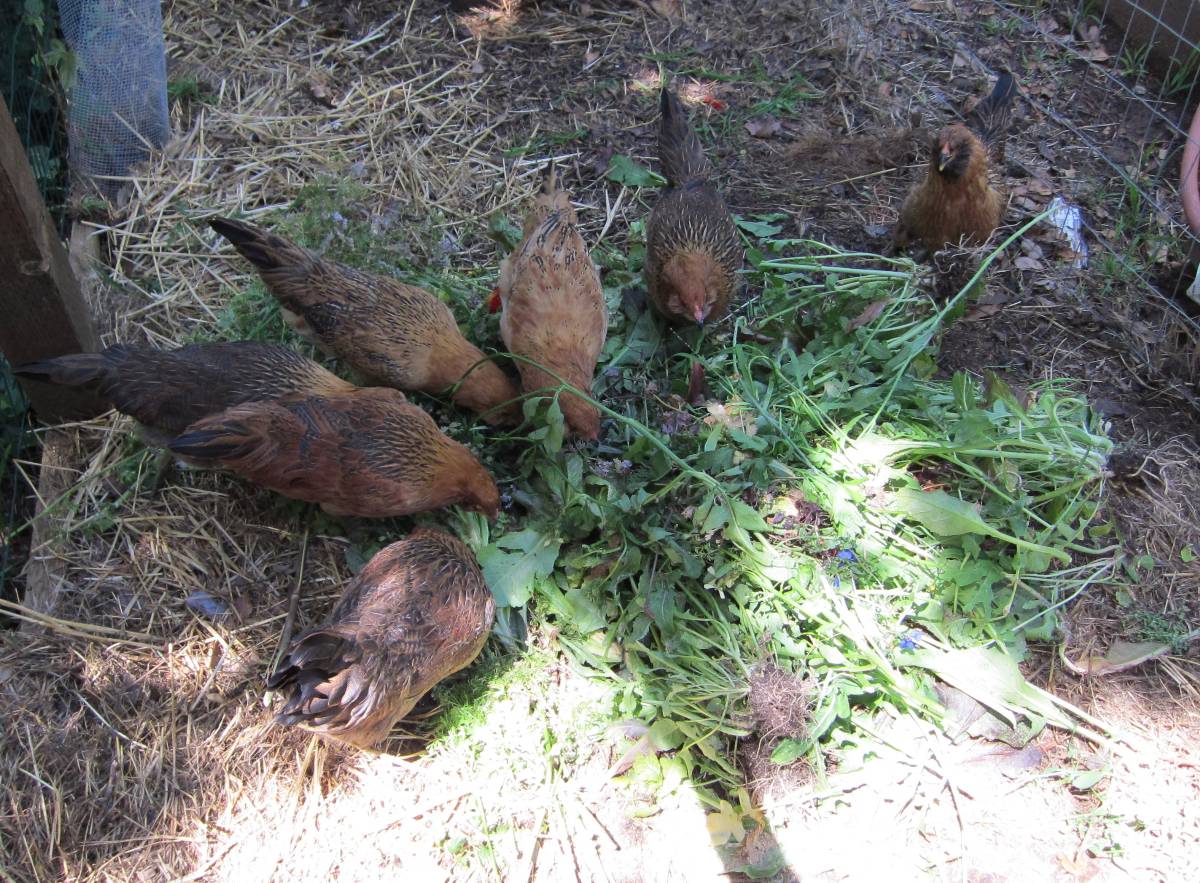
Everyone was happy. Or at least the chickens and I were both pleased with the morning’s work.

If I were to work on a poem today, it would be in the category Bob Hass called in a lecture “poems of domestic felicity.” One of my favorites in that category is this one, “Everyone Was in Love.”As with all domestic felicity, there is a hint of darkness at the edges that only makes the moment sweeter.

Everyone Was in Love

One day, when they were little, Maud and Fergus
appeared in the doorway, naked and mirthful,
with a dozen long garter snakes draped over
each of them like brand-new clothes.
Snake tails dangled down their backs,
and snake foreparts in various lengths
fell over their fronts, heads raised
and swaying, alert as cobras. They writhed their dry skins
upon each other, as snakes like doing
in lovemaking, with the added novelty
of caressing soft, smooth, moist human skin.
Maud and Fergus were deliciously pleased with themselves.
The snakes seemed to be tickled too.
We were enchanted. Everyone was in love.
Then Maud drew down off Fergus’s shoulder,
as off a tie rack, a peculiarly
lumpy snake and told me to look inside.
Inside that double-hinged jaw, a frog’s green
webbed hind feet were being drawn,
like a diver’s, very slowly as if into deepest waters.
Perhaps thinking I might be considering rescue,
Maud said, “Don’t. Frog is already elsewhere.”

This poem is in Galway Kinnell’s latest book, Strong is Your Hold. Not only is this a wonderful book, it comes with a CD of Galway reading the poems. He has one of the great reading voices, and the book is worth it just to hear him read this poem.

 

Miscellany

William Burroughs, a guy with a weird imagination if there ever was one (Dr. Benway, I presume?), wore plain gray suits to preserve a certain public anonymity. I feel the same way about bumper stickers. I want my gray car to blend into the flow of traffic, unnoticed by all. Not to mention that if you have a bumper sticker on your car and then drive badly, you’re undermining whatever cause your sticker promotes. Yesterday I was cut off by Veterans for Peace, and aced out of my parking space by Keep Tahoe Blue. Not that it makes me want to turn the lake orange or declare war, but it doesn’t help. And just when I had decided never, a friend brought me this. But I think I’ll post it here and on my fridge, not on my car.

Continue reading “Miscellany”

How the garden grows

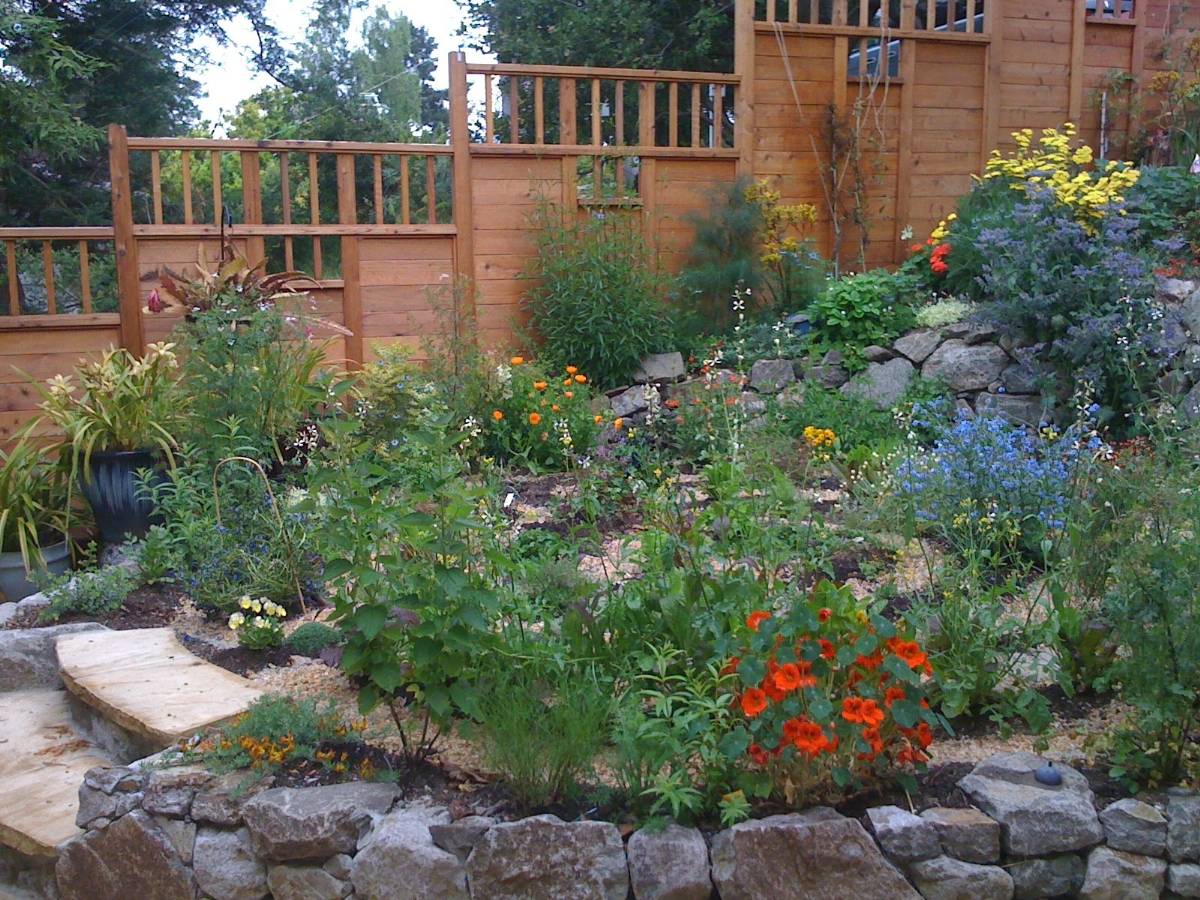
This is the labyrinth this morning.  I can see the plants grow from one day to the next. I’ve let the salad mix and some herbs go to seed in the labyrinth, hoping I’ll see new seedlings soon.

Herbs include all the common culinary herbs, plus borage, hyssop, lemon verbena, summer and winter savory, lemon balm, Thai basil, fennel, rue, feverfew, along with five or six kinds of lettuce, three kinds of chives, and dozens of flowers.

The rest of the front is all flowers.

 
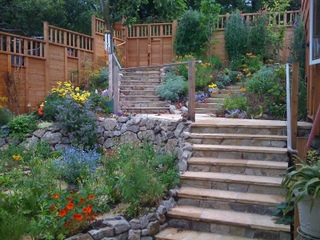
Along with the stone work, there is drip irrigation, so no watering issues (for once in my life) other than figuring out how often and how long I want the water to drip.


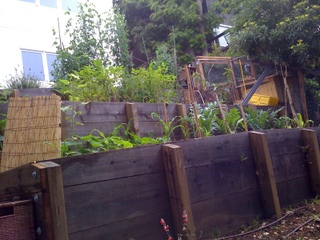
The back, aside from a plethora of poppies, is all vegetables, chickens, and bees.


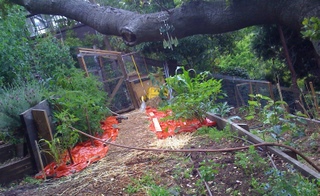
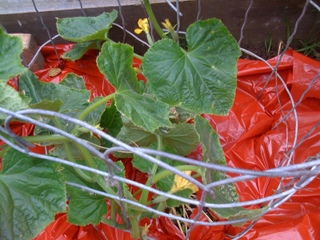
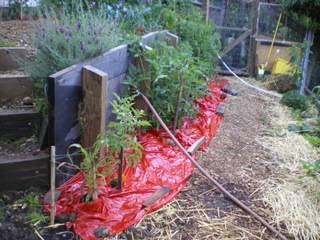
Here is the famed red mulch, chicken coop in the background.

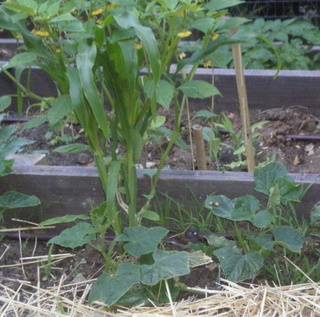
The baby cucumbers, artichokes, tomatillos, corn, and beans:


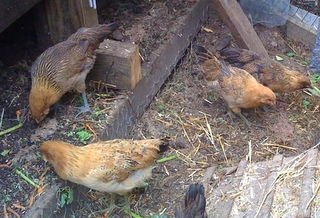
and four of the seven pullets, happily eating scraps.

When Larry discovered me baking egg shells this morning before adding them to the compost, he said:

“This is a farm my Okie relatives wouldn’t recognize.”

Indeed! I hope this is not like someone’s dull slide show of their vacation–but I couldn’t resist.

Potato towers and red mulch

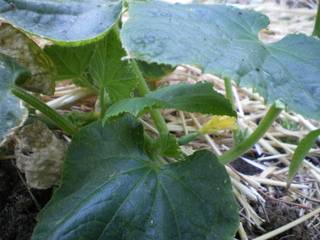
This morning I went out to look at the garden, and a little junco was nibbling under the cucumber—hopefully eating weeds! Can you see it between the plants?

Yesterday was devoted to putting down red mulch and building potato towers. I first read about potato towers in Sunset Magazine (waiting for the dentist!), then saw them on the Bennington Garden Blog. Now they seem to be all the rage. The idea is to put in a bunch of potato pieces and keep adding layers of straw, soil, and compost as the potatoes grow. They grow up instead of sideways, giving a tower of harvestable potatoes.

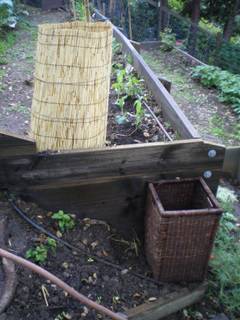
Everyone likes to try something new, including me. They seem like an appealing, space-saving idea. I like the thought of just reaching in for new potatoes as the rest keep growing. I went to Urban Ore my favorite shopping spot for the garden, and picked up an old wicker hamper for one. I made another one out of a remnant of chicken wire and a bamboo shade.  It took most of the morning, and I remembered the best home improvement advice I ever read. “Never think anything is going to take 15 minutes; it takes 15 minutes to find the screwdriver.” Or in my case, to assemble wire cutters, pliers, scissors and glasses.

The red mulch (according to its label) is “a recent innovation to maximize the effect of reflected light on plant growth…red has been found to enhance the growth and yield of several vegetable crops, including tomatoes.”  I decided to give it a try, especially as the foggy east bay is not the best tomato-growing environment in the world.


First I weeded, then top dressed the plants with compost, then put on the mulch. I had to cut and paste a bit to fit my odd rows, but it went pretty well. We’ll see. I think I’ll put it on the eggplants and cucumbers, too.

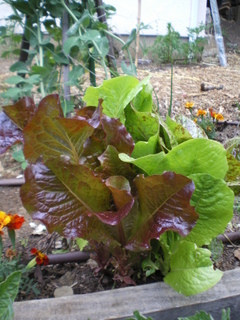
And the first baby cucumbers are as cute as any newborn.  Meanwhile, I’ve been eating and giving away lettuce every day, and enjoying the bumper crop of peas.


Introducing the garden

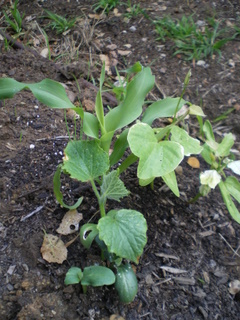
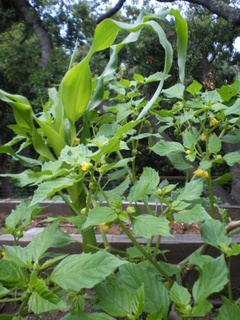
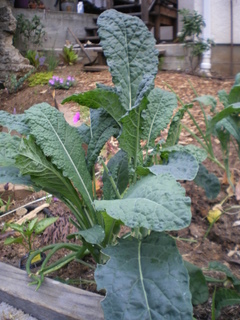
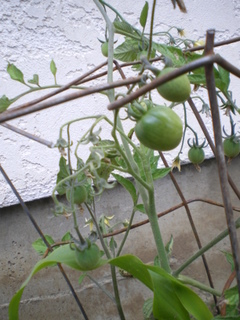
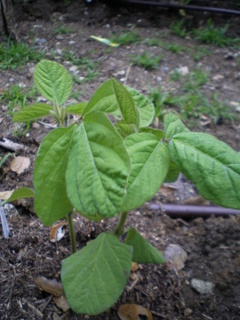
I realized, reading the Bennington Garden Blog this morning that I have neglected to document my miraculous garden. I am lucky to be planting on soil that has been uncultivated for years; it’s rich and full of worms. With the addition of some compost to lighten up the clay, it has produced what seems like instant results. I started planting in February, and now have more lettuce than we can eat (just ready to transplant the third crop of seedlings), snap and snow peas, kale, baby tomatoes, and vigorous corn, tomatillos, cucumber, squash, artichoke, eggplant, edamame and bean plants. I also have first year blueberry bushes, raspberry, and blackberry vines, a young Celeste fig and Hachiya persimmon, and a pepper tree. Here come the photos:


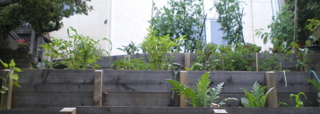
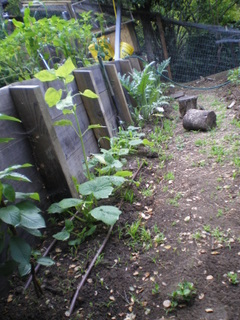
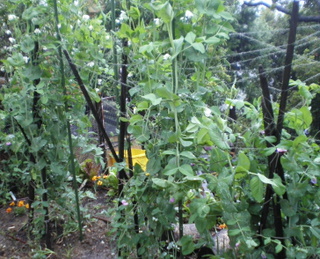
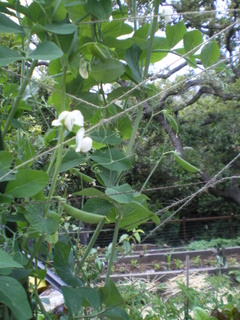
The peas grow visibly taller each day!

These are planted with a technique called Mayan gardening. The corn should be a stalk for the beans, tomatoes or tomatillos, the cucumber provides ground cover.


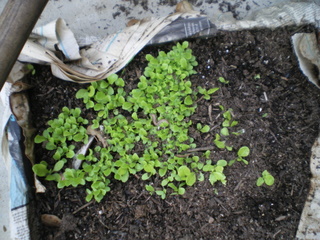
Can you spot the slug in the lettuce seedlings? I didn’t know it was there till I looked at these.

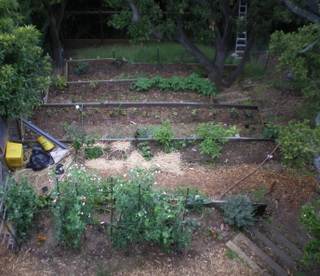
Here’s the front. You can see the beginning of the labyrinth here:


Some of the herbs and salad greens in the labyrinth are already going to seed—I’m letting that happen, figuring I’ll have a summer crop later.


The garden is a world of pleasure, changing each day.  Soon to come: red mulch for the tomatoes! Stakes for the berries, taller stakes for the peas.


Supervised freedom

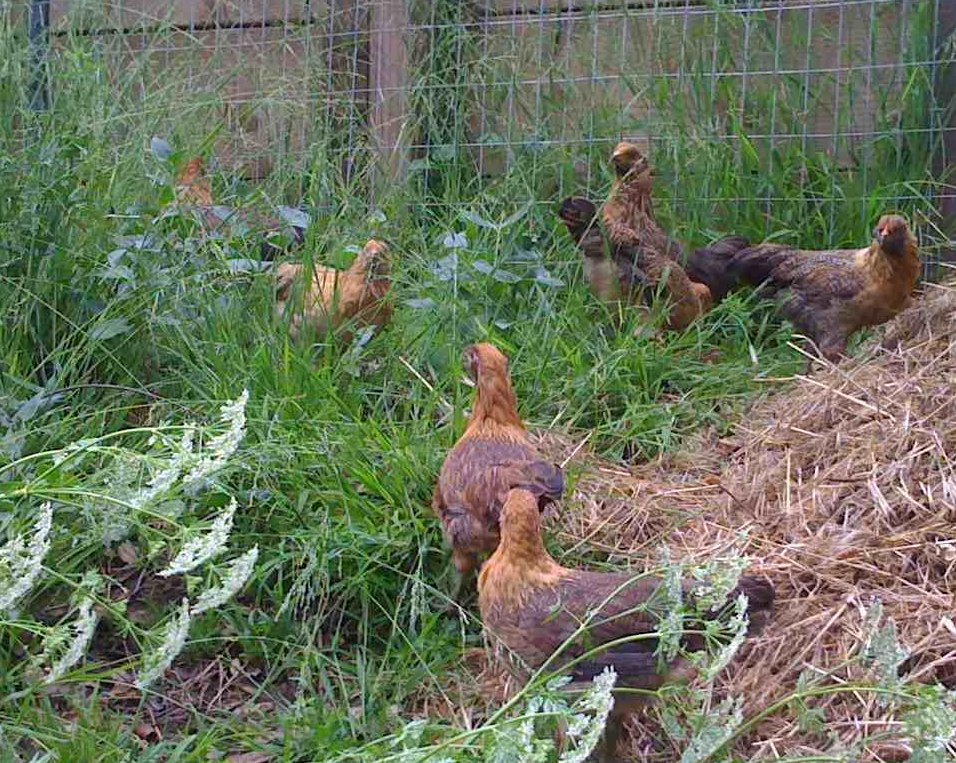
Today for the first time I let the chickens into their large, uncovered pen that gives them plenty of grass and bugs to eat.

They’ve been in a small enclosed area since they went outside, about a month ago.  The enclosed area has chicken wire or bird mesh around 2″ x 4″ wire, and is about 5’ x 16’.  It’s covered top, bottom, and sides. Their house is inside and is 3’ x 4’. It’s hard to believe they were once small enough to fit through 2×4″ mesh! They cheerfully but cautiously explored, then went back in to their smaller area after an hour or so.

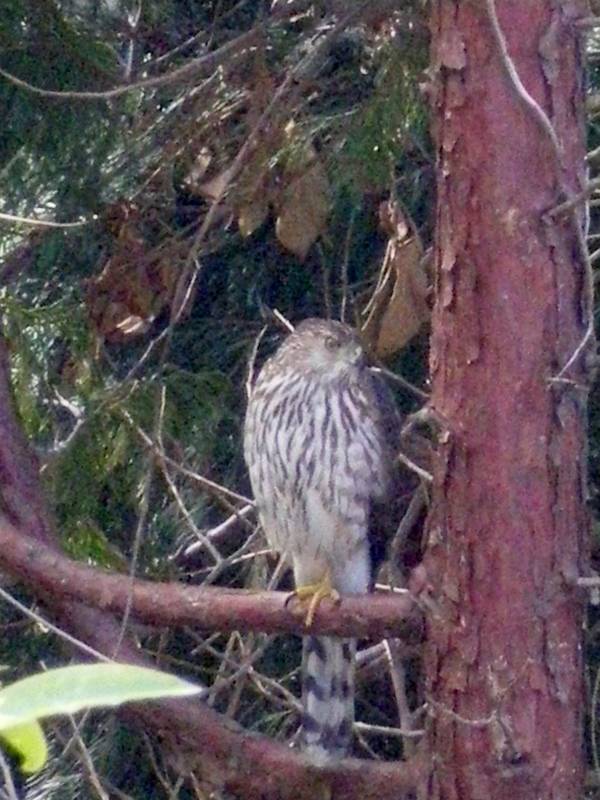
I stayed out there with them, to make sure they really are too big for the chicken hawk, because a few days after I first settled them in their caged area, I saw a young Sharp-Shinned Hawk or possibly a Cooper’s Hawk (they also call these hawks Chicken Hawks, no surprise) sitting on top of the chicken coop.

It was hardly larger than the chicks (so probably Sharp-Shinned–they’re smaller), but it seemed thoroughly unintimidated by me.

It let me come within 15 feet before it reluctantly moved to a branch slightly further away.

The chicks were huddled in their house.

I did lose one chick the day before I saw the hawk. I started with eight. I went for a walk one afternoon and came back to find only seven. I counted and recounted. Only seven. Then I found a small hole in my wire. I guess one got out, and perhaps was a meal for the hawk or a cat or… Nonetheless, I didn’t try to chase the hawk away. It’s my job to keep them safe, not the hawk’s to refrain from catching one. So they only get supervised freedom for now. As my friend Poppy once said, when we saw a raven grab a baby sparrow from its cliffside nest, “It’s a bird eat bird world.”


Labyrinthine

The tag line for this blog includes “a labyrinthine life,” because that seems to me the perfect metaphor for the shape of a life. We can always craft stories about what happened afterwards, but while it’s happening, life is mysterious, counter-intuitive, lots of backtracks and strange turns, which is what I find so compelling about labyrinths. I love that the path to the center is not straightforward and that they have no real “reason” for being.

When I visited my friend Maureen about 10 years ago, she had made one in the field next to her house using a lawnmower to cut the circles into the tall grass. Over time, her friends brought her rocks, fragments, small pots, etc. to put in the center. I was so jealous! But I lived in a space with no flat surface. I had a hill, but it was too steep for a labyrinth.

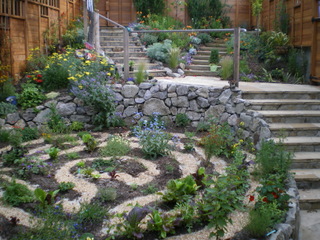
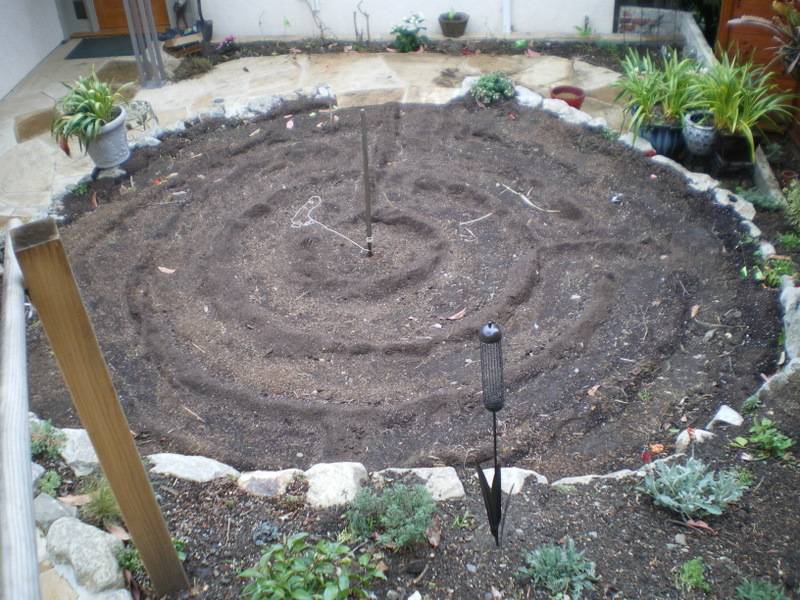
A few years ago we moved, and the house we bought had a space we could make into a small (16’ diameter) labyrinth, a project I’ve been working on since about August of last year. I decided to plant kitchen herbs and small flowers in the labyrinth rows, and modified a plan to fit the space. I cleared and weeded the ground, and took a stick and a string to make the concentric circles, then made the pattern by mounding the dirt:

The idea for me was that it would work a little pause into my day—I tend to move very quickly. I planted the herbs I use most (parsley, oregano, cilantro, sage, chives) in the outer row, so I wouldn’t have to walk the whole labyrinth if I just wanted a sprig of one of them. I bought seedlings at Annie’s Annuals, the best retail nursery I’ve ever seen.

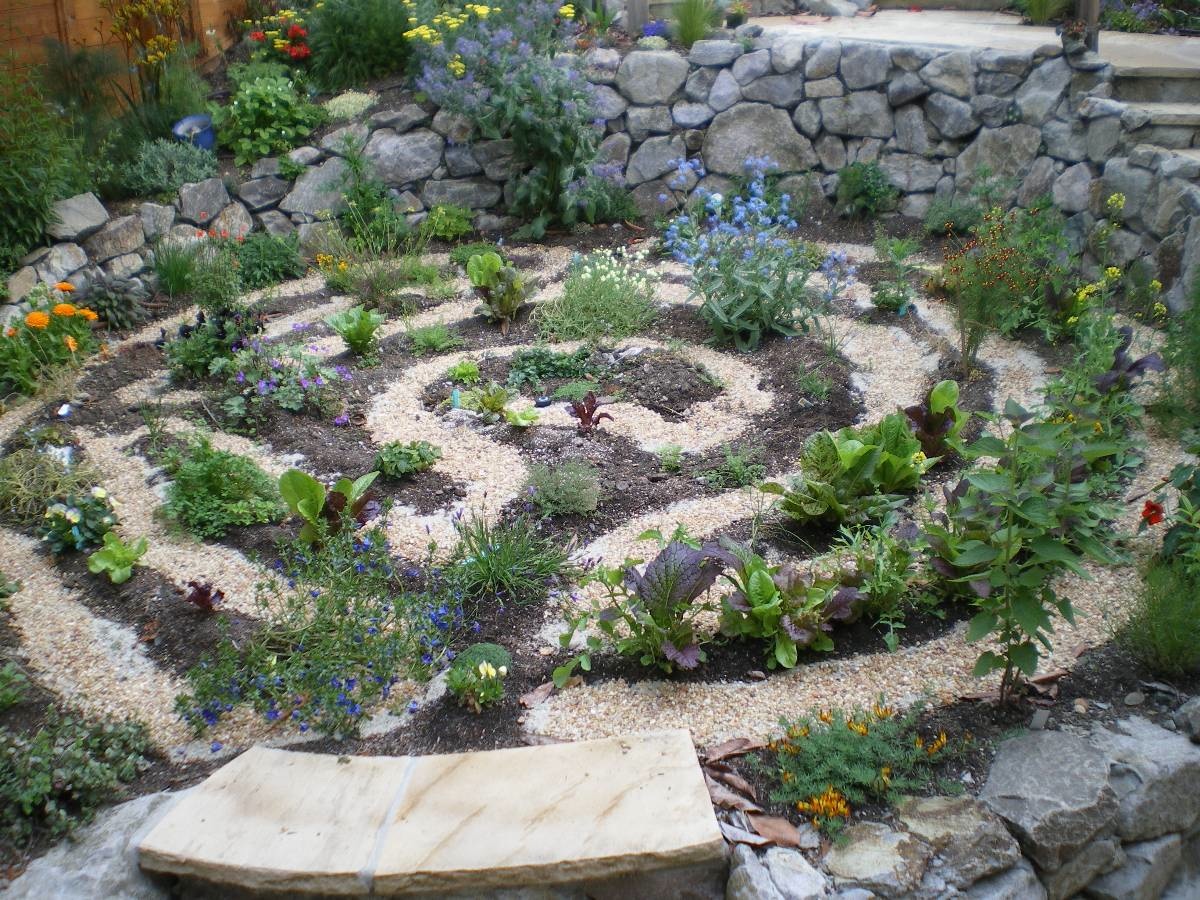
After three months, the labyrinth looks like this:

I have many interim shots, including one with the just-planted labyrinth filled with hail, which gave me the idea for the pale pebble walkway.  But like pictures of one’s children, I may be more in love with them than you are, so I thought these two would suffice for now.

I pick from the labyrinth daily, and tend to walk the whole labyrinth at least once a week, gathering flowers for small bouquets as well as lettuces and herbs. I’ve been adding to the plantings as I go. It’s an ongoing project. And as it’s right in my entryway, it gives people some idea about who I am as they come in. I like that!

Chickens, Driving at Night

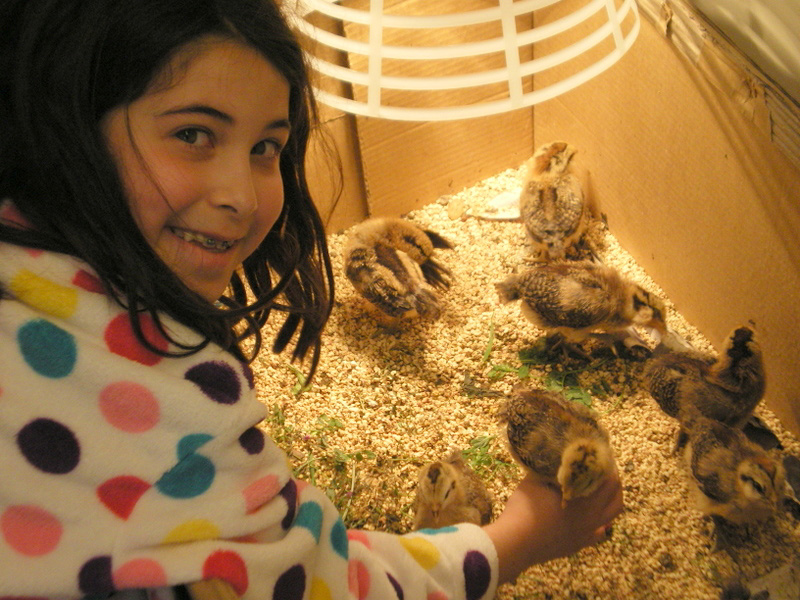
It seems to me that chickens are the perfect eco-accessory. Here they are, a few days old, when they were still in the laundry room.

They grow quickly, provide eggs and meat, and are omnivores. I ground up the remains of the fish stock and they gobbled it—no more smelly mess in the garbage. They eat weeds, bugs, snails and slugs. I’m planning to make a “chicken tractor” to move them around to various parts of the garden. I wonder if I’d still like them as much without the knowledge of future eggs? There is really no comparison between the eggs from a backyard chicken that gets to roam and eat grass and bugs to those sold commercially. Larry says the yolks are the color of a Van Gogh sun. Of course, here in the suburbs, no roosters, which is too bad. I understand that others may not be charmed by the rooster alarm clock. They do crow incessantly, starting before dawn. When I was in Puerto Rico, surrounded by households with roosters I wondered: is a rooster’s crow the sound of poverty or of affluence? In any case, a small, well-tended flock of chickens is pretty delightful. I saw this poem about chickens years ago and saved it.

Passing a Truck Full of Chickens at Night on Highway Eighty 

Some were pulled by the wind from moving
to the ends of the stacked cages,
some had their heads blown through the bars—

and could not get them in again.
Some hung there like that—dead—
their own feathers blowing, clotting

in their faces.  Then
I saw the one that made me slow some—
I lingered there beside her for five miles.

She had pushed her head through the space
between bars—to get a better view.
She had the look of a dog in the back

of a pickup, that eager look of a dog
who knows she’s being taken along.
She craned her neck.

She looked around, watched me, then
strained to see over the car—strained
to see what happened beyond.

That is the chicken I want to be.

Jane Mead,  The Lord and the General Din of the World

I don’t know anything about Jane Mead, but the following poem, also about a bird seen driving at night, was written by a woman who died fairly young from a chronic and degenerative disease.  It’s a level darker and deeper:

Night Owl

            You are nearing the land that is life,
            You will recognize it by its seriousness.
                                                                                  Rilke

Diving my bad news the back way home
I know I’m in the land that is life
when I reach my favorite stretch of road—fields
flat and wide where corn appears soon after
planting the soil tilled, night-soaked
and crumbled into fists.
Ferguson’s barn is somewhere
at the end of this long arm of tar
and as I near it, something grazes the back
passenger-side door, luffs parallel to my car—
a huge owl on headlight spray floating,
holding night over the hood to see
if this moving thing is real, alive,
something to kill—then gliding in
close as if to taste glass.
The road levitates, buffeted on a surf
of light, the fog-eaten farm disappearing
as I ride into starlessness, cells conspiring
so I am bright-flecked and uplifted—is this
what it feels like to be chosen—to be taken
under the wing of something vast
that knows its way blindly?

M. Wyrebek, Be Properly Scared