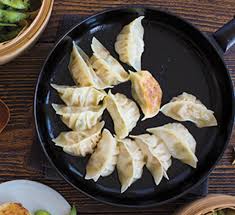
 I’m sure there’s a difference between the two, but I’m not sure what it is. Whichever you want to call them, here’s a recipe. It takes some time, but they are delicious.
INGREDIENTS (You can find these at an Asian market)
For the Dumplings:
- 6 oz finely minced Napa cabbage (about 1/2 a medium head)
- 4 oz finely minced shiitake mushrooms
- 4 oz finely minced Kimchee
- 1 finely minced shallot
- 1 tablespoon kosher salt, divided
- 1 pound ground pork shoulder
- 1 teaspoon white pepper
- 1 tablespoon (or more) minced fresh garlic (about 3 medium cloves)
- 1 teaspoon minced fresh ginger
- little grated lime peel
- 2 ounces minced scallions (about 3 whole scallions)
- 2 teaspoons sugar
- 1 package dumpling wrappers (40 to 50 wrappers)
- Vegetable or canola oil for cooking
DIRECTIONS
For the Dumplings: Combine cabbage, mushrooms and 2 teaspoons salt in a large bowl and toss to combine. Transfer to a fine mesh strainer and set it over the bowl. Let stand at room temperature for 15 minutes.
Transfer cabbage and mushrooms to the center of a clean dish towel and gather up the edges. Twist the towel to squeeze the cabbage, wringing out as much excess moisture as possible. Discard the liquid.
Combine pork, drained cabbage and mushrooms, remaining teaspoon salt, white pepper, garlic, ginger, scallions, and sugar in a large bowl and knead and turn with clean hands until the mixture is homogenous and starting to feel tacky/sticky. Transfer a teaspoon-sized amount to a microwave-safe plate and microwave on high power until cooked through, about 10 seconds. Taste and adjust seasoning with more salt, white pepper, and/or sugar if desired.
Set up a work station with a small bowl of water, a clean dish towel for wiping your fingers, a bowl with the dumpling filling, a parchment-lined rimmed baking sheet for the finished dumplings, and a stack of dumpling wrappers covered in plastic wrap.
To form dumplings, hold one wrapper on top of a flat hand. Using a spoon, place a 2 teaspoon- to 1 tablespoon-sized amount of filling in the center of the wrapper. Use the tip of the finger on your other hand to very gently moisten the edge of the wrapper with water (do not use too much water). Wipe fingertip dry on kitchen towel.
Working from one side, carefully seal the filling inside the wrapper by folding it into a crescent shape, pleating in edge as it meets the other–just like they look in the picture. Transfer finished dumplings to the parchment lined baking sheet.
At this point the dumplings may be frozen by placing the baking sheet in the freezer. Freeze dumplings for at least 30 minutes then transfer to a zipper-lock freezer bag for long-term storage. Dumplings can be frozen for up to 2 months and cooked directly from the freezer.
To Cook: Heat 1 tablespoon of vegetable oil in a medium non-stick skillet over medium heat until shimmering. Add as many dumplings as will fit in a single layer and cook, swirling pan, until evenly golden brown on the bottom surface, about 1 1/2 minutes.
Increase heat to medium-high, add 1/2 cup of water and cover tightly with a lid. Let dumplings steam for 3 minutes (5 minutes if frozen), then remove lid. Continue cooking, swirling pan frequently and using a thin spatula to gently dislodge the dumplings if they’ve stuck to the bottom of the pan, until the water has fully evaporated and the dumplings have crisped again, about 2 minutes longer. Slide dumplings onto a plate, turning them crisped-side-up before serving with the sauce.
SAUCE
- 8 tablespoons ponzu sauce
- 4 tablespoons thinly sliced scallions
- 4 teaspoons grated fresh peeled ginger
- 4 teaspoons mirin
- 2 teaspoons toasted sesame oil
- 1/2 teaspoon kosher salt
DIRECTIONS
In a small bowl, combine ponzu, scallions, ginger, mirin, sesame oil, and salt. Serve.
 Sunday Night

 ‘s story:
 Undressing You
 I’ve been receiving poems from so many sources lately. Even my local art gallery is sending daily inspiration. It’s amazing how many poems I don’t like! But then comes one I do, and it’s all worth it. I try only to post the ones that move me here:
 It’s always a delight to discover a new poet. Here is a poem by Aimee Nezhukumatathil. I love the whole neighborhood of past loves. Don’t we all have that, even if they are long past? And that last line is killer: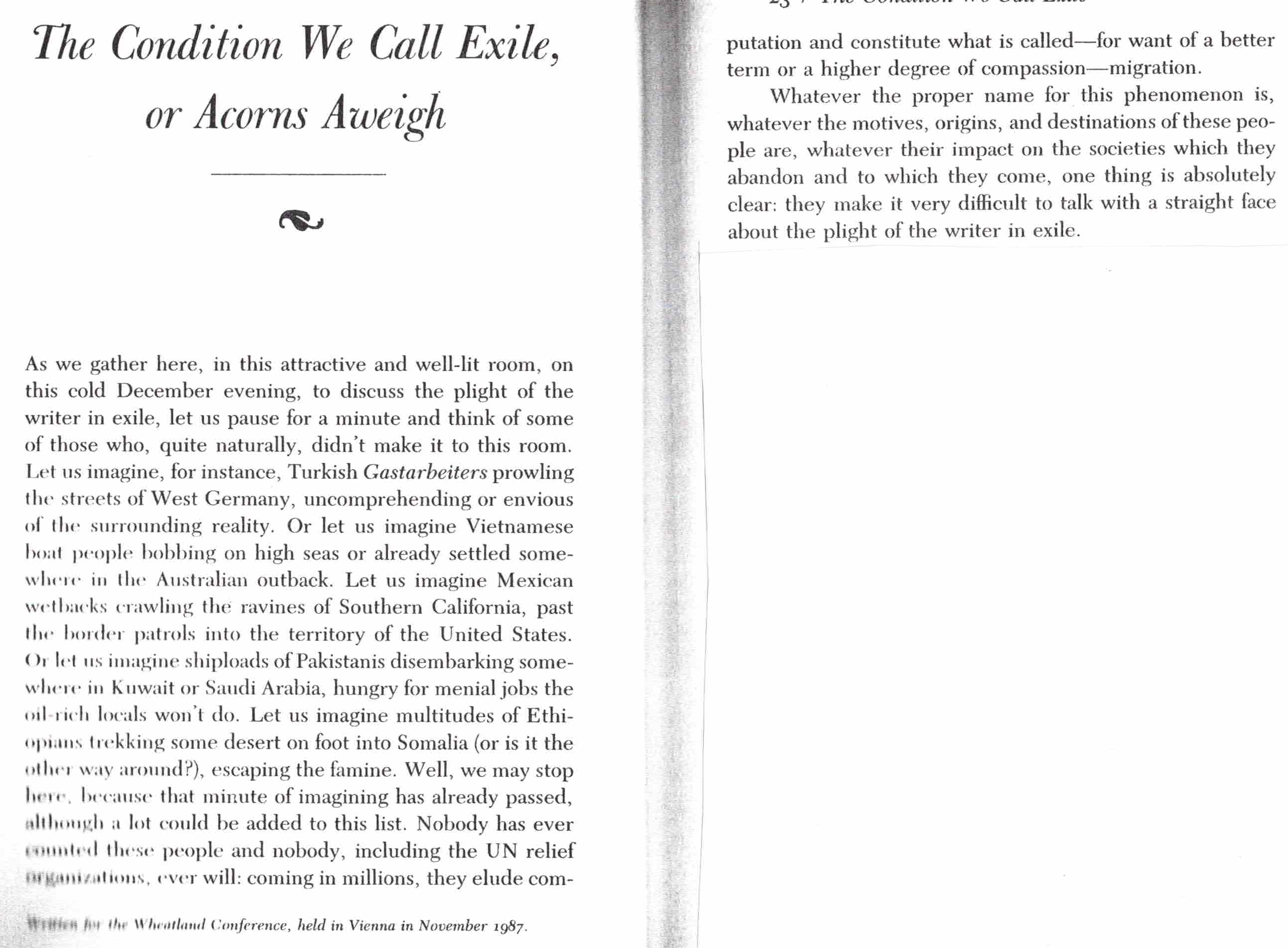
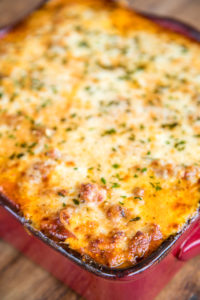 This is a wonderful comfort dish for a gray day. I first had something similar at the Jazz School Café in Berkeley, and later went home and experimented. If you make this when golden-red heirloom tomatoes are available, they make a lovely contrast with the polenta. If you use vegetable stock for the polenta, it’s a vegetarian treat. Otherwise use light chicken stock—stay away from beef or dark chicken stock to preserve the yellow color of the polenta. I go very light on the cheese and it’s yummy, but if you are insouciant about dairy and calories, more makes it even creamier. Of course you can add or substitute in the sauce with just about anything: fennel, yellow peppers, bok choy, carrots, corn, squash, whatever fall vegetables please you.
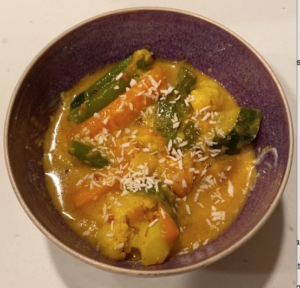 When my friend Tung came back from a wedding in India, she was raving so much about the perfectly delicious vegetarian food, that I began looking for recipes. This simple curry is a winner. And if you can’t find curry leaves, it’s still delicious:
 This poem, which I found on the site Women’s Voices for Change, seems to perfectly encapsulate this moment. Jane’s new book, Ledger, from Knopf, just came out. It’s worth buying a copy from your local book store. You won’t regret it.
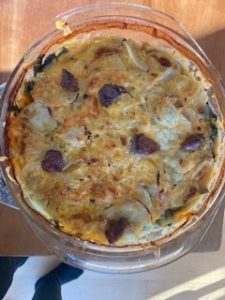 This is a dish that I have made hundreds of times. The whole family loves it. Part of its charm is that you essentially make it in the food processor really quickly. It ages well, heats up to have with eggs at breakfast of by itself for lunch. The onions in this dish caramelize and sweeten the taste. When my son was young and wouldn’t eat onions, my daughter told him these weren’t onions, they were “chiapas.” He happily ate many portions.