 The Guggenheim Museum is showing the work of two collaborators, Peter Fischli and David Weiss. The highlight of the show for me is a 30-minute video, The Way Things Go, of a series of objects interacting in an extended chain reaction, one object moving in a way that propels the next. But unlike most assemblages of this sort, this one is often excruciatingly, deliciously slow, as one object grows or turns coming closer and closer to affecting the next. It is a delightful exploration of balance, motion, and fire, with explosions, suds, clouds of steam, old tires, bottles of flammable liquid, moving blocks and ladders. You can see an excerpt here. Continue reading “Fischli and Weiss”
Author: Meryl
Another Insane Devotion
At the beginning of a book by the same name that I haven’t read, I found this poem by Gerald Stern, now in his nineties. He came and read to a full house last year in the Bay Area:
Another Insane Devotion
This was gruesome—fighting over a ham sandwich
with one of the tiny cats of Rome, he leaped
on my arm and half hung on to the food and half
hung on my shirt and coat. I tore it apart
and let him have his portion, I think I lifted him Continue reading “Another Insane Devotion”
Two points of view
 This week, I have read two passages with very opposing points of view. The first from a book by Claudia Rankine, called Citizen. Here’s a fairly typical excerpt:
“You are in the dark, in the car, watching the black-tarred street being swallowed by speed; he tells you his dean is making him hire a person of color when there are so many great writers out there.
You think maybe this is an experiment and you are being tested or retroactively insulted or you have done something that communicates this is an okay conversation to be having.
Why do you feel okay saying this to me? You wish the light would turn red or a police siren would go off so you could slam on the brakes, slam into the car ahead of you, be propelled forward so quickly both your faces would suddenly be exposed to the wind.
As usual you drive straight through the moment with the expected backing off of what was previously said. It is not only that confrontation is headache producing; it is also that you have a destination that doesn’t include acting like this moment isn’t inhabitable, hasn’t happened before, and the before isn’t part of the now as the night darkens and the time shortens between where we are and where we are going.”
The second is from After the Parade, by Lori Ostlund: Continue reading “Two points of view”
Who?
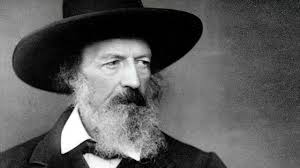 At a craft talk at Squaw Valley one year, Bob Hass said something like this: No one can say whose work will last. Alfred Lord Tennyson was the most famous poet of his day. But who reads him now? The important thing is to wrestle with our own demons, to get that struggle into our work. As for its worth, that’s not up to any of us to know.
I don’t read Tennyson either, although I did love the strong, almost irresistible music of his work when I was first reading poems. And many of his lines remain in my memory. So here is a poem of his, and afterwards, a poem of mine on a very similar theme. Not that I equate my work with his, but because the work itself is all there is, and we are all struggling to get it down on the page, famous or not.
Break, Break, Break
Break, break, break,
On thy cold gray stones, O Sea!
And I would that my tongue could utter
The thoughts that arise in me. Continue reading “Who?”
Apolitical
 I’ve never been very engaged in the political process–probably because my introduction was going with my mother to rallies for Adlai Stevenson. But I’ve never been quite as depressed by the process as this year. Really? This is who people are voting for?
Larry summed it up perfectly, “The biggest problem the next president will face is presiding over a nation of idiots.”
Ada Limón
 I first heard Ada Limón read at San Francisco Litquake’s World Series of Poetry. I found her work alive and intriguing.
Here’s sample from her latest book:
The Last Move
It was only months when I felt like I had been
washing the dishes forever.
Hardwood planks under the feet, a cord to the sky.
What is it to go to a We from an I?
Each time he left for an errand, the walls
would squeeze me in. I cried over the nonexistent bathmat, wet floor of him,
how south we were, far away in the outskirts.
(All the new bugs.)
I put my apron on as a joke and waltzed around carrying
a zucchini like a child.
This is Kentucky, not New York, and I am not important. Continue reading “Ada Limón”
C. D. Wright
 Last month, C. D. Wright died suddenly in her sleep. There have been many good articles about her life and work since then. This poem, from her book String Light, reads to me as a self-written obituary.
Oh, the Novaculite Uplift–a chert and flint formation in the mountains of Arkansas (where Carolyn was born), Oklahoma and Texas.
Our Dust
I am your ancestor. You know next to nothing
about me.
There is no reason for you to imagine
the rooms I occupied or my heavy hair.
Nor the faint vinegar smell of me. Or
the rubbered damp
of Forrest and I coupling on the landing
on route to our detached day.
You didn’t know my weariness, error, incapacity.
I was the poet
of shadow work and towns with quarter-inch
phone books, of failed
roadside zoos. The poet of yard eggs
and sharpening shops,
jobs at the weapons plant and the Maybelline
factory on the penitentiary road. Continue reading “C. D. Wright”
Morning reading
I set aside David Lipsky’s review of Nabokov’s Letters to Vera in Harper’s to read this morning, and was rewarded by a truly elegant piece of work. Lipsky doesn’t just review the letters, he provides a succinct and literate overview of Nabokov’s life, his work, his long marriage. “No marriage of a major twentieth-century writer lasted longer,” he quotes from Brian Boyd’s introduction. He manages to cull and quote gems from the 864 pages and relate them to the body of Nabokov’s fiction.
 He notes the shocking intimacy of Nabokov’s work–“The hero takes a sleepy, eye-watering yawn–and the world ‘shivered and dissolved in the prism of his tears.’ …Nabokov’s people are constantly yawning scrunching, nose wiping, bug-bite scratching.”
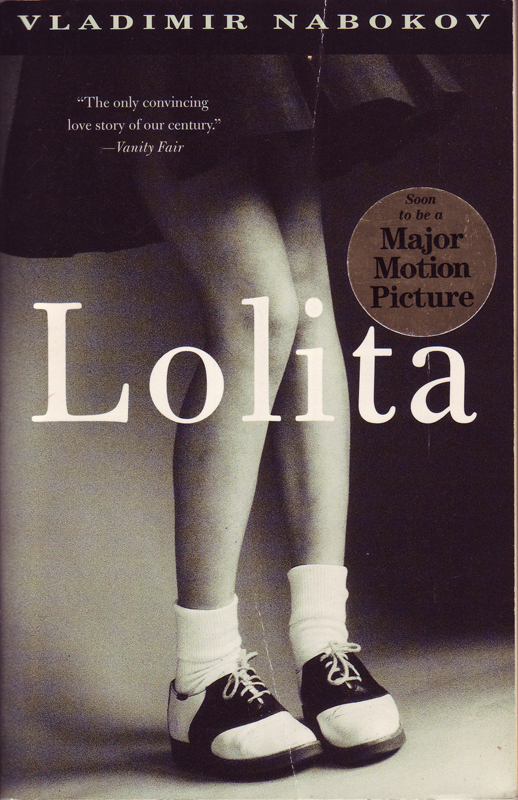
He’s especially funny about the popular “hurricane” of Lolita, published thirty years into Nabokov’s literary career: “There were Lolita dolls, Lolita cartoons (arriving Martian: ‘Take me to your Lolita’), a Kubrick movie, a San Francisco drive-in serving Lolitaburgers.” And Eichmann–instrumental in the murder of (among others, Nabokov’s brother), who finds the book “unwholesome.”
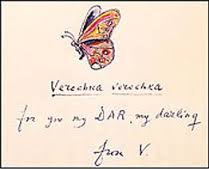 The essay was especially moving to me having visited the Nabokov museum in St. Petersburg–all those many title pages with hand-drawn butterflies dedicated to Vera. Continue reading “Morning reading”
Bob and Ray
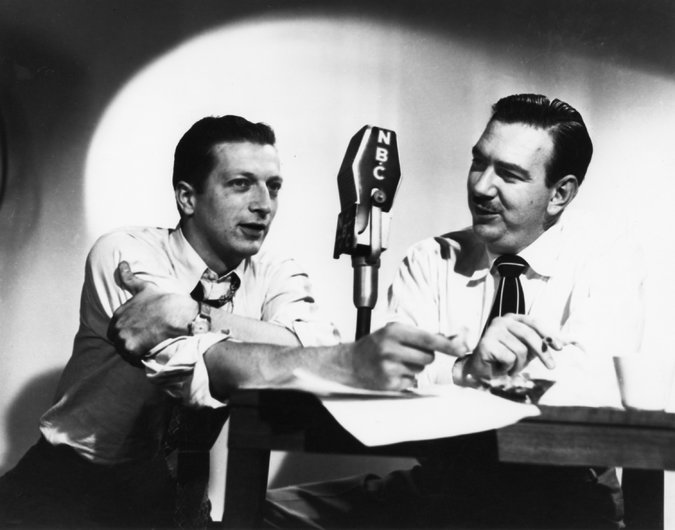
Back in the days of radio, the comedy team of Bob and Ray provided hours of low-key comedy. Ray Goulding has been gone for some time, but Bob Elliott’s obituary just appeared in the NY Times this morning. Continue reading “Bob and Ray”
Two poems about birdsong
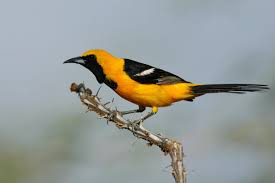 The first, in sonnet form, by Robert Frost, published in 1942. The second a more contemporary song by Troy Jollimore.
Never Again Would Birds’ Song Be the Same
He would declare and could himself believe
That the birds there in all the garden round
From having heard the daylong voice of Eve
Had added to their own an oversound,
Her tone of meaning but without the words.
Admittedly an eloquence so soft
Could only have had an influence on birds
When call or laughter carried it aloft.
Be that as may be, she was in their song.
Moreover her voice upon their voices crossed
Had now persisted in the woods so long
That probably it never would be lost.
Never again would birds’ song be the same.
And to do that to birds was why she came.
Robert Frost
A Witness Tree
Oriole
A bend in the river.
A flaw in the surface.
How many continents
has this lone oriole
crossed to come balance
on our sagging clothesline,
and what urgent thing
is he trying to tell us?
That those who could translate
his song are lagging
a thousand miles
behind? Or that those
who can speak both his tongue
and ours have not yet
been born, that we will go
into the ground
and a thousand years pass
before their eyes open,
the wayward atoms
of our nests and tongues
having been dispersed,
reassigned, and repurposed
into their bright,
unforeseeable bodies?
Troy Jollimore
Syllabus of Errors
The British first
Looking at my post yesterday about Robert Lowell’s book, Imitations, I commented that the first edition of that book was for sale for $35. Larry looked at the picture and said, “That must be the British first edition.” I checked the source, and it was. “How did you know that?” I wanted to know. Continue reading “The British first”
Books that change your life
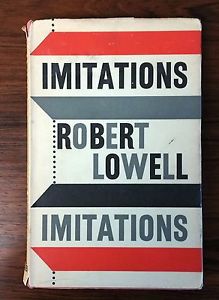 I’ve been reading some essays by C.K. Williams (who wrote last week’s poem). In one essay he talks about reading a book by Robert Lowell, Imitations, which broke open a new way of thinking about poetry.
Imitations was influential and controversial. Lowell took poems in other languages and rather than translate them, he created his own poems in English inspired by them. Many deplored this technique, finding it arrogant and disrespectful. But it definitely gave poets something to think about. For Williams, it “released something in me I hadn’t grasped had been keeping me from moving ahead in my own work.”
How amazing it is that books can crack you open, can shed light into your own struggles and world view. Continue reading “Books that change your life”