Thanks to a friend, I just watched an amazing video about animal communication. Then I remembered this poem:
Night Owl 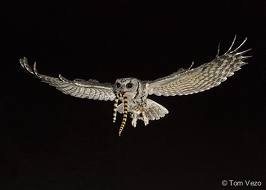
You are nearing the land that is life.
You will recognize it by its seriousness.
–Rilke
mine and others
Thanks to a friend, I just watched an amazing video about animal communication. Then I remembered this poem:
You are nearing the land that is life.
You will recognize it by its seriousness.
–Rilke
Monday, and here’s another poem I found in the book of Ghazals: Ravishing Disunities
Summer Whites
I want old-fashioned metaphor; I dress in black.
My son was murdered. I bear witness in black.
The graveyard shocks with rampant green.
In a rusted chair sits grief, enormous in black.
Died July 16, 1983.
Navy’s white headstone, christcross in black.
A cadnal falmes—sudden visitation.
Loy spirit? Surcease from black?
Grackles keen in mad falsetto.
Treeful of banshees. Fracas in black.
It should be told, of course, in small details
and with restraint (artfulness in black).
He was a sailor in summer whites in a port city.
He was walking, streets dangerous in black.
The bullet entered right shoulder, ricocheted.
In the ground his dress blues decompose to black.
I am Isabel. He was Jerry John. The dead
are listening for their names, soundless in black.
Isabel Nathaniel
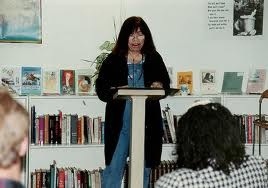
I have been reading about and playing with the poetic form called a Ghazal. The rules of the Ghazal are that it is an unspecified number of couplets. The first couplet sets out a repeating word or phrase in first line, and repeats that word or phrase at the end of every couplet. The word before the repeated words should rhyme in every couplet. And in the final couplet, the author should use their own name. The couplets should each stand alone. This form comes to us from the Arabic, and according to Agha Shahid Ali’s book, Ravishing Disunities, at poetry readings the audience participates in the form by calling out the repeated phrase as it occurs in each couplet. Here’s one by Lisa Rappoport:

I was afraid of the girls: their cliques and all
that gossiping made me sick for them all.
Their willingness to wear dresses
showed they bought into the rhetoric and all.
Worthwhile activities like climbing trees or
bicycling
were severely hampered by such icky folderol. Continue reading “Ghazal for Monday”
Those of you who have been reading this blog for awhile know about my passion for libraries, how I like to have a card for any library I pass so I can go in and get a book.
 The only card I pay for is my UC Berkeley library card, and going there is a bit of an expedition, involving finding a parking space, at least a 10-minute walk, and usually a specific quest for a book I can’t get elsewhere. So it’s a disappointment when the book I’ve carefully looked up online and gone to get isn’t available, which happened a few weeks ago when the main library stacks were closed due to a power failure, which was itself due to an explosion caused by the theft of copper wire from a University power plant, a whole other story–one for someone else to write.
All of which is a preamble to explain why I wandered the undergraduate library for consolation, and came home with a book called The Best American Erotic Poems from 1800 to the Present, edited by David Lehman. The poems are arranged by the poets’ year of birth, and I find it depressing that people very much younger than I can write so well. In some moods, of course, I find it encouraging, but rarely. Continue reading “Poetry Monday: Erotica”
 Somehow, it always seems to be Tuesday these days when I set out to post a Monday poem. Two weeks ago, Seamus Heaney died, and there were many of his poems posted here and there. This is one of my favorites, the way it compares moving through the armed surveillance of Northern Ireland to the act of writing…or at least, that’s how I read it.
The tightness and the nilness round that space
when the car stops in the road, the troops inspect
its make and number and, as one bends his face
towards your window, you catch sight of more Continue reading “Poetry Monday–From the Frontier of Writing”
A week or so ago I received a poem by Joe Lamb, tree wizard, poet, and friend, in my inbox. I thought I’d share it here:
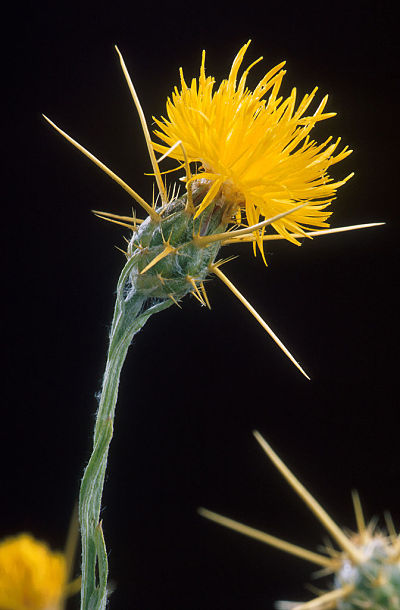 Star Thistle
Go into the intimacy
of your little eternity
with the wild patience
of a Star Thistle Continue reading “Poetry Monday–Joe Lamb”
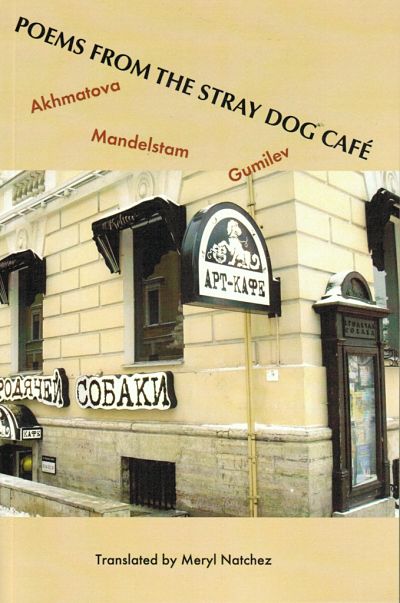 This poem, untitled when written, has since been labeled “Stalin Epigram.” Osip Mandelstam wrote it at the height of the Stalin purges, in 1933, and recited it to a literary gathering at Pasternak’s house. Someone at that gathering reported him, and he was exiled to a remote village and later arrested. He died on the way to Siberia. So in a way, this poem cost him his life.
I will read this and other poems from my new book of translations, Poems from the Stray Dog Cafe: Akhmatova, Mandelstam, and Gumilev, at University Press Books in Berkeley on Thursday, September 26 at 6 pm.
Polina Barskova will read some of the Russian.
Мы живем, под собою не чуя страны,
Наши речи за десять шагов не слышны,
А где хватит на полразговорца,
Там припомнят кремлёвского горца.
Его толстые пальцы, как черви, жирны,
А слова, как пудовые гири, верны,
Тараканьи смеются усища,
И сияют его голенища.
А вокруг него сброд тонкошеих вождей,
Он играет услугами полулюдей.
Кто свистит, кто мяучит, кто хнычет,
Он один лишь бабачит и тычет,
Как подкову, кует за указом указ:
Кому в пах, кому в лоб, кому в бровь, кому в глаз.
Что ни казнь у него – то малина
И широкая грудь осетина.
May, 1933
We live, but cannot feel the earth,
And if we speak, we can’t be heard.
But wherever you hear a half-conversation,
They talk of that backwoods lout in the Kremlin.
Ten fat fingers like greasy worms,
Each of his words weighs fifty pounds.
His moustache bristles in cockroach laughter,
And his polished jackboots glitter.
His gang surrounds him, a spineless crew,
Half-men who do what he tells them to.
Some growl, some whimper, some yowl and hiss,
But he alone rages and bangs his fists.
Decree on decree like horseshoes fly
At groin, forehead, eyebrow, eye.
Each execution—sweet as a berry,
To this broad-chested thug from Gori.
The full press release follows…. Continue reading “Poetry Monday”
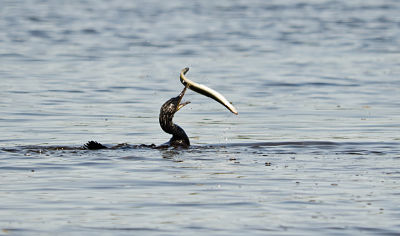 The weekly publication jWeekly published my poem, “The Afternoon Before the Day of Atonement,” which is great. Really, it’s a pleasure to be published there. But there was a formatting mistake and the poem came out like prose. I don’t think it works very well as prose. Here is the poem as I wrote it.
I thought I would see seals asleep on the rocks,
but the cormorant was the real show,
wrestling a twisted length of eel,
persistently untwisting with its beak
to swallow it whole.
Then, as I watched, uncertain whether
I’d seen eel or kelp straighten and slide
down the long bird throat, it speared
into the surf and did it again:
unmistakably eel, writhing
for its life, no match for the skilled,
beak-tossing cormorant.
And the whole time, and afterward,
waves rake the shore,
and I wonder how to ask forgiveness
for being myself: merciless
like the cormorant, frantic
like the eel, thoughtless
like both, though I am designed to think,
a mindful tool, whose eyes engage the ocean
to sense the curve and crash of the infinite. Continue reading “Formatting error”
 Here is a podcast from J.P. Dancing Bear’s radio show, FM91.5 KKUP’s “Out of Our Minds.”
Bear does a one-hour poetry radio show every Wednesday night at 8 pm. I was lucky to be his guest.
http://jp-dancingbear.squarespace.com/outofourminds/2013/9/4/out-of-our-minds-wguest-meryl-natchez
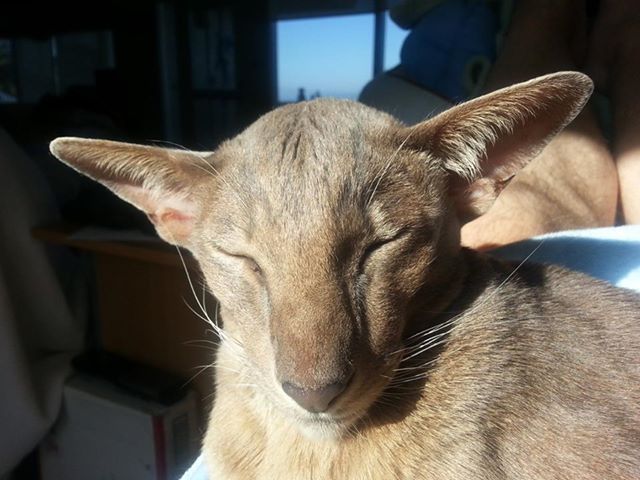
He’s a pro, and makes it flow so easily. He also has a great-looking cat.
 Yes, I know, it’s Tuesday again. What can I say? As always, life before poetry. But today I have a poem by Troy Jollimore, a recent Squaw connection, whose book Tom Thomson in Purgatory, won the National Book Critics Circle Award. One section of the book has poems that give a nod to Berryman’s Dream Songs. Troy’s alter ego is not Henry, but Tom Thomson. Here’s one of my favorites:
He had a good run. Ran like hell, in fact,
toward the wisdom and away from pain.
(Except he got them mixed up, it turned out.) Continue reading “Poetry Monday”
I get a lot of poems online, various sources. Once in awhile, I like one. This one is by Gretchen Primack. You can read more by selecting the link below:
 Avenue
I’m tired. Men can Hey baby
all they want. A station wagon
shudders into reverse,
a plum wrinkles
its skin; three nurses
walk their smoke break,
a bird decides no,
paper bag tumbleweeds
tumble. Too much
hangs on a doorknob.
Too many choke
the awnings. Tired water
holds itself up by the curbs;
all that grows in the hardy
filth of the avenue
holds itself up; the dirty hands
and minds, someone
hollering about grace.
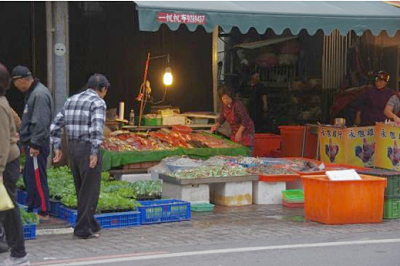
Look at that bucket of carrots
outside the deli, glowing
like a lampshade. How can that man,
peeling them in another language,
bear it?
Beside him, pyramids of citrus.
Rows and pyramids and buckets:
all that bounty at eye level. Up above,
nothing at all, as if the sky
has always been imaginary.
Forty-five years ago, I began translating Russian poetry. Okay, I was a strange young adult. But this year, a book of my poetry translations was finally published, Poems from the Stray Dog Cafe: Akhmatova, Mandelstam, and Gumilev. Here’s one of the poems:
Но я предупреждаю вас,
Что я живу в последний раз.
Ни ласточкой, ни кленом,
Ни тростником и ни звездой,
Ни родниковою водой,
Ни колокольным звоном –
Не буду я людей смущать
И сны чужие навещать
Неутоленным стоном
——————-
Ah, but I am warning you
This life’s the last I’m living through.
Not as a swallow, or a poplar
Not as a reed or a star,
Not as water from a well
Nor a bell’s hollow song—
I won’t return to trouble men
Or visit stranger’s dreams again
With my unquenchable lament.
Anna Akhmatova, 1940
If you like this, you can hear more at the Center for the Book in San Francisco (an interesting place to visit) this Friday, August 9, as part of a reading of Littoral Press authors:
Susan Gangel l William A. Henkin l Karen Lee Hones l Rick Kempa l Kit Kennedy Stephen Kessler l Joe Lamb l Bill Mayer l Meryl Natchez l Steven Rood
Friday, Auqgust 9, 2013 at 7 p.m.
San Francisco Center for the Book, 375 Rhode Island St. at 16th, San Francisco, 415-565-0545
Or you can buy a copy of the book (listed on page 4).