Poetry Monday

Tony Hoagland wrote an article about teaching poetry in school, or rather about the need to change how we teach poetry in school, called Twenty Little Poems That Could Save America. His idea is that poetry as a living part of the curriculum could become part of the daily fabric of thinking and decision making. Here’s one of the poems he mentions.
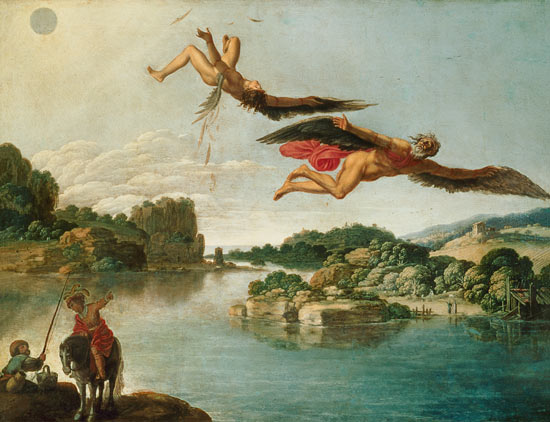
the_fall_ofWaiting for Icarus

He said he would be back and we’d drink wine together
He said that everything would be better than before
He said we were on the edge of a new relation
He said he would never again cringe before his father
He said that he was going to invent full-time
He said he loved me that going into me
He said was going into the world and the sky
He said all the buckles were very firm
He said the wax was the best wax
He said Wait for me here on the beach
He said Just don’t cry

I remember the gulls and the waves
I remember the islands going dark on the sea
I remember the girls laughing
I remember they said he only wanted to get away from me
I remember mother saying : Inventors are like poets,
a trashy lot
I remember she told me those who try out inventions are worse
I remember she added : Women who love such are the
Worst of all
I have been waiting all day, or perhaps longer.
I would have liked to try those wings myself.
It would have been better than this.

Muriel Rukeyser

I read an account of studying with Muriel Rukeyser by Sharon Olds. It made me wish I, too, had a wonderful poetry teacher. If there are good teachers out there, I am sure many will follow Tony’s advice, and support his hope that poetry could inform the American way of thinking.
New poets, new poems

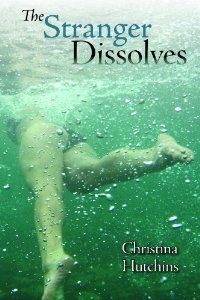
The Stranger DissolvesOne of the benefits of my week at the Squaw Valley Poetry Workshop was coming home with several books of poems by poets I hadn’t read much (or any) of before. Today I’m printing a poem by a Berkeley poet, Christina Hutchins. Not only did I have a great time with her, I’m happy to print her deft, tender poem, from her book The Stranger Dissolves: Continue reading “New poets, new poems”

Back at Squaw Valley

Gander by BerkleyI’ve posted about this intense week of poetry before, so I won’t explain it here. Each time I’ve come, it’s been a giant booster shot for my writing. Yesterday, I listened to an amazing craft talk by Forrest Gander. It was about translation, the origin of words, the decisions we make in translating poetry. For example, in England, the upper classes spoke French, the peasants Anglo-Saxon. So this class distinction persists in the words we we use–the Anglo-Saxon names of animals: deer, cow, swine; the French origin words for the meat: venison, beef, pork.

There was much more of course. By the end of the talk, I realized how little I know, how presumptuous I’ve been in translating. Perhaps I’ll transcribe my notes. But for today, I thought I’d give you one of Forrest’s translations.

And the Intrepid Anthurium

Two bumblebees
extract nectar,
sweet and bitter
from the center
of the rose-colored petals
of a flower
which is not a rose.
Sated,
they thud against the picture window
again and again,
fixed on escaping
with their bounty inside them,
into the air behind them,
incognizant that the path to freedom
has been eclipsed,
incognizant
that they are drawn to an illusion.
With the blood honey
in their guts
already a part
of their rapturous marrow.
And distinct.

Pura López-Colomé
translated by Forrest Gander

Poetry Wednesday

AdcockAlright, I know it’s supposed to be Poetry Monday, but I was busy babysitting.

Here is a poem by Fleur Adcock:

Things

There are worse things than having behaved foolishly in public.
There are worse things than these miniature betrayals,
committed or endured or suspected; there are worse things
than not being able to sleep for thinking about them.
It is 5 a.m. All the worse things come stalking in
and stand icily about the bed looking worse and worse
and worse.

I’ve been waiting for this…

I’ve had this Epiphyllum for a long time, but it’s been languishing in the wrong corner of the garden–too much sun or not the right sun. A few months ago I moved it towards the street where it gets filtered late afternoon sun, and I’ve been watching it revive and bud… This morning, the first bloom.

Epiphyllum

And lots more to come…

Optimized-P1000760

All of which made me think of Stanley Kunitz, as I often do when I’m in the garden, as he was almost as famous for his garden as his poetry.

But often, when weeding especially, creating my own little piles (both physical and metaphorical), I think of this poem by Louise Glück…

Purple Bathing Suit

I like watching you garden
with your back to me in your purple bathing suit:
your back is my favorite part of you,
the part furthest away from your mouth.

You might give some thought to that mouth.
Also to the way you weed, breaking
the grass off at ground level
when you should pull it by the roots.

How many times do I have to tell you
how the grass spreads, your little
pile notwithstanding, in a dark mass which
by smoothing over the surface you have finally
fully obscured. Watching you

stare into space in the tidy
rows of the vegetable garden, ostensibly
working hard while actually
doing the worst job possible, I think

you are a small irritating purple thing
and I would like to see you walk off the face of the earth
because you are all that’s wrong with my life
and I need you and I claim you.

Louise Glück

So deceptively simple and darkly complex! Now we’ll wait and see what the deer think of the Epiphyllum–I doubt my feeling if they eat it will be complex at all.

In praise of bad poems

MatthewsBW2After finding my childhood diary, I’ve been thinking about the huge numbers of bad poems one must be willing to write to arrive at a few good ones. Even the best poets seem to have to publish a lot of mediocre work and, I’m sure, throw away a lot more to achieve a few dozen gems. While I was thinking about this, I stumbled on this poem by William Matthews that at least partially addresses this very point.

Mingus at the Showplace

I was miserable, of course, for I was seventeen,
and so I swung into action and wrote a poem, Continue reading “In praise of bad poems”

Two parties for Poetry Monday

Sharon OldsLisa Alvarez, whose blog The Mark on the Wall often features interesting poems as well as literary events in Orange County, mentioned on Facebook that it was her son’s 11th birthday. Thinking about children’s parties reminded me of two poems by Sharon Olds, who recently won the Pulitzer Prize.  These two are from her second book, The Dead and the Living:

Rite of Passage

As the guests arrive at my son’s party
they gather in the living room–
short men, men in first grade
with smooth jaws and chins. Continue reading “Two parties for Poetry Monday”

A Narrative Poem

In the past, poems often told a story.  There are great narrative poems like the Odyssey or Beowulf, and many shorter examples up through the 1900s. But in the world of contemporary poetry, narrative is rare. Philip Levine’s work sometimes tells a story, I can think of a few poems of Ed Hirsch, and the famous poem “The Shirt,” by Robert Pinsky. You can probably think of others. But most of what we call poetry now is lyric verse, an image, an impression, a feeling, a puzzling through the complexities of daily life.

kelly2_optPerhaps this is why this extraordinary poem by Brigit Pegeen Kelley that appears just to tell a story is so powerful. I say “appears” because this may be real or may not, but in either case is enhanced by the language of the telling:

The Dragon Continue reading “A Narrative Poem”

Poetry Monday on Tuesday

MillayI recently came across this poem by Edna St. Vincent Millay, a poet who was once all the rage–perhaps as much for her outrageously bohemian life as for her work–and is now thoroughly out of fashion. In my view she is neither as great as she was once thought to be or as overly romantic and out of date as she is now perceived. After all, for years, her candle burned at both ends for me and so many others. This poem feels very contemporary in its attempt to reconcile the wonders of a scientific world with the primitive undertow of our human selves:

This Gifted Age Continue reading “Poetry Monday on Tuesday”

Realism in poetry

Sometimes you come across a poem that simply seems like a statement, as if there were no poetics involved; the poet is simply stating a series of facts in a way that happens to be particularly moving.  I think that these are often the most highly crafted works. Here is one by the Serbian poet, Vasco Popa:

Vasco PopaAbsolute Goal

Two Red Army men are carrying
Their dead comrade past our house

A little while ago my mother was feeding
All three with apple tart
And Vershats wine

My father advised the dead man
They should go over the roofs
And come out behind the nest of machine guns

The dead man laughed and hugged my father
And together with the other two
Chose a shortcut

I watch the Red Army men

They put their comrade in a cart
With the crooked painted letters
T o   B e r l i n

Vasko Popa
translated by Anne Pennington