Poetry Monday–the problem with poetry

I had two books of poetry from the library this week, The Collected Poems of Amy Clampitt, and Continuum, a selection of poems by Nina Cassian. Clampitt’s collected poems was 471 dense pages, and even though I have read a number of poems of hers I like, the sheer weight of it all was overwhelming. Any poet’s collected works is bound to have hundreds of uninteresting poems. It’s so much easier to get to know a poet through their selected works.  But in the case of Cassian, either I don’t like her, or I don’t like the selection.  It’s so difficult to get to know a new poet, to find the right poems, to get a sense of whether their voice really interests you!

So in hopes of saving you a little time, here is a poem by a poet you may not have heard of whom I like very much: Continue reading “Poetry Monday–the problem with poetry”


Poetry Monday

t-elizabethbishop-0I realized in all the time I’ve been writing this blog, I’ve neglected to include a poem by Elizabeth Bishop. She taught at Harvard just after I left, alas, my tenure there was deadly dull as far as poets went. Probably her most well known poem is a villanelle, called One Art. She and Lowell were great letter writers and a volume of their letters came out recently. She wrote a wonderful memoir of Marianne Moore, her mentor and friend, which is available online in the Collected Prose.  Bishop lived with her lover in Brazil for many years. This poem is from that time.

It Is Marvelous to Wake Up Together Continue reading “Poetry Monday”

Those Winter Sundays

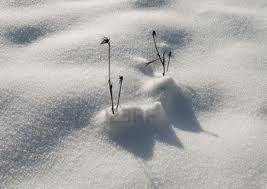
haydenAfter more than 40 years in California, I’d forgotten what cold was really like.  Waking with the heat low and the cold seeping in, going out into wind that feels like icy knives. So I chose a poem by Robert Hayden, one that I plan to memorize soon. It seems relevant to any adult who looks back on their parent with a new understanding, and manages to evoke a lot of sentiment while skirting sentimentality.

winter morningThose Winter Sundays

Sundays too my father got up early
and put his clothes on in the blueblack cold,
then with cracked hands that ached
from labor in the weekday weather made
banked fires blaze. No one ever thanked him.

I’d wake and hear the cold splintering, breaking.
When the rooms were warm, he’d call,
and slowly I would rise and dress,
fearing the chronic angers of that house,

Speaking indifferently to him,
who had driven out the cold
and polished my good shoes as well.
What did I know, what did I know
of love’s austere and lonely offices?

Robert Hayden

A pleasant surprise

Screen Shot 2013-02-05 at 8.32.27 AMI logged onto Facebook in an idle moment yesterday, and discovered that I was a finalist in a poetry contest I’d entered months before, for Split This Rock. Ok, there were nine other finalists, and three winners, nonetheless…

The contest was judged by Mark Doty, a poet I’ve mentioned here several times. I love the brilliant transcendence of his work. Here’s a copy of the winning poem–I wrote it in reaction to the epigraph I quote at the top…it made me immediately think of things I find hard to reconcile with the concept of Nirvana:

The Tenth Time

Nirvana is here, nine times out of ten
                          Hô Xuân Hu’o’ng

The disposable diaper
in the meadow

The morning at the DMV

The razor wire on top of the chainlink
around the concrete
around the school

For every black man in college
five behind bars

What happens to the eyes
as the argument flares

The blueprints for the gas chambers,
meticulously filed

The invasion

The story of the invasion

The story behind the story
of the invasion

The ones
who knew to profit from it
Meryl Natchez

I’d put a poem by Mark Doty here, but the contrast would be too great!

Poetry Monday

rainbowHow quickly the weeks roll by! I can remember lying on my great-aunt’s chaise lounge while visiting with my mother. Maybe I was 10.  I watched dust motes sift slowly down in a shaft of sun and thought life would never happen–time was standing still. But now it goes so fast it’s like the old movie image of calendar pages flashing by, dates streaming away in the wind. Which is all a prelude to a poem for Monday. I decided to use one of my own, as we finally had some rain, and in the clarity of an after-rain morning, I remembered this one. Continue reading “Poetry Monday”

Renaissance Man

larry celebrityAside from baseball, bridge, collecting blues and jazz autographs, and having taught me to cook many years ago, before he tiptoed out of the kitchen for several decades, Larry is also the publisher of hit & run press, and has an extensive collection of broadsides–poems printed on oversize sheets of paper for display, often with graphic ornamentation.  He has published many of these.

He also collects others’ broadsides. His most recent acquisition was of three broadsides done of original calligraphy by Gary Snyder, Philip Whalen and Lew Welch–three of the “beat poets” of the West Coast. They had all studied calligraphy with Lloyd Reynolds at Reed. Steve Jobs also studied with him, and Jobs’ study of calligraphy led to the wealth of fonts he introduced to the computer. Continue reading “Renaissance Man”

More transcendence

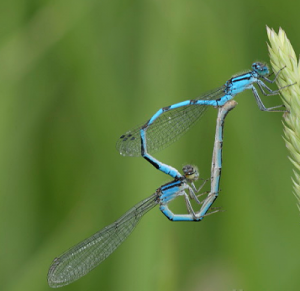
damselfliesAfter the last post, Simone sent me a report on a heron rookery, and it mentioned damsel bugs and dragon flies.  I wasn’t going to post two poems in a row, but the coincidence with this poem and its damselflies was too strong to resist.

I’m not crazy about the beginning, the old “poet looking for a subject” opener, but once it gets going, I like it a lot. That said, my friend and fellow poet likes the opening just fine. And the way  it uses nature is quite different from Mary Oliver’s poem, but the impact just as strong, I think.

Wheel

I sat, as I do, in the shallows of the lake—
after crawling through the rotting milfoil on the shore.
At first
the materials offered me were not much—

just some cattails where a hidden bullfrog croaked
and a buckhouse made from corrugated tin—

at first I thought I’d have to write the poem of its vapors.
But wait
long enough and the world caves in, Continue reading “More transcendence”

The transcendental poem

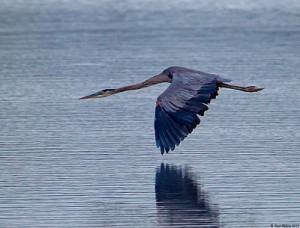
Mary OliverThere is a great tradition of poetry that elevates the experience of the natural world to provide a feeling of deep connection to the cycle of life and death. I can think of no better example of this type of poetry than can be found in the early work of Mary Oliver.  Here’s one.  (This poem’s lines are centered on the page in the original, but WordPress won’t do that):

heron risesHeron Rises from the Dark, Summer Pond

So heavy
is the long-necked, long-bodied heron,
always it is a surprise
when her smoke-colored wings

open
and she turns
from the thick water,
from the black sticks

of the summer pond,
and slowly
rises into the air
and is gone.

Then, not for the first or the last time,
I take the deep breath
of happiness, and I think
how unlikely it is

that death is a hole in the ground,
how improbable
that ascension is not possible,
though everything seems so inert, so nailed

back into itself—
the muskrat and his lumpy lodge,
the turtle,
the fallen gate.

And especially it is wonderful
that the summers are long
and the ponds so dark and so many,
and therefore it isn’t a miracle

but the common thing,
this decision,
this trailing of the long legs in the water,
this opening up of the heavy body

into a new life: see how the sudden
gray-blue sheets of her wings
strive toward the wind; see how the clasp of nothing
takes her in.

Mary Oliver

If you like this one, I recommend Vultures, Moles, Ice, Crows, and the probably her most famous (but not my favorite!), Wild Geese.

Holiday card

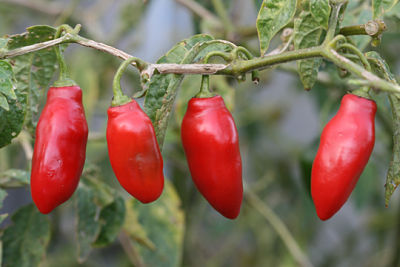
Bolivian PepperIn past years, I’ve sent holiday cards with a short letterpress poem. But this year, thinking about all those trees and not finding a poem I felt could justify that, I decided to create an online version here.

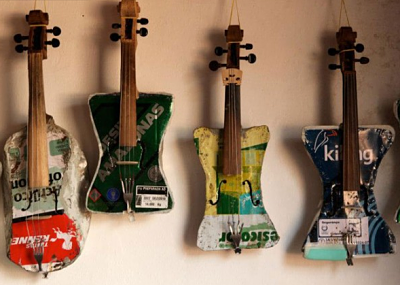
I was nudged further in this decision by finding this short video, Landfill Harmonic (thanks to Lynn Kiesewetter), about a youth orchestra in Paraguay whose young musicians play with instruments made from trash.

Recycled violins
“The world sends us garbage. We send back music.” Fabio Chavez, Orchestra director

This theme was instrumental (I really couldn’t resist–I tried, but I think it’s genetic) in my poem selection for the season:

Compost

Lemon rind, spines
and gnawed sheaths of artichoke,
coffee grounds, stale brownies, banana peels,
pit from the peach—intractable, but
thrown in anyway. Three months later,
turning the dirt, worms squirm
in the peach pit.

Meryl Natchez

Continue reading “Holiday card”

Cheese ball

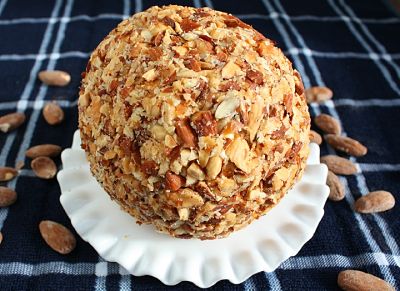
This morning in my email I received a poem about cheese from E-Verse radio, a blog a enjoy. I realized I had my own cheese poem.  So here we go for Poetry Monday:

Cheese Ball

Whole factories are dedicated to this,
pillars of cheddar large enough
to bear a second story, and wire
that cuts the slabs. Machines
add the precise measure of port wine,
according to Michele Bean, Cheese Ball
Expert.

The process takes a long time.
Great steel vats churn and burble,
a conveyer trundles nuts, paddles
spin the balls along till not a scintilla of cheese shows,
all glossed with nutty skin. This must
be a metaphor for something: children
moving through the school system,
or what happens when primitive tribes
encounter matches and carbon steel.

Maybe we’re all just cheese balls,
starting from something simple, like milk,
pummeled and slashed
and adulterated and finally extruded
in a shape of use to someone
with a sense of humor
and an insatiable appetite.

Another by Marie Howe

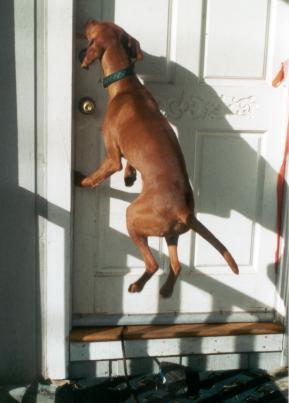
At my piano lesson early this week, my teacher’s dog saw her dog friend and the dog’s owner pass by the window.  She often walks with them, but not that day.  It was hard for her to understand why they were going without her, and she pranced around unhappily, left behind. It made me think of this poem, from What the Living Do, by Marie Howe. The book deals (for the most part) with poems about her brother’s death.  What I love about this one is it’s oblique approach to mourning.

Buddy

Andy sees us to the door, and Buddy is suddenly all over him, leaping
and barking because Andy said: walk. Are you going to walk home? he said.

To me. And Buddy thinks him and now, and he’s wrong. He doesn’t
understand the difference between sign and symbol like we do–the thing

and the word for the thing, how we can talk about something when it’s not
even there, without it actually happening–the way I talk about John. Continue reading “Another by Marie Howe”

Withering toward winter

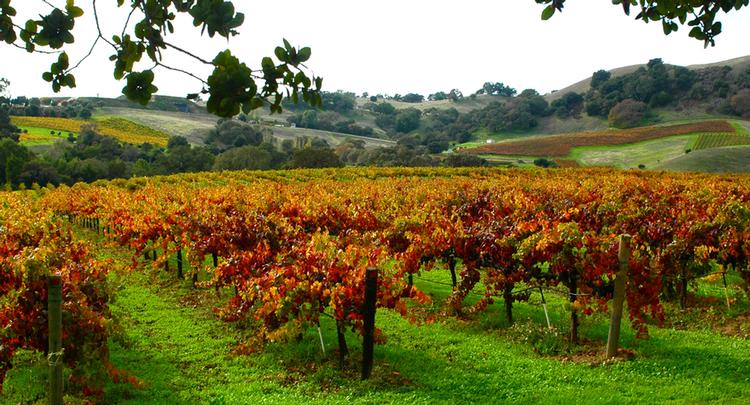
I love how poetry can enhance a moment. This weekend, winding through the vineyards on the way to the coast, this poem of Robert Mezey’s came to mind:

Touch It

Out on the bare grey roads, I pass
by vineyards withering toward winter,
cold magenta shapes and green fingers
and the leaves rippling in the early darkness. Continue reading “Withering toward winter”