The exemplary sentence, take 2

I recently finished Night Train to Lisbon, by the Swiss author, Pascal Mercier, translated by Barbara Harshav.  This is another book about a quest. In most ways, Henderson and Gregorius could not be more opposite: Henderson a flamboyant, wandering millionaire seeking the meaning of life, and Gregorius a scholar of Greek and Latin, nicknamed Papyrus because of his dry, papery ways. Gregorius is of working class origins. He has lived his whole adult life as a high school teacher in Bern. And yet, as Night Train to Lisbon opens, a strange encounter is a catalyst for Gregorius to drop precipitously out of his former life and start on a quest for the Portuguese author of an obscure, privately published book A Goldsmith of Words, a book that purports to explore the fragmented, buried, kaleidoscopic experiences that make up a life.

The passion to learn about this mysterious author, the conceit of a book within a book, and the appealing figure of Gregorius all captured my imagination and sustained me through the 438 pages of this novel.  This book is almost too full of intriguing sentences, most attributed to the mysterious Portuguese author, Amadeu de Almeida Prado. Here are a few: Continue reading “The exemplary sentence, take 2”
The exemplary sentence

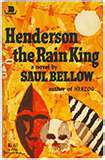
I saw this idea on Mark Doty’s blog and immediately adopted it. I’ve been saving sentences for decades, and just now am rereading Saul Bellow’s Henderson the Rain King. This is the only one of Bellow’s books I’ve ever liked, but I really love it and it holds up wonderfully since I first read it maybe 30 years ago.

I say rereading, but this time I am listening to it as read by Joe Barrett, who manages to embody the voice of Henderson as well as the soft accents of various African characters. It’s wonderful to me how such a reading can enhance a book. But this one is so packed with exemplary sentences, it’s hard to choose, and I often need to rewind–not as easy on CD as formerly on cassette–to capture their complete sense.  Here is one (not even the whole sentence, but enough):

“Even civilized women  are not keen on geography, preferring a world of their own.”

Continue reading “The exemplary sentence”

Ann Patchett

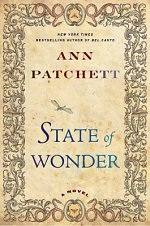
I came to Bel Canto late because I don’t usually like best sellers. But Ann Patchett is a terrific writer. She really knows how to spin a plot, and creates wonderful images. I read her new book, State of Wonder on my trip back east. Is there anything more reassuring when one travels than to have an engrossing novel to turn to in the plane, on the train, in a strange bed in a hotel? This book is the story of a woman research scientist, Marina, who abandoned her initial career as an OBGYN intern after a traumatic incident. There are echoes of Conrad’s Heart of Darkness, as she has to head to the Amazon to find and confront her old mentor and her past. I love the weaving of the story, the complexity of the questions it raises, and the believability of Marina’s transformation in the jungle. Continue reading “Ann Patchett”

So much to read, so little time

But if you’re looking for a easy-to-read mystery with a twist, try Out of the Blackout, by Robert Barnard, which I learned about from Harriet Devine’s blog–a terrific resource. In this well-paced and unusual story the murder may or may not have happened, but doesn’t enter in till the middle of the suspense. It starts as an extra boy appears in a group of evacuees from London during the blitz. About five years old, the boy calls himself Simon Thorn. No one ever claims him, and his origins remain mysterious until he investigates them himself as an adult.

And Harriet’s blog (featuring Rumer Godden at the moment) reminded me how much I love Greengage Summer, the story of a family stranded at a hotel in southern France for a summer, due to their mother’s falling seriously ill on the journey. The children fend for themselves, and the two oldest girls each come of age in their own way.  A perfect summer read. This is her best book, I think, though she and her sister Jon wrote a number of readable novels.

Is there anything better than reading in a hammock on a hot summer afternoon? Which reminds me of of another favorite, this James Wright poem:

Lying in a Hammock at William Duffy’s Farm in Pine Island Minnesota

Over my head, I see the bronze butterfly,
Asleep on the black trunk,
blowing like a leaf in green shadow.
Down the ravine behind the empty house,
The cowbells follow one another
Into the distances of the afternoon.
To my right,
In a field of sunlight between two pines,
The droppings of last year’s horses
Blaze up into golden stones.
I lean back, as the evening darkens and comes on.
A chicken hawk floats over, looking for home.
I have wasted my life.

James Wright

You can hear him read it, if you like. I love the specificity of his images, and how he telescopes the process of horse droppings to fertilizer to golden wild flowers in two lines. A short poem that builds dramatically to the conclusion. Happy August!

Abandoned Books

One of the best things about writing a blog is that you plunge ever deeper into the great labyrinth of blogs. Today, via Harriet Devine’s blog, I found The Literary Stew, and this meme to which I’ve added a fourth question.  Please answer it below in the comment section or post about it in your blogs and leave a link.

1. What would cause you to stop reading a book?

I start a lot of books—one of the reasons I’m library addict. I abandon them if they bore me, I don’t like the writing style, or I just can’t get into them. Sometimes it’s not the book’s fault, it’s just not the right fit at the moment. Sometimes I can tell there’s going to be too much grief and the writing just isn’t worth it. Usually 50 pages is my cutoff point.

2. Name a book or books you’ve abandoned in the past that you ended up loving later on.

The most significant for me, Madame Bovary. The first time through, I just had no sympathy for the shallow heroine; that changed the second time around. Guess I’ve become increasingly shallow.

3. Name a book you’ve abandoned in the past that you hope to finish someday.

I’ve started Magic Mountain three times. I know it’s a classic. Maybe a John Woods’ translation will do it for me.

4. How often do you stop reading and just skim to the end?

More often than I like to document. I’m impatient, and unless the author is a really good writer, I often find myself flipping along, just to redeem my investment in the characters and their travails.

Anyone have an idea for what we should call this last category? Not exactly abandoned, but not exactly finished, either.


Louis B. Jones

This week I started Louis B. Jones new book, Radiance. I’d been waiting eagerly for it. It’s a rare treat to enter the world of someone who thinks deeply and articulates his thought beautifully (poetically!) while moving you along a compelling story line. Here are two passages.

The first is about the strangeness of women, via the narrator’s teen-age daughter:

“…he hadn’t known what a girl’s graces were until Lotta, nor felt how over years his world was gradually changing shape so that females’ natural secret regnant ascendancy became more impossible  to ignore, not until Lotta, not until he’d started watching a girl take shape from earliest infancy, the fineness of discernment, as well as a soreness, which amounted to a discriminating kind of electromagnetic force, all superpowers in comparison with boys’—and how hard that all was for them, the amazing unremitting meanness of their competition, their fundamental sad practicality, then the encroaching ineluctable weird song and dance of their inferior competence.”

The second describes a carpenter’s belt his wife is wearing:

“The new tool belt from True Value was red, redder than any valentine, its tough nylon webbing lustrous with that almost-lanolin stuff that synthetic hardware-store fabrics have when they’re brand-new and still faintly cense the factory warehouse perfumes of polymerized thermo-plastic.”

Here is a man who is paying attention and has the vocabulary to wake you up and see what he sees. And we’re only at page 13! I could go on, but it would be better if you bought the book and supported this kind of writing.


Rain and libraries

Okay, the weather is decidedly odd. But I refuse to jump to apocalyptic conclusions. Instead, I’ve been noodling around the web. I discovered several wonderful British blogs about books, including Harriet Devine’s blog.  This led me to discover an online article about Patrick Hamilton, a previously-unknown-to-me British author. I’ve reserved two of his books.

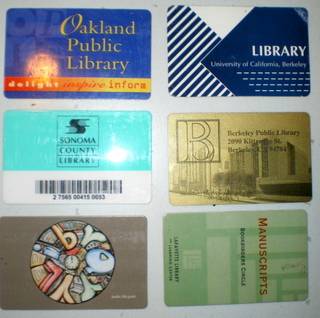
I am a total library addict; can’t bear to pass by one without going in and browsing and taking something out. It’s sort of like dating. No commitment—you’re just borrowing a book. Then I buy the ones I want to keep, especially the best contemporary authors who need me to buy their books (like Julie Orringer and Louis B. Jones) so they can keep writing. I have two credit cards, but six active library cards—a good ratio:

And now that I can reserve books online, I have a continual stream of good books available at any one time. The more scholarly ones and obscure poets I get from UC; cookbooks, how-to, and general fiction from whichever public library near me has what I want. Continue reading “Rain and libraries”

Hungary, World War II, the genius of Julie Orringer

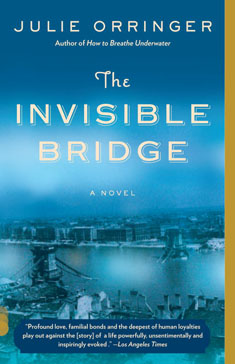
Last night we went down to Stanford to hear Julie Orringer read from her novel The Invisible Bridge. http://julieorringer.com/ is her website.  I loved her book of stories, how to breathe underwater, when it appeared several years ago, and bought The Invisible Bridge as soon as it came out. It’s a marvelous novel, rich, compelling, painful. It’s the story of a Hungarian Jewish family starting in the 1930s and moving through World War II.

The genius of the book is that you become invested in the lives of the characters before the war, during “normal” life. When Hitler and Hungary’s fate make terrible choices necessary for the characters, it brings those events to life—so much so that you want to change history, to stop its crushing, implacable march. It makes you feel the impact of the war in a visceral way.

Here in the US, we don’t hear much about Hungary, a tiny country that tried to fight with the Germans against the Russians without buying into Hitler’s crusade against the Jews. It didn’t work, of course. But there was nobility in the struggle—a sort of old world dignity. I also recommend Sándor Márai’s Memoir of Hungary 1944-1948, a moving non-fiction account of the same period. I wrote this poem after reading his memoir:

Sándor Márai in Exile

Deprived of your native language,
of paprikash cooked in cramped kitchens,
of the scent of elder flowers in early June,
you don’t meet people you know on the street, or stop
in familiar shops that sell just what you need.
You don’t sit with friends
at the café with a newspaper filled
with gossip about people you know.

After your home was destroyed,
you said language was your true home.
But so few speak the Magyar tongue.
Even your name sounds unfamiliar here.
Who will read your forty-six books?
your scrupulous observations of
the German soldiers who set up radios
in your parlor? the Russians
who used it for their motorpool?
You saved your hatred for
your countrymen, newly minted
Soviets, returned from Moscow.
Their lethal mix of terror
and preferment snuffed
what little there was left of Hungary
and drove you out.

It’s lonely in the sun
of San Diego. Your bones crave cold light,
need winter in Krisztinaváros
before the siege,
the irreplaceable stones of Castle Hill.
Your mouth is parched
for the barbed sweetness of accented vowels,
the braided bread of consonants,
the bullets
of your spoken tongue.

Meryl Natchez