Rivalry

I read Larry a line from this review of The Art of Rivalry, a study of influences a group of modernist painters had on each other: “Lucien Freud declining a wedding invitation because he found himself ‘in the unusual position of having been involved sexually not only with the bride but also the groom and the groom’s mother.'” Larry’s response:

“At least he didn’t mention the family pets.”

George Oppen

oppenGeorge Oppen is a poet who seems to have faded from view. But his sensibility is intriguing.  His focus was on simplicity–using language to point to the experience as opposed to itself. Here’s a snippet:

Pedestrian

What generations could have dreamed
This grandchild of shopping streets, her eyes

In the buyer’s light, the store lights
Brighter than the lighthouses, brighter than moonrise

From the salt harbor so rich
So bright her city

In a soil of pavement, a mesh of wires where she walks
In the new winter among enormous buildings.

George Oppen

Discoveries

2016-08-15 07.32.59The other day I made fig jam–one of my all time favorites.

But in trying to speed up the process, I scorched the bottom of my enamel pot. I scrubbed and scrubbed, but couldn’t get the fine layer of burnt jam off the bottom. I gave up and set the pot out in the sun to dry. When I went to take it in, all the scorch had lifted from the enamel and was easy to brush off. Who knew?

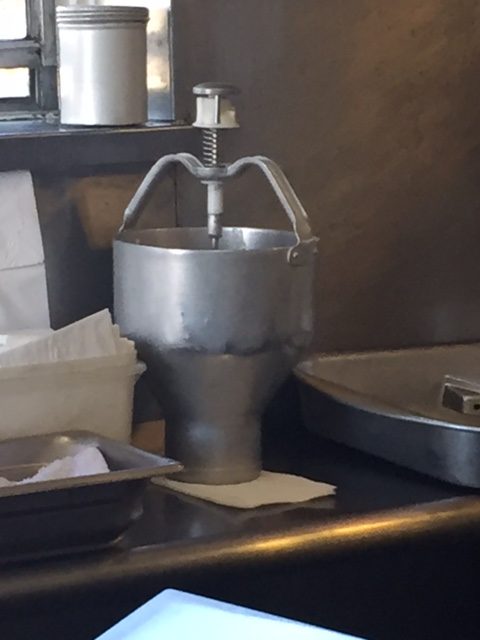
In other news, I stopped at a little mom and pop (mostly mom it seemed) diner the other morning for a quick bite and saw in action this wonderful pancake batter dispenser. If I made pancakes more often, I’d definitely get one.

IMG_2925

IMG_2926

Molly Peacock

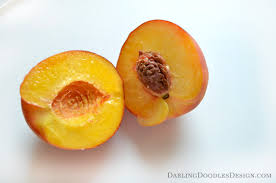
I had a chance to look at a book of poems by Molly Peacock in a friend’s library. This one reminded me of a moment when i saw my parents sharing an apricot, by far my tenderest and most intimate memory of them:

peachCouple Sharing a Peach

It’s not the first time
we’ve bitten into a peach.
But now at the same time
it splits–half for each.
Our “then” is inside its “now,”
its halved pit unfleshed–

what was refreshed.
Two happinesses unfold
from one joy, folioed.
In a hotel room
our moment lies
with its ode inside,
a red tinge,
with a hinge.

Molly Peacock

Continue reading “Molly Peacock”

The art of the short poem

Does anyone do it better than this?

avocadoMarried

I came back from the funeral and crawled
around the apartment, crying hard,
searching for my wife’s hair.
For two months got them from the drain,
from the vacuum cleaner, under the refrigerator,
and off the clothes in the closet.
But after other Japanese women came,
there was no way to be sure which were
hers, and I stopped. A year later,
repotting Michiko’s avocado, I find
a long black hair tangled in the dirt.

Jack Gilbert

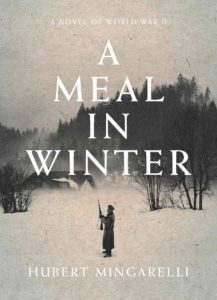
A Meal in Winter

This extraordinary little book is told as if a memoir, in very straightforward, matter-or-fact prose, which makes it all the more chilling. It is translated from the French by Sam Taylor. The basic plot concerns three German soldiers who no longer want to shoot Jews. They go to the commander, who is “a reservist like we were”:

“We explained to him that we would rather do the hunting than the shootings. We told him we didn’t like the shootings: that doing it made us feel bad at the time and gave us bad dreams at night. When we woke in the morning, we felt down as soon as we started thinking about it…” Continue reading “A Meal in Winter”

Olds’ Odes

If you’ve never heard Sharon Olds read, this is a good example:

or this, a poem I woke up thinking about this morning:

patz24n-5-webThe Missing Boy

(for Etan Patz)

Every time we take the bus
my son sees the picture of the missing boy.
He looks at it like a mirror–the dark
blond hair, the pale skin,
the blue eyes, the electric-blue sneakers with
slashes of jagged gold. But of course that
kid is little, only six and a half, Continue reading “Olds’ Odes”

Yesterday a friend was talking about gimmicks in poetry–and here is an example she gave. The gimmick is or world seen through the eyes of a Martian. Gimmick itself is a pretty good word…

A Martian Sends a Postcard Home

Caxtons are mechanical birds with many wings
and some are treasured for their markings –

they cause the eyes to melt
or the body to shriek without pain.

I have never seen one fly, but
sometimes they perch on the hand.

Mist is when the sky is tired of flight
and rests its soft machine on ground:

then the world is dim and bookish
like engravings under tissue paper.

Rain is when the earth is television.
It has the property of making colours darker.

Model T is a room with the lock inside –
a key is turned to free the world

for movement, so quick there is a film
to watch for anything missed.

But time is tied to the wrist
or kept in a box, ticking with impatience.

In homes, a haunted apparatus sleeps,
that snores when you pick it up.

If the ghost cries, they carry it
to their lips and soothe it to sleep

with sounds. And yet, they wake it up
deliberately, by tickling with a finger.

Only the young are allowed to suffer
openly. Adults go to a punishment room

with water but nothing to eat.
They lock the door and suffer the noises

alone. No one is exempt
and everyone’s pain has a different smell.

At night, when all the colours die,
they hide in pairs

and read about themselves –
in colour, with their eyelids shut.

Craig Raine

Continue reading

Summer recipe

Optimized-2016-07-12 18.35.54This recipe makes a soup that is like a bowlful of summer.

I adapted it from one of my favorite cookbooks, Annie Somerville’s Field of Greens. She has you make a vegetarian stock with the corn cobs (adding a potato, some celery, garlic, salt and parsley), which I do if I’m having vegetarians for dinner. But I just cook the corn cobs in a light chicken broth if I’m making it for omnivores, and it works fine. Also, she runs the soup through a food mill. I’ve never had the patience to do that, and it tastes great without. But if you want a satin smooth base, you can do that.

This recipe makes enough for about eight people. It’s yummy and keeps well. But you can easily halve it and have plenty for four. It takes about an hour from start to finish, about half of it “active time” as they say in the world of cookbooks.

Summer Corn and Red Pepper Soup

5 C light chicken stock or water (see below)
1 1/2 T unsalted butter
1 T olive oil
12 medium or 10 large ears of corn (to make 7 Cups of kernels)
2 large or 3 medium red peppers (about 2 1/2 cups, chopped)
1 giant leek or a big white or onion (about 2 cups chopped)
4 large or 8 small garlic cloves
Salt and cayenne or other pepper, toasted ground cumin, green pepper powder
fresh basil Continue reading “Summer recipe”

Summer food

Ripe tomatoes, sweet corn, peaches. They are all here, and we are eating them all. This morning, delicate white Mexican onions crisped with corn kernels, spinach and basil from the garden, and a fried egg in the middle. Is there anything better?

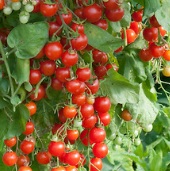
So here’s a tomato poem, also a love poem, also short–three excellent attributes for a poem I want to post. Early Cascade is the name of a tomato, of course:

tomatoEarly Cascade

I couldn’t have waited. By the time you return
it would have rotted on the vine.
So I cut the first tomato into eighths,
salted the pieces in the dusk,
and found the flesh not mealy (like last year)
or bitter,
even when I swallowed the green crown of the stem
that made my throat feel dusty and warm. Continue reading “Summer food”

Who are these Trump supporters?

I’ve really been wondering, and this article in the New Yorker provides at least a partial answer:

rally“The Trump supporters I spoke with were friendly, generous with their time, flattered to be asked their opinion, willing to give it, even when they knew I was a liberal writer likely to throw them under the bus. They loved their country, seemed genuinely panicked at its perceived demise, felt urgently that we were, right now, in the process of losing something precious. They were, generally, in favor of order and had a propensity toward the broadly normative, a certain squareness. They leaned toward skepticism (they’d believe it when they saw it, “it” being anything feelings-based, gauzy, liberal, or European; i.e., “socialist”). Some (far from all) had been touched by financial hardship—a layoff was common in many stories—and (paradoxically, given their feelings about socialism) felt that, while in that vulnerable state, they’d been let down by their government. They were anti-regulation, pro small business, pro Second Amendment, suspicious of people on welfare, sensitive (in a “Don’t tread on me” way) about any infringement whatsoever on their freedom. Alert to charges of racism, they would pre-counter these by pointing out that they had friends of all colors. They were adamantly for law enforcement and veterans’ rights, in a manner that presupposed that the rest of us were adamantly against these things. It seemed self-evident to them that a businessman could and should lead the country. “You run your family like a business, don’t you?” I was asked more than once, although, of course, I don’t, and none of us do. Continue reading “Who are these Trump supporters?”

Another Neruda translation?

“It’s true, I’ve been caught in print several times saying, ‘The last thing we need is another Neruda translation.'” This sentence opens Forrest Gander’s introduction to Then Come Back: The Lost Neruda Poems, from Copper Canyon Press. He then goes onto explain how these late poems were discovered, and their quality convinced him to undertake the project of translating them. Here’s one from the book:

9

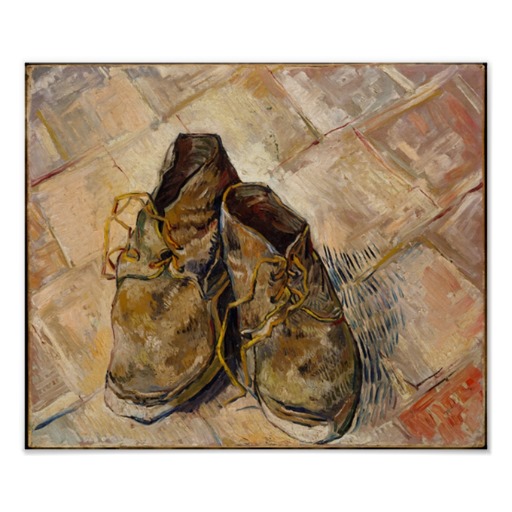
shoes“Don’t be vain,” someone had scrawled
on my wall.
I don’t recognize
the script or hand of
whoever left that line
in the kitchen, No one I invited, clearly.
He came in from the roof.
So who am I
Supposed to answer? The wind.
Listen to me, wind.
For many years
the vainest
have tossed in my face
their own vanities,
that is, they show me the door
I open at night, the book
I write,
the bed
that waits to receive me,
the house I build, Continue reading “Another Neruda translation?”