Antidotes to Fear of Death

Once in awhile I discover a scientist who writes a poem that moves me. That was the case with this poem, by the astronomer Rebecca Elson. I wish I’d had a chance to know her. She died at 39, but wrote, A Responsibility to Awe, edited and published after her death.

Antidotes to Fear of Death

Sometimes as an antidote
To fear of death,
I eat the stars.

Those nights, lying on my back,
I suck them from the quenching dark
Til they are all, all inside me,
Pepper hot and sharp.

Sometimes, instead, I stir myself
Into a universe still young,
Still warm as blood:

No outer space, just space,
The light of all the not yet stars
Drifting like a bright mist,
And all of us, and everything
Already there
But unconstrained by form.

And sometime it’s enough
To lie down here on earth
Beside our long ancestral bones:

To walk across the cobble fields
Of our discarded skulls,
Each like a treasure, like a chrysalis,
Thinking: whatever left these husks
Flew off on bright wings.

Rebecca Elson (1960-1999)

Frosty

I know it’s appropriate to post a patriotic poem on July 4th, but a poem by our first US Poet Laureate is the best I can do. It seems to me that this is one of the few formal poems that feels entirely natural.

The Silken Tent

She is as in a field a silken tent
At midday when the sunny summer breeze
Has dried the dew and all its ropes relent,
So that in guys it gently sways at ease,
And its supporting central cedar pole,
That is its pinnacle to heavenward
And signifies the sureness of the soul,
Seems to owe naught to any single cord,
But strictly held by none, is loosely bound
By countless silken ties of love and thought
To every thing on earth the compass round,
And only by one’s going slightly taut
In the capriciousness of summer air
Is of the slightest bondage made aware.
Robert Frost

For Juneteenth

I heard Danez Smith read before the Pandemic. His energy from the slam tradition is ebullient, and his poems are powerful. Here is one for this holiday. As usual, I especially like the ending.

C.R.E.A.M.

after Morgan Parker, after Wu-Tang

                      in the morning I think about money

           green horned lord of my waking

                      forest in which I stumbled toward no salvation

                                 prison made of emerald & pennies

           in my wallet I keep anxiety & a condom

I used to sell my body but now my blood spoiled

           All my favorite songs tell me to get money

                                              I’d rob a bank but I’m a poet

                                 I’m so broke I’m a genius

           If I was white, I’d take pictures of other pictures & sell them

I come from sharecroppers who come from slaves who do not come from kings

                                              sometimes I pay the weed man before I pay the light bill

                      sometimes is a synonym for often

I just want a grant or a fellowship or a rich white husband & I’ll be straight

           I feel most colored when I’m looking at my bank account

I feel most colored when I scream ball so hard motherfuckas wanna find me

                                 I spent one summer stealing from ragstock

If I went to jail I’d live rent-free but there is no way to avoid making white people richer

                                              A prison is a plantation made of stone & steel

           Being locked up for selling drugs = Being locked up for trying to eat

                                              a bald fade cost 20 bones now a days

                      what’s a blacker tax than blackness?

                                              what cost more than being American and poor?

                                         here is where I say reparations.

here is where I say got 20 bucks I can borrow?

           student loans are like slavery but not but with vacation days but not but police

I don’t know what it says about me when white institutions give me money

                      how much is the power ball this week?

I’mma print my own money and be my own god and live forever in a green frame

                      my grandmamma is great at saving money

           before my grandfather passed he showed me where he hid his money & his gun

                      my aunt can’t hold on to a dollar, a job, her brain

                                 I love how easy it is to be bad with money

                      don’t ask me about my taxes

                                 the b in debt is a silent black boy trapped

Danez Smith
The Exemplary Sentence: Elizabeth Von Arnim

If you are looking for a bon bon of a book, The Enchanted April is delectable. Not overwhelmingly sweet, amusing, light, but well-enough written that it’s not a guilty pleasure. I especially enjoyed this paragraph, the musings of a woman who has long been ignored by her husband:
“Why, if Frederick did come, she would only bore him. Hadn’t she seen in a flash quite soon after getting to San Salvatore that that was what kept him away from her? And why should she suppose now, after such a long estrangement, she would be able not to bore him, be able to do anything but to stand before him like a tongue-tied idiot, with all the fingers of her spirit turned into thumbs? Besides, what a hopeless position, to have as it were to beseech: Please wait a little–please don’t be impatient–I think perhaps I shan’t be a bore presently.”

Oh that position, the fingers of one’s spirit turned into thumbs! Haven’t we all felt it, just when we wanted most to be brilliant and dextrous? I’ll have to take a look at her other novels.


Hands on

I first encountered Yehuda Amichai in Chana Bloch’s translation.  Having slaughtered and cleaned many chickens, I love the image in this  excerpt, from another translator:

God’s Hand in the World

God’s hand in the world
like my mother’s
in the guts of the slaughtered hen
on Friday.
What does God see beyond the window
as he puts his hand into the world?
What does my mother see?

Yehuda Amichai (tr. from Hebrew by Harold Schimmel)

No words

Another week of mourning the senseless deaths of children. This poem, by a Jewish resistance leader against the Nazi’s is the best I can do.

Consolation

It will not last. A few more weeks,
a month, two at the most,
the wounds will heal.
Everything will get better.
Apart from what is no longer there.

Abba Kovner (tr. from Hebrew by Eddie Levenston)

Thanks once again to Sean Singer for his posts, where I saw this.

Jamaal May

I heard Jamaal May read about 10 years ago. A real treat, and here is a more recent poem of his I found. His book, Hum, is worth owning. I haven’t yet read his newer book, The Big Book of Exit Strategies, where you can find this poem.
.

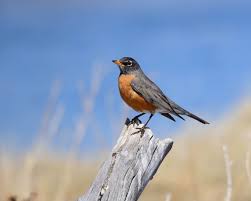
There are birds here

for Detroit

There are birds here,
so many birds here
is what I was trying to say
when they said those birds were metaphors
for what is trapped
between buildings
and buildings. No.

The birds are here
to root around for bread
the girl’s hands tear
and toss like confetti. No,

I don’t mean the bread is torn like cotton,
I said confetti, and no
not the confetti
a tank can make of a building.
I mean the confetti
a boy can’t stop smiling about
and no his smile isn’t much
like a skeleton at all. And no
his neighborhood is not like a war zone.

I am trying to say
his neighborhood
is as tattered and feathered
as anything else,
as shadow pierced by sun
and light parted
by shadow-dance as anything else,
but they won’t stop saying

how lovely the ruins,
how ruined the lovely
children must be in that birdless city.

Jamaal May

Poetry and cooking

As someone who loves both, I was so pleased to see this inventive political poem in the Paris Review archives:
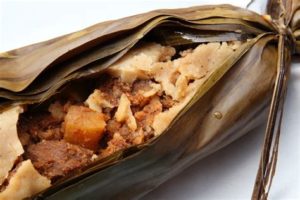
Little Cambray Tamales

          (makes 5,000,000 little tamales)
        —for Eduardo and Helena who asked me
   for a Salvadoran recipe

Two pounds of mestizo cornmeal
half a pound of loin of gachupin
cooked and finely chopped
a box of pious raisins
two tablespoons of Malinche milk
one cup of enraged water
a fry of conquistador helmets
three Jesuit onions
a small bag of multinational gold
two dragon’s teeth
one presidential carrot
two tablespoons of pimps
lard of Panchimalco Indians
two ministerial tomatoes
a half cup of television sugar
two drops of volcanic lava
seven leaves of pito
(don’t be dirty-minded, it’s a soporific)
put everything to boil
over a slow fire
for five hundred years
and you’ll see how tasty it is.
Claribel Alegría
Translated by Darwin J. Flakoll