Another gem from Poetry Daily. I love naming and disintegration play against each other in this poem, vowels scattered. And benthic, a wonderful word, new to me.
A Thousand Vowels
A long slope.
The strong sun dipped, and finally sank.
No matter how long I walked, I stayed in “the middle of the road.”
The name torn into pieces.
Just keeping on, climbing higher and higher,
I’d completely forgotten the name.
The west wind shifts the typhoon’s course,
the world, for a few hours, is thrown into confusion.
You might name one thing after another,
but each loses its name in that same moment.
Into what we call “nature.”
I stood in the middle of nature.
And something was missing, the natural was
draped in a thin shroud.
Vowels scattered,
the name went missing.
When once more the name “nature” was applied
to the desolate-as-ever landscape,
immediately, the name began to weather away.
What is still losing its name,
and what has already lost its name,
those two strands entwine
around the true name.
Those who have wings stay put,
howling out their condition over and over,
“How fragile we are!”
though no one hears them.
Thousands of ripples tell
a story of benthic anguish.
The ripples beach themselves
on the name of each anguish,
vowels scatter by the thousands
over the earth.
Shuri Kido, translated from the Japanese by Tomoyuki Endo and Forrest Gander
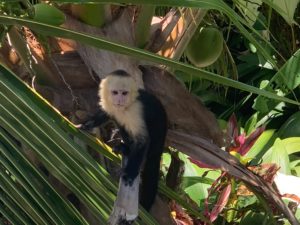 First Anniversary with Monkeys
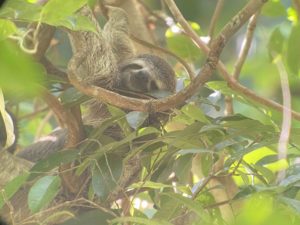 I took this photo yesterday in Manuel Antonio National Park, and then found this poem by Yuseff Komunyakaa.
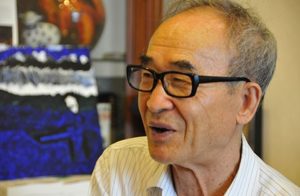 I am a little embarrassed that I have discovered K-dramas, the vast output of Korean soap operas on Netflix. My favorite so far is Navillera (Butterfly) about a 70-year-old retired postman who has always wanted to study ballet. I like the glimpse into modern Korea they provide. I also have discovered a Korean poet whose sensibility appeals to me, Ko Un. Here’s a sample of his work. I like how how he uses the gradual blossoming of spring flowers to knit his divided country together:
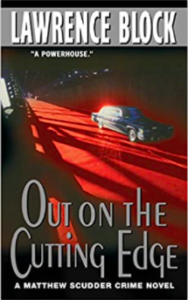 Thanks to
 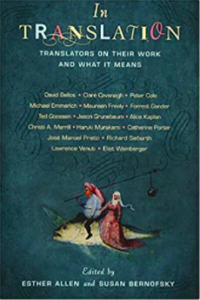 In another vein entirely, but equally pleasurable, here’s a quote from Eliot Weinberger from his essay in
 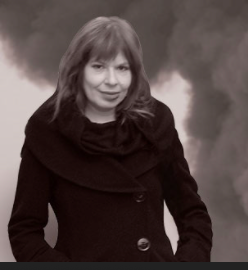 This is from a book called Words for War: New Poems from Ukraine. Of course, the poems here come from the 2014 war, not the current one. How sad for this poor, tattered country.
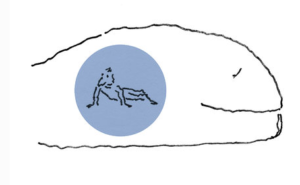 This is a daunting title for a poem, but Lynn Emanuel pulls it off:
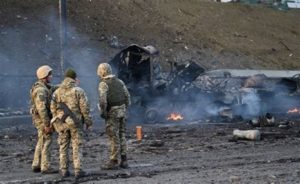 Watching news of the ongoing invasion of the Ukraine, where my father was born, reminds me of the fragility of the equilibrium we take for granted.
 This French song form, made famous in English by Dylan Thomas and Elizabeth Bishop, is so tricky. The repeating first and third lines doubled at the end, is a form that it’s very hard to make sound natural. I think