Chris Maher Marathon

Remember the chef who came to dinner? Chris Maher, the chef, was teaching some cooking classes in LA, and arranged to teach a Thai cooking class on Sunday at my house. There were eight of us, learning everything from how to hold a knife and chop an onion, to tricks for making Thai green chile paste and peanut sauce. It was warm enough that we ate dinner outside in candlelight, a rare treat in the Bay Area at any time.

I took a video of Chris’s instructions and demo of how to hold and use a knife and how to chop an onion, but somehow lost the videos in the transfer.  More than that, my memory card filled up with that one video, and the rest of the dinner was undocumented.

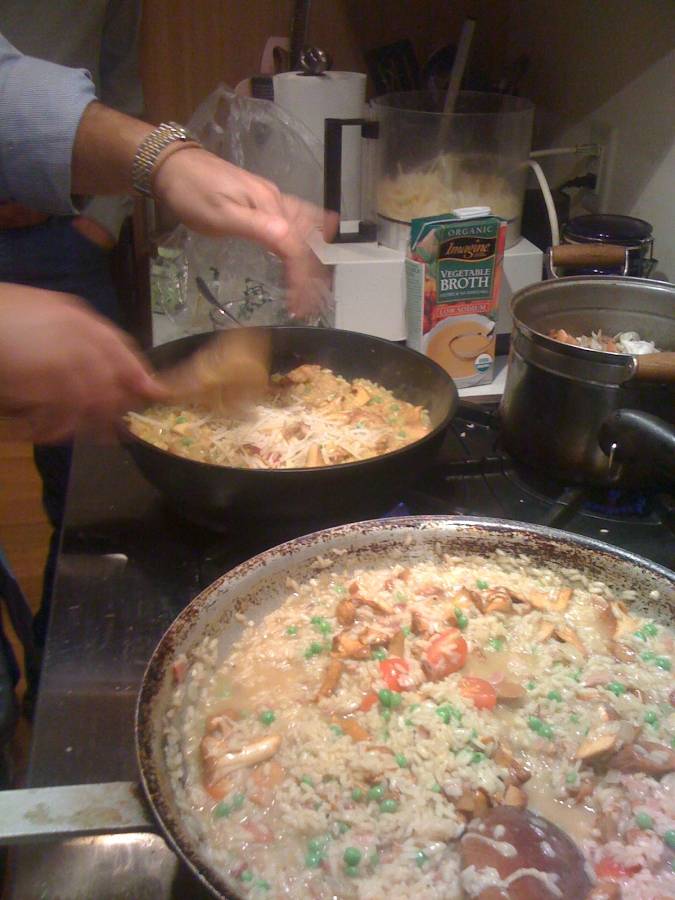
While we were eating, we got to talking about risotto, probably because Chris made truly fluffy and delicious rice, and he agreed to make risotto on Monday. this time there were five of us for a very informal class. We made a risotto with chicken stock, pancetta, chanterelles, onions and peas, and one with vegetable stock minus the pancetta. Both were creamy without cream. They were easy to make and even easier to eat.

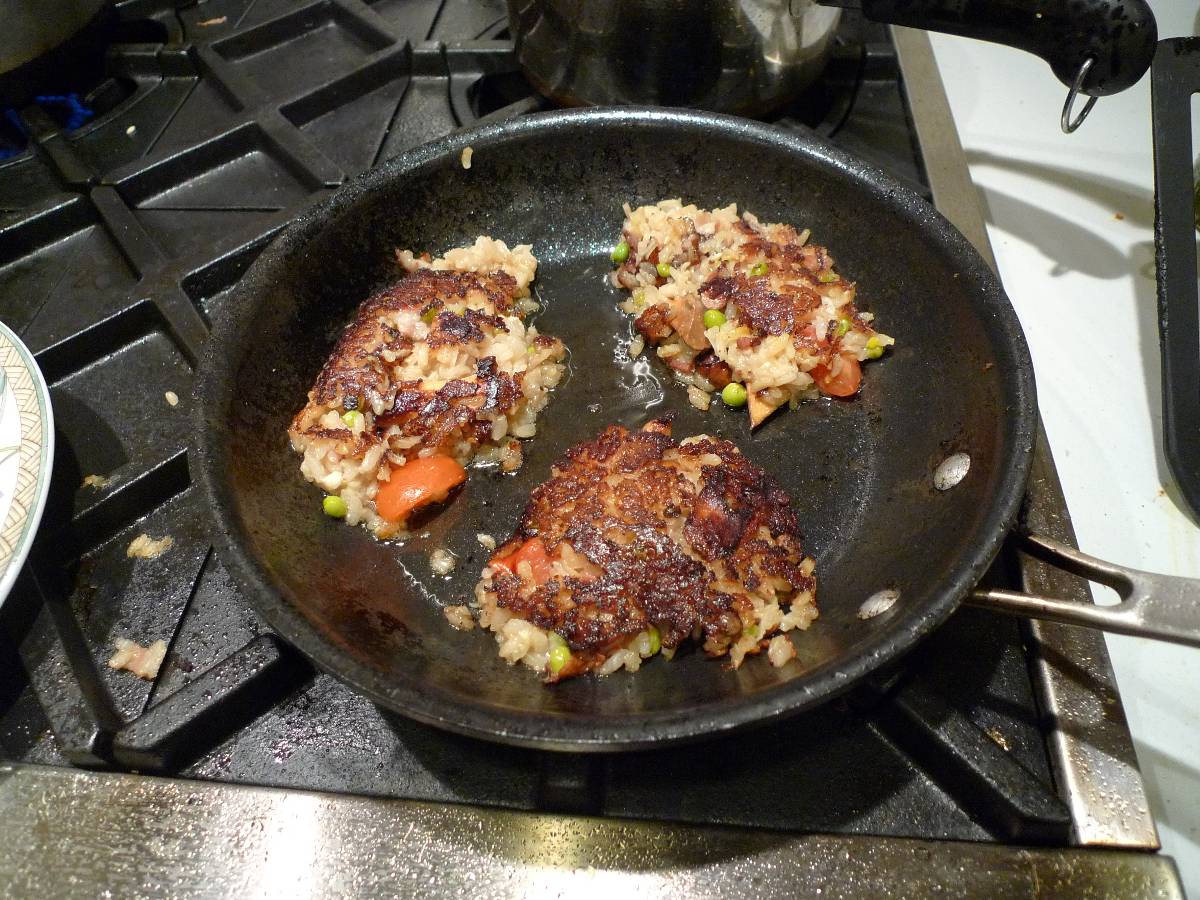
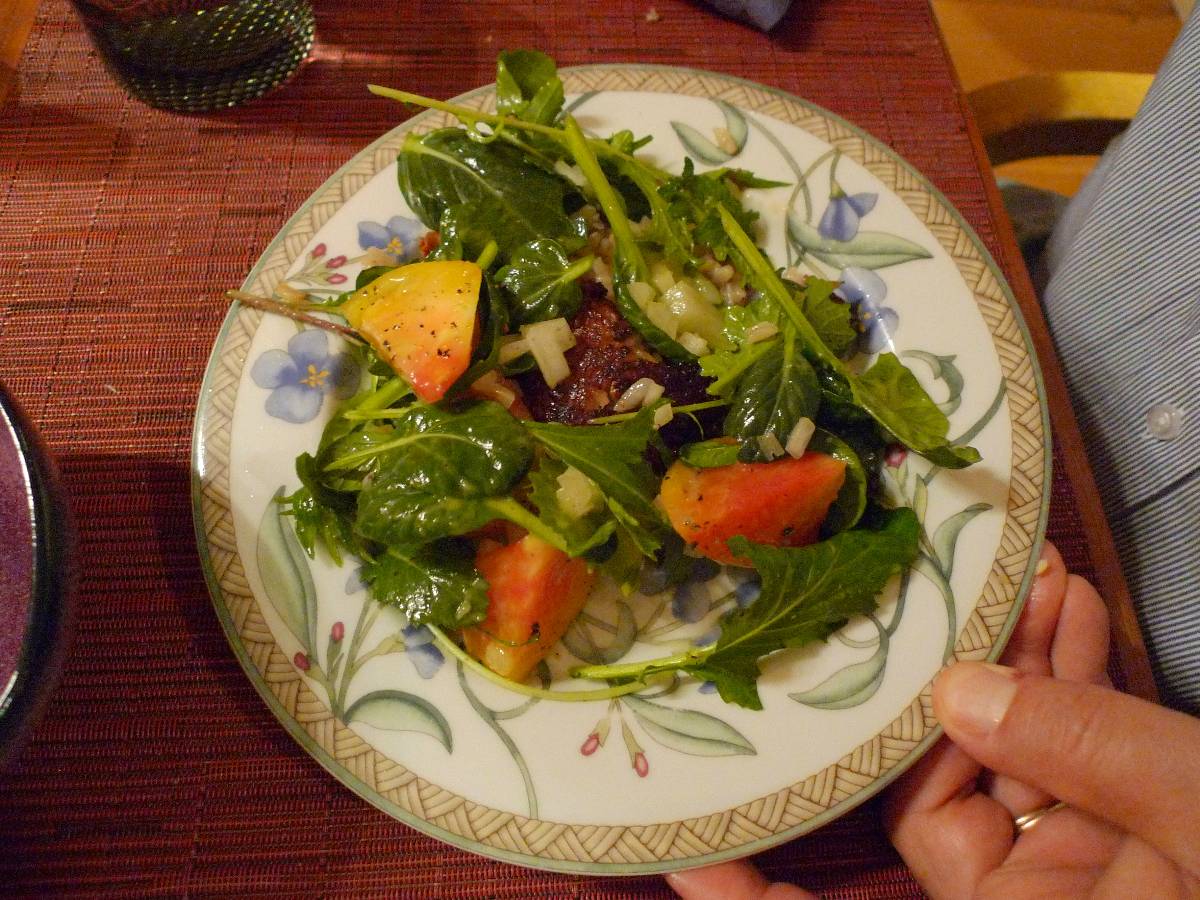
Best of all, because Chris stayed over, the next night we took the risotto, formed it into patties, browned it on both sides in olive oil and served it with a salad of arugula, tatsoi, and tomatoes (all from the garden) on top. The slightly lime-flavored dressing, the slightly bitter greens, and the sweet tomatoes over the risotto cakes made for a true delicacy. Chris says it’s called “Al Salto,” and is a common use of leftover risotto in Italy.  As a big plus, I’ve learned a new salad dressing–made in the food processor with shallot, garlic, vinegar, oil, salt and pepper, a dollop of dijon and juice of half a lime.

In any case, I am replete. Chris is on his way to Utah to demo his products (he has a line of scrumptious eggplant dip, salsa, and other products under the label Caleb and Milo. If you’re in Utah, Kansas, New Mexico, or Nevada, you can buy these at Whole Foods.


Don’t bother coming by my house. We scarfed up all the samples he brought!

Jamboree

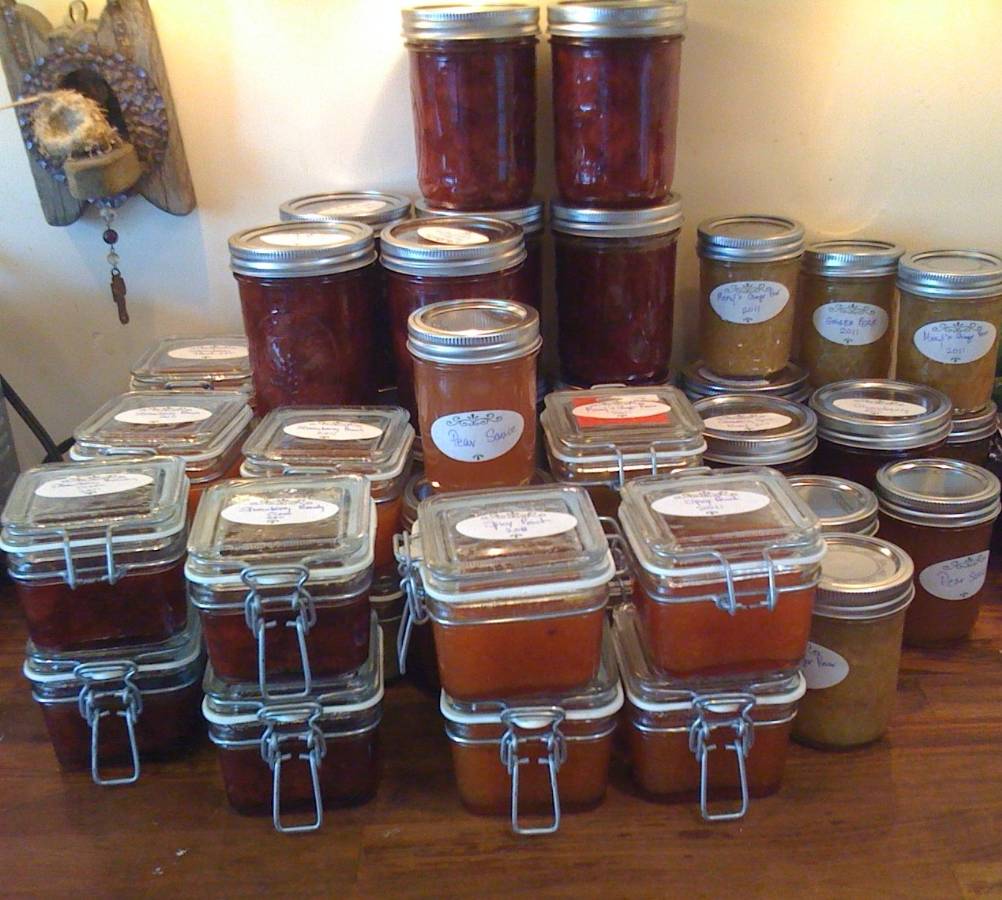
After the Kensington Farmer’s Market on Sunday, I wound up with six flats of strawberries and two of peaches.  So it’s been jam, jelly, and fruit butter city here.

And I’m not done! Because you need to cook the fruit in small batches to get it to gel, I’ve been adding various spices: ginger, cardamom, allspice, vanilla to some mixes. Best so far: Strawberry Brandy Clove.  And while cooking, it’s great to listen to Koko Taylor, who even has a line in this song about jelly/jam.

Blackberries turn to figs

Yesterday my friend Tung and I set off bright and early with her dog Toby to go blackberry picking.

I love the process: finding the succulent black berries that are only sweet when perfectly ripe among the sour pretenders. The fat, plump ripe ones are the sweetest fruit there is. They always seem just beyond easy reach, the thorns always ready to scratch. Maybe that’s what inspires so many blackberry poems—the picking lends itself to metaphor.

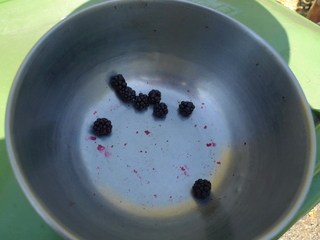
But alas, despite our hopes, our buckets, and our enthusiasm, the berry crop seemed either desiccated—brown nubs instead of berries–or picked over. After an hour, I had seven berries in my bowl, while Toby had about seventy burs in his fur.

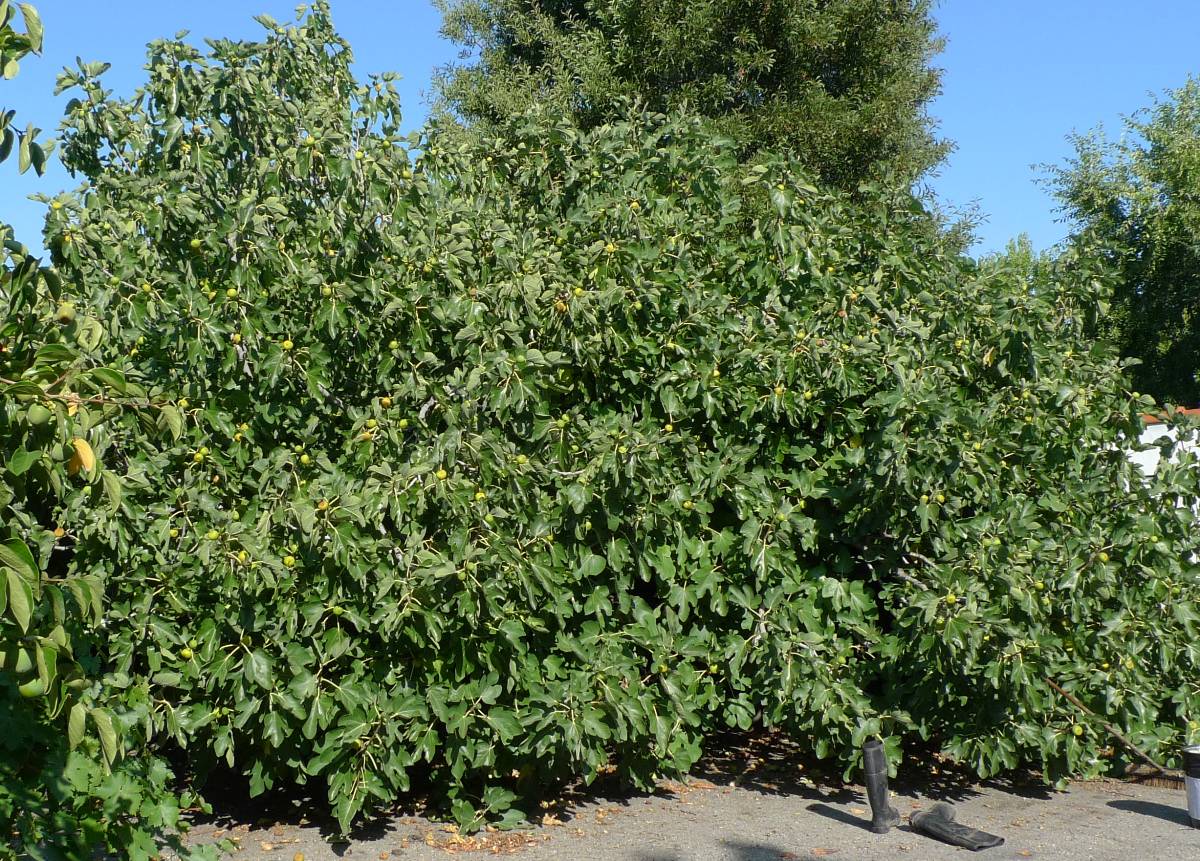
Luckily, Tung’s neighbor Catherine has a fig tree—more like a fig mountain—loaded with figs. We happily picked enough for jam in about 10 minutes.

Catherine is a fellow gardener, and grew up on her father’s farm, where she lives now in Walnut Creek.

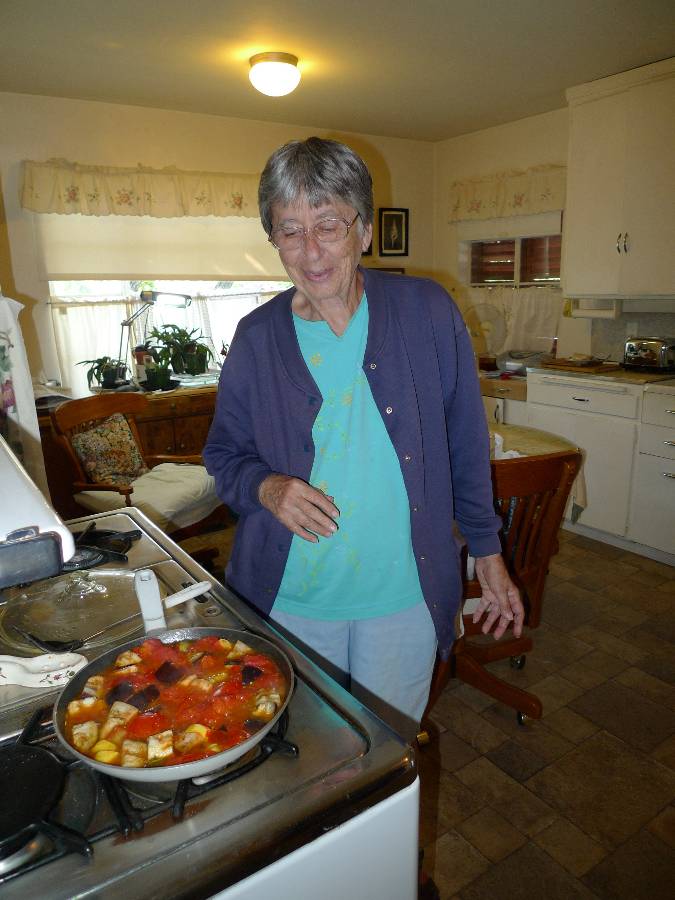
Fig, quince, peach, and apple trees groan with fruit. There is no substitute in fruit trees for time. She was cooking ratatouille with eggplant, tomatoes and squash when we arrived.

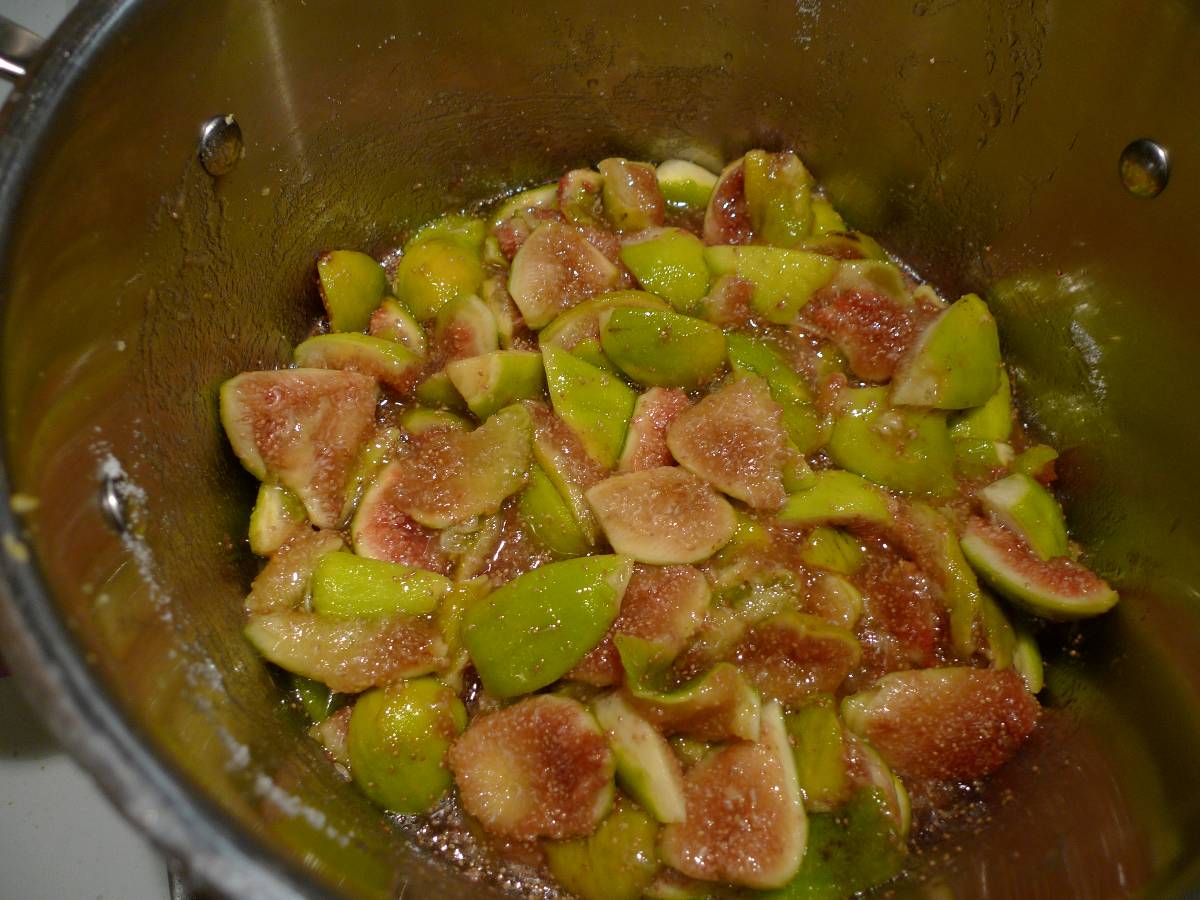
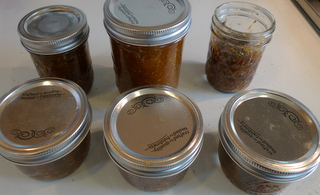
So today, I have six jars of delicious fig jam. At Catherine’s suggestion, I added lemon juice and zest, just the perfect touch to cut the intense sweetness, with lemons from her tree.


Still, I don’t know a single poem about figs, and I know five wonderful ones about blackberries.  That will be tomorrow.

Barbara Larsen’s Enchiladas

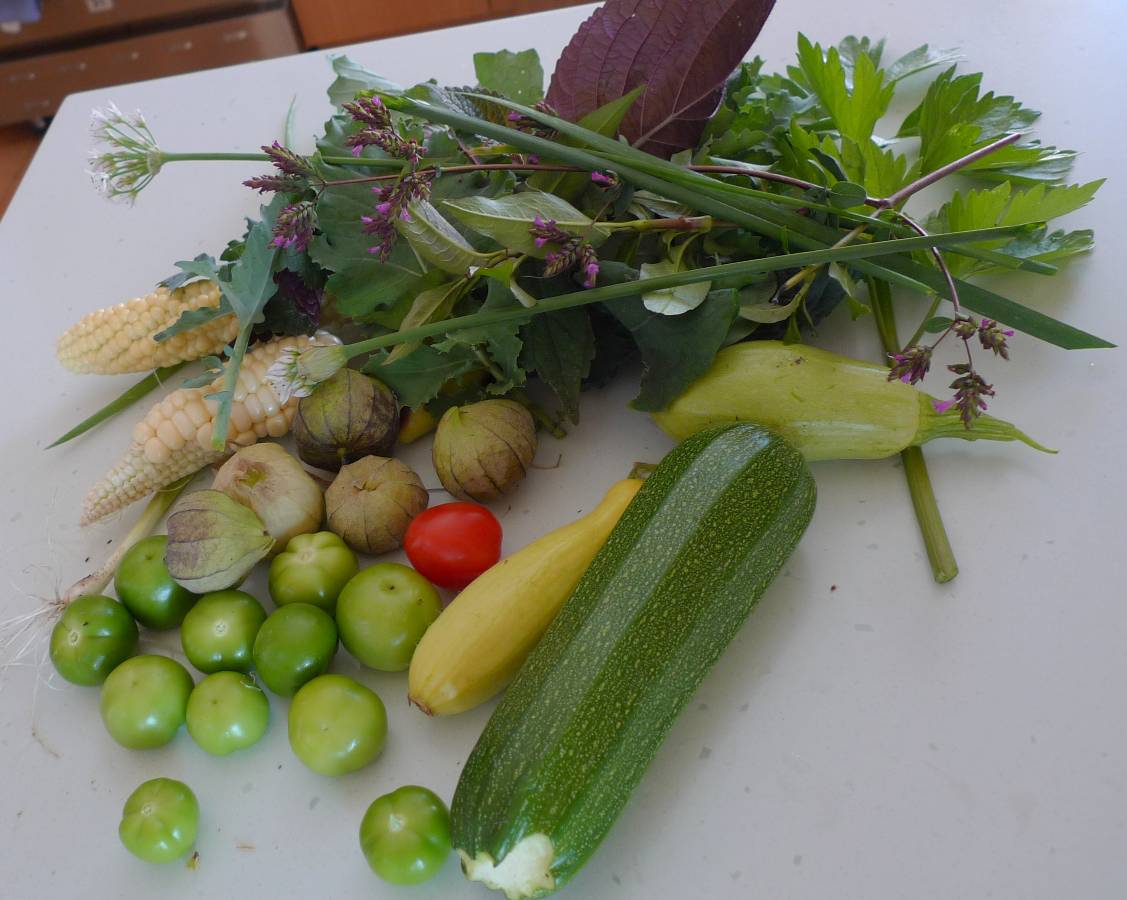
Camping is great fun, and so is hanging out with nine-year olds, but it is tiring! Then it’s back to what’s piled up in the meantime. The garden is flourishing:

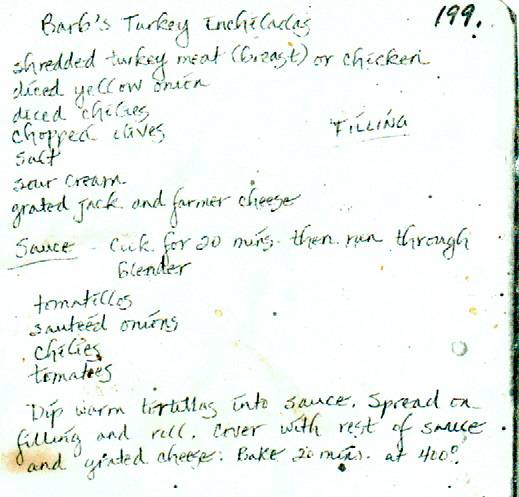
I made enchiladas entirely from garden produce except for the meat and tortillas. This was a takeoff on a turkey enchilada recipe of Barbara Larson’s who is no longer with us. Here it is in her own hand. I’ve made this recipe many times, and usig what came from the garden, put it together from memory.  It took pretty far off now that I look at the recipe.


Still, her recipe was the inspiration. Barbara let me make copies of some of her recipes years ago, and they are all good.

Barbara’s husband, Jim, has for years turned out reliably marvelous food at The Restaurant in Fort Bragg (a must visit if you’re on the Mendocino Coast). He now cooks there with his wife Susan. A patron of the arts, Jim for years had a soup and sandwich lunch for under $5 that let those of us who were low on funds and high on longing for good food savor something delicious in a n elegant atmosphere. I think the lunch is an artifact of the past, but I’ve never been disappointed in one of Jim’s meals in the 30+ years I’ve eaten there.

In any case, it was fun to make a variant of Barbara’s old recipe, even more fun to eat them, and it’s good to be home. I was too hungry to photograph the enchiladas as they came out of the oven, but here are the three that were left.

Guess who came to dinner?

The chef made a repeat visit, which I found pretty flattering. I also invited a couple of friends whose company I enjoy—as easy to cook for five as for three. I made bruschetta with roasted baby tomatoes, a cucumber, jicama and citrus salad, a southwest chicken stew and peach crème celeste for dessert.

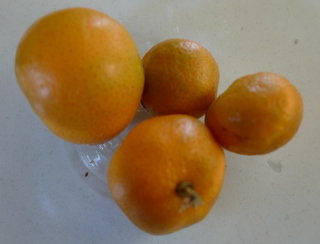
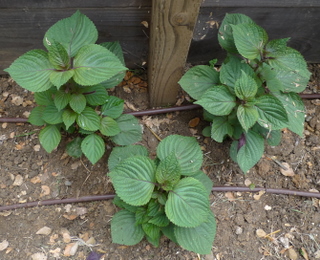
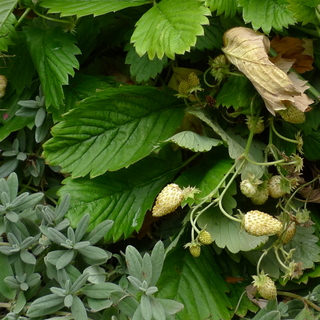
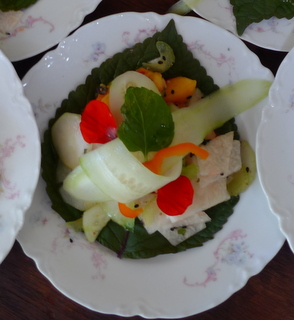
I wanted to use as many ingredients as I could that are not available commercially. This included calamondins–a small orange, Filipino lime–from my neighbor’s tree, and shiso leaves and white alpine strawberries from my garden. The chef noticed and appreciated each one—it’s so much fun to cook for someone who really tastes his food. As I made the stew the day before, I had time to play around with the salad. I put a big shiso leaf on each salad plate, and chopped some mint and shiso together to add to the vegetables. (Shiso is from the mint family and tastes slightly minty.) I sliced the cucumbers and jicama on the mandoline, and made some long cucumber slices, added some sliced orange pepper, pink grapefruit sections and a chunks of ripe peach, and sprinkled it with black sesame seeds. I used the long thin slices to make a cucumber bow on top, with a nasturtium leaf and a leaf of orange mint. I made a citrus vinaigrette with calamondin and grapefruit juice, champagne vinegar, olive oil and a little sugar.

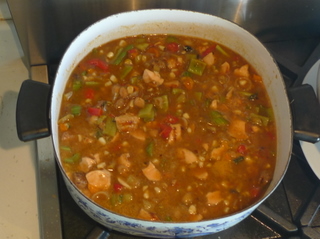
For the southwest chicken stew, I cooked some garbanzos in chicken stock the night before, adding some tomato, onion, a chipotle pepper and garlic. When they were done, I drained off the broth, and pureed the chipotle, garlic and tomato with some leftover roasted cauliflower and added these back into the broth to thicken it I bit.  In my grill pan, I grilled chicken breast and merguez sausages in chunks and added them to the broth, along with some calamondin and orange juice. Then I sautéed onions, garlic, turmeric, chili flakes and some squash and threw those in with some grilled corn and chopped Romano beans. I let this simmer about half an hour, added some salt and a spoonful of lime infused honey. I put the garbanzos back in, added some chopped shiso, and and let it all cool in the fridge till an hour before dinner.  If there had been a layer of fat, I would have removed it, but there was no need to defat, as there wasn’t much fat in it. I reaheated slowly, and made the salad while it heated. 

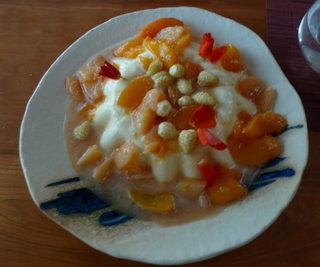
The crème celeste is a simple cream, yoghurt, sugar and gelatin dessert. I added one small, peeled and pureed peach and served with peaches simmered in sugar and brandy and topped with the alpine strawberries.

The wine, the food, and the conversation were all a delight. This was an easy meal, and lots of fun to make, especially the salad. The leftover chicken stew was also delicious. There wasn’t any leftover salad or dessert, not even a cucumber slice for the chickens.

Movie, garden, poetry

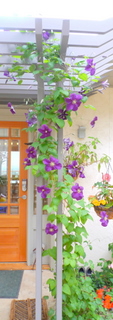
This clematis lived in a pot for five years and is finally in the ground, thriving. It almost died several times, and I wasn’t sure it would make it after the final transplant–it was just a bundle of brown sticks. My landscaper friend said it had no chance. Now it looks better than it ever did in its original home. I love to see it as I come in and out of my house–a reminder not to give up too easily, no matter what the experts say.

This week has been full of events regarding the movie that was partially shot at my house. I got to meet one of my favorite celebrities (and give her a poem), finally got to make dinner for the chef, and am going to be an extra in a scene.
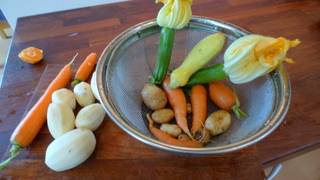
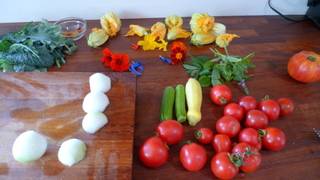
For dinner Larry suggested brisket–something tried and true. It was a hit. Brisket is something not usually on the menu in restaurants, and this one was chock full of vegetables from the garden. I used some tomatoes in the broth for the brisket, and made the rest into a very simple tomato and onion salad, with a light dressing, spread on a plate. We also had squash blossoms redux–without halibut roe.

I started the brisket the night before. It’s always better the next day. A friend who also came for dinner asked for the recipe, and the chef himself asked a lot of questions about how I made it.  I do it slightly differently each time, but here’s the general technique.
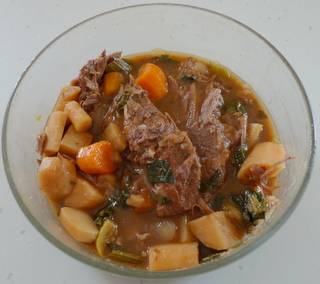
Brisket

2-4 lb brisket
flour, salt. pepper
vegetable oil
pkg dried onion soup
garlic, onions, (leeks or shallots if you like)
stock or bouillon
tomatoes, potatoes
carrots, mushrooms, squash, greens, etc.
herbs, spices and other additions to taste

Prep time: 30 minutes (after meat is room temp, includes chopping veges)
Cooking time: 3+ hours

Trim off as much fat as you can and rinse the meat. Let it come to room temperature. Pat it dry if it hasn’t dried thoroughly. Drench with flour mixed with a bit of salt and pepper.

Heat oven to 350 degrees. Add enough oil to cover the bottom of your roasting pan and heat it on top of the stove till the oil is hot.  Sear both sides of the brisket till brown–about five minutes a side.  Turn the heat down a bit and add crushed garlic and onion wedges and let them brown.  Add a handful of chopped tomatoes and a few potato chunks. Cook for a few minutes and cover the mixture with stock (beef or chicken stock will do). The stock should almost cover the meat. You can add a packet of dry onion soup mix (if you use this, sprinkle on top of the meat) a little sugar or some chopped ripe fruit, herbs, a chipotle or other hot pepper–whatever you like for flavor and sweetness.

Set the pan uncovered in the oven for at least 2 hours, until a fork goes easily into the meat, but you can’t cut the meat with a fork.  Take out of the oven and let cool.
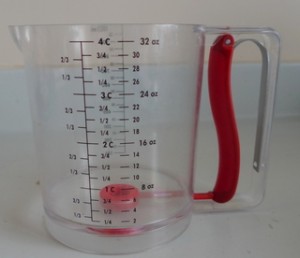
The liquid will be really greasy. You can either cool overnight in the fridge and peel off the congealed fat or strain and degrease with something like this. In any case, after you degrease the liquid, strain out the cooked veges if you haven’t already, and blend them up and return them to the broth–this acts as a natural thickener. Add all the other vegetable chunks you want–carrots, parsnips, potatoes, cauliflower. Cook in the oven at 350 (or simmer on top of the stove) for about an hour. Now you should be able to cut the meat with a fork. Add any faster cooking veges like celery or zucchini and herbs like parsely, sage, rosemary, and cook for about 15 more minutes. Throw in final greens like chopped kale or spinach, and salt and pepper if necessary.  You can refrigerate and reheat at any point in the process.

And on another note, here’s the poem I was lucky enough to give to one of my favorite actresses:

Split Screen

In the media room, two movies
stream by from different cubes:
one the birth of skateboarding,
the other a sixties Cassavetes’ flick.
He and his pals caper in trench coats and sideburns,
troubled and frantic and utterly honorable,
eyebrows cocked
and ready to fire. Even without sound,
you can tell the dialog is urbane.
All the streets are grey.
While the insouciant Z-boys of Dogtown glide,
neon in their t-shirts and sunbleached hair,
impossibly graceful and doomed and obsessed,
defining what the body can do in air
as they careen into myth
and the boys become brands.

Whatever else we’ve done
at whatever cost,
we’ve given the world this:
New York angst,
California cool.
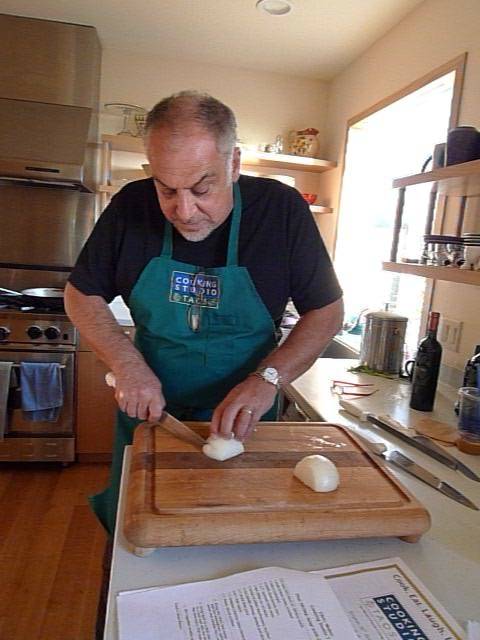


Quiet on the set


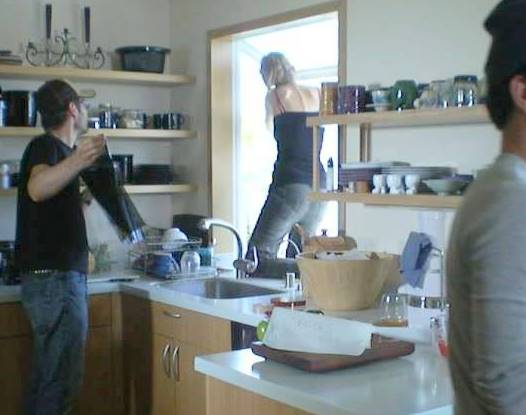
For the past week, a movie crew has been using my house and garden as a set. Here the crew is setting up my kitchen.  The paper in front says “Hot Set” which meant takeout for dinner last night. I’m not allowed to give details about the movie or the actors yet, but  it’s been an interesting experience to have a crew of about 18 people here each day.

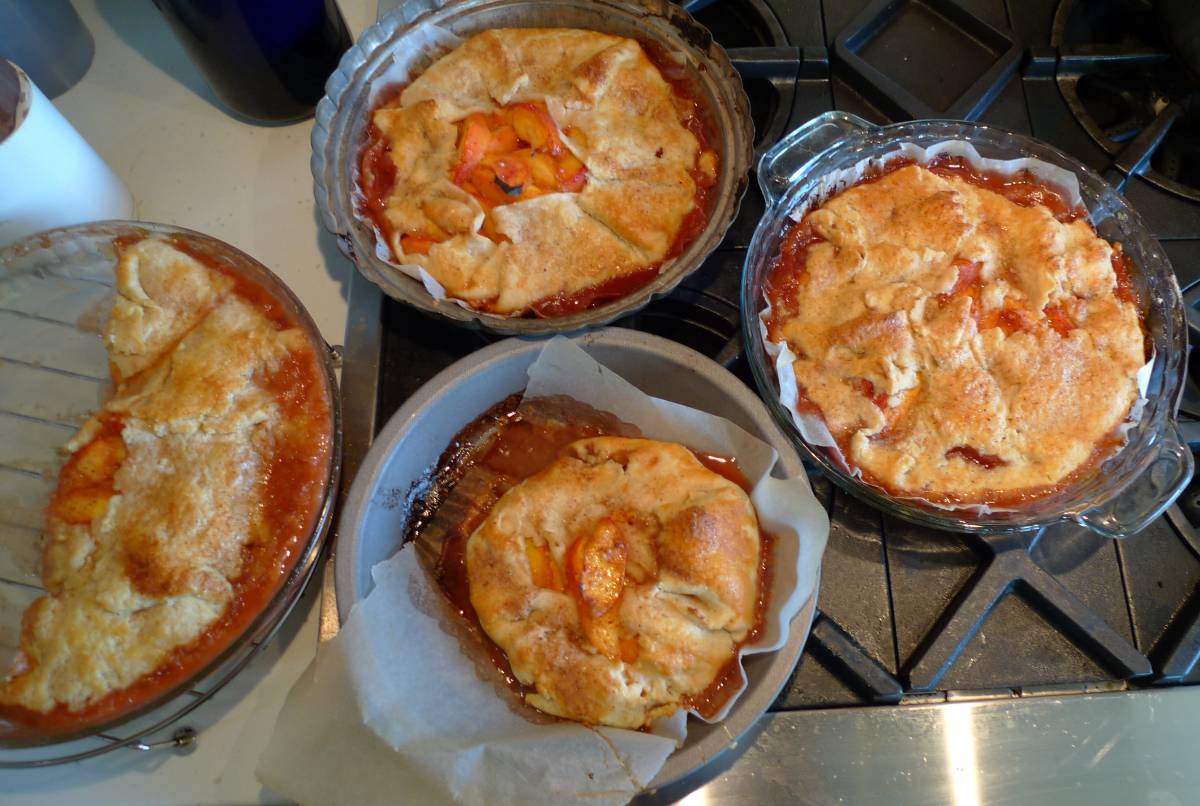
They have been as considerate as possible and while they keep telling me it’s a minimalist production, I’ve been impressed watching them haul hundreds of pounds of equipment up and down my five flights of stairs, create grass, hedges and fences, set up a complete wardrobe and makeup shop, and in general construct what they needed on site. They have lunch catered, but one day the ice tea spilled into the lemon bars, so I made some extra peach galettes. I had to bring a dessert to an event that night, so just made two extra. One got sampled before I could get out my camera!

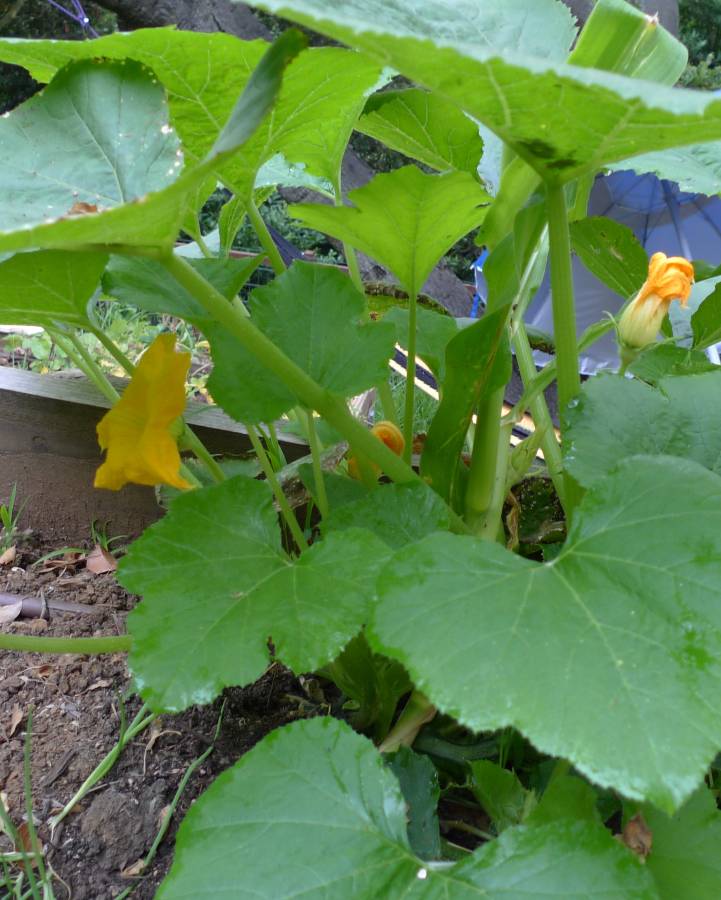
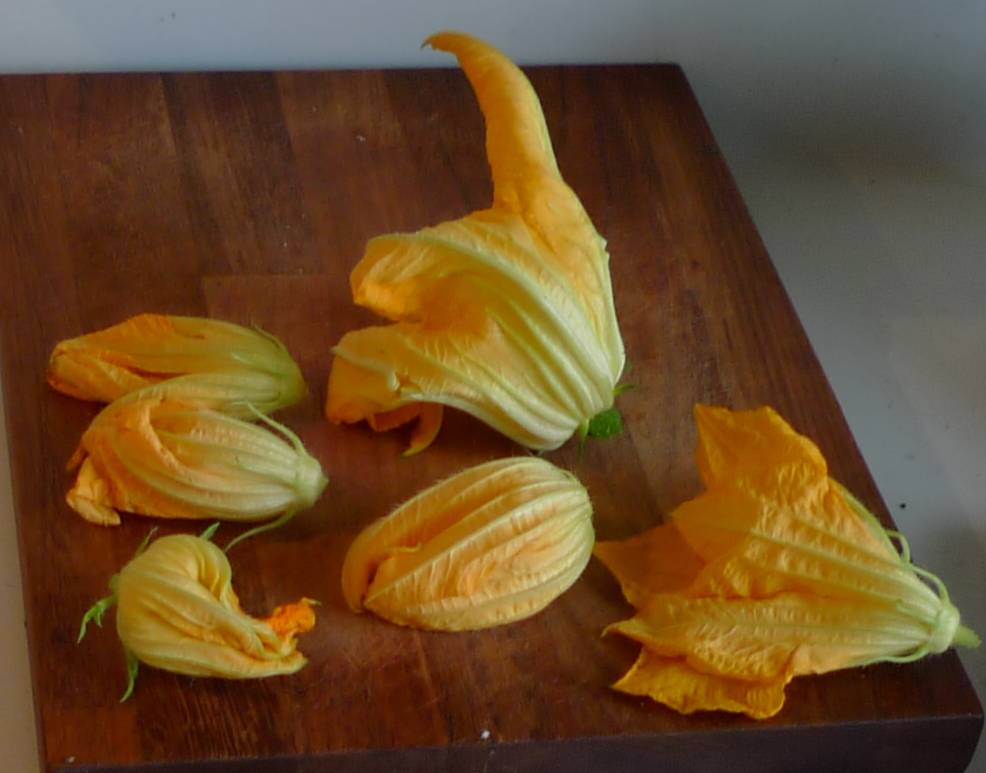
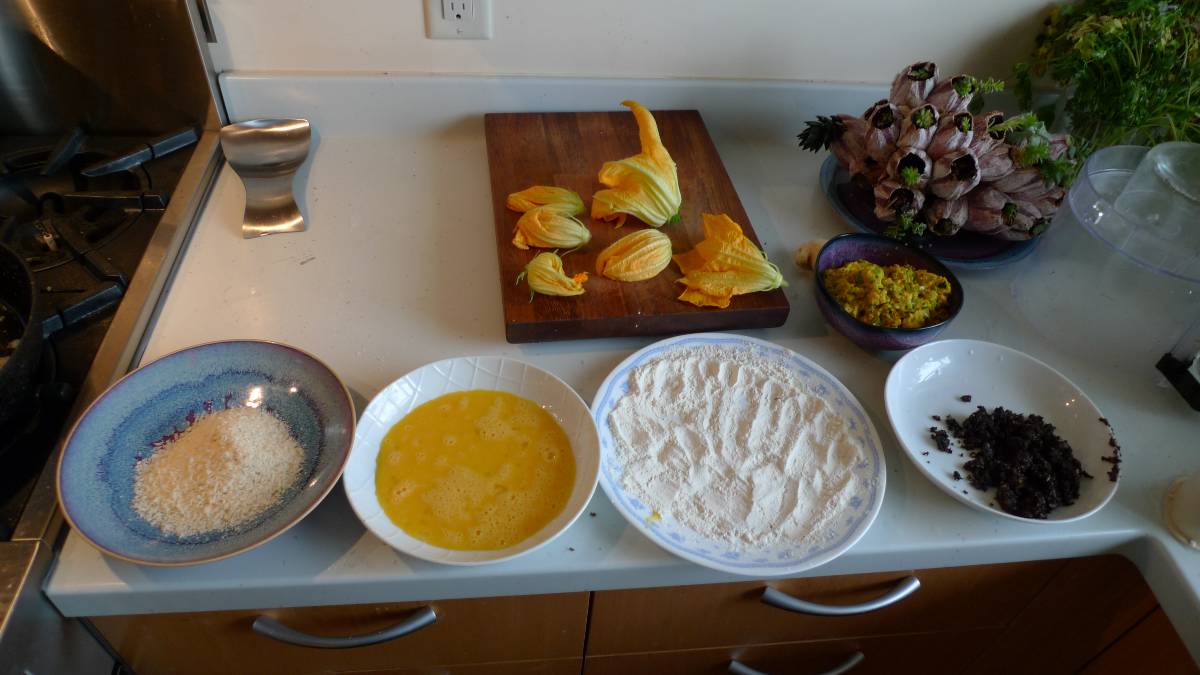
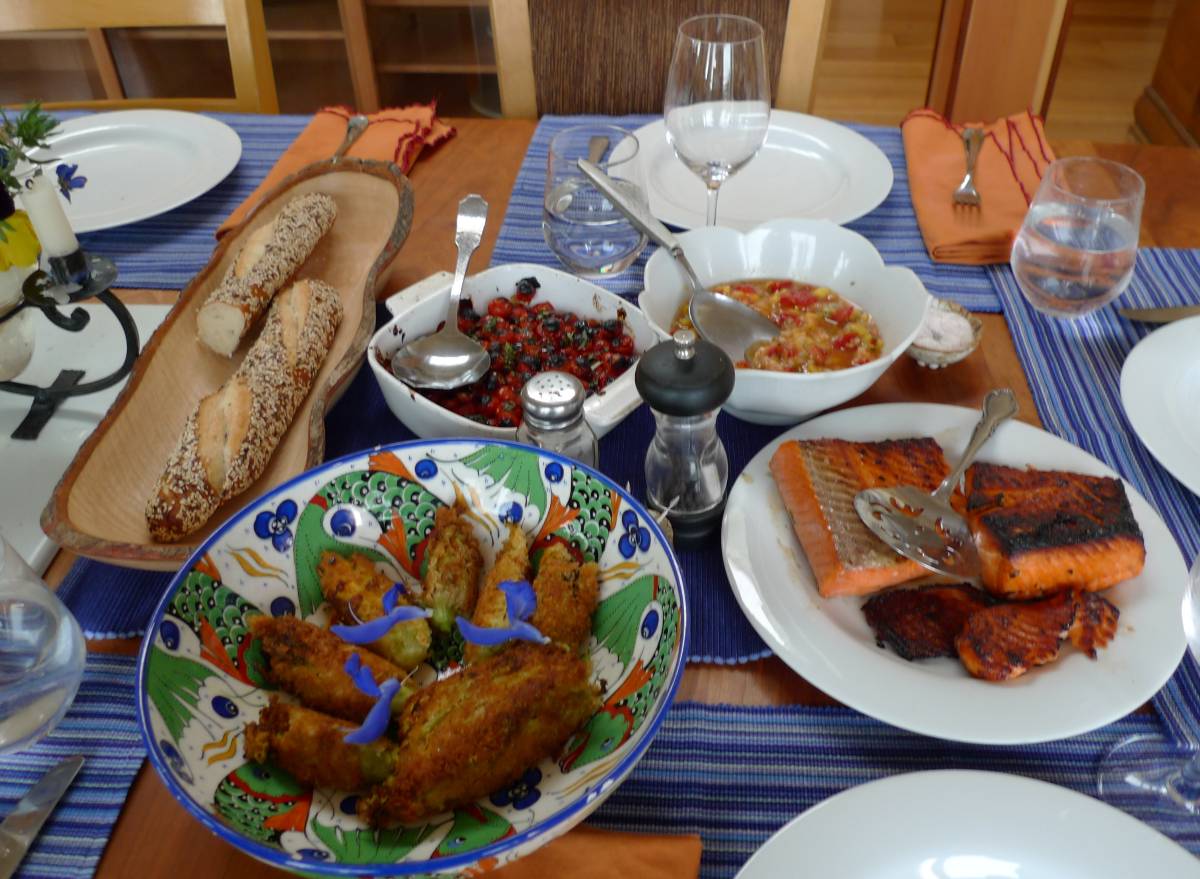
This week, one of the main actors is also a renowned chef. He was mostly in the outdoor shots, and noticed the wealth of squash blossoms. He suggested that I pick and cook them and told me how to make a filling of a mushroom duxelle, something new to me. This is basically mushrooms chopped really fine (you can do this in a food processor) and cooked in butter till the liquid evaporates and you have a sort of mushroom paste. You can add some minced shallots and thyme leaves for flavor. He also told me to flour the outside of the blossom first, then dip into beaten egg, then into panko (those spirally Japanese breadcrumbs). So I invited him to dinner.  Wednesday was their last day of filming here, and yesterday they were filming in Napa. He accepted, pending their shooting schedule, and I busied myself making the squash blossoms, some lightly grilled cherry tomatoes, and grilled salmon with a mango/tomato salsa.

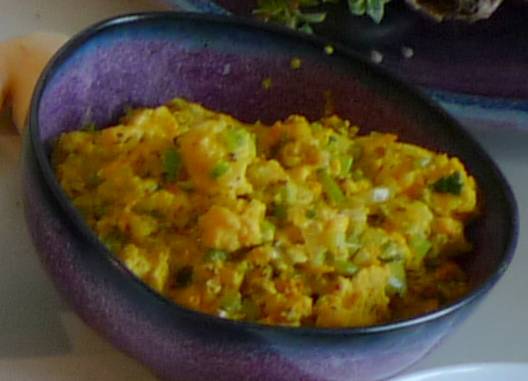
For the blossoms, in addition to the mushroom duxelle (yummy!), I had some halibut roe from the Farmers’ Market. I sauteed the roe with chopped onion from the garden, fresh tumeric, ginger and garlic and a little diced celery. My idea was to see if he could guess what the filling was. It’s a very subtle flavor and a light fluffy texture, almost like beaten egg whites. The roe are much smaller than caviar, and if you chop into the skin that holds them, they smoosh out into a light pasty substance. I wish I’d taken a picture when it was in the skin, as it’s unique, but here it is after cooking it up:

I got everything ready, but then got a call that filming was running very late, and we’d have to reschedule. Luckily, some good friends were available on short notice to come eat with us:

I threw on a few sage flowers to brighten them and the squash blossoms were delicious! If we reschedule, I’ll have to think of what else to make.


Watermelon Rind Gazpacho

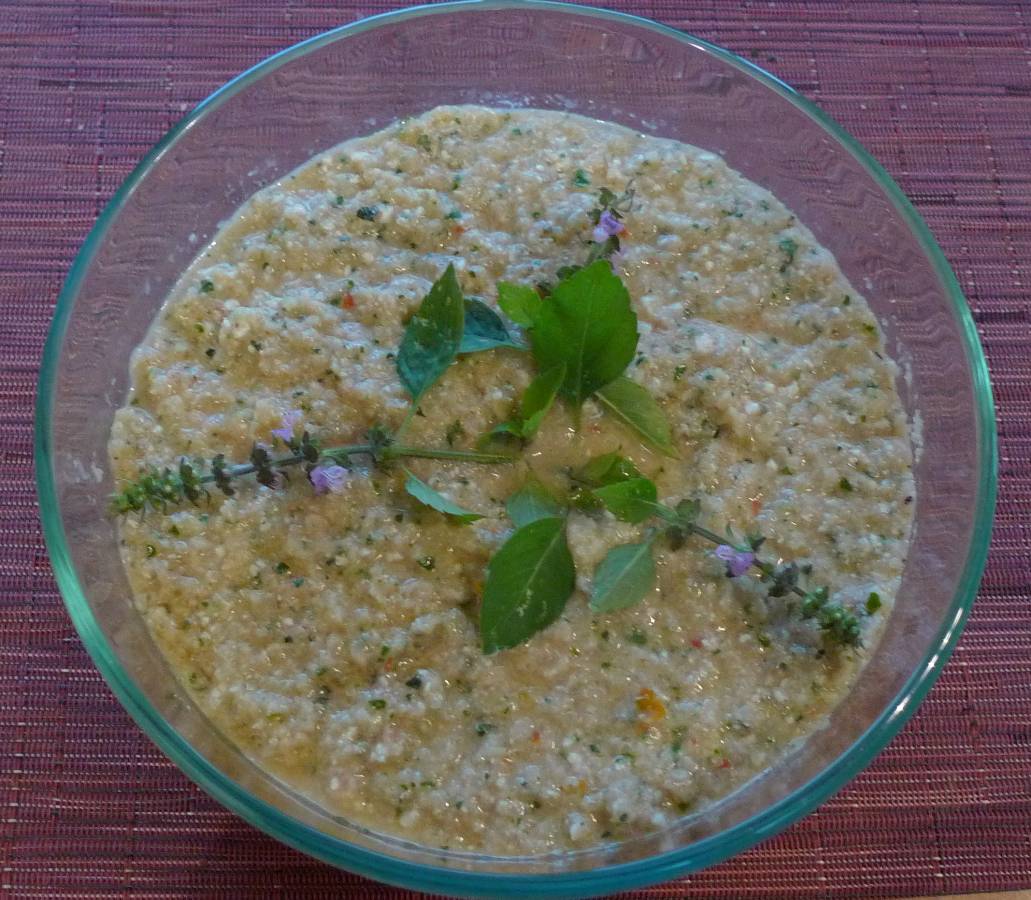
When I clip recipes from the newspaper, I either make them right away, or they pile up for months. This one struck a chord as it comes from a blog section titled “Otherwise Trash.” As someone who invented a compost machine that makes food for my chickens, edible trash interests me.  This white gazpacho uses watermelon rinds–everything except the hard green outer shell–along with ground almonds. It’s unique and delicious.  I even had cinnamon basil in the garden for the garnish, something I learned about from The Savory Way, by Deborah Madison.

This was from Wednesday’s “Dining” section of the New York Times. As I’d never seen or tasted it, I pretty much followed the recipe blind, and I like how it came out–a nice variant on a summer staple.

White Gazpacho with Watermelon Rind

Adapted from Ronna Welsh, Purple Kale Kitchenworks

Time: 45 minutes, plus at least 2 hours’ chilling

 3/4 cup blanched, slivered almonds (I was a little short on almonds and added a few raw cashews, which worked fine)
1 cup loosely packed parsley or mint leaves, or a combination of the two (I included a little lemon balm, too)
1 stalk celery, cut into chunks
1 dozen cherry tomatoes
1 clove garlic
1 1/2 cups bread cubes, like ciabatta or sourdough, hard crusts removed
5 tablespoons extra virgin olive oil
About 2 pounds cucumbers, preferably thin-skinned types like lemon or English (about 4)
About 2 pounds cubed watermelon rind, pale pink and green parts, hard skin removed (about 8 cups, from 1/2 watermelon)
1 tablespoon sherry vinegar or rice wine vinegar, more as needed
1 tablespoon salt, more as needed.

1. In a food processor, combine almonds, herbs, celery, tomatoes, garlic, bread and oil. Purée until smooth. Transfer mixture to a large bowl and return the used canister to the processor.
2. If using thin-skinned cucumbers, cut in chunks. If using thick-skinned ones, like Kirbys, peel and seed, then cut in chunks.
3. Working in batches if necessary, combine cucumbers, watermelon rind, vinegar and salt in the processor. Purée until smooth. Add to the other purée and whisk together well. Taste, adding salt and vinegar as needed. For a smoother texture, purée in a blender, in batches.
4. Chill until very cold, at least 2 hours or overnight. Taste for salt again before serving.

Yield: 8 to 12 servings. (I think more like 6-8, myself–it’s too good to skimp!)

Note: The total weight of cucumber and watermelon pieces should be 4 pounds, but it is not necessary to use precisely 2 pounds of each.

Witches’ Brew

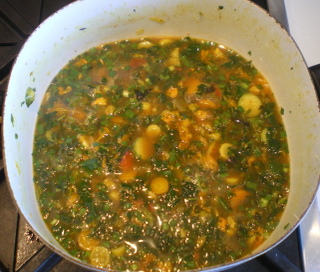
My friend is sick, so I made her some soup using the first harvest from the garden. Sauteed the onions and garlic in olive oil, added a little fresh grated turmeric, ginger, and cumin. Threw in the carrots, potatoes, and tomatoes along with a mix of vegetable and fish stock and let them simmer about 15 minutes. Added the greens and herbs), including chopped shiso, hyssop, and stinging nettle (all allegedly medicinal) and voila. A witches’ brew for better health. Tasty, too.

Family contributions

Larry is reading a Baseball book by Jim Bouton called Ball Four. He paraphrased a story in it for me today.  This is from the 70’s when the publicity department sent out a form with questions for the players. One was, “What is the most difficult thing about playing major-league baseball?” A player named Mike Hegan responded, “Explaining to your wife why she needs a penicillin shot for your kidney infection.”

That seems in a league with Bob Hass’ haiku-ish couplet:

Spit straight up
learn something.

Yesterday was the DVD launch party for my son’s movie, Blank Slate, a truly independent feature. Now it’s headed for festival submission–hope you get a chance to see it. As there were several vegans in attendance I made the pea soup with the last of the peas from the garden and a dip recipe from a cookbook my daughter’s friend put together for a wedding present. The dip was a big hit with omnivores as well as vegans:

Cowboy Caviar

1 (15 0z) can Black-eyed peas, drained
1 (11 oz) can white Shoepeg corn, drained (I just used plain white corn)
2 avocados diced
2/3 C chopped tomato
2/3 C chopped cilantro

Dressing:
1/4 C good olive oil
1/4 C red wine vinegar
2 cloves garlic, pressed
1/2-1 tsp cumin (I used 1 tsp freshly ground)
salt and peper to taste

Combine dressing and mix into other ingredients. Serve with scoop-style chips. Makes a good sized bowl full.  Can double the recipe if desired.


Mackinnon-Patterson risotto

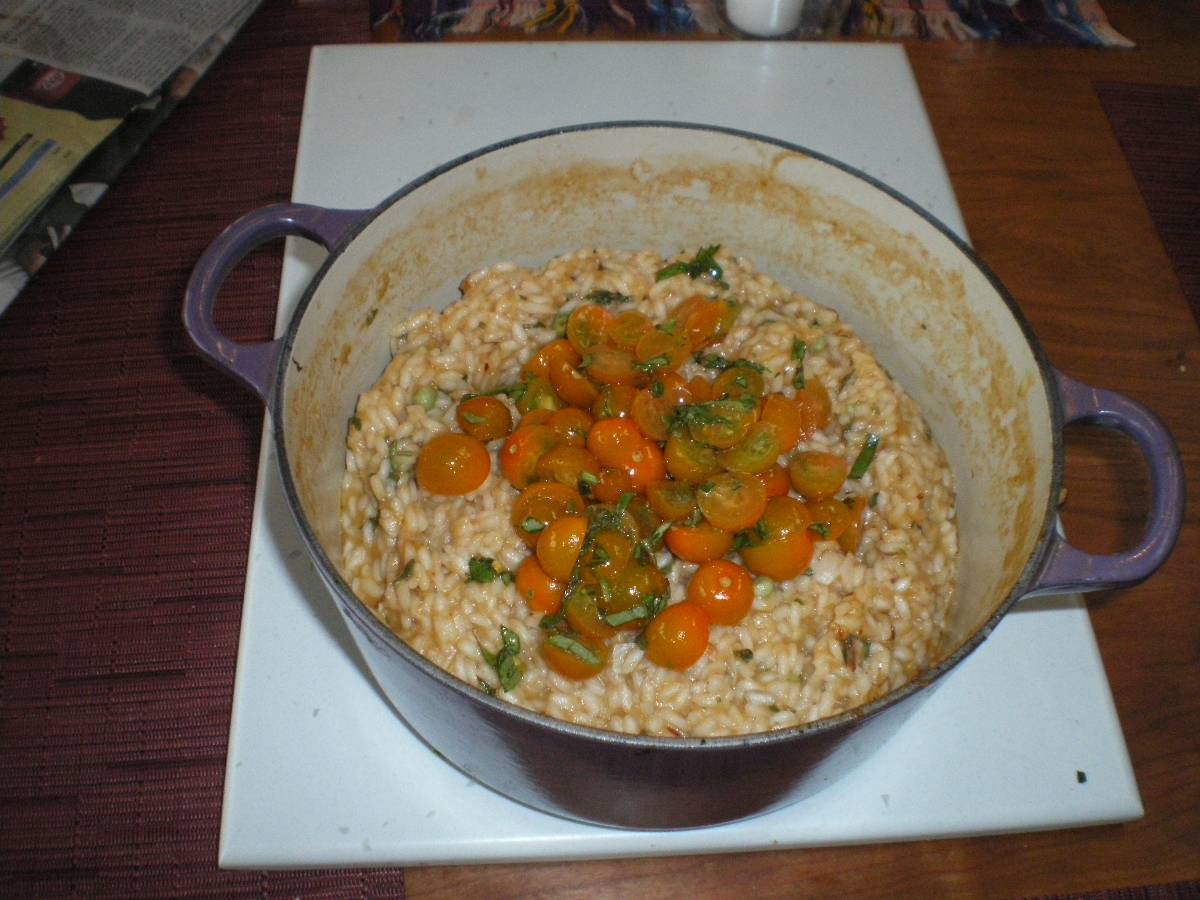
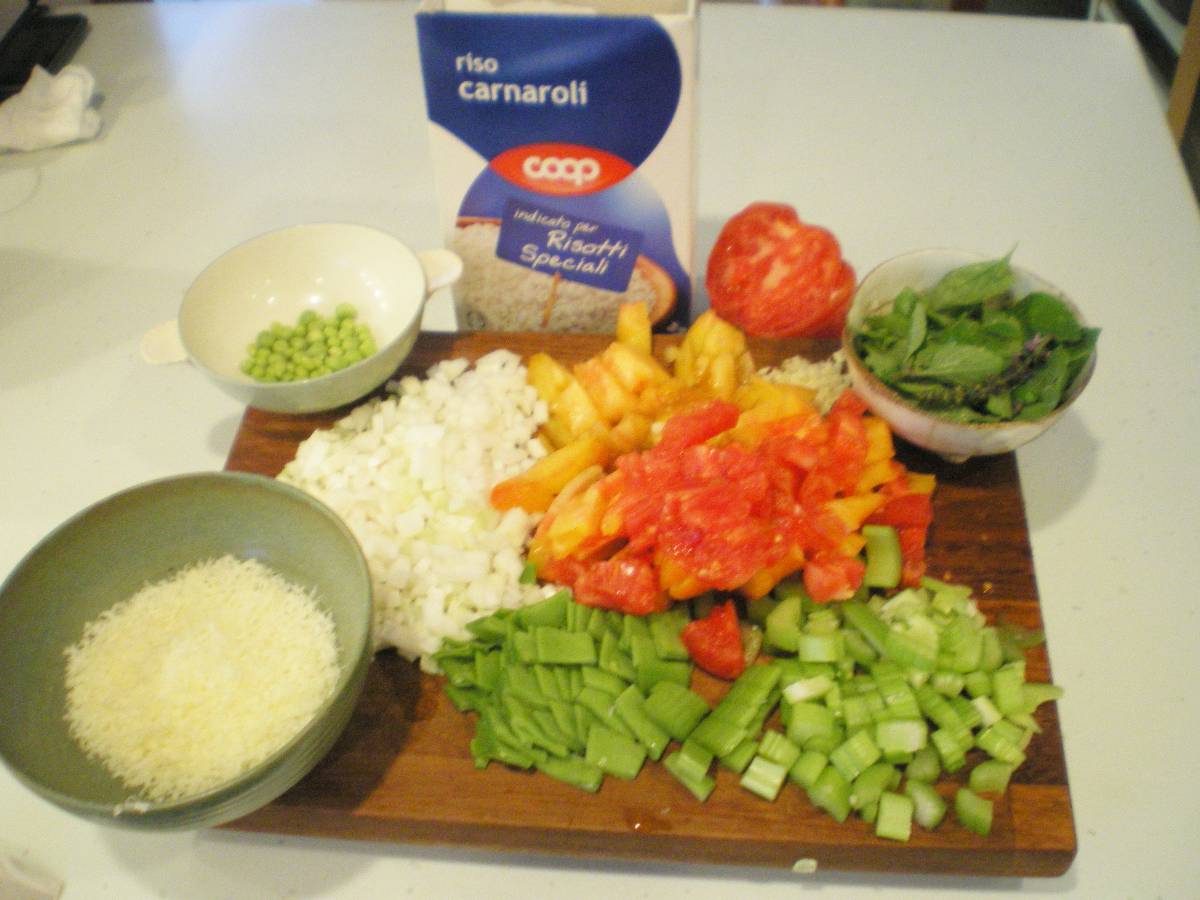
Last night I made a spring tomato risotto recipe from the “Fast Slow Food” series in the Wall Street Journal. I had a lot of spring tomatoes from the farmers’ market, and the recipe called for Carnaroli rice. I had a few pounds of this I brought back from Italy. It’s bigger and toothier than Arborio rice and perfect for risotto. The recipe was easy enough (as described), even counting straining the tomato and celery blend. I don’t usually strain things–too finicky for me–but decided to follow the recipe exactly as I’d never made anything by Mackinnon-Patterson before (well almost exactly–had to add some minced garlic to the onions, a few chopped snow peas for a little of the celery and a handful of English peas at the end as we have so many). While I liked the idea of olive oil instead of butter, the result was a little bland. Can’t say I was completely surprised–the recipe calls for water, not stock. I can’t think of any risotto that wouldn’t be improved by using stock, even a little light vegetable stock instead of water. I threw in a pinch of pepper flakes and some Italian dried peppers and garlic at the end for a little pep. Maybe I would call this, “so-so risotto.” To be fair, the risotto might be a little livelier later in the summer when the tomatoes are at their best, but then it wouldn’t be spring tomato risotto. Also, I would substitute some white wine along with stock for the water.

I’ve become a cook who assembles her ingredients before she starts to cook. This is rewarding! Here is the recipe as printed in the WSJ. If you try it, let me know how it works for you.

TOMATO RISOTTO

TOTAL TIME: 30 MINUTES; SERVES: 6

½ cup extra-virgin olive oil
½ cup yellow onion, diced small
1 tablespoon salt, plus extra for seasoning
4-6 cups water
1 pound juicy, ripe tomatoes
2 stalks celery
2 cups Carnaroli or arborio rice
4 tablespoons basil, chopped medium-fine
1 cup grated parmesan cheese
2 tablespoons lemon juice
1 cup cherry tomatoes, halved

WHAT TO DO:

1. Set a medium heavy-bottomed pot over medium-low heat. Swirl in 2 tablespoons olive oil. Add onions and 1 teaspoon salt. Sweat onions until translucent, about 5 minutes.

2. In another pot, bring water to a simmer.

3. While water heats up and onions cook, juice tomatoes and celery. If you don’t have a juicer, pulse tomatoes and celery in a food processor or blender until liquefied. Push through fine mesh strainer, reserving juice and discarding solids.

4. Turn onion pot’s heat up to medium-high and stir rice into the sautéed onions. Toast 2 minutes, or until grains are hot and opaque.

5. Deglaze pot with 2 cups simmering water. Stir until liquid is absorbed and season with 2 teaspoons salt. Adjust heat to keep risotto at a steady simmer. Add another 1-2 cups water and continue to stir often.

6. Once liquid is absorbed, add another 1-2 cups water and continue to stir regularly.

7. When rice has cooked for about 15 minutes, or once it is five minutes shy of al dente, stir in tomato juice. Cook, while stirring, 4 additional minutes, or until risotto is creamy and rice is al dente.

8. Quickly stir in 4 tablespoons olive oil, basil and parmesan. Remove from heat and add lemon juice. Taste and season with salt, if needed.

9. In a small bowl, mix cherry tomatoes with 2 tablespoons olive oil and pinch of salt.

10. Garnish risotto with tomato-oil mixture. Serve immediately.

    From the Farmers’ Market

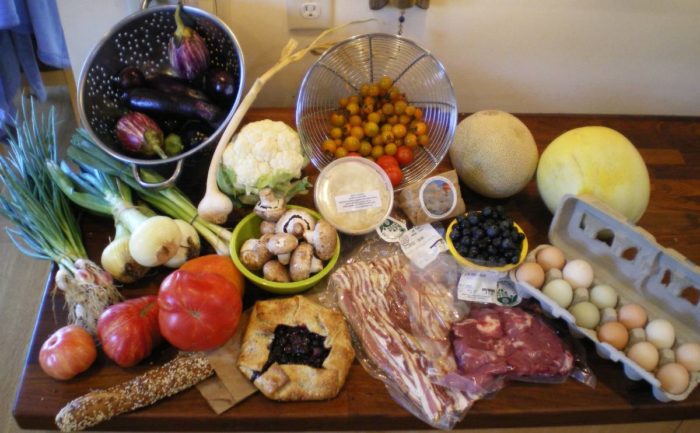
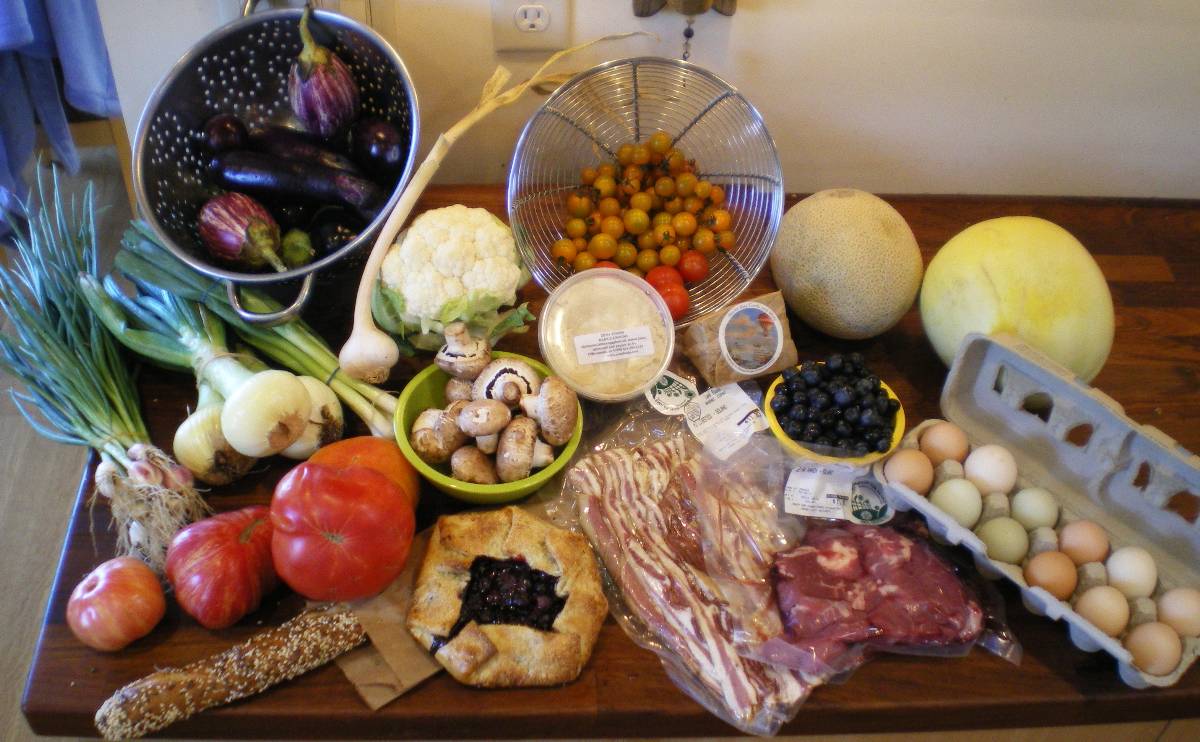
    This is what I bought at the Kensington Farmers’ Market today. The meat packages are lamb bacon and goat stew. The little plastic container is baba ghanoush, with a piece of local parmesan wrapped in brown paper next to it, above a big handful of fully ripe blueberries.  In front of the mushrooms is a blueberry galette that I couldn’t resist. Now all I have to do is think about what to make for dinner.