A short poem for Monday

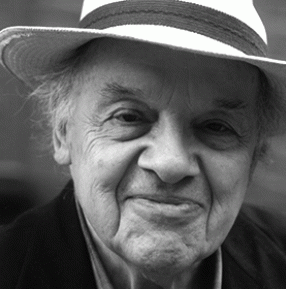
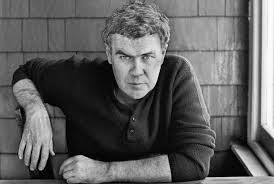
I think of Raymond Carvercarver almost exclusively for his short stories, but he wrote poems, too.  If you haven’t read his work, it’s spare–I think the term minimalist was first applied to his work.  “Cathedral,” “What We Talk About When We Talk About Love,” are two very famous ones. “One Good Thing” is one of my favorites. And here’s a poem.
Late Fragment

And did you get what
you wanted from this life, even so?
I did.
And what did you want?
To call myself beloved, to feel myself
beloved on the earth.

Raymond Carver
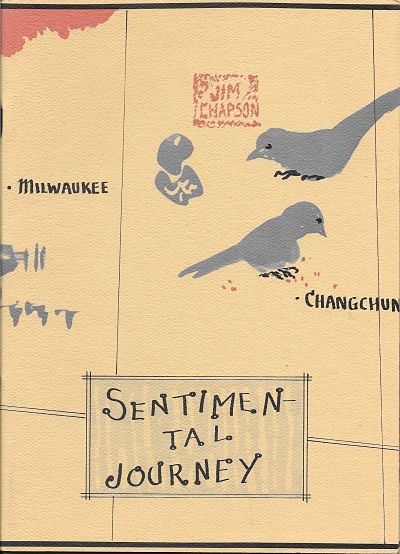
Jim Chapson

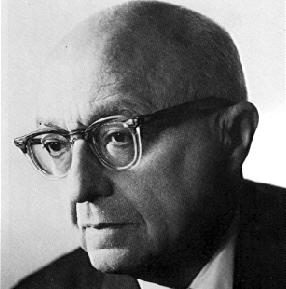
ChapsonI have been going through files, discarding bales of no longer relevant paper, but came across this wonderful short poem by Jim Chapson that seems a good antidote to the fervor of New Year’s resolutions:

What Are You Doing?

Tomorrow you will fall into a pit.
What are you doing today
To prevent this from happening?
Today you are digging the pit,
Today you are covering it with leaves and branches
So tomorrow you can say, “I didn’t know it was there.”

Jim Chapson

How many self-dug pits have I fallen into in a lifetime? As for Jim, he seems to be gliding above ground in Milwaukee.

Geodes

I know nothing at all about Jared Carter, except that I like this poem a friend sent me:

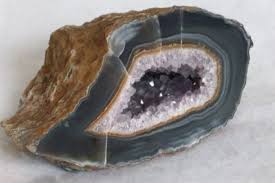
geodeGeodes

They are useless, there is nothing
To be done with them, no reason, only

The finding, letting myself down holding
To ironwood and the dry bristle of roots

Into the creekbed, into clear water shelved
Below the outcroppings, where crawdads sport

Through silt; clawing them out of clay, scrubbing
Away the sand, setting them in a shaft of light

To dry. Sweat clings in the cliff’s downdraft.
I take each one up like a safecracker listening

For the lapse within, the moment crystal turns
On crystal. It is all waiting there in darkness.

I want to know only that things gather themselves
With great patience, that they do this forever.

Jared Carter

How a poem can happen

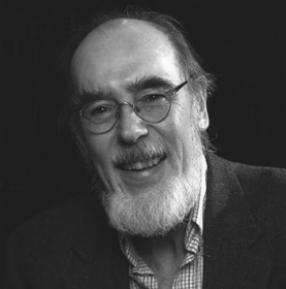
824_egrennanHere’s your Monday poetry vitamin (and isn’t this how you imagine an Irish poet should look!):

Detail

I was watching a robin fly after a finch – the smaller bird
chirping with excitement, the bigger, its breast blazing, silent
in light-winged earnest chase – when, out of nowhere
over the chimneys and the shivering front gardens,
flashes a sparrowhawk headlong, a light brown burn
scorching the air from which it simply plucks
like a ripe fruit the stopped robin, whose two or three
cheeps of terminal surprise twinkle in the silence
closing over the empty street when the birds have gone
about their own business, and I began to understand
how a poem can happen: you have your eye on a small
elusive detail, pursuing its music, when a terrible truth
strikes and your heart cries out, being carried off.

Eamon Grennan


In the supermarket

220px-Agi_Mishol_by_Iris_NesherEven a poem for Black Friday… or part of a poem, by Agi Mishol, a Hungarian-born poet who lives in Israel and  writes in Hebrew. This is the first (and I think best) part of three part poem from the Ecco Anthology of International Poetry:

In the Supermarket

Through the supermarket aisles I push a cart
as if I were the mother of two heads of cauliflower,
and navigate according to the verse-list
I improvised this morning over coffee.
Sale banners wave to shoppers
studying the labels of packaged food
as Muzak entertains the frozen birds. And I too,
whose life is made of life, stride down the dog-food aisle
toward Mr. Flinker who confides in my ear that only the body
crumbles but the sipirt remains young forever, believe me.
I believe, but now let me turn to Granny Smith and McIntosh.
Hurry, hurry, folks, I’m the supermarket bard,
I’ll sing the rustle of cornflakes,
the curve of mutinous cucumbers,
until the cash register will hand me
the final printed version
of my poem. Continue reading “In the supermarket”

Keats

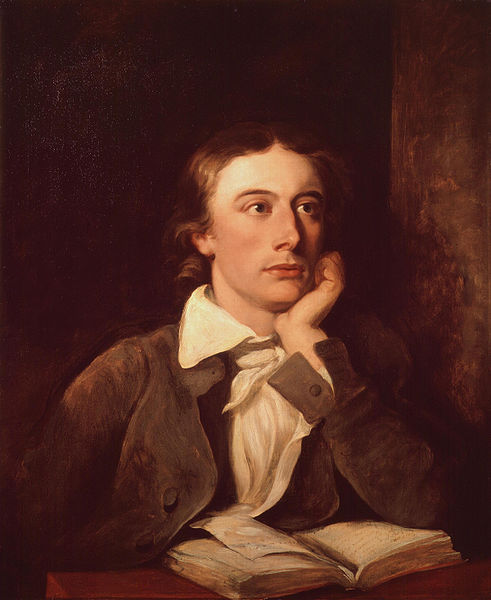
491px-John_Keats_by_William_HiltonI rarely post poems by 19th century poets, preferring to stay with the contemporary. But in this poem by John Keats, if you simply substitute modern pronouns for “thy” and “thine” and “thou,” seems to me it could have been written tomorrow.

And Keats, 1795 – 1821, is just barely a 19th century poet. This poem is almost 200 years old.

The Living Hand

Continue reading “Keats”

Galway Kinnell

If you are lucky in your life, you have a chance to meet a larger-than-life spirit, one whose presence becomes an ongoing inspiration. Galway Kinnell was that for me. I met him at a time in my life when I was consumed by work and family and hadn’t written a poem in years. It was the first night of the first poetry workshop at Squaw Valley Community of Writers (1986). He was in charge, and after dinner he explained that we needed to write a poem and submit it by 8 am for the next day’s workshop. He was welcoming, matter of fact, made the impossible seem possible.

The spirit of that workshop–the idea that after you read your poem, someone immediately jumps in and says something they like about it, that no one offers criticism unless asked, that discussion focuses on what is working in the poem–leads to better work from everyone. The self-censorship that is the enemy of good work diminishes. I’ve written some of my best poems at Squaw Valley, and Galway’s spirit lingers still.

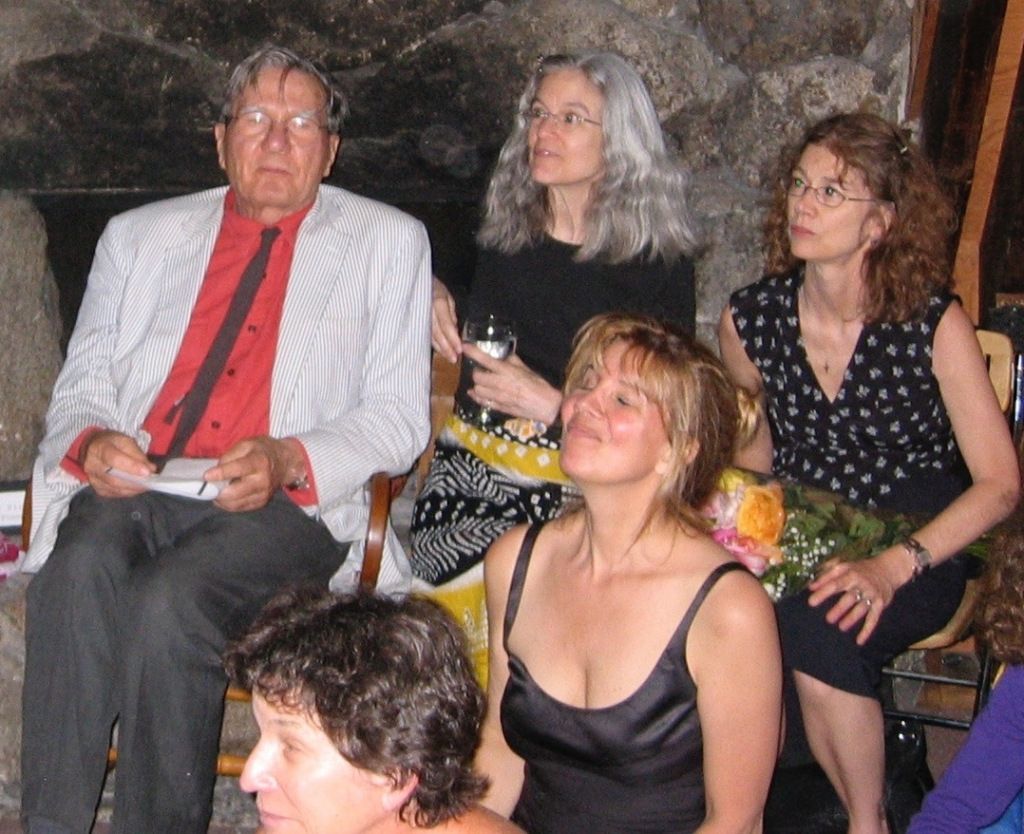
Here I am, with Sharon Olds, Brenda Hillman and a woman whose name I’ve forgotten on the last night of the last time he was there.

Galway
I’ve posted poems of his before: St. Francis and the Sow, Blackberry Eating, Weaving the Morning, Everyone Was in Love… but here’s one I haven’t posted:

Daybreak

On the tidal mud, just before sunset,
dozens of starfishes
were creeping. It was
as though the mud were a sky
and enormous, imperfect stars
moved across it as slowly
as the actual stars cross heaven.
All at once they stopped,
and, as if they had simply
increased their receptivity
to gravity, they sank down
into the mud, faded down
into it and lay still, and by the time
pink of sunset broke across them
they were as invisible
as the true stars at daybreak.

Galway Kinnell

Cornelius Eady

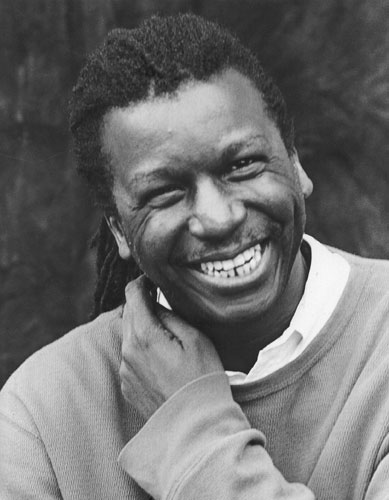
Cornelius-EadyI took a workshop one day from Cornelius Eady at Squaw Valley. It was my favorite session of the week, almost at the end, everyone exhausted, hardly a poem to be found in any of us. Cornelius, upbeat, made it all work.  Here’s a poem of his from his book of the same name:

Hardheaded Weather

1.
These leaves which have yellowed and are aloft
Or waving like bright hands at their stems as I drive my
Small red car under this raw and whipped
November sky.
Continue reading “Cornelius Eady”

Secular Love

If you’ve heard of Michael Ondaatje, it’s probably as the author of The English Patient, which was made into the movie (lampooned by Elaine on Seinfeld). But Ondaatje is that rare author who writes equally well in multiple formats. His memoir, Running in the Family, is a terrific book about growing up in Sri Lanka (the Ceylon), and he has several books of poetry. Today’s poem is from Secular Love, and is one of my favorites.

peelerI can imagine the origin of this poem as a musing–what if I were one of those men peeling cinnamon bark? Then taking off from there, using the richness of those memories to weave into this sensuous love poem.

The Cinnamon Peeler

If I were a cinnamon peeler
I would ride your bed
and leave the yellow bark dust
on your pillow.

Your breasts and shoulders would reek.
You could never walk through markets
without the profession of my fingers
floating over you. The blind would stumble
certain of whom they approached,
though you might bathe
under rain gutters, monsoon. Continue reading “Secular Love”

Monday poem

I’ve been thinking about this little syllabic by Sylvia Plath, a riddle of nine lines, each with nine syllables:

Metaphors

I’m a riddle in nine syllables,
An elephant, a ponderous house,
A melon strolling on two tendrils.
O red fruit, ivory, fine timbers!
This loaf’s big with its yeasty rising.
Money’s new-minted in this fat purse.
I’m a means, a stage, a cow in calf.
I’ve eaten a bag of green apples,
Boarded the train there’s no getting off.

Sylvia Plath

Did you get it?