Polish poetry

481cf0f2b6a30ad8986c6e.L._V339163520_SX200_I’ve been reading through the luminous translations Mira Rosenthal has done of the work of Tomasz Różycki, a contemporary Polish poet. It’s a delight to read them here in Krakow, where they take on an additional resonance, although Różycki is from Opole, northeast of Krakow. This poem, dedicated to one of the most famous Polish poets, Czesław Miłosz, gives a sense of a land and a poetic spirit that has survived a tortured history.

The Rainy Season

xxxxxxxxxxxxxxxxxxxxFor Cz. M.

We drove through Wrocław, black sea of ruins,
which exiles later wanted to rebuild
to look at least a little like Lwów
so that it did not become a dream, a dream. Continue reading “Polish poetry”
Russian poem

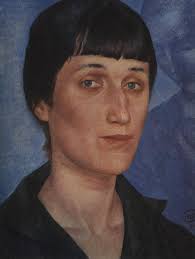
LevitanAnna Akhmatova never left Russia, although she had a difficult life here–persecuted, unpublished, her family and friends always at risk. Here’s an Akhmatova poem that seems to me to speak to her choice to stay. We saw this painting of her today, by Isaac Levitan, at the Russian Museum.

Lot’s Wife

And God’s luminous messenger, larger than life,
led the one righteous man along the black mountain.
But regret cried out to his wife:
“It’s not too late, you can still catch a glimpse
of Sodom, the red rooftops of home,
the square where you sang, the yard where you spun,
the tall house, its windows abandoned—
the house where your sons and daughters were born.”

She looked back—a sudden arc of pain
stripped her eyes of sight,
fused her feet to the ground—
her flesh became transparent salt.

Who will mourn this nameless woman?
She seems the least of all we lack.
Yet I, for one, can never forget
how she gave her life for one look back.

Anna Akhmatova, 1924

Continue reading “Russian poem”

Why I don’t write political poems

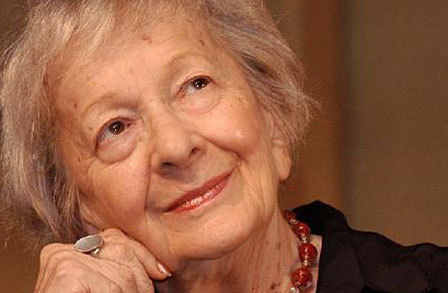
wisaawa-szymborskaWe’re heading to Russia and Eastern Europe in a few days, so I’ve been rereading the wonderful Polish poet, Wisława Szymborska. Here’s a poem of hers that expresses an idea I’ve had about political poetry perfectly. I believe the conference table she’s referring to is the one from the Paris Peace Talks, which were designed to end the Vietnam War in 1968.

Children of Our Age

We are children of our age,
it’s a political age.

All day long, all through the night,
all affairs—yours, ours theirs—
are political affairs.

Whether you like it or not,
your genes have a political past,
your skin, a political cast,
your eyes, a political slant. Continue reading “Why I don’t write political poems”

Poetry Monday

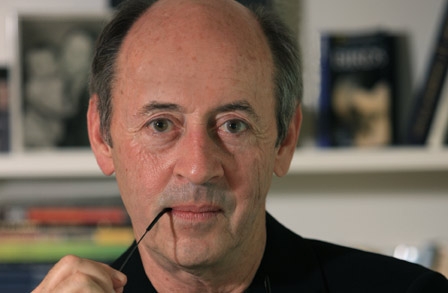
billy-collins-2012-448Here’s a lovely little Billy Collins poem–no smart-ass irony, not much self in it at all, just a lovely image, well rendered:

Elk River Falls

is where the Elk River falls
from a rocky and considerable height,
turning pale with trepidation at the lip
(it seemed from where I stood below)
before it is unbuckled from itself
and plummets, shredded, through the air
into the shadows of a frigid pool,
so calm around the edges, a place
for water to recover from the shock
of falling apart and coming back together
before it picks up its song again,
goes sliding around the massive rocks
and past some islands overgrown with weeds
then flattens out and slips around a bend
and continues on its winding course,
according to this camper’s guide,
then joins the Clearwater at its northern fork,
which must in time find the sea
where this and every other stream
mistakes the monster for itself,
sings its name one final time
then feels the sudden sting of salt.


Billy Collins

Late, but still Monday

Louise-Gluck-credit-c-Katherine-Wolkoff-300x225Louise Glück is a poet whose works seems to evolve with each new book. This poem is one of my favorites:

Cottonmouth Country

Fish bones walked the waves off Hatteras.
And there were other signs
That Death wooed us, by water, wooed us
By land: among the pines
An uncurled cottonmouth that rolled on moss
Reared in the polluted air.
Birth, not death, is the hard loss.
I know. I also left a skin there.

Louise Glück


Louis Gluck

A day late again

NaomiShihabNye_NewBioImage_Credit-BrianPalmerSorry to be late with your Monday poetry vitamin! I was trying yesterday to find a poem by Larry Levis to publish here, but most of his poems are very long and I couldn’t find one I really loved. So here is an old favorite by Naomi Shihab Nye that you may know. You can hear some of her other poems at the
above link.  She says it is her most anthologized poem.

Making a Fist

For the first time, on the road north of Tampico,
I felt the life sliding out of me,
a drum in the desert, harder and harder to hear.
I was seven, I lay in the car
watching palm trees swirl a sickening pattern past the glass.
My stomach a melon split wide inside my skin.

“How do you know if you are going to die?”
I begged my mother.
We had been traveling for days.
With strange confidence she answered,
“When you can no longer make a fist.”

Years later I smile to think of that journey,
the borders we must cross separately,
stamped with our unanswerable woes.
I who did not die, who am still living,
still lying in the backseat behind all my questions,
clenching and opening one small hand.

Naomi Shihab Nye

Levertov on Monday

levertovDenise Levertov’s son went to my high school–he was a year younger than I, and I remember Denise Levertov coming to speak at some event–a graduation? a festival? and being impressed by her air of brooding inaccessibility. This seems to me how she looked then. That’s when I first read O Taste and See, still one of my favorites of her books. It was a revelation to me. I had been reading Hart Crane, Wordsworth, Yeats–poems with a strong sense of rhyme and meter.  Levertov’s spare, intense poems were something completely new.

She has said of the line break that it should read as “half a comma.”  I love how this poem opens, seems to detour, and resolves. And this may be the only poem I know that includes vomiting and diarrhea and still remains a poem:

The Prayer

At Delphi I prayed
to Apollo
that he maintain me
in the flame of the poem Continue reading “Levertov on Monday”

Monday Poem

Thanks to Simone who showed me this poem:

Not Waving but Drowning

Nobody heard him, the dead man,
But still he lay moaning:
I was much further out than you thought
And not waving but drowning.

Poor chap, he always loved larking
And now he’s dead
It must have been too cold for him his heart gave way,
They said.

Oh, no no no, it was too cold always
(Still the dead one lay moaning)
I was much too far out all my life
And not waving but drowning.

Stevie Smith

Continue reading “Monday Poem”

A Brief History of Happiness

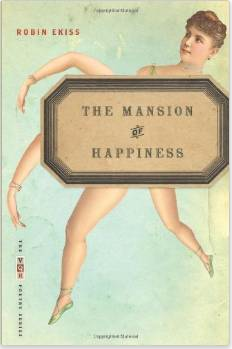
Screenshot 2014-07-27 07.15.26Today, we’re leaving for camping, so I’m posting Monday’s poem early. This is from a book called The Mansion of Happiness, by Robin Ekiss. There are many intriguing poems in the book, but here’s one I particularly like:

A Brief History of Happiness

In the beginning, there was nothing–
xxxx or rather,
nowhere else to start.

Continue reading “A Brief History of Happiness”

For my brilliant friend

Screenshot 2014-07-21 16.55.21This weekend I was lucky to work with two brilliant poets, and in our conversation I referred to this poem by Marie Howe. I couldn’t remember the title, and I had just lent my copy of What the Living Do to another poet friend (I’ve posted the title poem before). But today I was visiting yet another poet friend for a civilized latte and scone moment, and she lent me her copy, so I can print this wonderful poem here:

For Three Days

For three days now I’ve been trying to think of another word for gratitude
because my brother could have died and didn’t,

because for a week we stood in the intensive care unit trying not to imagine
how it would be then, afterwards.

My youngest brother, Andy, said: This is so weird. I don’t know if I’ll be
talking with John today, or buying a pair of pants for his funeral. Continue reading “For my brilliant friend”