From another time

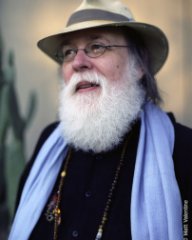
Norman_DubieI’ve been taking an free online poetry course from the Iowa Writer’s workshop. I like parts of it, and because it’s at my own discretion I can ignore the the parts I don’t like. One of the speakers was talking about images. Poets hardly ever use bare similes anymore (my love is like a red, red rose), more likely to use “as” or “the way that.” But this poem by Norman Dubie (mentioned in that session) takes the simile and throws it at you in the final line like a 97-MPH fast ball over the plate–no ducking.

The Funeral

It felt like the zero in brook ice.
She was my youngest aunt, the summer before
We had stood naked
While she stiffened and giggled, letting the minnows
Nibble at her toes.  I was almost four—
That evening she took me
To the springhouse where on the scoured planks
There were rows of butter in small bricks, a mold
Like ermine on the cheese,
And cut onions to rinse the air
Of the black, sickly-sweet meats of rotting pecans.

She said butter was colored with marigolds
Plucked down by the marsh
With its tall grass and miner’s-candles. Continue reading “From another time”

Jamaal May

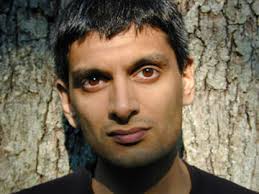
MayI have been reading, Hum, Jamaal May’s intriguing book of poems, and finding what he does with language very inspiring. He’s a great performer, too, you can hear him recite on Youtube. I think this poem works best if you don’t try to make too much sense of it as it goes along; just take the images in as they come.

How to Disappear Completely

You are quarter ghost on your mother’s side.
Your heart is a flayed peach in a bone box.
Your hair comes away in clumps like cheap fabric wet.
A reflecting pool gathers around your altar
of plywood subflooring and split wooden slats.
You are a rag doll, prone, contort,
angle and arc. Rot. Here you are Continue reading “Jamaal May”

Monday again

aliThis past week was the week of the poetry workshop at Squaw Valley, and here at my house, a poetry weekend following that format.  It was a wonderful weekend. I’m sure I’ll be posting something from the weekend soon–the work was exhilarating.  Meanwhile, here’s a poem from a poet who has been part of the staff at Squaw Valley in years past:

Zehra Begum

your ribs are thick ridges
but you do not eat.

your eyes are so tired
but you do not sleep.

you say you want to feel belief
but you do not pray.

Kazim, listen:

fruit out of dirt
is your proof.

folding into sleep
is the miracle. Continue reading “Monday again”

And in keeping with “New Music”…

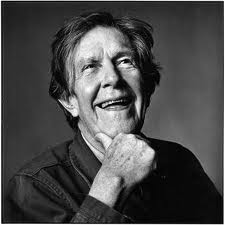
cageToday’s poem is by John Cage, who certainly would have appreciated the Solstice event at Chapel of the Chimes, and who has captured the essence of the creative process in this little poem:

When you start working
Everybody is in your studio
The Past,
Your friends,
Enemies,
The Art World,
And above all, your own ideas—
All are there.
But as you continue,
They start leaving,
One by one,
And you are left completely alone.
Then, if you are lucky, even you leave.

John Cage


Lagniappe

traveAnd here, in answer to Simone’s request, and as a bonus for poetry Monday, a video of my reading as part of the Marin County Poetry Center’s Traveling Show (don’t worry, camera work improves as it goes along).


Monday poem

gailGail Entrekin edits an online poetry journal called Canary that focuses on poets’ “engagement with the natural world.”  If you like the poems I post, I’m sure you’ll enjoy reading her excellent selection of work.  Here is a poem of Gail’s. I like its fearless exploration of aging, its unapologetic ambivalence, and especially the ending:

Before Making Love

Finally, we tell the truth: how death’s been
hovering at the door, muttering threats and banging
in the long night, how reason takes flight
like a circling falcon over its nest of flapping
fear, how you sometimes wander out into the ocean fog,
how I am so angry I cannot speak, that you
who took the vow, would drift down the beach
accept the icy water, leave me to lift the heavy boat
lock the oars, paddle the hard night, looking
for you; leave me to rake the sand,
build the park, martial the troops, while
you stand down there, your pant legs sloshing
in the water, smiling at the crows,
not helping, not helping at all
with the work of life, just because
you are leaving soon. And I don’t want Continue reading “Monday poem”

Brenda Hillman on Monday

Hillman_448Brenda Hillman, who so generously allowed me to audit her class last fall, has just won the Griffin Poetry Prize, a very big deal in the poetry world, for her most recent book, Seasonal Works with Letters on Fire.  (Her photo here was taken by Brett Hall Jones, who manages the Squaw Valley Community of Writers, a poetic feat in it’s own right.)

The judges’ citation starts: “Seasonal Works with Letters on Fire concludes Brenda Hillman’s tetralogy on the four elements of classical thought. She steers wildly but ably through another day of teaching, a ceremonial equinox, the distress of bee colony collapse; space junk, political obstruction, military drones, administrative headaches, and everything in between. The ‘newt under the laurel’ and ‘the herring purring through the eelgrass’ don’t escape her arc of acuity.”

This poem is from one of her early books, Bright Existence, and it remains one of my favorites, the way it mixes the daily with the darker, ongoing undercurrent of reflection (what they call “steering wildly but ably”) and probably also because the terrain is so familiar to me:

Several Errands

Continue reading “Brenda Hillman on Monday”

Spring cleaning

Business-man-buried-under-paper1Going through old files on my computer, trying to organize–organization, or the Platonic ideal of it, always just outside my grasp. The process is extraordinarily time consuming, good work for foggy mornings.

In the process, I found this poem of Jack Gilbert’s I copied two years ago. It beautifully articulates a world view I share, except for the “what God wants” phrase. I think I’d leave that out and just say “We enjoy our lives. Otherwise” and go on from there. It seems I’m always editing Gilbert just a tad, too bad he’s not around to argue with me:

A Brief for the Defense

Sorrow everywhere. Slaughter everywhere. If babies
are not starving someplace, they are starving
somewhere else. With flies in their nostrils.
Bur we enjoy our lives because that’s what God wants.
Otherwise the mornings before summer dawn would not
be made so fine. The Bengal tiger would not
be fashioned so miraculously well. The poor women Continue reading “Spring cleaning”

Tung-Hui Hu

I was reading through the Copper Canyon Reader to try to find a poem for today. This was the one I liked best, an odd, off-beat love poem:

Empire of the Senseshhui

Love, the back of your
mouth is delicate as
mushrooms, caves,

or even moths that come out
at night after painting sugar
on tree bark, feathery,

blanched and translucent
from flashlights. Had I
a hundred tongues yours

would be the kindest and
most radiant: the last
time I saw anything shine

like your gums was at
a pond encircled with
cattails and coarse-tipped

grasses on which beetles
climbed, hard-shelled
and bright as hammers.

Tung-Hui Hu

Różewicz

rosewiczWe used to have a slim Penguin paperback, Five Polish Poets, in which I first read Tadeusz Różewicz. He was 18 at the start of World War II, and with his older brother, joined the Polish resistance. His brother was captured, tortured and killed by the Gestapo, but Tadeusz survived. After the war, he published his first of many volumes of poems called Anxiety, “piercingly direct” poems with a breath-taking realism. The NY Times carried his obituary today.  Here’s a poem from the late Mr. Różewicz:

Pigtail

Continue reading “Różewicz”

Korean Mums

SchuylerBecause of Mark Ford’s workshop, I have been reading his anthology The New York Poets, which includes Ashbery, O’Hara, Koch and Schuyler. This is an excellent selection of poems, with short, cogent introductions. Mark suggested I pay particular attention to James Schuyler, whom I hadn’t read at all before. I find him accessible, many short poems arising like a soap bubble of a moment–an image, carefully chosen, captured in time.

Korean mums aef11 0804In and out of mental hospitals, often living with friends, Schuyler has a series of poems from Payne Whitney that I especially like, but I chose a slightly longer one for today, because I like its arc and its deceptive simplicity. Deceptive because of the astute details: salt hay, airedale, the owls bulk “troubling the twilight,” the Korean mums themselves, and its clever line breaks. One can learn a lot from such crafted simplicity.

imagesKorean Mums

beside me in this garden
are huge and daisy-like Continue reading “Korean Mums”

Fat Monday

In Saturday’s WSJ, there was an article debunking the assumption that fat is implicated in heart disease:

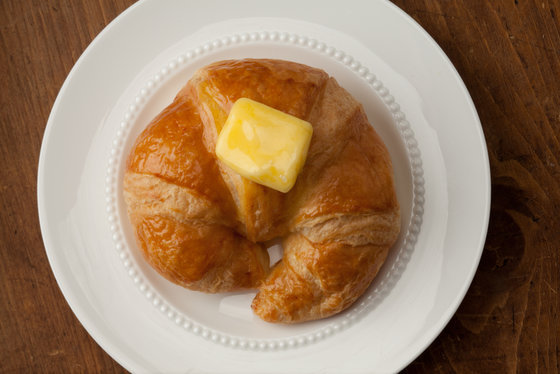
butter-croissant-fat-weight” ‘Saturated fat does not cause heart disease’—or so concluded a big study published in March in the journal Annals of Internal Medicine…

“The fact is, there has never been solid evidence for the idea that these fats cause disease. We only believe this to be the case because nutrition policy has been derailed over the past half-century by a mixture of personal ambition, bad science, politics and bias.”

The article goes on to trace our belief in fat as deleterious to health to one man, Ancel Benjamin Keys, who forged a career based on his extremely flawed research delineating fat as a culprit in heart disease.  In fact, the shift away from meat and animal fat and to starchy carbs and sugar has been implicated in the current obesity and diabetes crisis. You can read the whole article here, and another supporting article here.

Which brings me to today’s poem, written a dozen years ago or so about my own relationship to fat–I think it was the first ode I’d ever written, inspired, of course, by Neruda’s Odes to Common Things:

In Praise of Fat

I never gave up butter, its golden taste
on the tongue as it soaks into toast,
softening and gilding each rough pocket
of grain, or graces the potato, turning that peasant
starch into a hymn of steamy flavor.
And the tomato cream sauce on the pasta,
the puff of pastry crumbing against the teeth,
the nuts and butter and sugar of Christmas.
The flavor is in the fat as the yolk is in the egg. Continue reading “Fat Monday”