Feral Meryl at the Poetry Slam

Last night my stalwart friend and I went to the Starry Plow to see if I could get on the list of performers. I squeaked on, using the moniker “Feral Meryl,” supplied by my friend.  I recited a poem, made it to the second round, and recited another.

The first poem is x-rated, and I have to say it was perfect for the slam audience, but will leave it out here. For the second round, I recited a poem I composed for the class I took last fall, and the Wall Street Journal ran a relevant photo this morning:

voteinIraq

You can hear it by clicking here:

I won second place and took home $30.

I think if I’d gone with “Ode to Flatulence” for my second poem, I’d have come home with first. The audience was a bit too bleary-eyed for “Democracy.”

One more prose poem

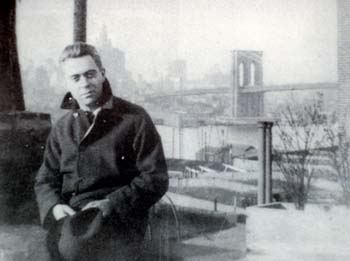
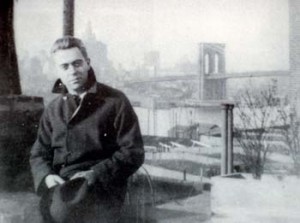
5-69-Hart-Crane-at-the-Brooklyn-Bridge_150dpiThis one is from Mark Ford’s Selected Poems​ published by Coffee House Press (2014). Mark said this is the only prose poem he’s ever written.  If, like me, you’re a fan of Hart Crane, it’s especially delicious. It’s in the form of a letter to a fictitious literary magazine. If you know nothing about Hart Crane, here is his most famous poem, To Brooklyn Bridge. A tortured gay man, who lived in a time when that was unacceptable, he allegedly committed suicide at 33 by jumping off a ship returning to New York from Mexico.

The Death of Hart Crane

Sir / Madam,

I was intrigued by the letter from a reader in your last issue that recounted his meeting, in a bar in Greenwich Village in the mid-sixties, a woman who claimed to have been a passenger on the Orizaba on the voyage the boat made from Vera Cruz to New York in April of 1932, a voyage that the poet Hart Crane never completed. According to her Crane was murdered and thrown overboard by sailors after a night of such rough sex that they became afraid (surely wrongly) that he might have them arrested when the boat docked in Manhattan. This reminded me of a night in the early seventies on which I too happened to be drinking in a bar in Greenwich Village. I got talking to an elderly man called Harold occupying an adjacent booth, and when the conversation touched on poetry he explained, somewhat shyly, that he had himself published two collections a long time ago, one called White Buildings in 1926, and the other, The Bridge, in 1930. I asked if he’d written much since. ‘Oh plenty,’ he replied, ‘and a lot of it much better than my early effusions.’ I expressed an interest in seeing this work, and he invited me back to his apartment on MacDougal Street. Here the evening turns somewhat hazy. I could hear the galloping strains of Ravel’s Boléro turned up loud as Harold fumbled for his keys. Clearly some sort of party was in progress. At that moment the door was opened from within by another man in his seventies, who exclaimed happily, ‘Hart! – and friend! Come in!’ The room was full of men in their seventies, all, or so it seemed, called either Hart or Harold. The apartment’s walls were covered with Aztec artefacts, and its floors with Mexican carpets. It dawned on me then that Hart Crane had not only somehow survived his supposed death by water, but that his vision of an America of the likeminded was being fulfilled that very night, as it was perhaps every night, in this apartment on MacDougal Street. At the same instant I realized that it was I, an absurd doubting Thomas brought face to face with a miracle, who deserved to be devoured by sharks.

Yours faithfully,

Name and address withheld

by Mark Ford



Transformation Monday

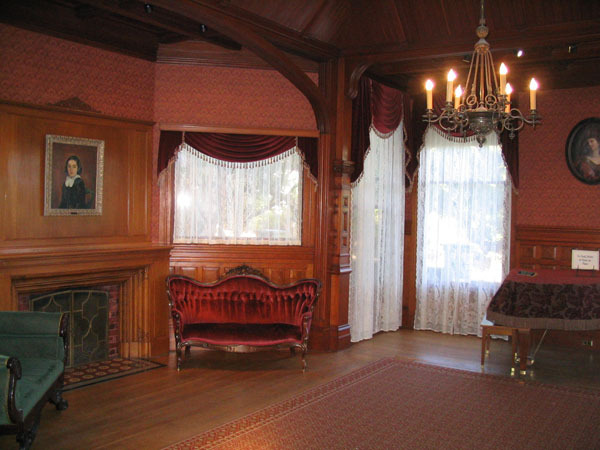
Optimized-falkirk_interior_oneI went to a poetry reading at the lovely Falkirk House, sponsored by the Marin Poetry Center. It was a reading entitled Poetry and Spirituality, featuring my friend and fellow Squaw attendee, Christina Hutchins, and a woman I hadn’t known before, Kim Rosen. Kim recited an Easter Poem that caught my imagination. Here it is:

In Impossible Darkness

Do you know how
the caterpillar
turns?

Do you remember
what happens
inside a cocoon?

You liquefy. Continue reading “Transformation Monday”

The Prose Poem

It’s hard to define exactly how a prose poem differs from prose. But for me, a short piece that has an edge, that stays with you, that feels more powerful than the usual snippet of prose, is a prose poem. Here are two of my favorites (I’ve already posted “A Story About the Body,” another fav):

Continue reading “The Prose Poem”

Another Monday

Somehow, I never posted this…so here it is, another Monday, and time for a poem.

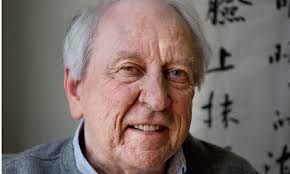
transtomerI lost Monday this week, traveling. It’s odd the way you step into a sealed tube, pass hours suspended above the continent, then emerge on the other side.

In the bookstore in the new SF airport terminal, they had (surprisingly) the wonderful bookof Tomas Tranströmer’s Selected Poems, edited and introduced by Robert Hass. I couldn’t resist buying a copy. Here’s a selection:

Slow Music

The building is closed. The sun crowds in through the windowpanes
and warms up the surfaces of desks
that are strong enough to take the load of human fate.

Continue reading “Another Monday”

Envy of Other People’s Poems

Talking with another poet about the discouraging series of rejections, the endless worry that one’s work is really good–how can one know? I remembered this wonderful little poem by Robert Hass, from Time and Materials.

Envy of Other People’s Poems

In one version of the legend the sirens couldn’t sing. Continue reading “Envy of Other People’s Poems”

Poets on Poetry

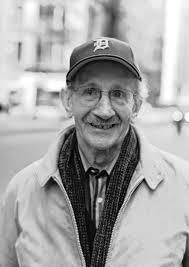
Of course, it’s Tuesday. Monday slipped by again, busy with spring planting, new baby chicks, and miscellaneous garden chores–they are endless. But for today I thought I’d share two famous poets words on poetry. Philip Levine and Marianne Moore:

LevineA Theory of Prosody

When Nellie, my old pussy
cat, was still in her prime,
she would sit behind me
as I wrote, and when the line
got too long she’d reach
one sudden black foreleg down
and paw at the moving hand, Continue reading “Poets on Poetry”

Too much I…

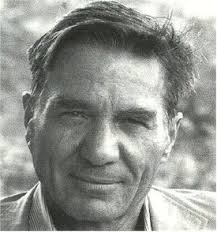
KinnellSometimes it seems to me that poets, especially American poets, got derailed by the confessional poems of Lowell and Plath, and there is just too much self-absorption. Of course, everything experienced is filtered through the lense of self, but a little perspective is the mark of a fine mind. Galway Kinnell gave a craft talk at Squaw Valley Community of Writers, in which he suggested taking the words “I” or “me” or the various forms of these out of your work.  And Sharon Olds, who was also there, wrote a beautiful poem about how she loved the I-beam I, “Take the I Out.”  But I did write for a year without an “I” poem.  It was a good exercise. And it’s hard to beat this poem, with no I in it:

Saint Francis and the Sow

The bud
stands for all things,
even for those things that don’t flower,
for everything flowers, from within, of self-blessing; Continue reading “Too much I…”

In Memoriam

KuminMaxine Kumin died last month. Right until a month before her death, we carried on a sporadic correspondence. She was extremely gracious and generous to me, and I think somewhat under- recognized as a poet.  Here’s one of my favorites of hers:

After Love

Afterward, the compromise.
Bodies resume their boundaries.

These legs, for instance, mine.
Your arms take you back in. Continue reading “In Memoriam”

Coral Bracho

Coral Bracho 7It’s not quite Monday, but I’ve been reading Forrest Gander’s splendid translations of Coral Bracho, a Mexican poet. The book is worth reading just for the introduction, but the poems are, well, rapturous might be the adjective I’m looking for.  Here’s a short sample, in Spanish and English:

En la entraña del tiempo

El tiempo cede
y entreabre
su delicada profundidad. (puertas
que unas a otras se protegen; que unas en otras entran;
huellashuellas,
rastro de mar.) Un otoño
de leños y hojarascas. En su fondo: Continue reading “Coral Bracho”

Poetry Monday–from the files

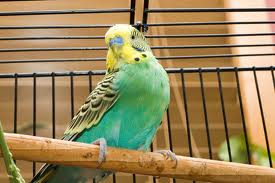
parakeetI found this poem, cut out from the New Yorker, no idea when…

HARM

First, you took the parakeet out of its cage,
Its body warm and folded, a blue-green kite
With a surprised heart. Then you scoured the metal,
The door a loose pocket of bars on two wire hinges,
The clawed perches, the swing and its endless dialogue
With the invisible. Slowly, you removed the racks
From the dishwasher and placed the cage in it.
We laughed at your ingenuity, at the way
It expressed your secret ambition to be
The one least mauled by the predictable.
And I think I knew then that I would carry on this hope
Of yours. There is such harm in love.
But let it be the green-and-blue acrobat it is,
A tropical danger in the midst of my body,
The body that you built for me.
Let it be the cage you cared for from which
Birdsong was pulled into the cool and odorless air.

Vickie Karp