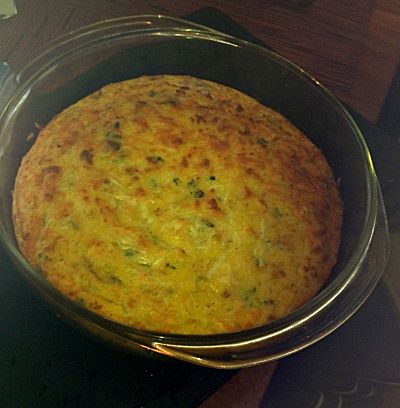
Once in awhile I see a recipe in the paper that I actually make. This one, one, a soufflé made with mashed potatoes instead of flour, is from David Tanis, a Chez Panisse chef. I happened to have the ingredients on hand, so it became last night’s dinner.
Author: Meryl
The exemplary sentence and the elusive world
 I realize I have collected a number of sentences about imagination vs. reality.
“What a gulf between the self which experiences and the self which describes experience.” Edmund Wilson, I Thought of Daisy from the last one of these posts
“Life is not what we live; it is what we imagine we are living.” Pascal Mercier, Night Train to Lisbon, from the one before
and this one:
“The world in out heads is not a precise replica of reality.” from Thinking, Fast and Slow by Daniel Kahneman, which Larry happens to be reading.
I’ve been pondering this idea a lot lately, the construct we carry in our heads as opposed to the world an infant experiences, for example, one without labels or words. Continue reading “The exemplary sentence and the elusive world”
Bouquets to Art
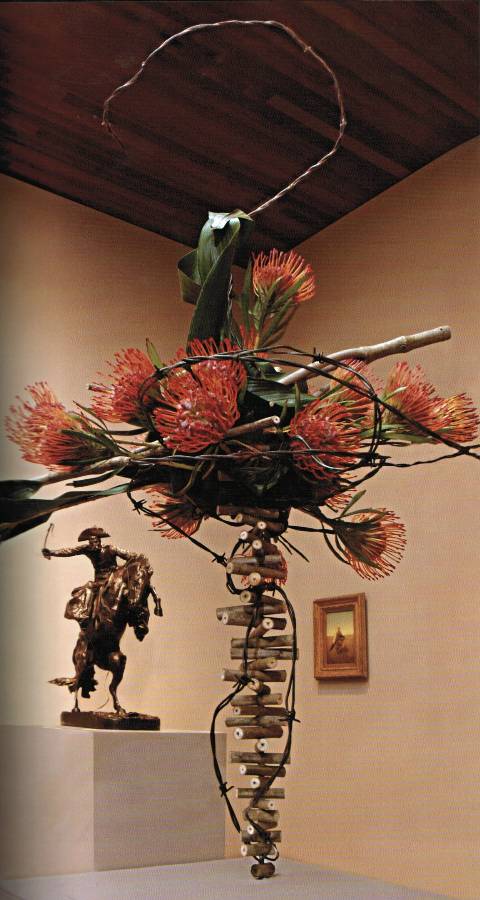 For one week in the spring, the De Young Museum is transformed into a unique floral event, one in which florists from the greater Bay Area are invited to represent a piece of art with a floral creation. Florists select their first, second and third choices, but may get a piece they didn’t bargain on–and then they try to capture something of the piece they are assigned with their floral creation. Some mimic the art, some capture an image, and some just seem to be like a jazz riff.
There’s something magical about the pairing, although the art itself gets short shrift.The floral creations are the focus. And the show is so popular that it’s not a good time to wander the galleries and appreciate the collections. Continue reading “Bouquets to Art”
Mad as a wet hen
 Actually, the hens don’t seem so much mad as unhappy. They huddle under their roof and don’t want to go out and scratch around. But the rain was a gift for Larry this morning, as he belongs to an over-60 softball league, the Creakers. You may remember them from an earlier post. And the photo I use of Larry is one in his Creaker’s outfit.
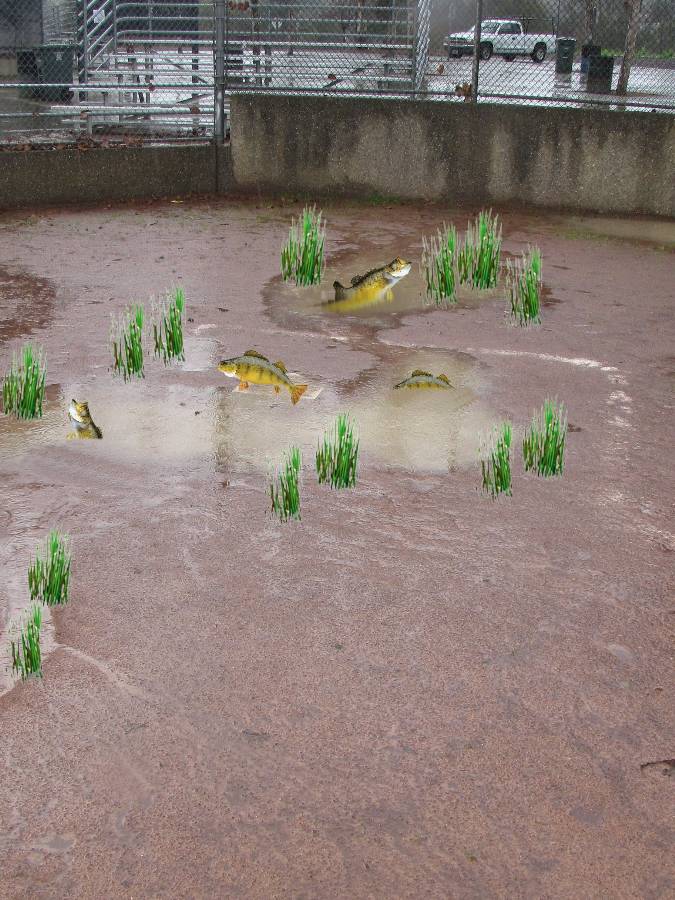
The Creakers are notorious (at least in my household) for playing in any kind of weather–like the mail, the game must go on. Had the rain been less decisive, Larry would have had to drive out early this morning for field prep. As it was, Evan Almdale, a whiz with photoshop, posted this on the Creaker website this morning.
 So Larry can happily putter and stay dry.
You are what you read
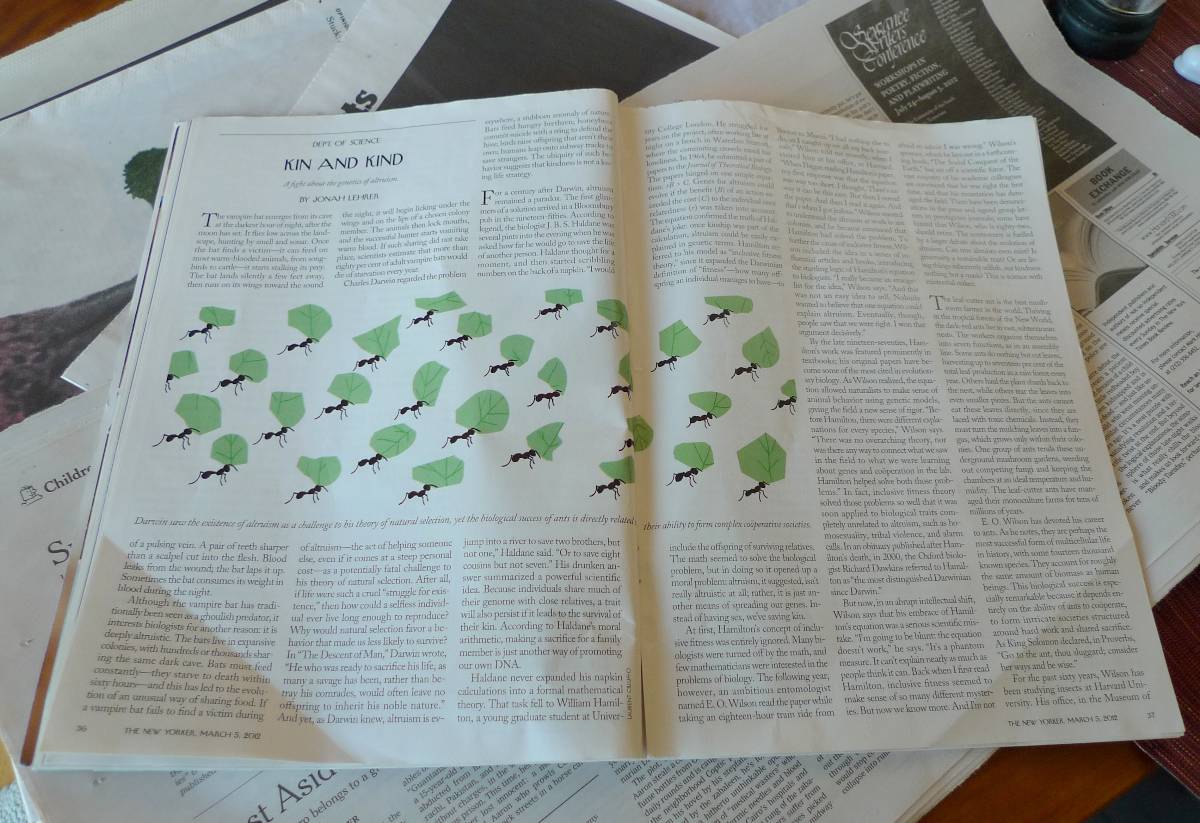 Having a cup of tea early Saturday morning at a bakery in Venice (CA), a couple with a young son were sitting at the table next to me. The parents were reading, the boy–maybe 5 or 7 years old–was playing a math game on a PDA. I looked up when the boy was asking for help figuring out what 6 minus 2 was. The father put down his magazine, and started working with the various cups and plates on the table to make the numbers real. I noticed that he was reading the very article in the New Yorker by Jonah Lehrer I had just finished the day before on the plane, about the Darwinian value of altruism. The article had a cartoon of leaf cutter ants and their bright green leaves across the two-page spread that made it recognizable from a distance, and he and his (I assume) wife discussed it once the mystery of 6-2 was resolved.
It made me reflect on how a certain number of people around the same period of time might be reading and thinking about the survival value of selflessness–and just what selfish and selfless might mean for us and for other species. There’s a kind of awesome power in that, the ability of a well-written article in a popular medium to support a current of thought and discussion across a broad swath of disparate people. Continue reading “You are what you read”
Seedlings and a recipe
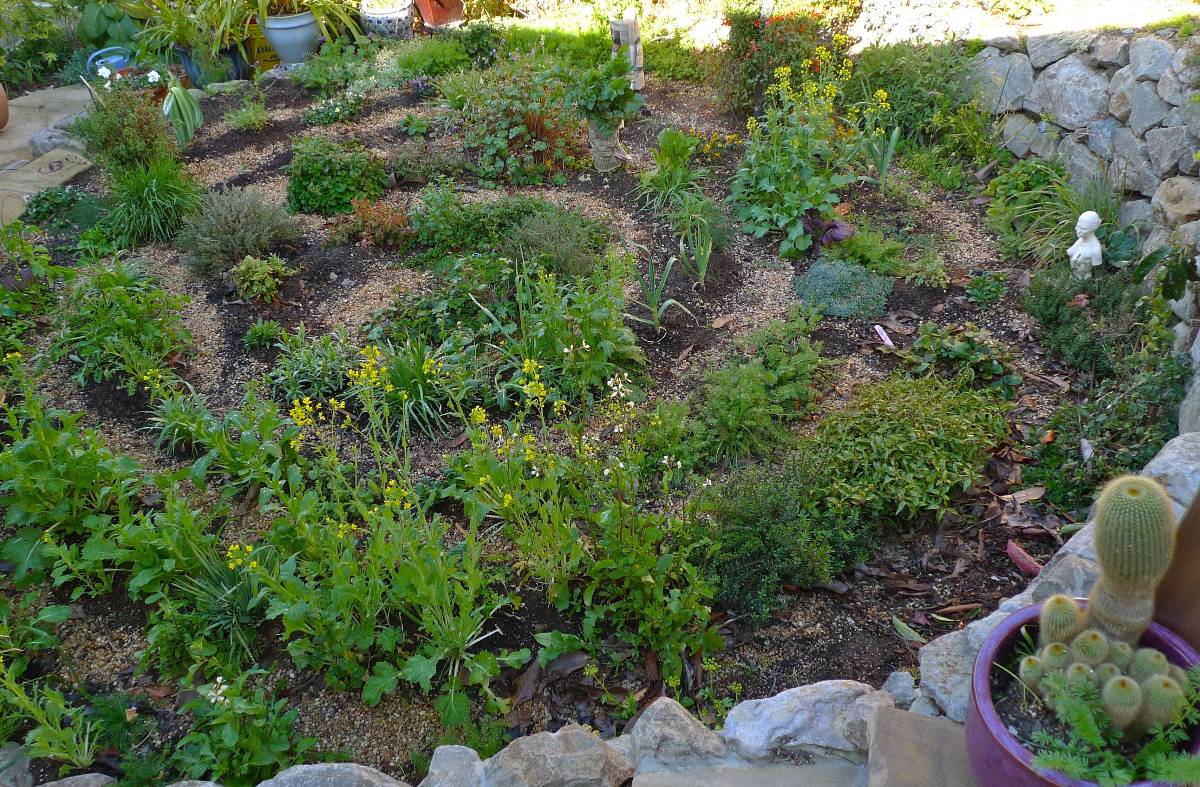 It’s full spring here in Northern California, with seedlings popping up on their own, seedlings planted for the garden, and a general rush of growth. I went though the labyrinth and potted up a tray of small geraniums like this one
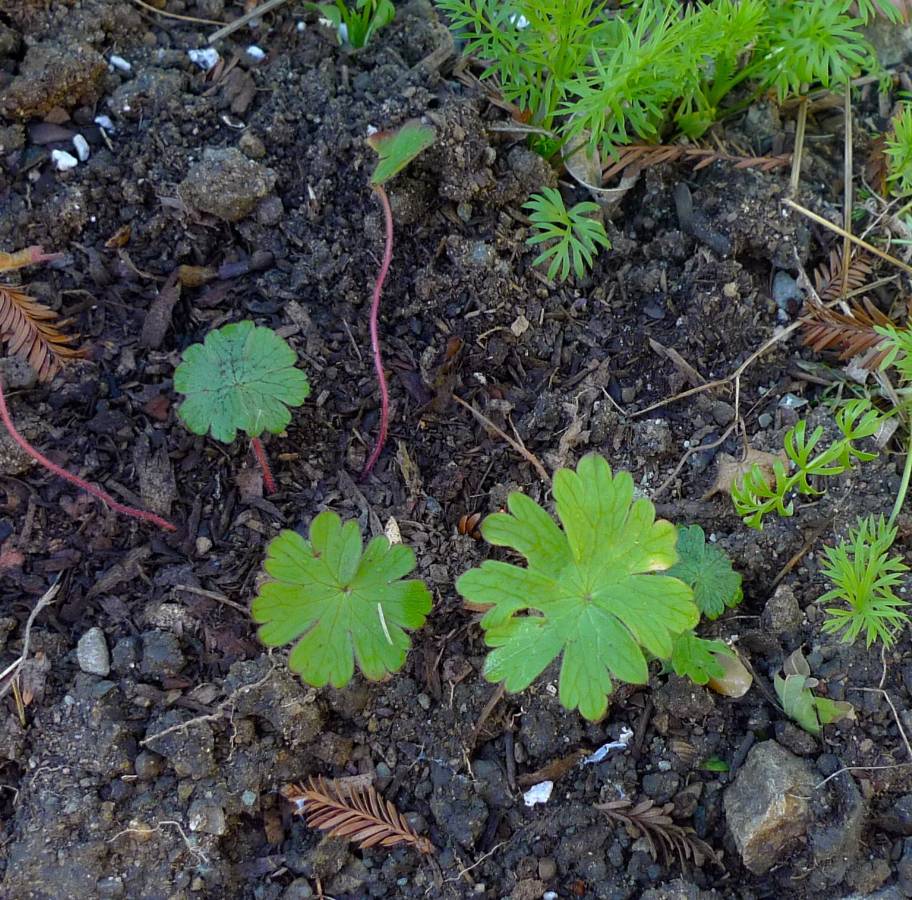 that had self-seeded all over the paths, and took them along with some marigold and shiso seedlings to give away at the Kensington Farmers’ Market. They disappeared in about 20 minutes.
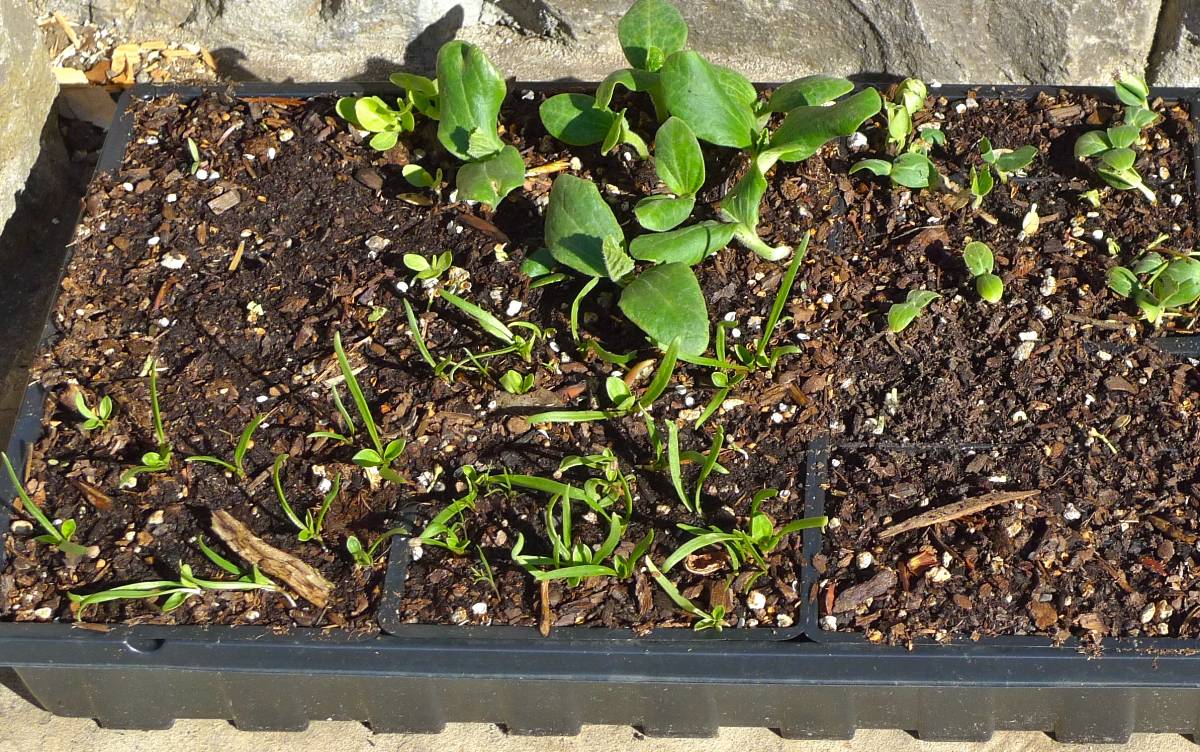
For my own garden I planted three kinds of carrots, and some early girl tomatoes in the ground, along with a tray of lettuce, coriander, spinach, squash, cucumbers, poppies and nasturtiums. The squash and spinach are almost ready to transplant. The cucumbers and lettuce are a little slower, and the coriander and flowers haven’t really shown up yet.
Meanwhile, from Whole Foods I tried a package of “cheesy kale,” dried kale with a paste of cashews, red pepper, lemon juice and salt. It was good, but pretty expensive. I have a lot of kale in the garden, so decided to try to duplicate it. I washed an dried the kale and spread it on a baking sheet, and blended about a cup of roasted cashews, 1/3 of a red pepper, juice of a lemon and a 1/2 teaspoon salt until it was a paste. I added about 1/4 cup of water along the way to help the process along. When it was smooth, I spread it over the kale: Continue reading “Seedlings and a recipe”
The exemplary sentence, take 3
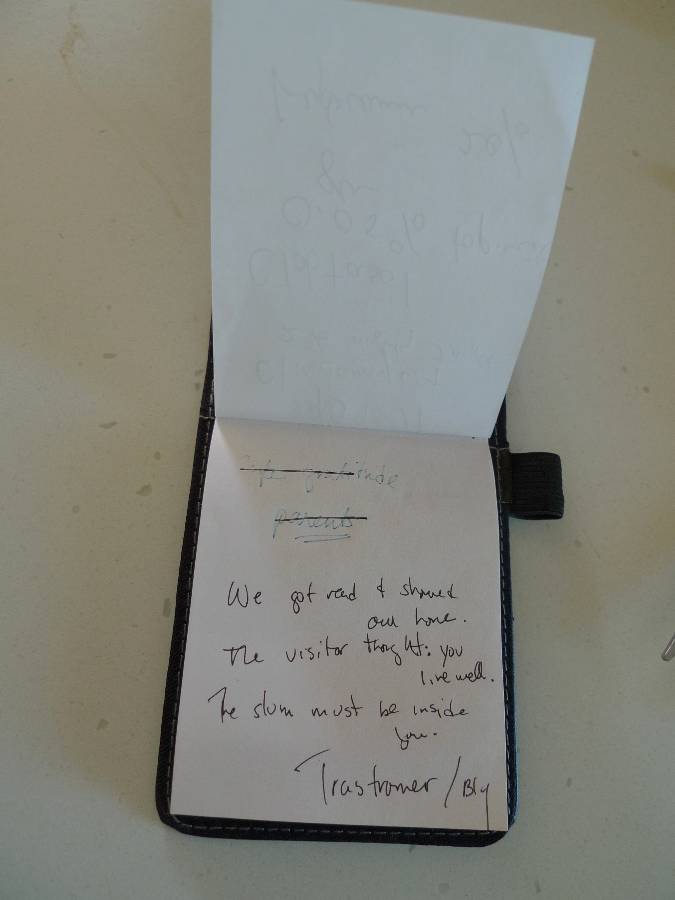 Here are some notes from the little pad I keep inside my purse to capture the stray sentence or idea, or in Brenda Hillman’s words, to be a rancher of phrases. These are all the more pleasing to me because they are surrounded by directions, movie and book titles, stray phone numbers.
We got ready and showed our home.
The visitor thought: you live well.
The slum must be inside you.
… Tomas Tranströmer, “The Scattered Congregation” (translated by Robert Bly)
Words make things happen. We must weigh them carefully.
… Pascal Mercier, Night Train to Lisbon (see more of these)
Maybe he better get out of here
before it’s too late, but maybe too late
was what he wanted.
… Philip Levine Continue reading “The exemplary sentence, take 3”
Snippets
Over breakfast we have have some pretty far ranging conversations. I am usually reading some poems (lately a selection Larry put together of his Berryman favorites), Larry is reading the Wall St. Journal or the NY Times. I read parts of these, too, the “soft” parts. I try to avoid the news, letting Larry be my filter. If it’s ever time to flee, I count on him to let me know.
Yesterday I was musing on what makes Louise Gluck’s poetry so powerful. Her imagery is not gorgeous, and her language tends to be plain not flashy. Yet the poetry is strong. Currents of feeling move though it and jump out at you. And Larry said: Yes, Berryman writes like a man on a high wire; but Louise stands on the ground. Continue reading “Snippets”
The mysterious Yacón, footsteps on the roof
My neighbor and I have gotten to be friends, bonding over our love of chickens. George is an avid gardener and I have been trading him eggs for various plants. The most recent is this Peruvian tuber, called a Yacón (or Yacun). 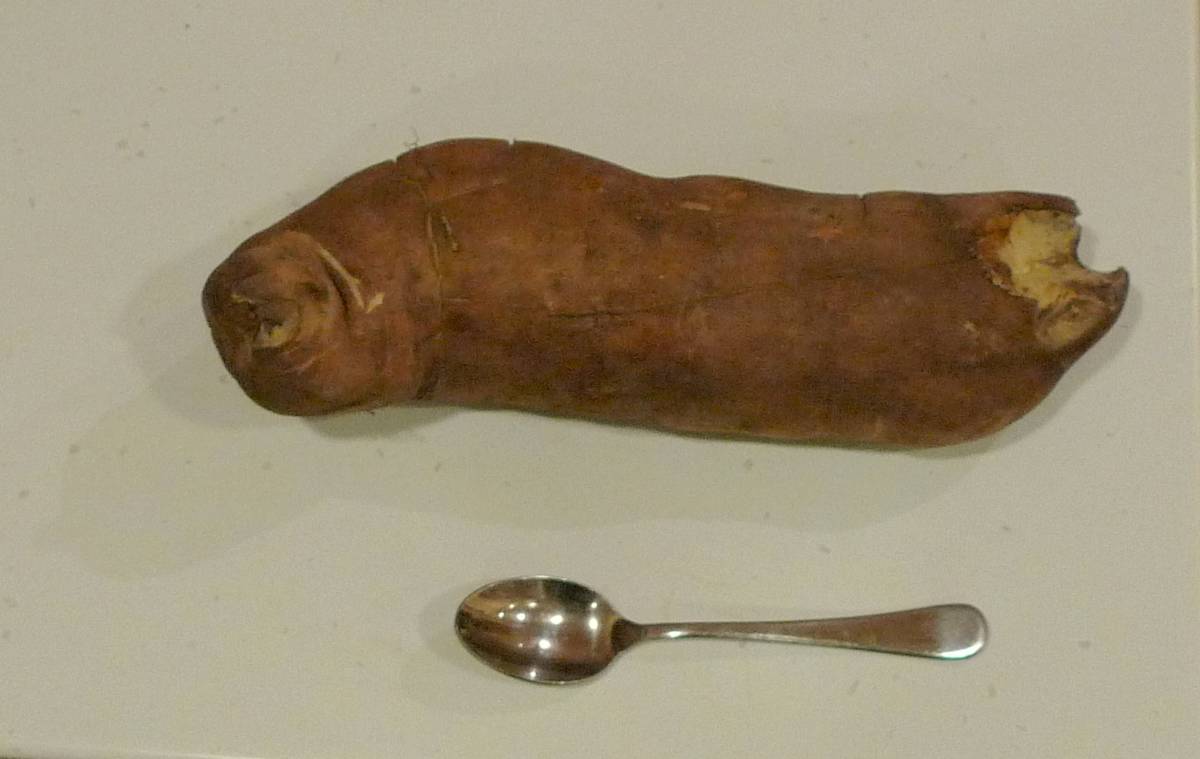
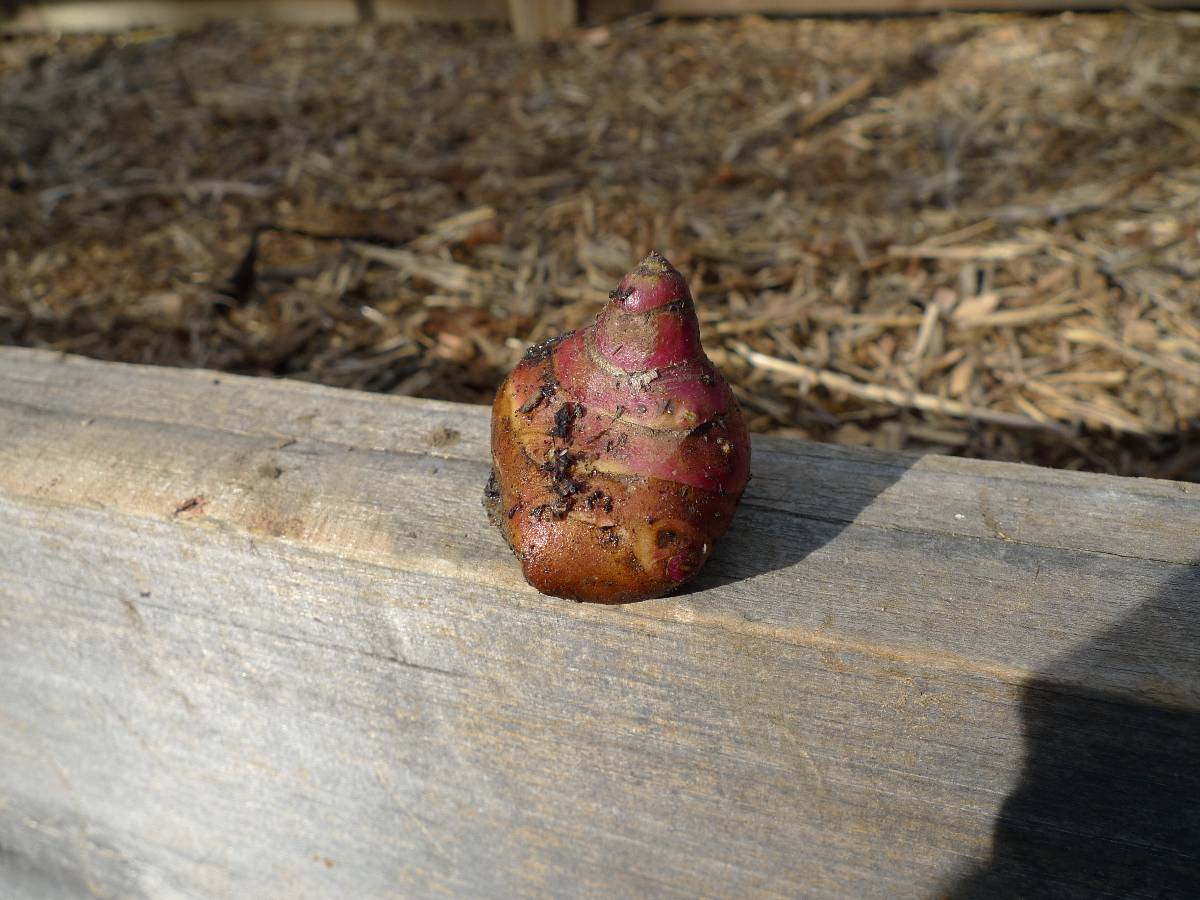 As you can see (using the spoon for scale), the tubers grow very large. When you peel and slice a piece, it’s like a sweeter, juicier jicama. It’s great in fruit salads, taking on the flavor of the fruit, in regular salads, or in stews. I like it so much I got some rhizomes from George to plant my own.
George said gophers were extraordinarily fond of the tubers, so I dug a bed and lined it with chicken wire before I planted them. Continue reading “The mysterious Yacón, footsteps on the roof”
In praise of Berryman
 I perfect my metres
until no mosquito can get through…
Beryman, Dreamsong 297
In the vagaries of poets’ reputations, Berryman is now up, while Lowell is down. This is a reversal of thirty years ago. Who can say why? I fell in love with Berryman’s Dreamsongs in my early twenties. They have two ongoing personae: Henry, a stand in for Berryman himself, and Mr. Bones, a wisecracking minstrel who sees through Henry. In my innocence and arrogance I wrote a Henry poem, in imitation and homage, and sent it to Berryman. He responded with a wonderfully kind letter. This wasn’t long before his suicide in 1972. Continue reading “In praise of Berryman”
Automation in the chicken coop
I love my chickens, but I also love to travel. I have already set up automated feed and watering systems and thanks to a friend who came to visit, I now have an automated chicken door that opens at dawn and closes at dusk. This amazing invention is from Wells Poultry in the UK, and came to me airmail. I couldn’t quite believe it would work, but it does. I set it up at the back of the covered area where the chickens are closed in at night as opposed to on their house itself. It’s very shady by the house, and I was afraid “dusk” there would be too early. We had to make a little ramp going down from the door, as the chicken yard is steep, and they were a little reluctant at first. Several hens went out, then the rooster.
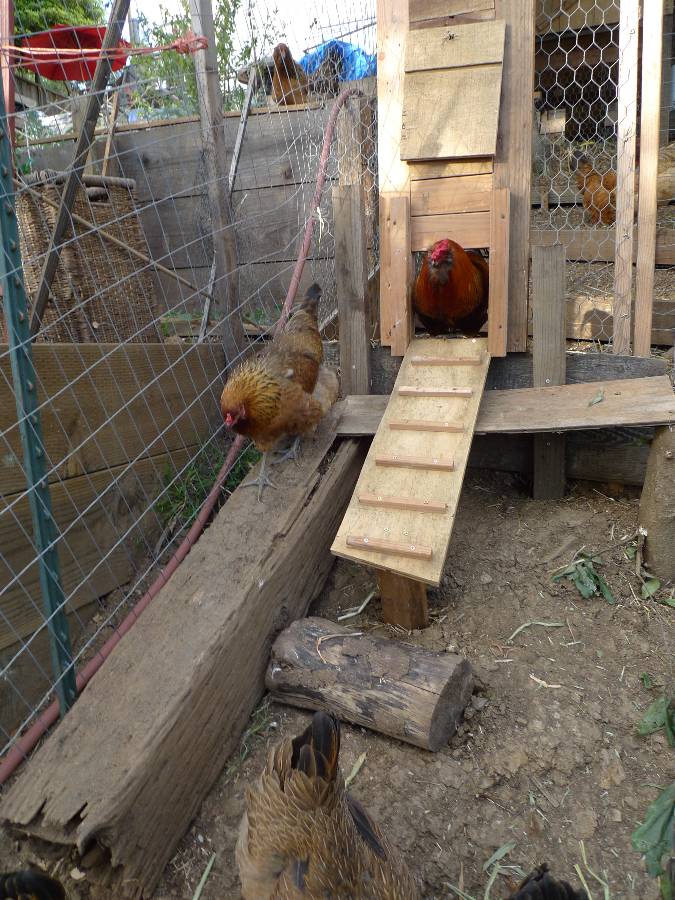
The rooster and about four of the hens went down to the area where I feed them. But three of the hens weren’t eager to try the new door. The rooster came back up and encouraged them, and soon all were out. Continue reading “Automation in the chicken coop”
The problem with Lowell
I woke from dreams of not getting where I needed to be in a foreign country of endless lines and confusing roads. Somewhere there was a cafe, somewhere a bay. But I couldn’t find them. And for some reason, I took out the brick of Robert Lowell’s collected poems for my morning reading.
 Why has Lowell, once so well-known that he appeared on the cover of Time magazine, dropped so out of favor? Was he unlucky to be adorably handsome, from a fine old Boston family, and talented? Perhaps the volume of his work is overwhelming. Coming to him cold, one would be daunted long before finding the handful of marvelous poems that still vibrate with the pain of the human condition. Every poem seems to tackle the big problems, and as with most (all?) poets, most of them fail.
 Still, Life Studies, published in the late 1950’s had a huge influence on poetry. I remember reading it, stunned by its intimacy–it was like nothing that came before. The personal, confessional tone from an academically acclaimed poet legitimized the personal as a subject for poetry. Sylvia Plath was his student, and took the next step.
Despite true madness, excess drinking, smoking, and three marriages, Lowell lived 60 years, and wrote and wrote and wrote. Rhyme and meter were the water he swam in–they seemed natural to him, not forced or added. He could write a sonnet in his sleep. Here’s one of my favorites, written late in his life. He nicknamed his third wife “dolphin,” and the first four lines seem addressed to her. The rest of the poem contemplates life as a poet. I always think they are about Berryman, who famously arrived drunk for readings, but they could be about Lowell himself, or many others I guess. Regardless, I especially love the final four lines:
Fishnet
Any clear thing that blinds us with surprise,
your wandering silences and bright trouvailles,
dolphin let loose to catch the flashing fish. . . .
saying too little, then too much.
Poets die adolescents, their beat embalms them,
The archetypal voices sing offkey;
the old actor cannot read his friends,
and nevertheless he reads himself aloud,
genius hums the auditorium dead.
The line must terminate.
Yet my heart rises, I know I’ve gladdened a lifetime
knotting, undoing a fishnet of tarred rope;
the net will hang on the wall when the fish are eaten,
nailed like illegible bronze on the futureless future.
Lowell is not an easy poet, but he’s one who whose stature will rise again, when others have faded.