Snail, snail glister me forward

Does this line from Roethke’s “Lost Son” make you want to spend some time with his work? Here’s your chance. As a teenager I was thoroughly seduced by Theodore Roethke’s work, and still love it. As Galway Kinnell put it:  “I suppose what I like most in Roethke is particularly that interest he had in real things including slimy things that everybody thought were too base a subject for poetry. There aren’t any angels in Roethke’s poems, but there are slugs and worms, and I like that about him.”
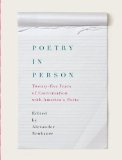
I came back to Roethke to this morning, remembering my great love of Roethke’s work by way of reading Poetry in Person, a series of interviews from a class run by Pearl London at the New School in New York, starting in 1970 and running for almost 25 years. The roster of interviewees is stellar, and the class became famous. Im jealous that I don’t have a similar resource in my life. There’s a short introduction to this book on youtube and a longer video of the celebration of its publication with anecdotes and readings by Maxine Kumin (someone else who writes about real things!), Paul Muldoon, Robert Pinsky, Ed Hirsch and others.

Roethke was not among those interviewed for the class, but the snippet from the Kinnell interview led me to take down my Collected Poems of Theodore Roethke and read through the opening sequence of Lost Son and Other Poems. Roethke deserves a better edition than this badly printed book!  There is a Selected Poems, which despite the hideous portrait on the front seems like a book worth owning. Here are three poems by Roethke, and an elegy for Roethke by John Berryman. Roethke’s father owned a nursery and greenhouse, hence all the gardening images.

Orchids

They lean over the path,
Adder-mouthed,
Swaying close to the face,
Coming out, soft and deceptive,
Limp and damp, delicate as a young
bird’s tongue;
Their fluttery fledgling lips
Move slowly,
Drawing in the warm air.

And at night,
The faint moon falling through whitewashed
glass,
The heat going down
So their musky smell comes even stronger,
Drifting down from their mossy cradles:
So many devouring infants!
Soft luminescent fingers,
Lips neither dead nor alive,
Loose ghostly mouths
Breathing.

Wish for a Young Wife

My lizard, my lively writher,
May your limbs never wither
May the eyes in your face
Survive the green ice
Of envy’s green gaze;
May you live out your life
Without hate, without grief,
And your hair ever blaze
In the sun, in the sun,
When I am undone,
When I am no one.

Big Wind

Where were the greenhouses going,
Lunging into the lashing
Wind driving water
So far down the river
All the faucets stopped?—
So we drained the manure-machine
For the steam plant,
Pumping the stale mixture
Into the rusty boilers,
Watching the pressure gauge
Waver over to red,
As the seams hissed
And the live steam
Drove to the far
End of the rose-house,
Where the worst wind was,
Creaking the cypress window-frames,
Cracking so much thin glass
We stayed all night,
Stuffing the holes with burlap;
But she rode it out,
That old rose-house,
She hove into the teeth of it,
The core and pith of that ugly storm,
Ploughing with her stiff prow,
Bucking into the wind-waves
That broke over the whole of her,
Flailing her sides with spray,
Flinging long strings of wet across the roof-top,
Finally veering, wearing themselves out, merely
Whistling thinly under the wind-vents;
She sailed until the calm morning,
Carrying her full cargo of roses.

A Strut for Roethke

Westward, hit a low note, for a roarer lost
across the Sound but north from Bremerton,
hit a way down note.
And never cadenza again of flowers, or cost.
Him who could really do that cleared his throat
& staggered on.

The bluebells, pool-shallows, saluted his over-needs,
while the clouds growled heh-heh, & snapped, & crashed.

No stunt he’ll ever unflinch once more will fail
(O lucky fellow, eh Bones?)—drifted off upstairs,
downstairs, somewheres.
No more daily, trying to hit the head on the nail:
thirstless: without a think in his head:
back from wherever, with it said.

Hit a high long note for a lover found
needing a lower into friendlier ground
to bug among worms no more
around um jungles where ah blurt ‘What for?’
Weeds, too, he favored as     most men don’t favor men.
The Garden Master’s gone.

John Berryman

“The Waking” (a villanelle), “My Pappa’s Waltz,” “In a Dark Time,” are some of Roethke’s most famous poems, easy to find online. You can hear Roethke read “Big Wind” if you like. Stanley Kunitz wrote a wonderful tribute to Roethke that gives a sense of the man and his work.
Ode to an Artichoke

Both the reading last night and my garden this morning exceeded my expectations. No photos today, I waited too late, the light is fading. But tomorrow, the magic will appear here. Last night there was a good crowd, what they call in the world of flamenco “agusto,” meaning a combination of sympathetic, knowledgeable, and up for the event. It was fun hearing the different voices, and people I had never met bought my book.  The tart was a hit, too, I’m glad I brought it.

One of the poems I read was my translation of Neruda’s Ode to an Artichoke. I was reminded of this because a translation was posted on the Bennington Garden blog.  Of course, I prefer mine…feel free to compare.


Ode to an Artichoke


La alcachofa                                                                  The artichoke
de tierno corazón                                                         its tender heart
se vistió de guerrero,                                                  dressed for war,
erecta, construyó                                                         upright, built itself
una pequeña cúpula,                                                    a little cupola
se mantuvo                                                                    kept itself
impermeable                                                                 impermeable
bajo                                                                                 under
sus escamas,                                                                  its scales
a su lado                                                                         nearby
los vegetales locos                                                        the crazy vegetables
se encresparon,                                                             curled into themselves
se hicieron                                                                     made themselves
zarcillos, espadañas,                                                    tendrils, cattails
bulbos conmovedores,                                                rustling bulbs,
en el subsuelo                                                               underground
durmió la zanahoria                                                    the carrot slept
de bigotes rojos,                                                           in its red whiskers,
la viña                                                                             the vineyard
resecó los sarmientos                                                  dried the shoots
por donde sube el vino,                                               from which wine rises,
la col                                                                               brussels sprouts
se dedicó                                                                        devoted themselves
a probarse faldas,                                                         to trying on skirts,
el orégano                                                                      oregano
a perfumar el mundo,                                                  to perfuming the world,
y la dulce                                                                        and the sweet
alcachofa                                                                        artichoke
allí en el huerto,                                                           was there in the orchard
vestida de guerrero,                                                     dressed for war,
bruñida                                                                           burnished
como una granada,                                                        like a grenade,
orgullosa,                                                                        proud,
y un día                                                                            till one day
una con otra                                                                    one on top of the other
en grandes cestos                                                           in big wicker baskets
de mimbre, caminó                                                        it drove
por el mercado                                                               to the market
a realizar su sueño:                                                        to realize its dream:
la milicia.                                                                         the militia.
En hileras                                                                         In the ranks
nunca fue tan marcial                                                     none was more martial
como en la feria,                                                              as in the marketplace,
los hombres                                                                      the men
entre las legumbres                                                         among the vegetables
con sus camisas blancas                                                  with their white shirts
eran                                                                                    were
mariscales                                                                         field marshals
de las alcachofas,                                                             of artichokes,
las filas apretadas,                                                           the close ranks,
las voces de comando,                                                     the commando cries,
y la detonación                                                                 and the detonation
de una caja que cae,                                                         of a falling box,
pero                                                                                    but
entonces                                                                             then
viene                                                                                   Maria
María                                                                                  comes
con su cesto,                                                                      with her basket,
escoge                                                                                 chooses
una alcachofa,                                                                    an artichoke,
no le teme,                                                                         not afraid of it,
la examina, la observa                                                     she examines it, looks at it
contra la luz como si fuera un huevo,                           against the light as if it were an egg
la compra,                                                                          buys it.
la confunde                                                                        mingles it
en su bolsa                                                                         in her bag
con un par de zapatos,                                                     with a pair of shoes
con un repollo y una                                                        with a cabbage and a
botella                                                                                bottle
de vinagre                                                                          of vinegar
hasta                                                                                   until
que entrando a la cocina                                                 coming to the kitchen
la sumerge en la olla.                                                       she plunges it into a pot.
Así termina                                                                        So, in peace,
en paz                                                                                  the struggle
esta carrera                                                                        of this armored vegetable
del vegetal armado                                                           called artichoke
que se llama alcachofa,                                                     ends,
luego                                                                                    later
escama por escama                                                            scale by scale
desvestimos                                                                        we undress
la delicia                                                                              this delicacy
y comemos                                                                          and eat
la pacífica pasta                                                                 the peaceful pulp
de su corazón verde.                                                         of its green heart.

Pablo Neruda                                                                    Translated by Meryl Natchez

I love how he plays with the spiney artichoke as an image of war, all its martial dreams conquered by simple Maria, who comes to market with her basket and isn’t afraid of it. And I love the way the short lines slow the poem down, give single words a certain weight.  The language is very simple yet exquisite.  Of course, translation is an iffy business… One does the best one can.

Poetry and Pastry

I’m reading tonight, Jun 16, at 7:00 PM

Falkirk Cultural Center
1408 Mission Street, San Rafael

as part of the Marin Poetry Center Summer Traveling Show
hosted by Laurel Feigenbaum

Others include:

Joan Gelfand, Alan Cohen, John Hart, James Phoenix and Andrea Freeman

Because I’m reading “Loaves and Fishes” I’m bringing a fruit tart…mango and blueberry—it’s not pear season. So at the very least they’ll be something yummy to eat.


Zbigniew Herbert

This Polish poet is one of my favorites. He has many dark poems, having survived the second world war and the subsequent Soviet regime in Poland.  But this is a light, acerbic little prose poem. I disagree with his assessment of the hen, though I love the poem.

The Hen

The hen is the best example of what living constantly with humans leads to.  She has completely lost the lightness and grace of a bird. Her tail sticks up over her protruding rump like a too large hat in bad taste. Her rare moments of ecstasy, when she stands on one leg and glues up her round eyes with filmy eyelids, are stunningly disgusting. And in addition, that parody of song, throat-slashed supplications over a thing unutterably comic: a round, white, maculated egg.
The hen brings to mind certain poets.

More typical is his poem, “Five Men.” This poem astonished me with its power when I first read it, perhaps 40 years ago. In an essay about another poem, Herbert said:

“If a school of literature existed, one of its basic exercises should be the description not of dreams but of objects. Beyond the artist’s reach, a world unfolds–difficult, dark, but real. One should not lose the faith that it can be captured in words…I do not turn to history to draw from it an easy lesson of hope, but to confront my experience with that of others, to acquire something I might call universal compassion, and also a sense of responsibility, responsibility for the state of my conscience.”

This poem seems to me to fulfill that responsibility.

Five Men

1.
They take them out in the morning
to the stone courtyard
and put them against the wall 

five men
two of them very young
the others middle-aged

nothing more
can be said about them

2.
when the platoon
level their guns
everything suddenly appears
in the garish light
of obviousness

the yellow wall
the cold blue
the black wire on the wall
instead of a horizon

that is the moment
when the five senses rebel
they would gladly escape
like rats from a sinking ship

before the bullet reaches its destination
the eye will perceive the flight of the projectile
the ear record the steely rustle
the nostrils will be filled with biting smoke
a petal of blood will brush the palate
the touch will shrink and then slacken

now they lie on the ground
covered up to their eyes with shadow
the platoon walks away
their buttons straps
and steel helmets
are more alive
then those lying beside the wall

3.
I did not learn this today
I knew it before yesterday

so why have I been writing
unimportant poems on flowers
what did the five talk of
the night before the execution

of prophetic dreams
of an escapade in a brothel
of automobile parts
of a sea voyage
of how when he had spades
he ought not to have opened
of how vodka is best
after wine you get a headache
of girls
of fruits
of life

thus one can use in poetry
names of Greek shepherds
one can attempt to catch the color of morning sky
write of love
and also
once again
in dead earnest
offer to the betrayed world
a rose

Zbigniew Herbert
both of these were translated by Czeslaw Milosz and Peter Dale Scott, and are from the Penguin 1968 edition of Zbigniew Herbert Selected Poems,

Abandoned Books

One of the best things about writing a blog is that you plunge ever deeper into the great labyrinth of blogs. Today, via Harriet Devine’s blog, I found The Literary Stew, and this meme to which I’ve added a fourth question.  Please answer it below in the comment section or post about it in your blogs and leave a link.

1. What would cause you to stop reading a book?

I start a lot of books—one of the reasons I’m library addict. I abandon them if they bore me, I don’t like the writing style, or I just can’t get into them. Sometimes it’s not the book’s fault, it’s just not the right fit at the moment. Sometimes I can tell there’s going to be too much grief and the writing just isn’t worth it. Usually 50 pages is my cutoff point.

2. Name a book or books you’ve abandoned in the past that you ended up loving later on.

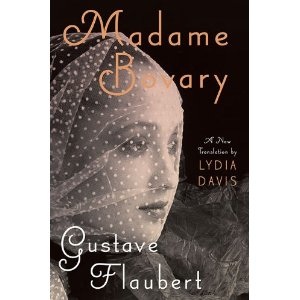
The most significant for me, Madame Bovary. The first time through, I just had no sympathy for the shallow heroine; that changed the second time around. Guess I’ve become increasingly shallow.

3. Name a book you’ve abandoned in the past that you hope to finish someday.

I’ve started Magic Mountain three times. I know it’s a classic. Maybe a John Woods’ translation will do it for me.

4. How often do you stop reading and just skim to the end?

More often than I like to document. I’m impatient, and unless the author is a really good writer, I often find myself flipping along, just to redeem my investment in the characters and their travails.

Anyone have an idea for what we should call this last category? Not exactly abandoned, but not exactly finished, either.


The Arrival of the Bee Box

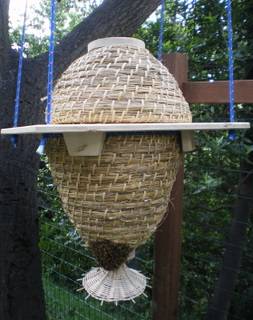
Although I love this poem by Sylvia Plath, in my case it’s more the arrival of the bee egg. My friend Laurie, an amazing creator of natural perfumes among other things, has been keeping bees for several years. She was written up in a new book on Backyard Beekeepers of the Bay Area. I’d been thinking about maybe having bees, and when she told me she had a swarm, I decided to take the plunge.  Laurie directed me to a couple of places in Sebastapol that sell “top bar” hives—easier, less honey than commercial bee boxes.  I went online to Michael Thiele’s site, read what he says about apiculture, and when I saw the Haengekorb, I was hooked. I called Michael, and this happened to be the only hive he had available at the moment, so I arranged to pick it up yesterday. I was a little perturbed when he told me in the email that I might want to cover it with cow dung(!) but I persevered. When Laurie heard I was going, she wanted to come meet Michael (if you look at any of his online videos, you’ll see why).

So we drove up yesterday. It turned out that Leslie, Michael’s wife, helped us, because Michael had a dental emergency. She was terrific, and showed us several hives (one made out of straw (and yes, covered in cow dung) and one made from a hollow log. I asked her if she was familiar with Andy Goldsworthy’s work, and when she said yes, I said “You’re married to the Andy Goldsworthy of bee keeping.” She smiled and said, “I know.”

I asked her about the cow dung, and she said it preserves the hive, and she really didn’t know if was necessary. In any case, on the way home, we passed by a field of cows, and gathered a bucket full of cow plops. It’s a true friend who’s willing to wander a cow pasture and help collect cow dung.  But when I talked to Michael that evening, I asked about it. I wasn’t reluctant to use it if I had to, but it seemed a shame to cover the beautiful straw basket with dung. I was relieved when he said it would be fine to use the Haengekorp as is, and if I want to I could cover it a few years down the line. The cow plops will go into the compost.

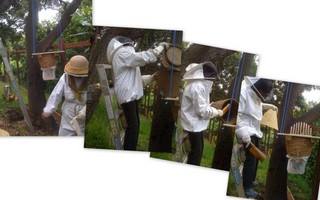
In any case, we assembled the hive last night, and this morning at 6 am, before the bees were out, we got the swarm box, and brought it down.  We banged the bees into their new home, added the frames, the cloth and beeswax cover, and the top of the hive.

It went amazingly smoothly.

I was worried that the bees would all want to fly up and it would be hard to assemble frames and coverings on top of them, but they stayed placidly in the bottom of the basket and allowed me to slowly assemble the top of the hive. It was all set up within an hour.

Now the sun is out, the bees are all in their hive, and I am a beekeeper.  Those little dots in the picture are bees. There is something about being around thousands of bees that is very magical. I didn’t feel at all frightened by them. In fact, I went and removed the cheesecloth we’d put around the bottom without my (loaner) bee suit. The bees pay no attention to me.  They are intent on their own concerns.

I can’t say that I share the exact sentiment of Sylvia Plath’s poem, though I’ve always loved it. The menace she feels from the bees, the ambivalence about her control is as different from my experience as a square wood box is from my egg-shaped basket.  Still the imagery is marvelous, and it does convey something of the powerful energy bees emit. As a metaphor for the swarm within, it works perfectly.  This was the first long poem I memorized.

The Arrival of the Beebox — Sylvia Plath

I ordered this, this clean wood box
Square as a chair and almost too heavy to lift.
I would say it was the coffin of a midget
Or a square baby
Were there not such a din in it.

The box is locked, it is dangerous.
I have to live with it overnight
And I can’t keep away from it.
There are no windows, so I can’t see what is in there.
There is only a little grid, no exit.

I put my eye to the grid.
It is dark, dark,
With the swarmy feeling of African hands
Minute and shrunk for export,
Black on black, angrily clambering.

How can I let them out?
It is the noise that appalls me most of all,
The unintelligible syllables.
It is like a Roman mob,
Small, taken one by one, but my god, together!

I lay my ear to furious Latin.
I am not a Caesar.
I have simply ordered a box of maniacs.
They can be sent back.
They can die, I need feed them nothing, I am the owner.

I wonder how hungry they are.
I wonder if they would forget me
If I just undid the locks and stood back and turned into a tree.
There is the laburnum, its blond colonnades,
And the petticoats of the cherry.

They might ignore me immediately
In my moon suit and funeral veil.
I am no source of honey
So why should they turn on me?
Tomorrow I will be sweet God, I will set them free.

The box is only temporary.

I read recently that in her layout of the book Ariel, in which this poem first appeared, it was the final poem of the book. This seems to me such a optimistic statement, because the ending “Tomorrow…I will set them free./The box is only temporary” seems so positive. It confirmed for me that her suicide attempt wasn’t meant to succeed. Of course, with her death, Ted Hughes got to rearrange the book as he felt it should be; she wasn’t around to argue one way or the other.


Louis B. Jones

This week I started Louis B. Jones new book, Radiance. I’d been waiting eagerly for it. It’s a rare treat to enter the world of someone who thinks deeply and articulates his thought beautifully (poetically!) while moving you along a compelling story line. Here are two passages.

The first is about the strangeness of women, via the narrator’s teen-age daughter:

“…he hadn’t known what a girl’s graces were until Lotta, nor felt how over years his world was gradually changing shape so that females’ natural secret regnant ascendancy became more impossible  to ignore, not until Lotta, not until he’d started watching a girl take shape from earliest infancy, the fineness of discernment, as well as a soreness, which amounted to a discriminating kind of electromagnetic force, all superpowers in comparison with boys’—and how hard that all was for them, the amazing unremitting meanness of their competition, their fundamental sad practicality, then the encroaching ineluctable weird song and dance of their inferior competence.”

The second describes a carpenter’s belt his wife is wearing:

“The new tool belt from True Value was red, redder than any valentine, its tough nylon webbing lustrous with that almost-lanolin stuff that synthetic hardware-store fabrics have when they’re brand-new and still faintly cense the factory warehouse perfumes of polymerized thermo-plastic.”

Here is a man who is paying attention and has the vocabulary to wake you up and see what he sees. And we’re only at page 13! I could go on, but it would be better if you bought the book and supported this kind of writing.


Rain and libraries

Okay, the weather is decidedly odd. But I refuse to jump to apocalyptic conclusions. Instead, I’ve been noodling around the web. I discovered several wonderful British blogs about books, including Harriet Devine’s blog.  This led me to discover an online article about Patrick Hamilton, a previously-unknown-to-me British author. I’ve reserved two of his books.

I am a total library addict; can’t bear to pass by one without going in and browsing and taking something out. It’s sort of like dating. No commitment—you’re just borrowing a book. Then I buy the ones I want to keep, especially the best contemporary authors who need me to buy their books (like Julie Orringer and Louis B. Jones) so they can keep writing. I have two credit cards, but six active library cards—a good ratio:

And now that I can reserve books online, I have a continual stream of good books available at any one time. The more scholarly ones and obscure poets I get from UC; cookbooks, how-to, and general fiction from whichever public library near me has what I want. Continue reading “Rain and libraries” →

Mark Doty

This morning I was chatting with friends about poetry over tea and muffins. We were talking about workshops, etc. I told them about my worst workshop experience, one with Mark Doty at the Walt Whitman Birthplace. Despite the awful workshop, his work is luminous. We talked about how you can’t equate the work with the person. This came home to me years ago, watching a poet I know who wrote stunning love poems to his wife and treated her like the dirt under his shoe soles.

In any case, Marcia, here’s a Mark Doty excerpt for you. Other poems of his I love include: A Green Crab’s Shell, Apparition; A New Dog; The Embrace, Migratory, A Display of Mackerel. There’s a transcendental strain in his work that he weaves in with such skill. I find it extraordinarily moving. You can find several of these at poets.org, and hear him read. He’s a good reader. Fire to Fire, his new and selected poems, is worth owning, and I even like his blog.

from “Atlantis”

I thought your illness a kind of solvent
dissolving the future a little at a time;

I didn’t understand what’s to come
was always just a glimmer

up ahead, veiled like the marsh
gone under its tidal sheet

of mildly rippled aluminum.
What these salt distances were

is also where they’re going:
from blankly silvered span

toward specificity: the curve
of certain brave islands of grass,

temporary shoulder-wide rivers
where herons ply their twin trades

of study and desire. I’ve seen
two white emissaries unfold

like heaven’s linen, untouched,
enormous, a fluid exhalation. Early spring,

too cold yet for green, too early
for the tumble and wrack of last season

to be anything but promise,
but there in the air was the triumph

of all flowering, the soul
lifted up, if we could still believe

in the soul, after so much diminishment…
Breath from the unpromising waters,

up, across the pond and the two-lane highway,
pure purpose, over the dune,

gone. Tomorrow’s unreadable
as this shining acreage;

the future’s nothing
but this moment’s gleaming rim.

Now the tide’s begun
its clockwork turn, pouring,

in the day’s hourglass,
toward the other side of the world,

and our dependable marsh reappears
—emptied of that scratched and angular grace

that spirited the ether, lessened,
but here. And our ongoingness,

what there’ll be of us? Look,
love, the lost world

rising from the waters again:
another continent, where it always was,

emerging from the half light,
drenched, unchanged.

Mark Doty

The poem that changed my life

Okay, I finally found a copy of the poem that was published in the (1967?)
Harvard Advocate that elicited the fateful fan letter from Larry that changed the course of my life. It was printed with a long footnote, which I include here.  I remember that in Larry’s letter (which will be harder to find, but will appear here eventually), he suggested that I lose the footnote, but I love the last sentence, so am leaving it in, despite the grammatical error (do you see it?). In any case it’s more authentic this way.

I remember pacing the Radcliffe library one night trying to write a poem and stumbling on the volume of the Cambridge Natural History.  Was it open on a desk?  Feeling somewhat caged myself at the time, the captive chameleon seemed the perfect subject.


Image from the Markov Thought Chain Blog

Chameleons in Captivity[1]

Silent, they bide their time.
Turning brown or green as the mood suits them
they swing on a twig,
and steady themselves
with a flexible tail.
Until, when their prey flies by,

they slyly become the branch.
With one cool thwap of an eight-inch tongue
they get their meal,
no sentiment spared
for their breakfast or dinner.
They slit their eyes and sleep.

And yet in winter, they wander.
Restless, insatiate, refusing to eat.
Aloof, they hiss
and swell, swaying
in gold indignation
and bite their keeper’s hand.

They no longer care who feeds them.
Some urge, half forgotten, intrigues them despite
the warmth of their cage,
and they crave the dark
and solitary
cave, drawn back towards the earth.

And what strange joy they must feel
As they watch their iridescent skin
fade and peel
in the long months
of slow starvation.
What absolute power they hold

over the foolish keeper
who thinks to deny this swaggering beast—
when weary of summer
and the hoards
of beetles and flies—
the privilege of death.

Meryl Natchez

[1] From the Cambridge Natural History, Vol. III. Chameleons are notoriously difficult to keep successfully, whereby we do not mean keeping for three to six months. This is easy enough, since it takes them several months to die of starvation. The difficulty is to keep them through the winter. To enable them to do this, it is absolutely necessary to fatten them up during the summer and autumn. Otherwise, although kept in a warm place, they are liable to lose their appetite in autumn, when they become restless, probably with the desire to hibernate. Those few individual which get over this critical period, say during the month of October, and do not refuse food are probably safe. But those are doomed which refuse to eat meal-worms or cockroaches or such food as can be procured easily during the winter.

Poems by heart

One year at the Squaw Valley Poetry Workshop, Bob Hass gave a craft talk in which he said he had memorized his own poetry by driving around with a cassette of his poems. I’d been memorizing poems for a long time used this technique to memorize several dozen poems more (not my own, though). As a result, not only do I have a treasury of poems to get me through long lines and bad traffic, snippets of poems come to me just in the course of an ordinary day.

Walking down the street in spring, when the new leaves have just unfurled, I sometimes think of Tony Hoagland’s poem, A Color of the Sky, in which he calls the color of these leaves “the very tint of inexperience.”

As I come out of the tunnel on Highway 24 and see San Francisco gleaming white over the bay, I might think of Wordsworth’s lines:

“The city now doth like a garment wear
The beauty of the morning, silent, bare.
Ships, domes, theatres and temples lie
Open to the fields, and to the sky;
All bright and glittering in the smokeless air.”

And when my granddaughter complains of boredom, I think of Berryman’s wonderful dream song that begins:

“Life, friends, is boring. We must not say so.
After all, the sky flashes, the great sea yearns,
we ourselves flash and yearn,
and moreover, my mother told me as a boy
(repeatingly), “Ever to confess you’re bored
means  you have no

Inner Resources.”

I refrain from quoting it to her, but it makes me smile.

Having an internal library of poems I love enriches my day, and will be a comfort if they every put me (like Christopher Smart) in solitary confinement. Here’s a poem about this:

Poems by Heart

The first I memorized was for Miss Underhill
in seventh grade: Frost’s woods.
Then Márgaret’s melodious grief,
like nothing I’d heard before,
like the anthem of my tribe.

I grabbed onto poetry as if
it were the round, white circle
of canvas-covered cork
thrown from the lifeguard’s chair
when they hauled me out,
and stood me on my feet,
still flailing.

The poems meant that somewhere
there had to be others like me.
They had left me a trail of words,
little candy lifesavers in rainbow colors,
and I ate them, one by one,
as I made my way
across the acres of suburban
athletic fields and sidewalks
to find them.

Poets Out Loud!

Want to hear F. Scott Fitzgerald reading Keats? or H.D.’s cultured accent reading her long poem, Helen in Egypt? or William Carlos Williams folksy tones as he reads his seminal A Red Wheelbarrow poem? or Lorine Niedecker, Jack Spicer, Robert Creeley, Louis Zukofsky not to mention many contemporary poets?  Here’s the list of authors in PennSounds’ audio library for you: http://writing.upenn.edu/pennsound/x/authors.php

Of course, there are many other audio libraries, but this one is new to me and intriguingly eclectic.