George Oppen

oppenGeorge Oppen is a poet who seems to have faded from view. But his sensibility is intriguing.  His focus was on simplicity–using language to point to the experience as opposed to itself. Here’s a snippet:

Pedestrian

What generations could have dreamed
This grandchild of shopping streets, her eyes

In the buyer’s light, the store lights
Brighter than the lighthouses, brighter than moonrise

From the salt harbor so rich
So bright her city

In a soil of pavement, a mesh of wires where she walks
In the new winter among enormous buildings.

George Oppen

Molly Peacock

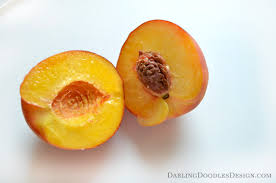
I had a chance to look at a book of poems by Molly Peacock in a friend’s library. This one reminded me of a moment when i saw my parents sharing an apricot, by far my tenderest and most intimate memory of them:

peachCouple Sharing a Peach

It’s not the first time
we’ve bitten into a peach.
But now at the same time
it splits–half for each.
Our “then” is inside its “now,”
its halved pit unfleshed–

what was refreshed.
Two happinesses unfold
from one joy, folioed.
In a hotel room
our moment lies
with its ode inside,
a red tinge,
with a hinge.

Molly Peacock

Continue reading “Molly Peacock”

The art of the short poem

Does anyone do it better than this?

avocadoMarried

I came back from the funeral and crawled
around the apartment, crying hard,
searching for my wife’s hair.
For two months got them from the drain,
from the vacuum cleaner, under the refrigerator,
and off the clothes in the closet.
But after other Japanese women came,
there was no way to be sure which were
hers, and I stopped. A year later,
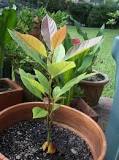
repotting Michiko’s avocado, I find
a long black hair tangled in the dirt.

Jack Gilbert

Olds’ Odes

If you’ve never heard Sharon Olds read, this is a good example:

or this, a poem I woke up thinking about this morning:

patz24n-5-webThe Missing Boy

(for Etan Patz)

Every time we take the bus
my son sees the picture of the missing boy.
He looks at it like a mirror–the dark
blond hair, the pale skin,
the blue eyes, the electric-blue sneakers with
slashes of jagged gold. But of course that
kid is little, only six and a half, Continue reading “Olds’ Odes”

Yesterday a friend was talking about gimmicks in poetry–and here is an example she gave. The gimmick is or world seen through the eyes of a Martian. Gimmick itself is a pretty good word…

A Martian Sends a Postcard Home

Caxtons are mechanical birds with many wings
and some are treasured for their markings –

they cause the eyes to melt
or the body to shriek without pain.

I have never seen one fly, but
sometimes they perch on the hand.

Mist is when the sky is tired of flight
and rests its soft machine on ground:

then the world is dim and bookish
like engravings under tissue paper.

Rain is when the earth is television.
It has the property of making colours darker.

Model T is a room with the lock inside –
a key is turned to free the world

for movement, so quick there is a film
to watch for anything missed.

But time is tied to the wrist
or kept in a box, ticking with impatience.

In homes, a haunted apparatus sleeps,
that snores when you pick it up.

If the ghost cries, they carry it
to their lips and soothe it to sleep

with sounds. And yet, they wake it up
deliberately, by tickling with a finger.

Only the young are allowed to suffer
openly. Adults go to a punishment room

with water but nothing to eat.
They lock the door and suffer the noises

alone. No one is exempt
and everyone’s pain has a different smell.

At night, when all the colours die,
they hide in pairs

and read about themselves –
in colour, with their eyelids shut.
Craig Raine

Continue reading

Summer food

Ripe tomatoes, sweet corn, peaches. They are all here, and we are eating them all. This morning, delicate white Mexican onions crisped with corn kernels, spinach and basil from the garden, and a fried egg in the middle. Is there anything better?

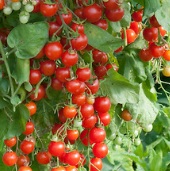
So here’s a tomato poem, also a love poem, also short–three excellent attributes for a poem I want to post. Early Cascade is the name of a tomato, of course:

tomatoEarly Cascade

I couldn’t have waited. By the time you return
it would have rotted on the vine.
So I cut the first tomato into eighths,
salted the pieces in the dusk,
and found the flesh not mealy (like last year)
or bitter,
even when I swallowed the green crown of the stem
that made my throat feel dusty and warm. Continue reading “Summer food”

Another Neruda translation?

“It’s true, I’ve been caught in print several times saying, ‘The last thing we need is another Neruda translation.'” This sentence opens Forrest Gander’s introduction to Then Come Back: The Lost Neruda Poems, from Copper Canyon Press. He then goes onto explain how these late poems were discovered, and their quality convinced him to undertake the project of translating them. Here’s one from the book:

9

shoes“Don’t be vain,” someone had scrawled
on my wall.
I don’t recognize
the script or hand of
whoever left that line
in the kitchen, No one I invited, clearly.
He came in from the roof.
So who am I
Supposed to answer? The wind.
Listen to me, wind.
For many years
the vainest
have tossed in my face
their own vanities,
that is, they show me the door
I open at night, the book
I write,
the bed
that waits to receive me,
the house I build, Continue reading “Another Neruda translation?”

Ignoring the news

I was wondering this morning whether if each insane massacre was basically ignored by the media, if it received the most minimal coverage possible on page 18 of the paper, would that remove a big incentive? Isn’t the publicity a huge part of it?

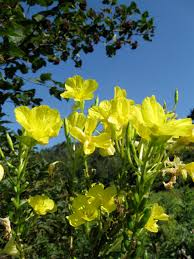
In any case, this poem has nothing to do with anything except those wonderful yellow primroses that bloom at dusk. Rita Dove, its author, was US Poet Laureate some years ago.

primrosesEvening Primrose

Neither rosy nor prim,
not cousin to the cowslip
nor the extravagant fuchsia—
I doubt anyone has ever
picked one for show,
though the woods must be fringed
with their lemony effusions. Continue reading “Ignoring the news”

Batter up

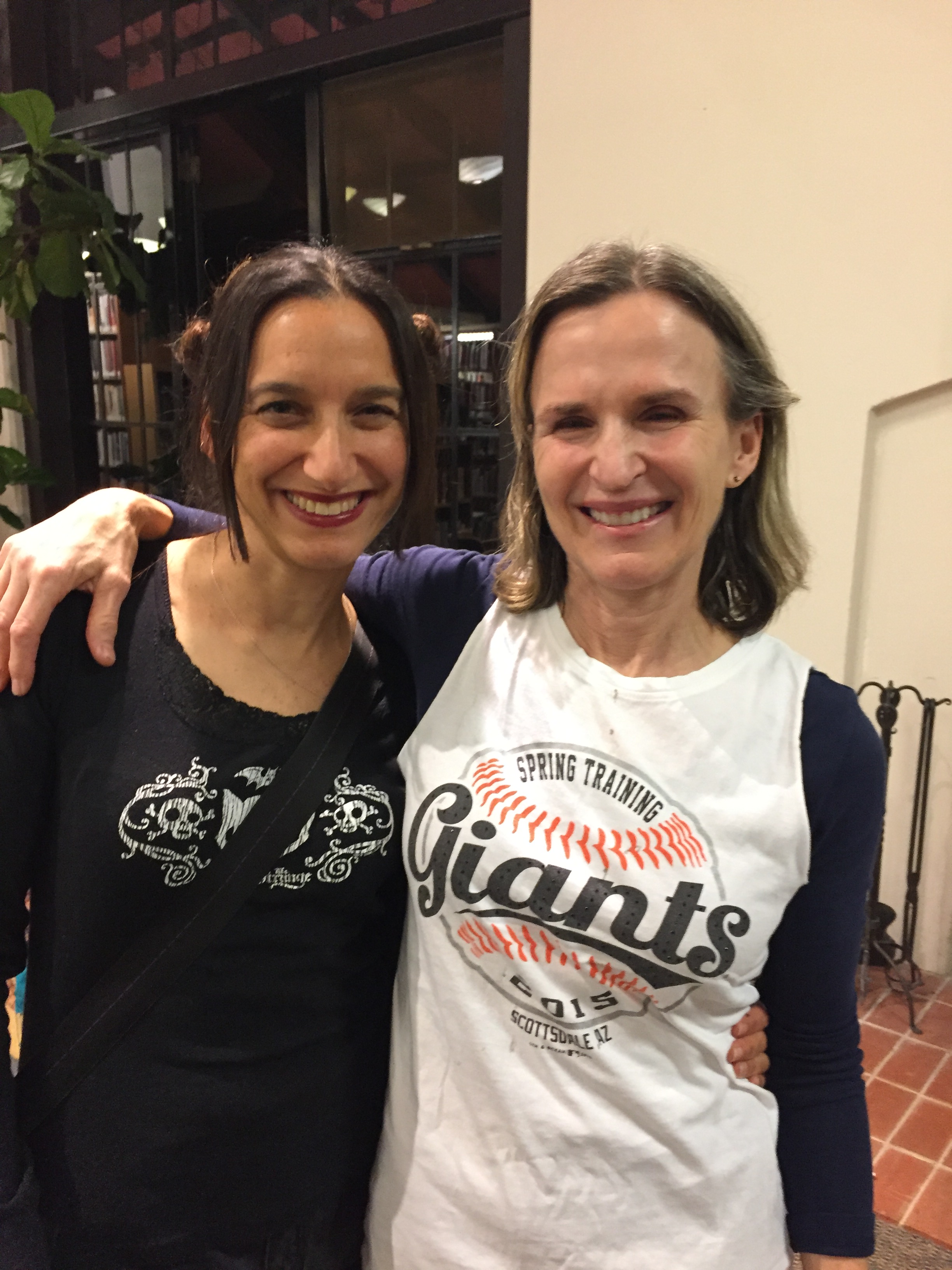
You may remember I mentioned the Poetry World Series, an annual event at the Mill Valley Library.  This event, organized by Becky Foust and Melissa Stein (below), combines poetry with the structure of a baseball game.

2016-05-06 21.10.36There are two teams of three poets each, an emcee, and judges. This is inning eight, the gracious and funny Matthew Siegel and I were pitched the phrase “zoo animals.” For each inning, the audience “pitches” topics, and one poet from each team “bats” their poem at the topic, no prep beforehand. We even each have walk up music.

Dean Rader was the charming emcee, and I was on the red team (note my borrowed red Diablo’s baseball shirt and cap), Continue reading “Batter up”

Yeats

wbyeatsHaving just filled out my absentee ballot for the California Primary, I can’t stop thinking about this poem, especially the first stanza. This was written during the first world war, but seems so relevant today. Certainly the worst are full of passionate intensity. And the feeling of things falling apart is very present.


THE SECOND COMING

Turning and turning in the widening gyre
The falcon cannot hear the falconer;
Things fall apart; the centre cannot hold;
Mere anarchy is loosed upon the world,
The blood-dimmed tide is loosed, and everywhere
The ceremony of innocence is drowned;
The best lack all conviction, while the worst
Are full of passionate intensity. Continue reading “Yeats”

Heartless?

stevensWallace Stevens is hard to miss in the landscape of contemporary American poets. He’s famous for his intricate, fanciful poems, as well as for the fact that he worked throughout his career as an insurance executive. He can seem dry and intellectual–difficult–but worth the trouble to unravel.

Two things about Stevens–apparently the other execs at Hartford Accident and Indemnity didn’t think too much of him. His boss was quoted in a recent bio: “Unless they told me he had a heart attack I never would have known he had a heart.” Berryman was kinder:

…something…something…not there in his
flourishing art…
What was it missing, then, at the man’s heart
so that he does not wound?
Continue reading “Heartless?”