Another day, another breakfast

We had our annual Dia de los Muertos party on Sunday, and I plan to post some photos and info from that, but that’s more than I have time for today.
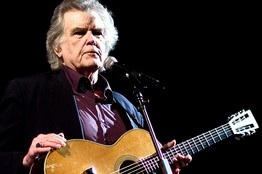
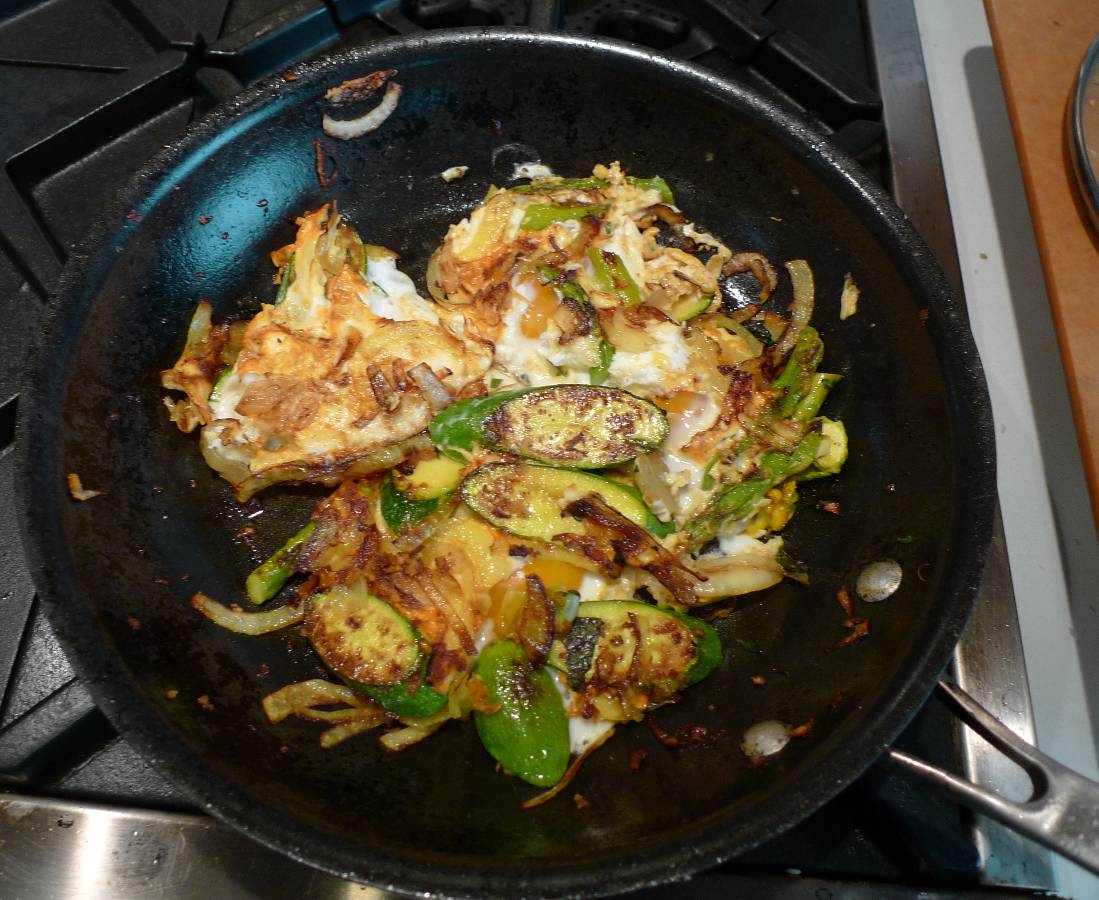
Over fried zucchini, onions, and garlic from the garden and fresh eggs from the chickens, Larry pointed out an appreciative article on Guy Clark from the WSJ. It’s full of good quotes, but this is my favorite, about song writing vs guitar making:

“I love craftsmanship…But that’s just something to do while I’m doing the real work…If there’s a need for a little rest, you go over and fix a guitar and go into a zone completely free of writing or fixing that next verse. And then things pop into your head.” That’s exactly how I feel about the balance between writing and cooking or gardening. Very different kinds of focus that support each other in a real way. I’ve never really heard much by Guy Clark except “L.A. Freeway,” but it sounds like he’s had a terrific life: “all in all, I’ve had a head of a time,” the article ends. “I wish the Mexican food was better, but I’ve really got no complaints.” He should have been at our house for Dia de los Muertos.

Submitting my work

I’ve had a very ambivalent relationship to submitting poetry to magazines for publication. I don’t read small literary magazines, so why submit to them? And if you pay the reading fee to enter a contest, they just pile up unread on the shelf, an unpleasant reminder of the problems of publication.

On the other hand, a friend recently had a poem of his published in the New Yorker, which I do read, and said he simply submitted it online.  Of course, he studied with the current poetry editor, so that helps. But I decided to submit one.

The online submission page said something like “due to the volume of submissions, it may take three or four months for us to respond.” However, I received a rejection note the very next day. I guess they really didn’t like it. But undaunted, I am printing it here.

In Praise of Research

Here’s to the researcher’s neck arched over his microscope
with the single-mindedness of a horse bent to its oats
hour after year in the bright box of the lab
decoding the origin of a sub-family of mosquito
that only lives sealed in the London underground.
Or Marie Curie burning her hands over and over
in the luminous blue-green glow of the radium
she extracted before anyone knew it was there
or what it could do.
Or the scholar holed up in the library carrel
working on the meaning of the “the.”

Quinine, x-rays, meaning itself, the way the world
is constructed of waves and particles and a something else
we can’t agree on, that time stretches and light bends,
and like horses in traces
impelled by the will of our kind
we bend our necks to it
as hungry for knowledge
as for grain from a loving hand.

*                      *                         *

I hope you like it better than the editors at the New Yorker. I think I’ll just keep sending them poems. Like Sylvia Plath, I could create wallpaper with rejection slips.


Chris Maher Marathon

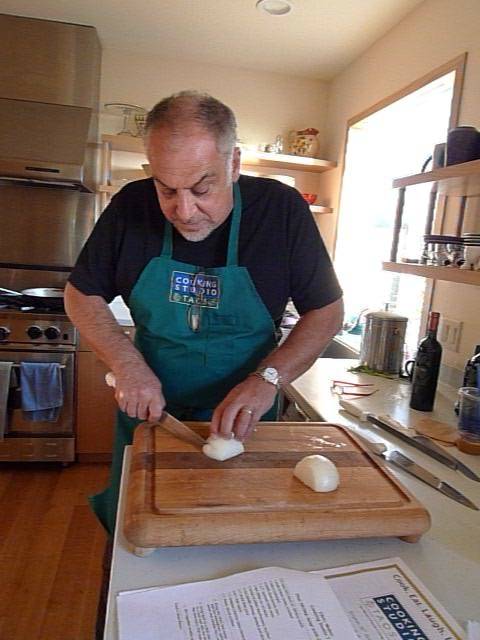
Remember the chef who came to dinner? Chris Maher, the chef, was teaching some cooking classes in LA, and arranged to teach a Thai cooking class on Sunday at my house. There were eight of us, learning everything from how to hold a knife and chop an onion, to tricks for making Thai green chile paste and peanut sauce. It was warm enough that we ate dinner outside in candlelight, a rare treat in the Bay Area at any time.

I took a video of Chris’s instructions and demo of how to hold and use a knife and how to chop an onion, but somehow lost the videos in the transfer.  More than that, my memory card filled up with that one video, and the rest of the dinner was undocumented.

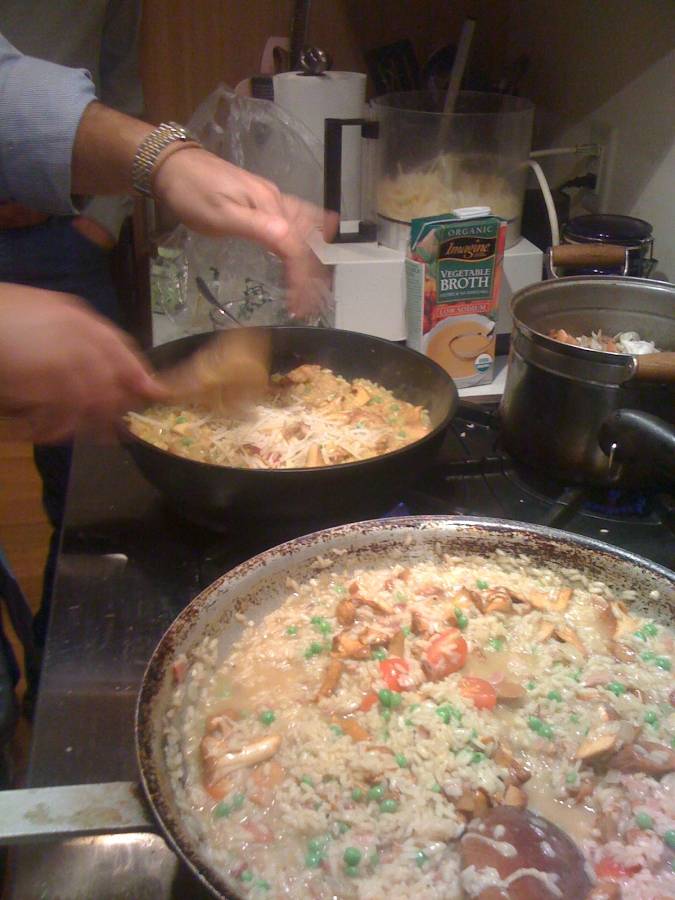
While we were eating, we got to talking about risotto, probably because Chris made truly fluffy and delicious rice, and he agreed to make risotto on Monday. this time there were five of us for a very informal class. We made a risotto with chicken stock, pancetta, chanterelles, onions and peas, and one with vegetable stock minus the pancetta. Both were creamy without cream. They were easy to make and even easier to eat.

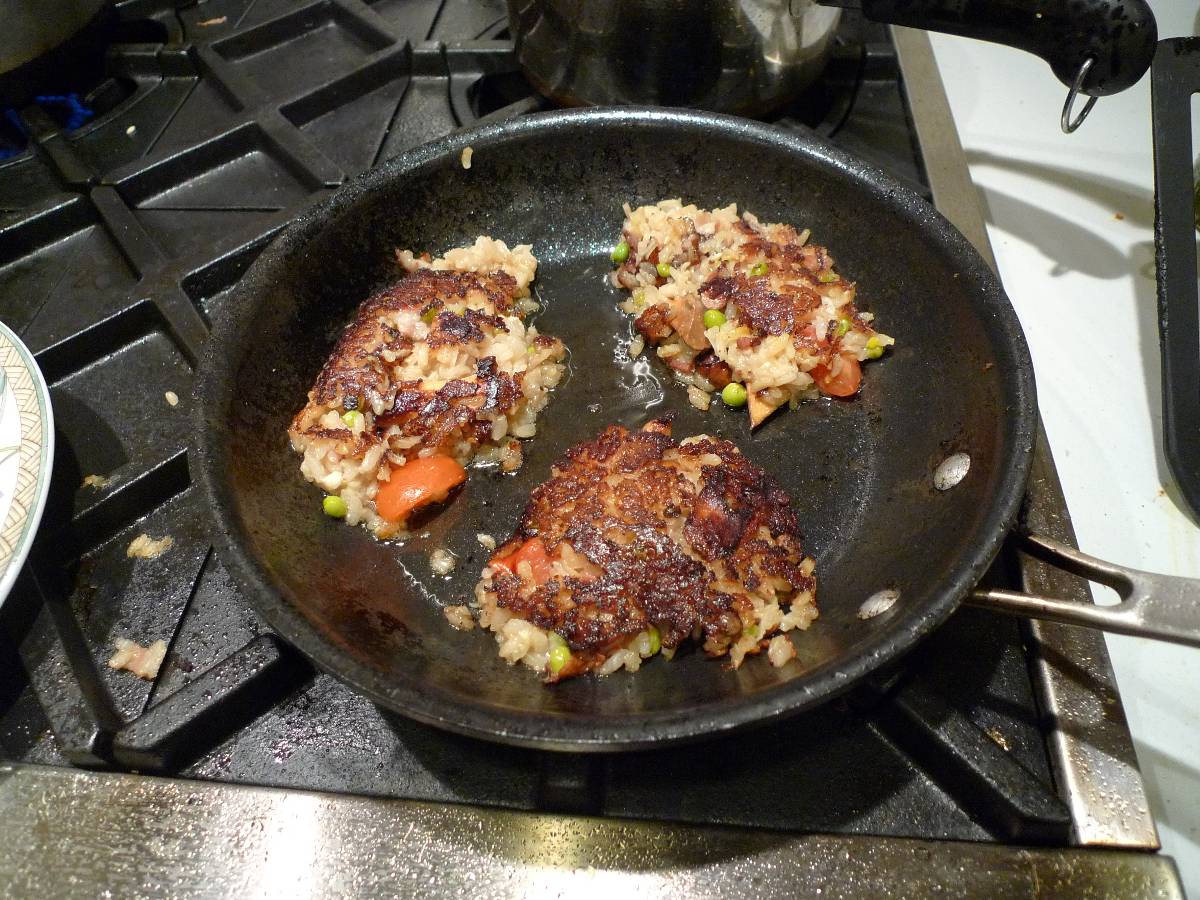
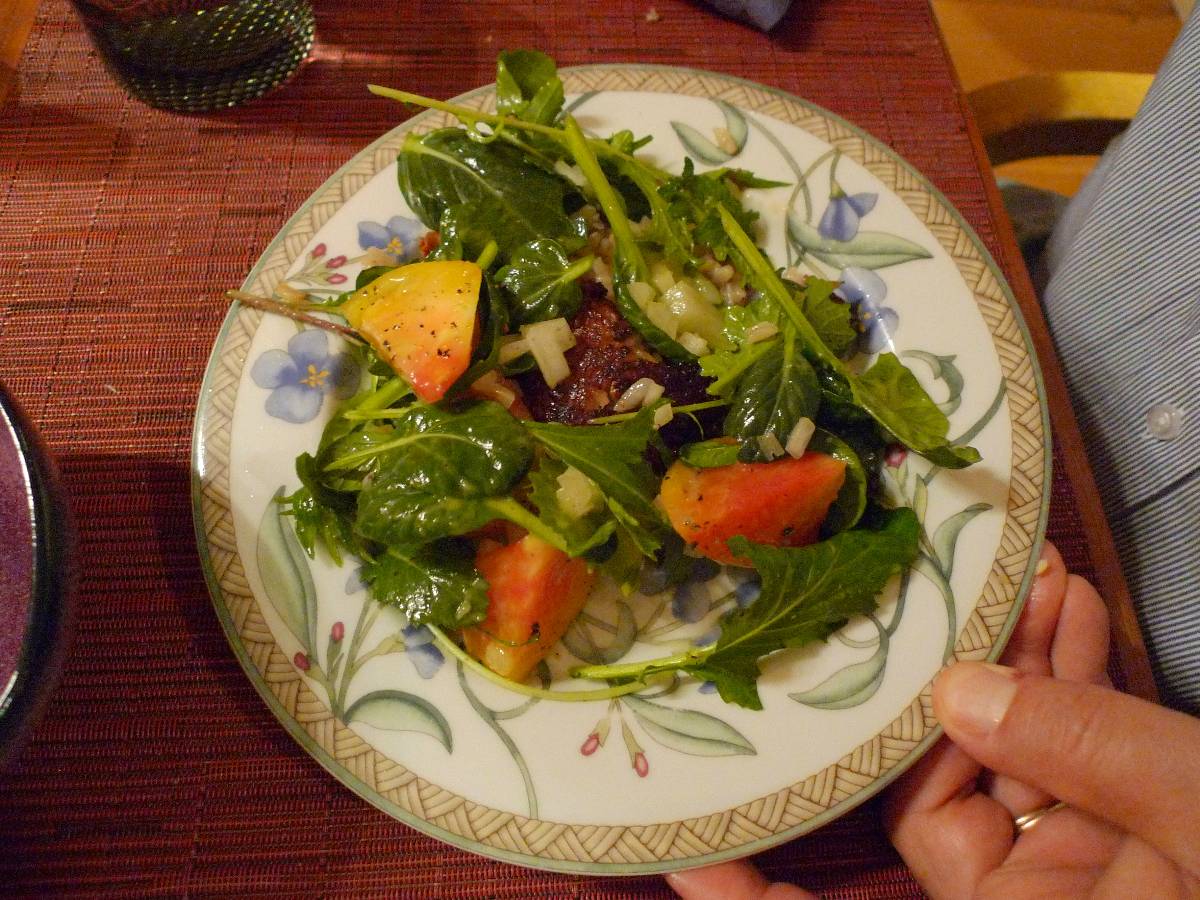
Best of all, because Chris stayed over, the next night we took the risotto, formed it into patties, browned it on both sides in olive oil and served it with a salad of arugula, tatsoi, and tomatoes (all from the garden) on top. The slightly lime-flavored dressing, the slightly bitter greens, and the sweet tomatoes over the risotto cakes made for a true delicacy. Chris says it’s called “Al Salto,” and is a common use of leftover risotto in Italy.  As a big plus, I’ve learned a new salad dressing–made in the food processor with shallot, garlic, vinegar, oil, salt and pepper, a dollop of dijon and juice of half a lime.

In any case, I am replete. Chris is on his way to Utah to demo his products (he has a line of scrumptious eggplant dip, salsa, and other products under the label Caleb and Milo. If you’re in Utah, Kansas, New Mexico, or Nevada, you can buy these at Whole Foods.


Don’t bother coming by my house. We scarfed up all the samples he brought!

Larry on flat tax

A lot of people have been sending around an email about a 28th ammendment–along with Warren Buffet’s great quote about the budget deficit: “I could end the deficit in 5 minutes,” he told CNBC. “You just pass a law that says that anytime there is a deficit of more than 3% of GDP, all sitting members of Congress are ineligible for re-election.”

However, according to Larry (and verified by Snopes),  most of the information in the email is inaccurate.  In regard to the “tax the rich” discussion that’s also current, Larry sez:

“If you want a flat tax (by far the simplest, most equitable solution), you need to get 218 congressmen, 60 senators (enough to prevent filibuster), and 1 president to stop selling their votes to special interests.” Larry says he’s heavily short on this possibility.

As if to prove his point, he pointed out that two New York Senators, Kirsten Gillibrand and Charles Schumer, are sponsoring a bill that would make selling fake maple syrup a felony.


Roberto Chavez at the Autry

For those of you au courant with the art world, there’s a dramatic set of exhibitions of Los Angeles artists happening in Southern California. Sponsored by the Getty, and called “Pacific Standard Time: Arti n L.A. 1945-1980.”  I went to the opening of one show at the Autry called Art Along the Hyphen: The Mexican-American Generation. Our old friend, the artist Roberto Chavez, is one of the artists featured in this stunning exhbit. (You can see a short video of him sketching here.)

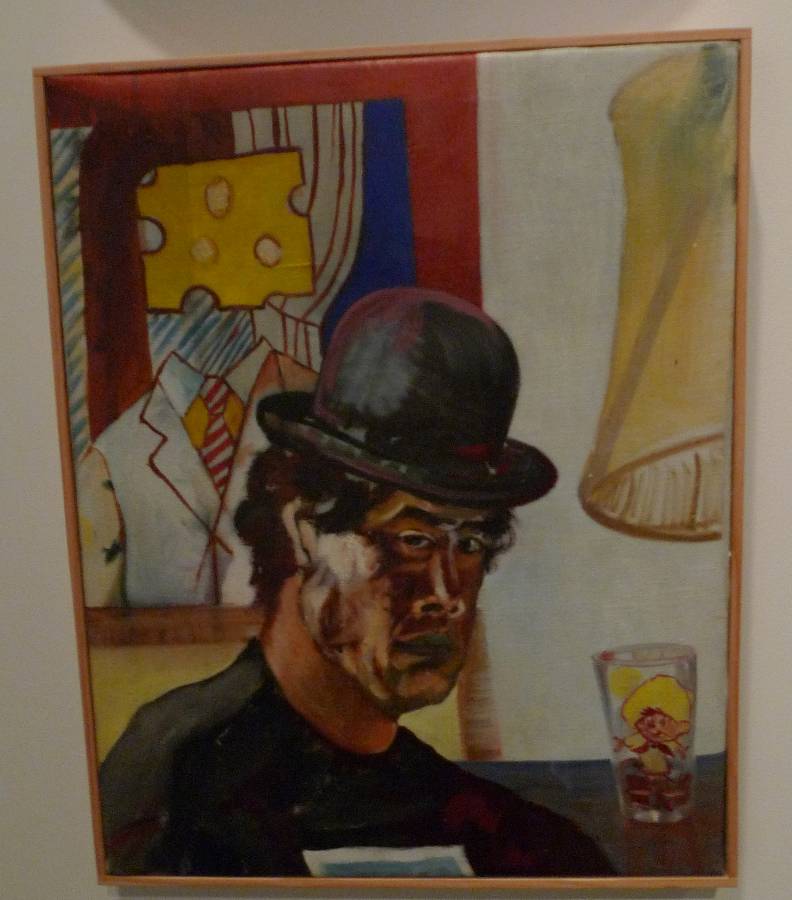
We’ve know Roberto for decades, and it is a thrill to see his work displayed in such a well-curated show. I’m willing to forgive any number of hyphens for the job the organizers did.  As you come into the show there’s a wall of self portraits of the six artists in the exhibit in various media, grouped almost as you would group a wall of family photos.  Here is Roberto’s self portrait:

We used to own a wonderful small self-portrait of Roberto with a lime-green background, one of my favorite pieces of art. But we loaned it to a gallery for a show and the owner sold it–a shocking offense I haven’t gotten over 30 years later.

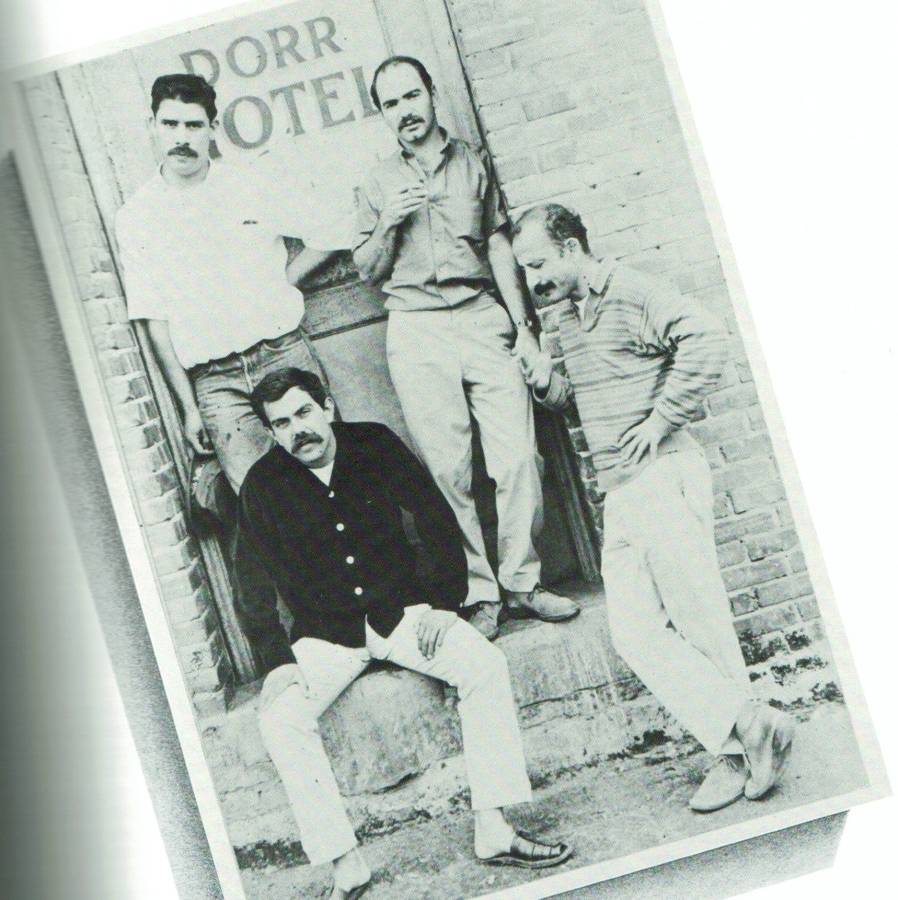
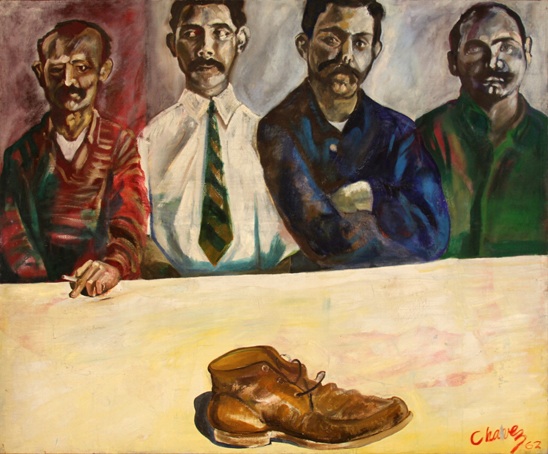
There were other works in the Autry show that I loved. One is the wonderful “Group Shoe” portrait as a humorous take on the first show Roberto and three friends were in (a group show, hence the pun) at the Ceejay Gallery. Here’s the photo from the catalog along with Roberto’s painting:


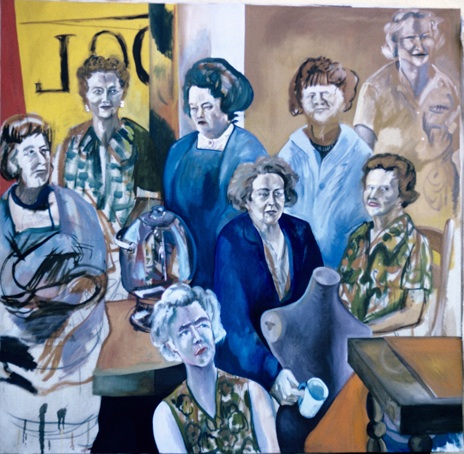
Another favorite is “Ladies Art Class,” from the days of Roberto’s teaching career. He told another friend that after he painted this, each of the women came up to him individually and told him that he had captured all of the women in the class perfectly, except her.

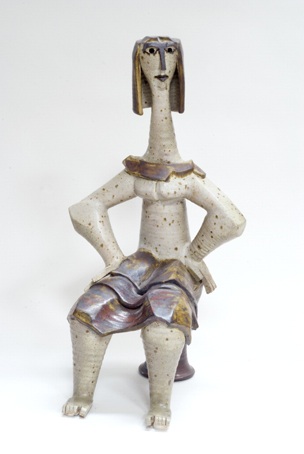
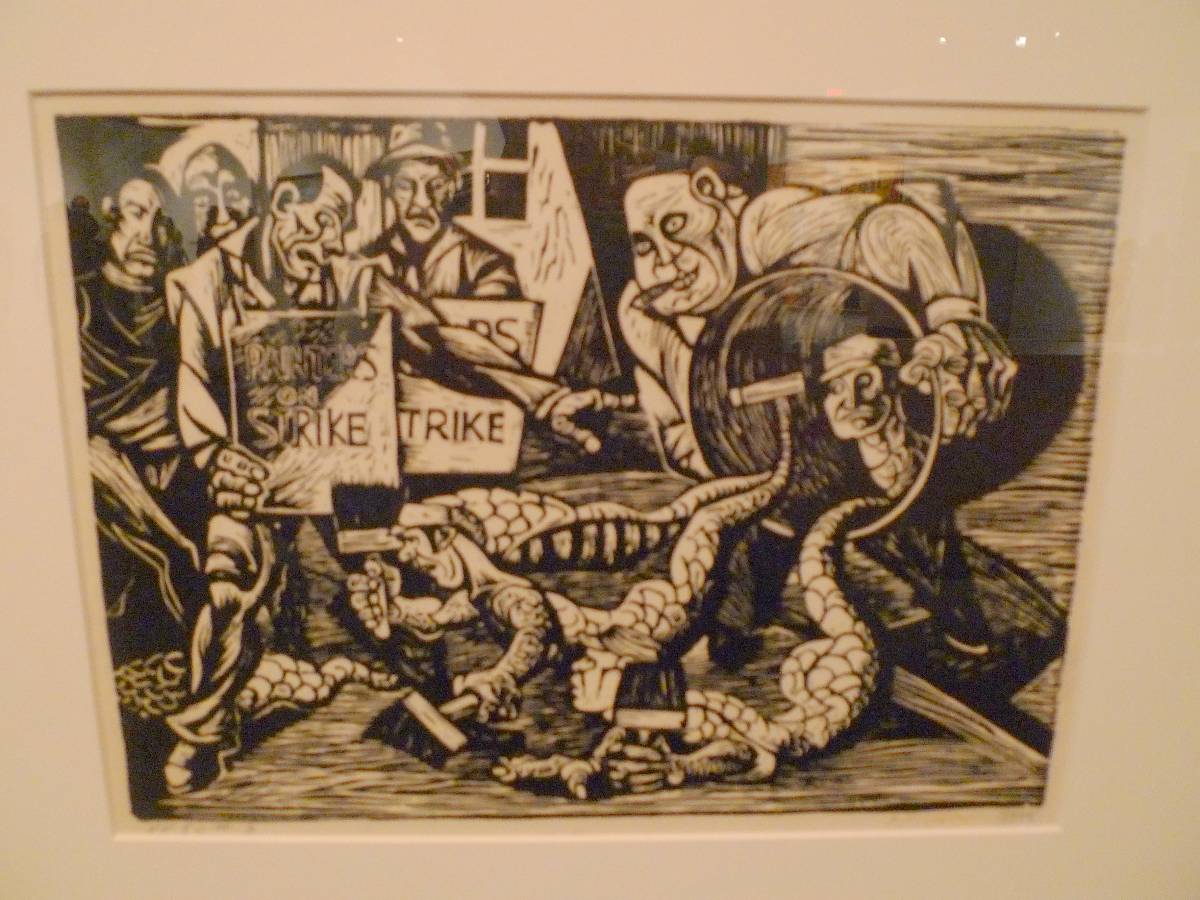
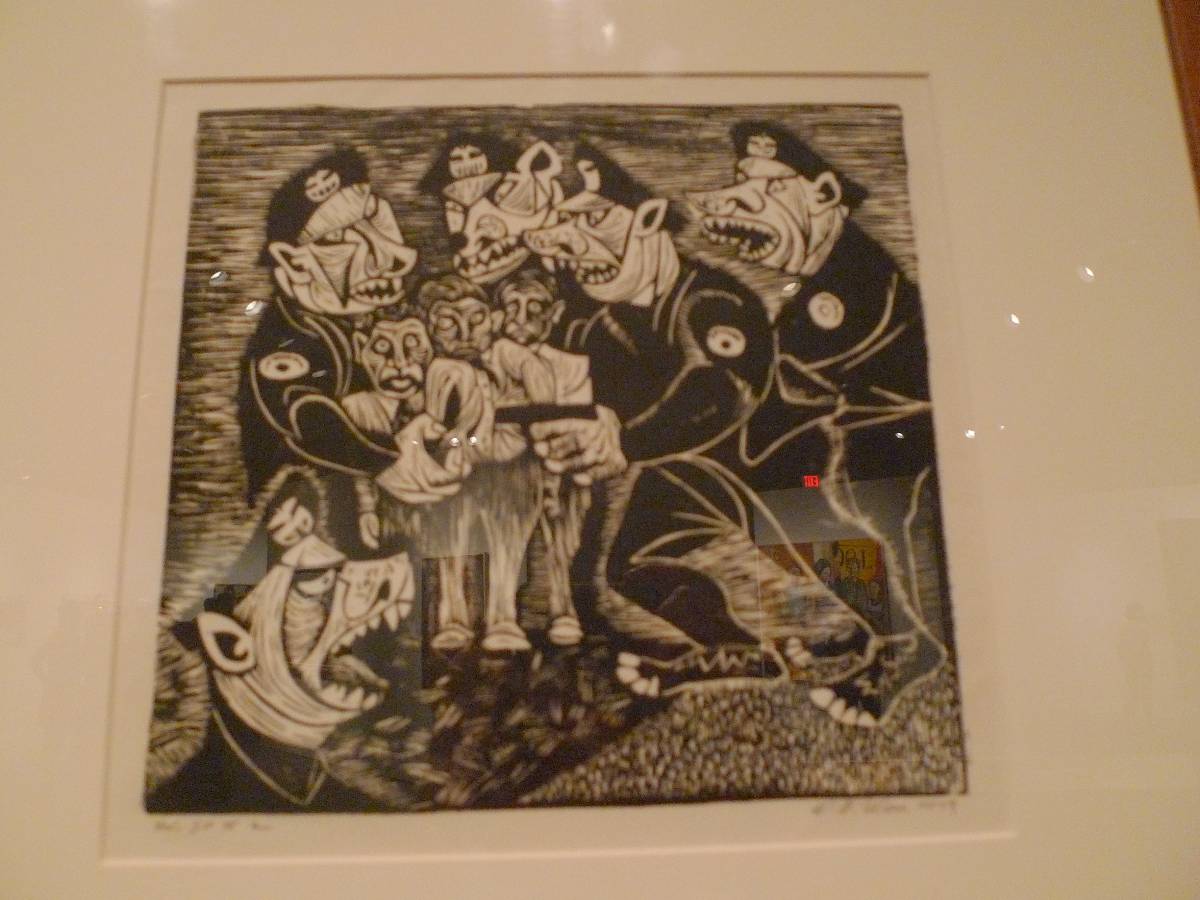
The only other living artist featured in the show was Dora De Larios, a ceramicist–one of her works is here. She and Roberto were both in attendance and both gave afternoon talks and brief speeches at the gala that evening.  An artist I’d never seen before whose work captivated me was Domingo Ulloa. Two of his woodcuts were especially powerful, Painters on Strike, and Wolf Pack:


You can see more images from the show, but they left out many of the ones I found most moving, including Roberto’s canvas titled Belsen.  This is a grim piece in blacks and yellow greens of bodies being stacked with a bulldozer. When asked about it after his talk, he said “I was interested in people being treated like garbage.”

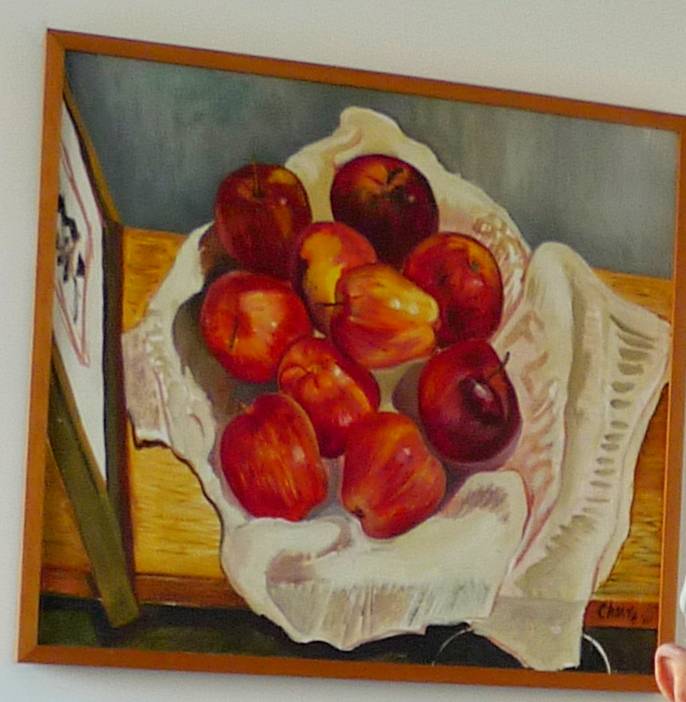
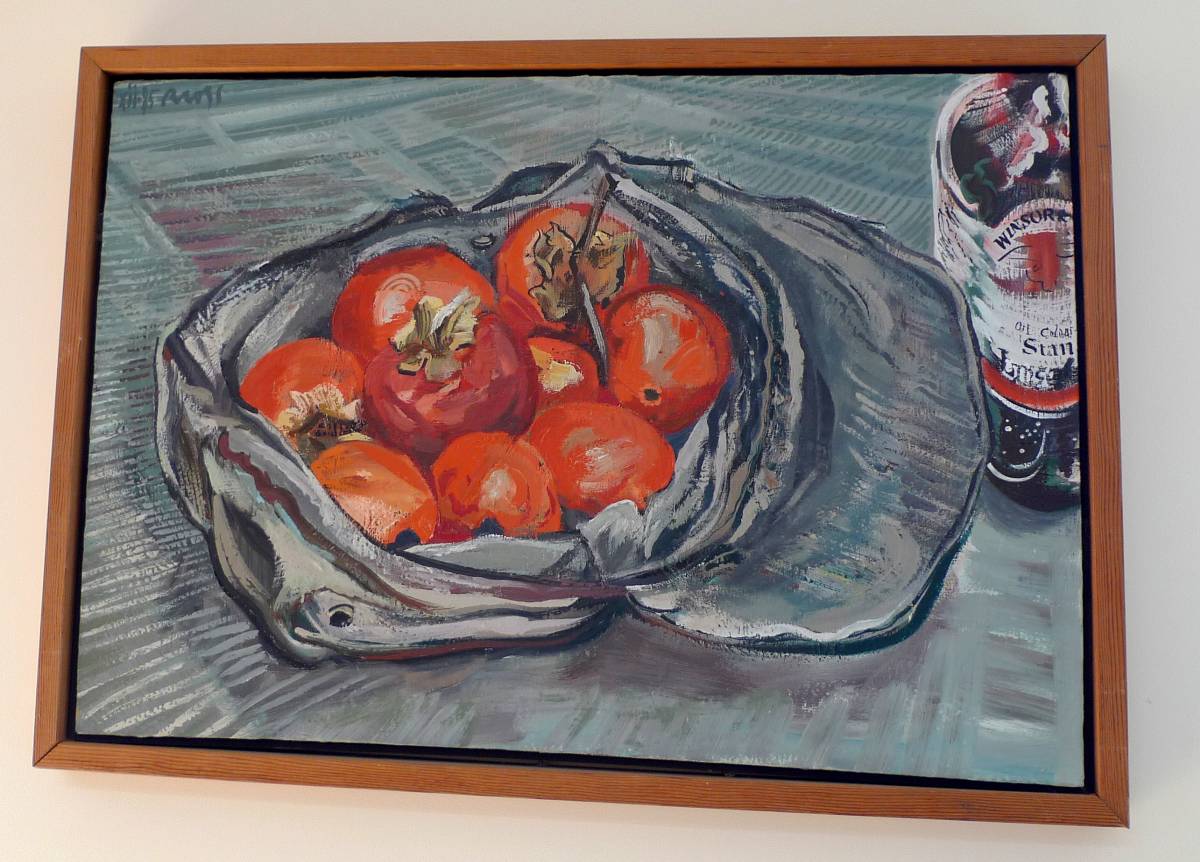
Here’s a few you won’t see anywhere but here, though, a Chavez painting of apples that hangs in my daughter’s dining room, and a painting of persimmons that I think of as its twin by Bob Ross (another terrific artist) that hangs in mine:

There are more, but I think this is enough for today! (And for those of you who really notice, that’s Larry’s ear in the corner of the apples painting.)

A few New England snaps

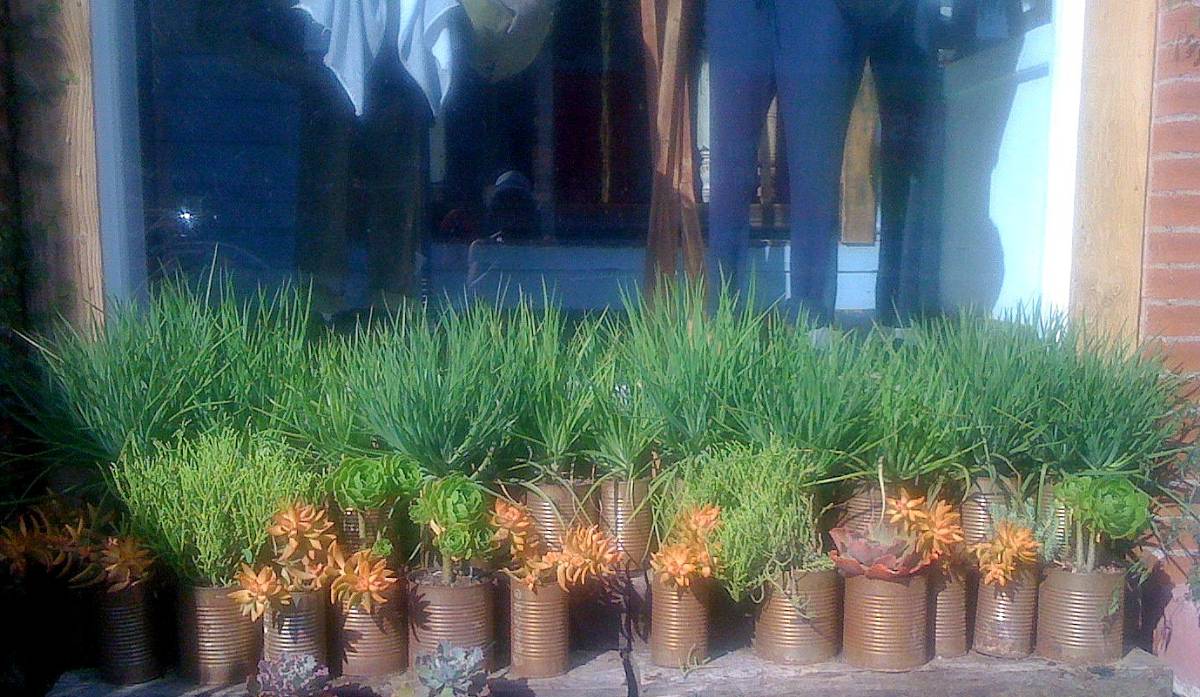
As a complement to the cactus and succulents on Abbot Kinney, I found their New England equivalent on Huntington Avenue in Boston:

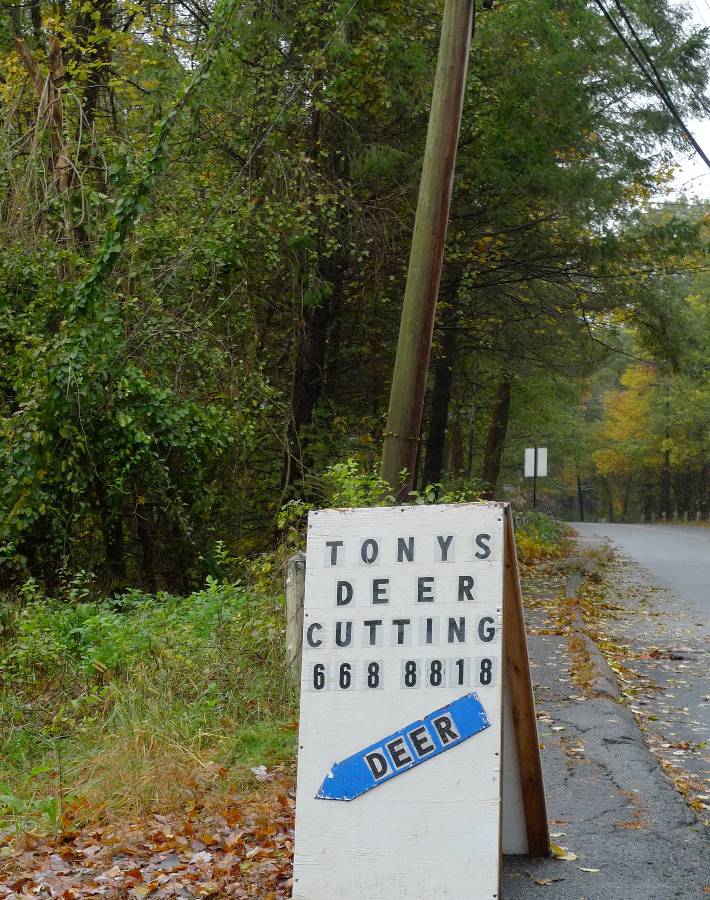
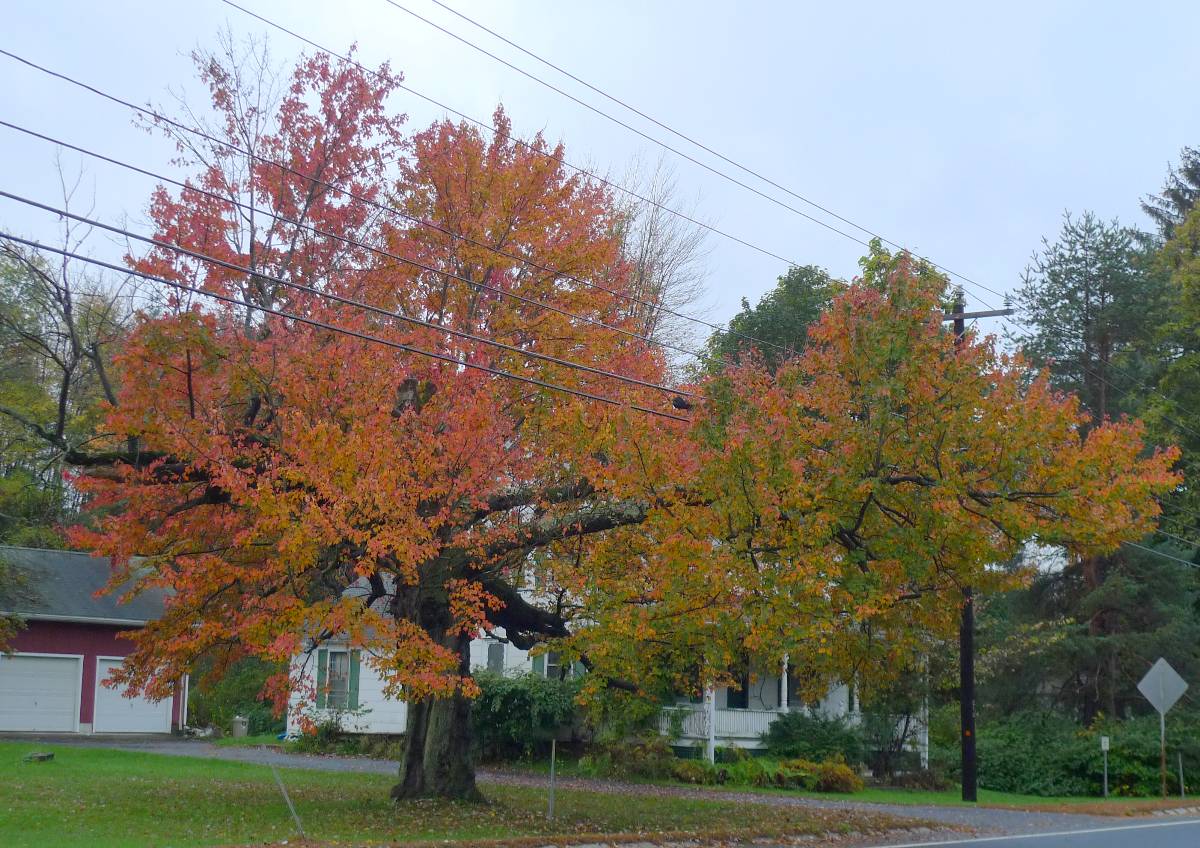
Here’s my favorite sign from Western Massachusetts–a little free publicity for Tony, in case any of you have some fresh deer to slaughter.  Along with a taste of that great fall color–I love how this tree has been sculpted around the wires:


Lots more to come, but for now, it feels great to be back home. The chickens are laying, the tomatoes are ripening, and the baby greens are sprouting.

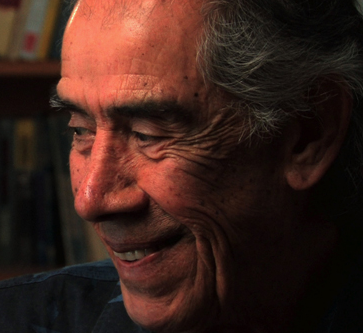
Plus, this morning over breakfast (kale, zuccini, onions and herbs from the garden, sautéed with eggs gathered yesterday!) Larry pointed out Robert Pierpoint’s obituary, with this great photo.  It’s worth reading the article to find out the story behind it.

A great trip, and great to be back home.


Rainy day in New England

It’s cold and rainy today with a definite feel of the coming of winter. It reminded me of this poem by Robert Mezey (one of that amazing group of students of John Berryman’s at Iowa).  His is a California fall poem, and it always gives me a shiver when I come to the last lines. I especially like the image of fire’s many small teeth, and the sun narrowed to a filament. The poem is full of the feeling of death that waits for all living things and that fall exposes.

Touch It

Out on the bare grey roads, I pass
by vineyards withering toward winder,
cold magenta shapes and green fingers
and the leaves rippling in the early darkness.

Past the thinning orchard the fields
are on fire.  A mountain of smoke
climbs the desolate wind, and at its roots
fire is eating dead grass with many small teeth,

When I get home, the evening sun
has narrowed to a filament.  When it goes
and the dark falls like a hand on a tabletop,
I am told that what we love most is dying.

The coldness of it is even on this page
at the edge of your fingernail.  Touch it.

Robert Mezey
 

Sunny Southern California

I’m on a 10-day jaunt—first LA, then Boston, New England, NY.  (And just when the pullets have really started to lay!) More about the terrific art show we went to at the Autry Museum when I’m home and can post the photos.  Meanwhile, here are a few shots from my cell phone while wandering along Abbot Kinney, in Venice (California, not Italy). I was struck by some uniquely Southern California scenes—landscapes of succulents and cactus against concrete and horizontal wood is a common theme.  This one fronts an what looked like an office building without a name.

Rusted number cans full of succulents gave this clothing store a hipster look.

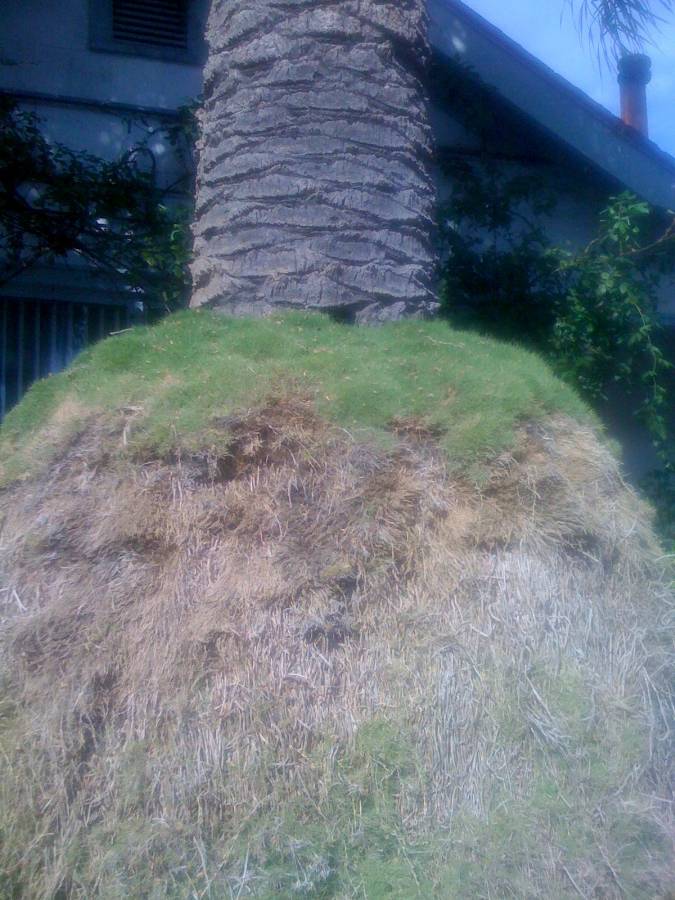
And I’m not sure what’s behind the massive base of this palm.

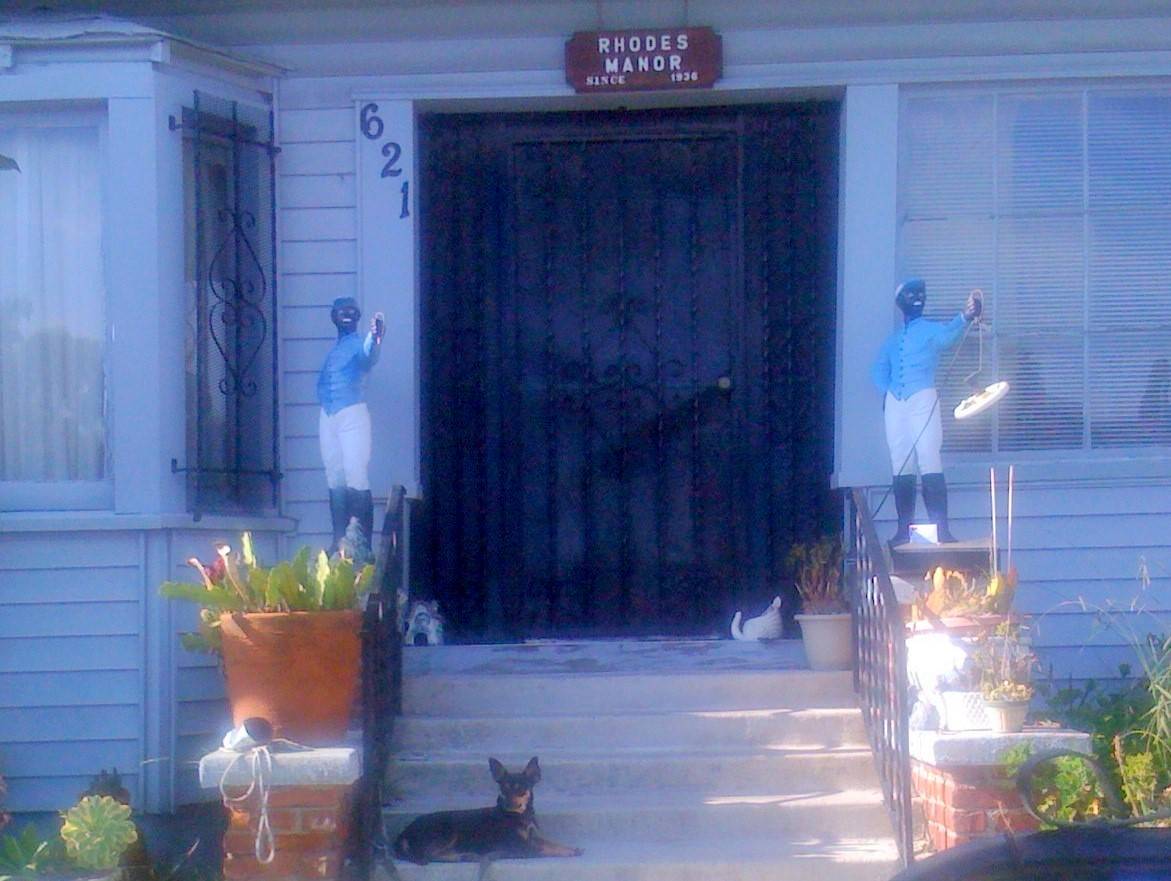
Heading off on side streets, the posh mingles with the down and out and the just plain zany, like this southern plantation on a small city lot.

The dog was alive, btw.  And this one seemed just ironic—let’s vote for peace while we keep everyone out.

A delicious, kitschy hour in the sun.


Dr. Seuss plant

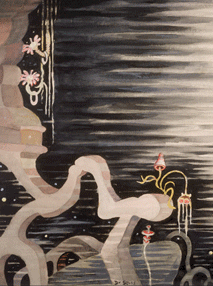
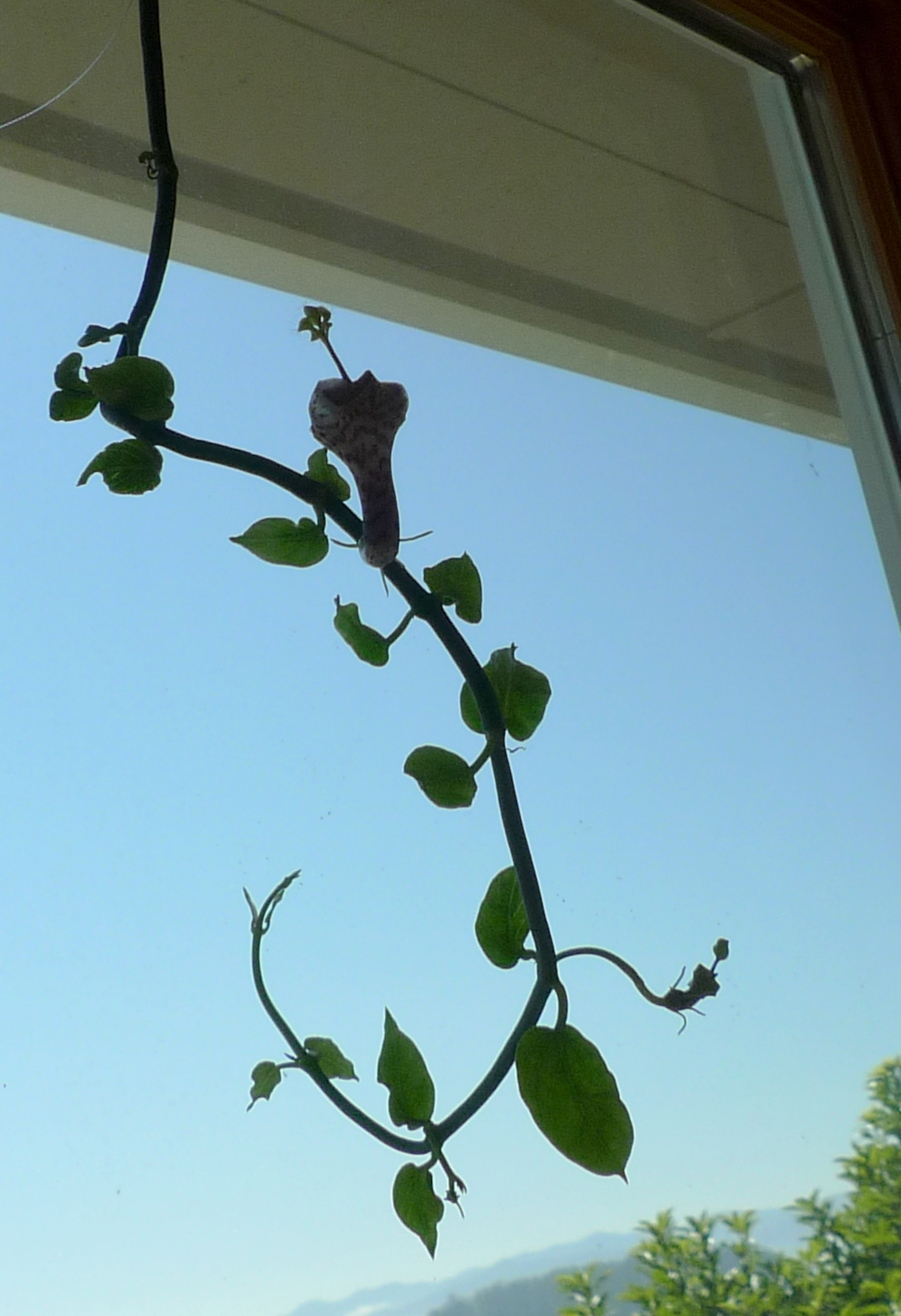
Every gardener has favorite plants. Mine is a little vine called Ceropegia Distincta.  It looks like nothing but a lot of green sticks a lot of the time, and then suddenly sprouts tendrils and leaves. Little flower buds form that turn into white and purple polka dotted upside down umbrellas that look like an illustration from a Dr Seuss book, this one from McElligot’s Pool.  After months looking lifeless, the ceropegia is doing it again this week:

It’s not a metaphor for anything, but is just itself.


Bleh!

Okay, time for a short rant about motivational pablum.  Like Chicken Soup for the Soul (I’m NOT going to link to that), or the slightly more sophisticated message from Thich Nhat-Hanh which I saw on a blog I occasionally enjoy, An Improvised Life:

We often ask, “What’s wrong?” Doing so, we invite painful seeds of sorrow to come up and manifest. We feel suffering, anger, and depression, and produce more such seeds. We would be much happier if we tried to stay in touch with the healthy, joyful seeds inside of us and around us. We should learn to ask, “What’s not wrong?” and be in touch with that. There are so many elements in the world and within our bodies, feelings, perceptions, and consciousness that are wholesome, refreshing, and healing. If we block ourselves, if we stay in the prison of our sorrow, we will not be in touch with these healing elements.”

There’s something about this kind of instruction (and I do admire the man!) that makes me want to go out and eat worms out of sheer perversity. Life is complicated and those healthy, joyful seeds also contain disease, death, despair, or as Berryman put it, “the image of the dead on the fingernail/of a newborn child.” Acknowledging that complexity is (at least for me) a much richer, deeper praise than asking what’s not wrong. Sorrow doesn’t have to be a prison; it can be a door to accepting the world as we find it.

“Cantatrice,” by Berryman, is by far more my kind of prayer. It appears at the end of this post, which I see was a little bit of a rant itself.

From the 60s or maybe the 70s

Larry has been going though boxes, and found this note that I’d copied from a personal ad:

Dear Johnny,
Please come home. Your father promises
he won't argue so much and he will
call you by that bird-name.

I can’t quite imagine the personal ad my parents would have printed, but like this one, I doubt it would have done any good.

Remember to catch Larry on KCSM, FM 91.1, tonight (October 9) at 9 pm PST with Mal Sharpe, autographed photos to give away, and cuts from the Ponderosa Stomp. You can stream this live on the web.

Lucky in lunch

How lucky to live in the Bay Area, with its surfeit of poetry events. Today, I heard Bob Hass talk about and read from the work of Tomas Tranströmer and Czesław Miłosz. The one-hour event is from a series at UC called “Lunch Poems,” and was billed as Hass reading from the work of Miłosz. News had just come in that Tranströmer had won the Nobel Prize and Bob talked about and read a few of his poems, too. He has translated both poets, and said that the three of them once had a meal together in Paris.

It was wonderful to hear Bob’s exposition on both these poets. I don’t have copies of exactly the poems he read, but soon the reading and Bob stories will be on YouTube, you can search for it.  In the meantime, here is a famous poem by Miłosz, who lived in exile from his native country for several decades in Berkeley. Until he received the Nobel Prize in 1980, he was almost unknown here, a professor of Polish literature at UC, writing in Polish, not largely translated.

This poem is fairly typical, starting with an event, seeming to meander along, almost prose, in reminiscence.  The “magic mountain” itself is a reference to Tomas Mann’s novel by that name, about a man exiled to a sanitorium for tuberculosis. But as the poem meanders it gathers to a fierce anger–the poet blazes out at his lack of recognition, the absence of fame, his inability to change the world. From there it moves to acceptance, endurance, and a wonderful couplet about how the work of poetry itself is a kind of salvation:

With a flick of the wrist I fashioned an invisible rope,
And climbed it and it held me.

Then, the poet is back in the real world, a little self-mocking, a little disdaining of the pomp of caps and gowns. He returns to July in Berkeley, hummingbirds and fog. It must have been hard for a poet whose work over and over seems extraordinarily alive to place to have lived most of his life estranged from home.

A Magic Mountain

I don’t remember exactly when Budberg died, it was either two years
ago or three.
The same with Chen. Whether last year or the one before.
Soon after our arrival, Budberg, gently pensive,
Said that in the beginning it is hard to get accustomed,
For here there is no spring or summer, no winter or fall.

“I kept dreaming of snow and birch forests.
Where so little changes you hardly notice how time goes by.
This is, you will see, a magic mountain.”

Budberg: a familiar name in my childhood.
They were prominent in our region,
This Russian family, descendants of German Balts.
I read none of his works, too specialized.
And Chen, I have heard, was an exquisite poet,
Which I must take on faith, for he wrote in Chinese.

Sultry Octobers, cool Julys, trees blossom in February.
Here the nuptial flight of hummingbirds does not forecast spring.
Only the faithful maple sheds its leaves every year.
For no reason, its ancestors simply learned it that way.

I sensed Budberg was right and I rebelled.
So I won’t have power, won’t save the world?
Fame will pass me by, no tiara, no crown?
Did I then train myself, myself the Unique,
To compose stanzas for gulls and sea haze,
To listen to the foghorns blaring down below?
Until it passed. What passed? Life.
Now I am not ashamed of my defeat.
One murky island with its barking seals
Or a parched desert is enough
To make us say: yes, oui, si.
“Even asleep we partake in the becoming of the world.”
Endurance comes only from enduring.
With a flick of the wrist I fashioned an invisible rope,
And climbed it and it held me.

What a procession! Quelles délices!
What caps and hooded gowns!
Most respected Professor Budberg,
Most distinguished Professor Chen,
Wrong Honorable Professor Milosz
Who wrote poems in some unheard-of tongue.
Who will count them anyway. And here sunlight.
So that the flames of their tall candles fade.
And how many generations of hummingbirds keep them company
As they walk on. Across the magic mountain.
And the fog from the ocean is cool, for once again it is July.

Berkeley, 1975