Some sadness

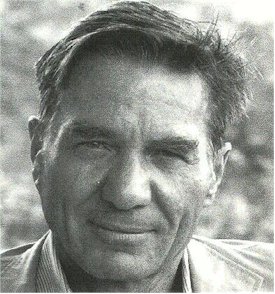
kinnellAt Squaw Valley, there was a lot of remembering of Galway Kinnell, who was the director and guiding spirit of the poetry workshop for almost three decades. His kindness, encouragement, and his own work were an inspiration. Bob Hass said that he “cracked the bones of life to suck the marrow into his poetry.” Here is a poem of his one poet recited:

How Many Nights

How many nights
have I lain in terror,
O Creator Spirit, maker of night and day,

only to walk out
the next morning over the frozen world
hearing under the creaking of snow
faint, peaceful breaths… Continue reading “Some sadness”

Besmirl Brigham

This is to me a difficult pseudonym for Bess Miller (Moore) Brigham, a poet who opted to spell her name phonetically. instead of Bess Miller Brigham, she used the more colloquial “Besmilr” because it was closer to the way people spoke in Arkansas, where she mostly lived.

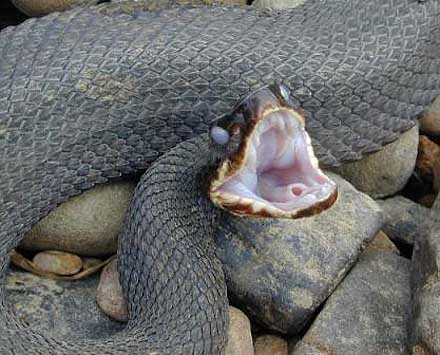
I found this poem, describing what happened to a poisonous water moccasin (also called cottonmouth) after a tornado, in a book of essays by Forrest Gander. The syntax and typography are a little difficult, a little tornado wracked, but the image of the snake’s fangs embedded in its own body is pretty vivid:

moccasinHeaved From the Earth

after the tornado, a dead moccasin
nailed to the pole
boards scattered across a pasture Continue reading “Besmirl Brigham”

At Squaw Valley

gayIt’s the end of June, and I’m at the poetry workshop in Squaw Valley. While I hardly ever publish long poems here, I heard one tonight that just blew me away. Evie Shockley talked about how poets use time, especially the way they use it to address race and history, and her first example was this poem by Ross Gay:

spoon

   for Don Belton

Who sits like this on the kitchen floor
at two in the morning turning over and over

the small silent body in his hands
with his eyes closed fingering the ornate

tendril of ivy cast delicately into the spoon
that came home with me eight months ago

from a potluck next door during which
the birthday boy so lush on smoke

ad drink and cake made like a baby
and slept on the floor with his thumb

in his mouth until he stumbled through my garden
to my house the next morning where I was frying up

stove top sweet potato biscuits, and making
himself at home as was his way,

after sampling one of my bricks
told me I could add some baking powder

to his and could I put on some coffee
and turn up the Nina Simone and rub, maybe,

his feet, which I did, the baking powder,
stirring it in, and I like to think, Continue reading “At Squaw Valley”

Voetica

Thanks to David Juda, who has added me to his roster of online poets. In addition spoken versions of the works of great poets of the past, David is assembling a library of spoken poetry by living poets, curated by the poets themselves.  Here is my page.  This is a labor of love by David, and I’m glad to be included.


A hard rain

imageA friend asked me to show her a poem by Tony Hoagland that “hit it out of the park.”

I hope this qualifies:

Hard Rain

After I heard It’s a Hard Rain’s Gonna Fall
played softly by an accordion quartet
through the ceiling speakers at the Springdale Shopping Mall,
then I understood: there’s nothin
we can’t pluck the stinger from,

nothing we can’t turn into a soft drink flavor or a t-shirt.
Even serenity can become something horrible
if you make a commercial about it
using smiling, white-haired people

quoting Thoreau to sell retirement homes
in the Everglades, where the swamp has been
drained and bulldozed into a nineteen hole golf course
with electrified alligator barriers. Continue reading “A hard rain”

Roethke for Monday

RoethkeIf you’ve never read Theodore Roethke, you have a treat in store. He has written some of the lushest poems about gardens, dirt, and decay that you’d ever want to read, a lovely villanelle and many profound, longer poems.  Today I’m posting the last two sections from “Mediations of an Old Woman,” one of the long poems. But  “My Papa’s Waltz,” “The Waking” (villanelle), “Root Cellar, and “Big Wind”are among my favorites.

from Mediations of an Old Woman

3

As when silt drifts and sifts down through muddy pond-water,
Settling in small beads around weed and sunken branches,
And one crab, tentative, hunches himself before moving along the bottom,
Grotesque, awkward, his extended eyes looking at nothing in particular,
Only a few bubbles loosening from the ill-matched tentacles,
The tail and smaller legs slipping and sliding slowly backward—
So the spirit tries for another life,
Another way and place in which to continue;
Or a salmon tired, moving up a shallow stream,
Nudges into a back-eddy, a sandy inlet,
Bumping against sticks and bottom-stones, then swinging
Around, back into the tiny maincurrent, the rush of brownish-white water,
So, I suppose, the spirit journeys.

4

I have gone into the waste lonely places
Behind the eye; the lost acres at the edge of smoky cities.
What’s beyond never crumbles like an embankment,
Explodes like a rose, or thrusts wings over the Caribbean.
There are no pursuing forms, faces on walls:
Only the motes of dust in the immaculate hallways,
The darkness of falling hair, the warning from lint and spiders,
The vines graying to a fine powder.
There is no riven tree, or lamb dropped by an eagle.

There are still times, morning and evening:
The cerulean, high in the elm,
Thin and insistent as a cicada,
And the far phoebe, singing,
The long plaintive notes floating down,
Drifting through leaves, oak and maple,
Or the whippoorwill, along the smoky ridges,
A single bird calling and calling:
A fume reminds me, drifting across wet gravel;
A cold wind comes over stones;
A flame, intense, visible,
Plays over the dry pods,
Runs fitfully along the stubble,
Moves over the field,
Without burning.
xxxxIn such times, lacking a god,
xxxxI am still happy.
Theodore Roethke
The Judith Lee Stronach Memorial Lecture

RachelLast night I attended a marvelous talk by Rachel Tzvia Back, called “‘This Bequest of Wings’ on Teaching Poetry in a Region of Conflict.” It was one of a series of lectures sponsored by Ray Lifchez in memory of his wife Judith (more about her later). Ms. Bach ia a vivid, insightful presenter with a beautiful speaking voice (you can hear her here).

She started with the question, what use is poetry in an environment of conflict. She said that her world, contemporary Israel, if filled with militaristic, politicized rhectoric. Racism, alienation, hatred of “the other,” are common. She teaches an introduction to poetry course in the English department that is compulsory and includes Christians, Druze, Muslim, Jewish and secular students who range in age from 18 to early 40s. In this somewhat hostile atmosphere–the students have to take the course–she starts with a poem by William Carlos Williams, “To Daphne and Virginia”:

Be Patient that I address you in a poem,
           there is no other 
                 fit medium
The mind
           lives there. It is uncertain,
                  can trick us and leave us

agonized. But for resources
           what can equal it?
                  There is nothing. We

should be lost
           without its wings to
                  fly off upon . . . .

Continue reading “The Judith Lee Stronach Memorial Lecture”

Memorial Day

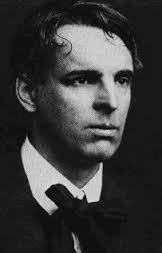
gregoryAn editorial in the paper reminded me that on Memorial Day we remember those who died in the war; on Veterans Day we remember the ones who returned. In either case, not just a day added to the weekend, but a day to reflect. Here is Yeats, reflecting on the death of Lady Gregory’s son, who died in 1918 in an air battle over Italy. My favorite line comes near the end: “What made us dream that he could comb grey hair?” Continue reading “Memorial Day”

Dull subjects

In a humorous essay about poetry, William Matthews suggested there are only four subjects for poems:

1. I went out into the woods today, and it made me feel, you know, sort of religious.

2. We’re not getting any younger.

3. It sure is cold and lonely (a) without you, honey, or (b) with you, honey.

4. Sadness seems but the other side of the coin of happiness, and vice versa, and in any case the coin is too soon spent, and on what we know not what.

lauxSo I looked for a poem today about something outside these categories and here is one by Dorianne Laux:

Finding What’s Lost

In the middle of the poem my daughter reminds me
that I promised to drive her to the bus stop.
She waits a few beats then calls out the time.
Repeats that I’ve promised.
I keep the line in my head, repeat it under my breath
as I look for my keys, rummage through my purse,
my jacket pockets. When we’re in the car, I search
the floor for a Jack-in-the-Box bag, a ticket stub,
a bridge toll dollar, anything to write on.
I’m still repeating my line when she points
out the window and says “look, there’s the poppy
I told you about,” and as I turn the corner I see it, Continue reading “Dull subjects”

An  Elegy

elephantsA friend leant me Inventions of Farewell, A Book of Elegies, by Sandra Gilbert. This is a wonderful collection and in the introduction she references a passage on “elephant grief” from Fragments on the Deathwatch, by Louise Harmon, which in turn cites a National Geographic article about the mourning behavior of a herd of elephants after the death of an old bull. The elephants “approached his body by twos and threes, ‘sweeping their trunks slowly over him, not touching him for the most part but maintaining an inch of distance between his skin and the moist tips of their trunks. The ritual was more impressive for its silence.’ ’’  Continue reading “An  Elegy”

A slight departure

AndrewMarvelI realized today that I have avoided putting older poems here–Marvell, Shakespeare, Wordsworth, for example. I’ve selected contemporary poems not only to avoid poems that everyone probably read in high school, but also because they seem more accessible, more alive.

But today I felt like reading Andrew Marvell’s “To His Coy Mistress,” written in the 1650s. You’ll certainly recognize phrases from this poem, even if you didn’t read it in high school. They’ve made their way into daily speech. And though written in strict rhyme and meter, Marvell’s language and syntax (except for the occasional thou and thy and shouldst) seem almost as fresh as a contemporary poem.

To His Coy Mistress

Had we but world enough and time,
This coyness, Lady, were no crime. Continue reading “A slight departure”

Lobster on Monday

nemerovHoward Nemerov seems almost forgotten as a poet–he died almost 25 years ago. He was not only US Poet Laureate twice, but was also the brother of Diane Arbus. This poem is fairly representative of his style.

The Lobster

Here at the Super Duper, in a glass tank
Supplied by a rill of cold fresh water
Running down a glass washboard at one end
And siphoned off at the other, and so
Perpetually renewed, a herd of lobster
Is made available to the customer
Who may choose whichever one he wants
To carry home and drop into boiling water
And serve with a sauce of melted butter. Continue reading “Lobster on Monday”