Merwin on Monday

The NY Times Magazine has started printing a poem each week. In case you missed this one, it’s the best of the series so far:

After the VoicesWSMerwin_NewBioImage

Youth is gone from the place where I was young
even the language that I heard here once
its cadences that went on echoing
a youth forgotten and the great singing
of the beginning have fallen silent
with the voices that were the spirit of them
and their absences were no more noticed
than were those of the unreturning birds
each spring until there were no words at all
for what was gone but it was always so
I have no way of telling what I miss
I am only the one who misses it

W. S. Merwin

Unfortunately, I’ve heard that Merwin now suffers from dementia, so truly there are no words at all.

Haiku by whom?

Recently, there was a literary scandal when a poem by Yi Fen Chu, chosen for inclusion in Best American Poetry 2015, turned out to be written by Michael Hudson, who said the poem had been rejected 40 times when submitted under his own name; he then got the idea of the Yi Fen Chu alias. Under that name, Prairie Schooner accepted the poem and it made it to the “best” volume. It’s pseudonymity highlighted the current literary bias towards publishing minority, disenfranchised, or foreign writers.

yasusadaIn the discussion, an older, more complex work came up: the two volumes, one of letters, one of poetry, allegedly by a Japanese survivor of Hiroshima, Akiri Yasusada, whose family was devastated by the blast.

After high profile reviews and excerpts from the volumes, his identity turned out to be the biggest literary fraud since Thomas Chatterton’s impersonation of Thomas Rowley, an imaginary monk of the 15th century, complete with fragments on parchment. But was it a fraud, or a construct designed to be discovered? Continue reading “Haiku by whom?”

Not exactly a poem

But when I was thinking about what poem to post today, I remembered this as a poem and went searching for it:

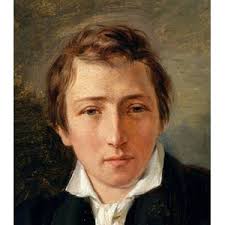
heineMine is a most peaceable disposition. My wishes are: a humble cottage with a thatched roof, but a good bed, good food, the freshest milk and butter, flowers before my window, and a few fine trees before my door; and if God wants to make my happiness complete, he will grant me the joy of seeing some six or seven of my enemies hanging from those trees. Before death I shall, moved in my heart, forgive them all the wrong they did me in their lifetime. One must, it is true, forgive one’s enemies– but not before they have been hanged.

Heinrich Heine

Unfortunately, no one seems to list the translator, so they remain without credit


Verde que te quiero verde

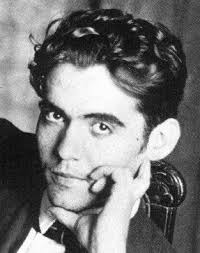
The first poet I read in translation who captured my imagination was Federico García Lorca (his full name is Federico del Sagrado Corazón de Jesús García Lorca, or Federico Sacred Heart of Jesus García Lorca!).  I knew nothing about Franco, the Falangists, the Guardia Civil, or the Spanish Civil War, and less about surrealism in poetry. Perhaps I knew that they existed, but had no sense of their weight or meaning. But somehow the slim bilingual volume of his selected poems (thanks to Donald Allen) found its way to me when I was 18. The music of these poems led me to learn about him, his execution, and the forces at play in Europe of the thirties.

Here is the poem I loved most in that volume, without trying to make sense of it.
lorcaBallad of the Sleepwalker

Green, how I want you green.
Green wind. Green branches.
The ship out on the sea
and the horse on the mountain.
With the shade around her waist
she dreams on her balcony,
green flesh, her hair green,
with eyes of cold silver.
Green, how I want you green.
Under the gypsy moon,
all things are watching her
and she cannot see them.

Green, how I want you green.
Great stars of frost
appear with the fish of shadow
that opens the road of dawn.
The fig tree rubs its wind
with the sandpaper of its branches,
and the forest, cunning cat,
bristles its brittle fibers.
But who will come? And from where?
She is still on her balcony
green flesh, her hair green,
dreaming in the bitter sea.

–My friend, I want to trade
my horse for her house,
my saddle for her mirror,
my knife for her blanket.
My friend, I come bleeding
from the gates of Cabra.
–If it were possible, my boy,
I’d help you fix that trade.
But now I am not I,
nor is my house now my house.
–My friend, I want to die
decently in my bed.
Of iron, if that’s possible,
with blankets of fine chambray.
Don’t you see the wound I have
from my chest up to my throat?
–Your white shirt has grown
thirsty dark brown roses.
Your blood oozes and flees a
round the corners of your sash.
But now I am not I,
nor is my house now my house.
–Let me climb up, at least,
up to the high balconies;
Let me climb up! Let me,
up to the green balconies.
Railings of the moon
through which the water rumbles.

Now the two friends climb up,
up to the high balconies.
Leaving a trail of blood.
Leaving a trail of teardrops.
Tin bell vines
were trembling on the roofs.
A thousand crystal tambourines
struck at the dawn light.

Green, how I want you green,
green wind, green branches.
The two friends climbed up.
The stiff wind left
in their mouths, a strange taste
of bile, of mint, and of basil
My friend, where is she–tell me–
where is your bitter girl?
How many times she waited for you!
How many times would she wait for you,
cool face, black hair,
on this green balcony!
Over the mouth of the cistern
the gypsy girl was swinging,
green flesh, her hair green,
with eyes of cold silver.
An icicle of moon
holds her up above the water.
The night became intimate
like a little plaza.
Drunken “Guardias Civiles”
were pounding on the door.
Green, how I want you green.
Green wind. Green branches.
The ship out on the sea.
And the horse on the mountain.

For those of you who like to see the original language, here it is. I don’t think you have to know Spanish to enjoy it:

Romance Sonámbulo

Verde que te quiero verde.
Verde viento. Verdes ramas.
El barco sobre la mar
y el caballo en la montaña.
Con la sombra en la cintura
ella sueña en su baranda,
verde carne, pelo verde,
con ojos de fría plata.
Verde que te quiero verde.
Bajo la luna gitana,
las cosas la están mirando
y ella no puede mirarlas.

Verde que te quiero verde.
Grandes estrellas de escarcha
vienen con el pez de sombra
que abre el camino del alba.
La higuera frota su viento
con la lija de sus ramas,
y el monte, gato garduño,
eriza sus pitas agrias.
¿Pero quién vendra? ¿Y por dónde…?
Ella sigue en su baranda,
Verde carne, pelo verde,
soñando en la mar amarga.

–Compadre, quiero cambiar
mi caballo por su casa,
mi montura por su espejo,
mi cuchillo per su manta.
Compadre, vengo sangrando,
desde los puertos de Cabra.
–Si yo pudiera, mocito,
este trato se cerraba.
Pero yo ya no soy yo,
ni mi casa es ya mi casa.
–Compadre, quiero morir
decentemente en mi cama.
De acero, si puede ser,
con las sábanas de holanda.
¿No ves la herida que tengo
desde el pecho a la garganta?
–Trescientas rosas morenas
lleva tu pechera blanca.
Tu sangre rezuma y huele
alrededor de tu faja.
Pero yo ya no soy yo,
ni mi casa es ya mi casa.
–Dejadme subir al menos
hasta las altas barandas;
¡dejadme subir!, dejadme,
hasta las verdes barandas.
Barandales de la luna
por donde retumba el agua.
Ya suben los dos compadres
hacia las altas barandas.
Dejando un rastro de sangre.
Dejando un rastro de lágrimas.
Temblaban en los tejados
farolillos de hojalata.
Mil panderos de cristal
herían la madrugada.
Verde que te quiero verde,
verde viento, verdes ramas.
Los dos compadres subieron.
El largo viento dejaba
en la boca un raro gusto
de hiel, de menta y de albahaca.
¡Compadre! ¿Donde está, díme?
¿Donde está tu niña amarga?
¡Cuántas veces te esperó!
¡Cuántas veces te esperara,
cara fresca, negro pelo,
en esta verde baranda!

Sobre el rostro del aljibe
se mecía la gitana.
Verde carne, pelo verde,
con ojos de fría plata.
Un carámbano de luna
la sostiene sobre el agua.
La noche se puso íntima
como una pequeña plaza.
Guardias civiles borrachos
en la puerta golpeaban.
Verde que te quiero verde.
Verde viento. Verdes ramas.
El barco sobre la mar.
Y el caballo en la montaña.


Poets in translation

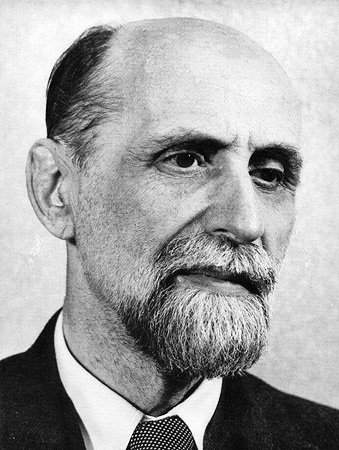
jimenezThe other day at lunch a friend and I were talking about the wealth of wonderful poems in translation. Here is one, for which we are indebted to Robert Bly:

I have a feeling that my boat
has struck, down there in the depths,
against a great thing.
And nothing
happens! Nothing….Silence….Waves….

—Nothing happens? Or has everything happened,
and are we standing now, quietly, in the new life?

Juan Ramón Jiménez
translated by Robert Bly

From the past

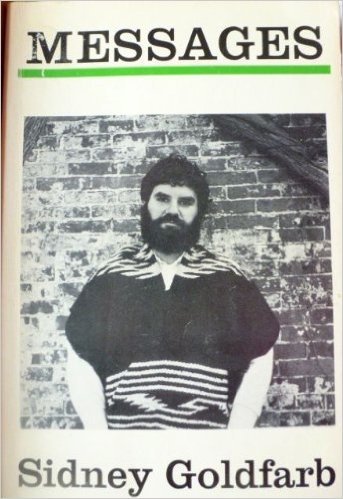
goldfarbReading through old letters I found that in 1968 I went to a reading and was impressed by the poems of Sidney Goldfarb, who was also at Harvard then and probably looked like this.

I requested a book of his from storage at UC Berkeley to see what I thought was a good poem when I was 20.I was impressed by the easy humor of this kind of poem then, so new to me. I was studying Milton, Swinburne, Tennyson. I think I might have heard this poem that night:

Moving Breakfast

I get out of bed without breaking anything
I give my daughter Cheerios and bananas for breakfast
First I let her stand on the table
Then I let her put her foot into the cereal
I look into the mirror and say, “Sidney, you’re no criminal.”
I put on a necktie because I have one
I go outside and find myself in Chicago
I say, “Boston, you faker, cut that out!”
Then I see Lake Michigan boiling up at me like a billion white birds
And clouds of soot talking to one another above the skyscrapers
So I yell up to my daughter,
“Sara! Take your foot out of the cereal, you’re in Chicago now!”
And she answers back,
“Cher-i-ooos!” Continue reading “From the past”

In for a Pound

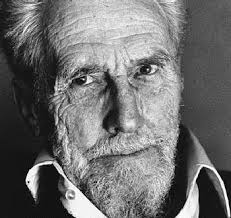
poundI have never posted a poem by Ezra Pound here, though he is an important figure in American poetry with a life and an impact too complex to report here. You can look him up. Here’s a little taste:

And the days are not full enough

And the days are not full enough
And the nights are not full enough
And life slips by like a field mouse
Not shaking the grass.

Ezra Pound

Thinking about poetry

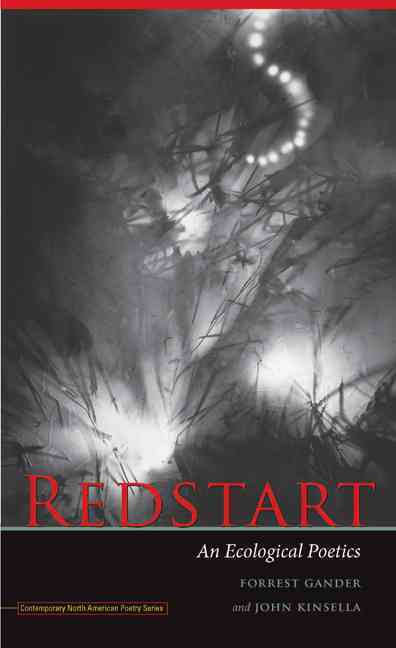
Sometimes I just get tired of poetry altogether and need a break. I had a period like that this month–no writiing, reading nothing that seemed worth the trouble. Then I went to see the wonderful claymation film: Shaun the Sheep Movie. It made me laugh out loud, restored my good spirits and opened me to whatever poem might find me next, which was this one, from a sequence about the end of a long drought.

redstaretmuddy boots
lined up inside
the barn door
cows miserable
in the lee
of the hill
it’s all I do
now he said–
holding the bucket
in one hand
stripping tit
with the other–
and I know each
one by its humid
eye–the ground
outside plopping
it’s deafening–say
what? say–cow
cocking an ear–the rain’s
falling pretty
healthy it
smells like
heaven in here

from Redstart
by Forrest Gander and John Kinsella

Continue reading “Thinking about poetry”

Monday again

An industrious week–pear jam, gazpacho, chicken stock, yard cleanup… the delicious tasks of summer. Though it doesn’t say so, this seems like a summer poem to me.

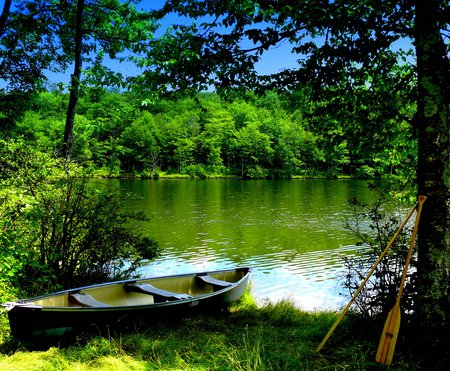
419237-bigthumbnailA Boat In the Forest

Sixty miles from a lake,
no river or pond within forty-eight,
no ocean near,
and this rowboat, crisply painted, oarlocks
oiled, oars set and cocked,
in a small—mossy, pine needles—clearing
of sparse gray and yellow forest grass.
The light here: like joy, pain, like glass.
On its bow, in red paint, beside the anchor rope,
its name: A Joy To Be Hidden
But a Disaster Not To Be Found
.
An odd place, a long name, for a boat

Thomas Lux Continue reading “Monday again”

Elizabeth Bishop

bishopThis narrative poem by Elizabeth Bishop seems so plainly written, yet I think it’s pretty extraordinary.

In the Waiting Room

In Worcester, Massachusetts,
I went with Aunt Consuelo
to keep her dentist’s appointment
and sat and waited for her
in the dentist’s waiting room.
It was winter. It got dark
early. The waiting room
was full of grown-up people, Continue reading “Elizabeth Bishop”

Another by Tony Hoagland

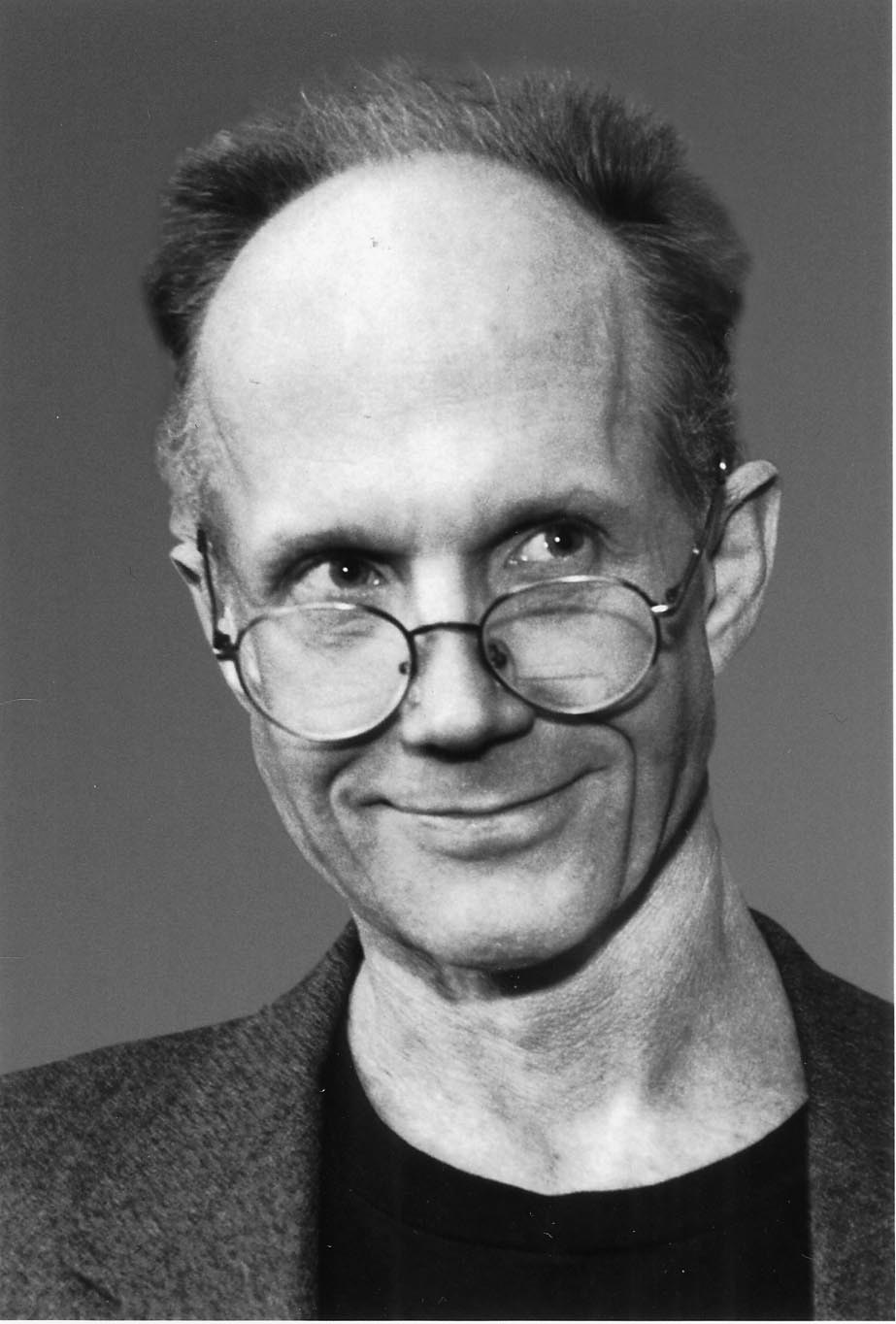
TonyHoaglandHeadshotReading though poems this morning, trying to find one to post, I couldn’t resist this one. He’s got the jargon so perfectly. I especially like his description of “holding the fear inside/like a tipsy glass of water”:

And The Men

want back in:
all the Dougs and the Michaels, the Darnells, the Erics and Josés,
they’re standing by the off-ramp of the interstate
holding up cardboard signs that say WILL WORK FOR RELATIONSHIP.

Their love-mobiles are rusty.
Their Shaggin’ Wagons are up on cinderblocks.
They’re reading self-help books and practicing abstinence,
taking out Personals ads that say
xxxx “Good listener would like to meet lesbian ladies,
xxxx                              for purposes of friendship only.”

In short, they’ve changed their minds, the men:
they want another shot at the collaborative enterprise.
Want to do fifty-fifty housework and childcare;
They want commitment renewal weekends and couples therapy.

Because being a man was finally too sad—
In spite of the perks, the lifetime membership benefits.
And it got old,
telling the joke about the hooker and the priest

at the company barbeque, praising the vintage of the beer and
 xxxx  punching the shoulders of a bud
xxxx         in a little overflow of homosocial bonhomie—
Always holding the fear inside
 xxxx                 like a tipsy glass of water—

Now they’re ready to talk, really talk about their feelings,
in fact they’re ready to make you sick with revelations of
  xxxx                 their vulnerability—
A pool of testosterone is spreading from around their feet,
it’s draining out of them like radiator fluid,
like history, like an experiment that failed.

So here they come on their hands and knees, the men:
Here they come. They’re really beaten. No tricks this time.
xxxx         No fine print.
Please, they’re begging you. Look out.

Tony Hoagland

Tuvia Ruebner

ruenmerWhen I heard Rachel Tzvia Back speak at the Stronach lecture in May, she mentioned the poems of Tuvia Ruebner, a Slovenian born in 1924, who emigrated to Israel in 1941, escaping the holocaust in which most of his family perished. He writes in Hebrew, and Back has translated much of his work.  Here are a few short poems that illustrate his style:

Transformations

How the sun couples with a cloud!
How the wind shifts the shapes of the trees!
There’s the fragrance of rain in the air!
Oh, all this joy!

Even after me. Continue reading “Tuvia Ruebner”